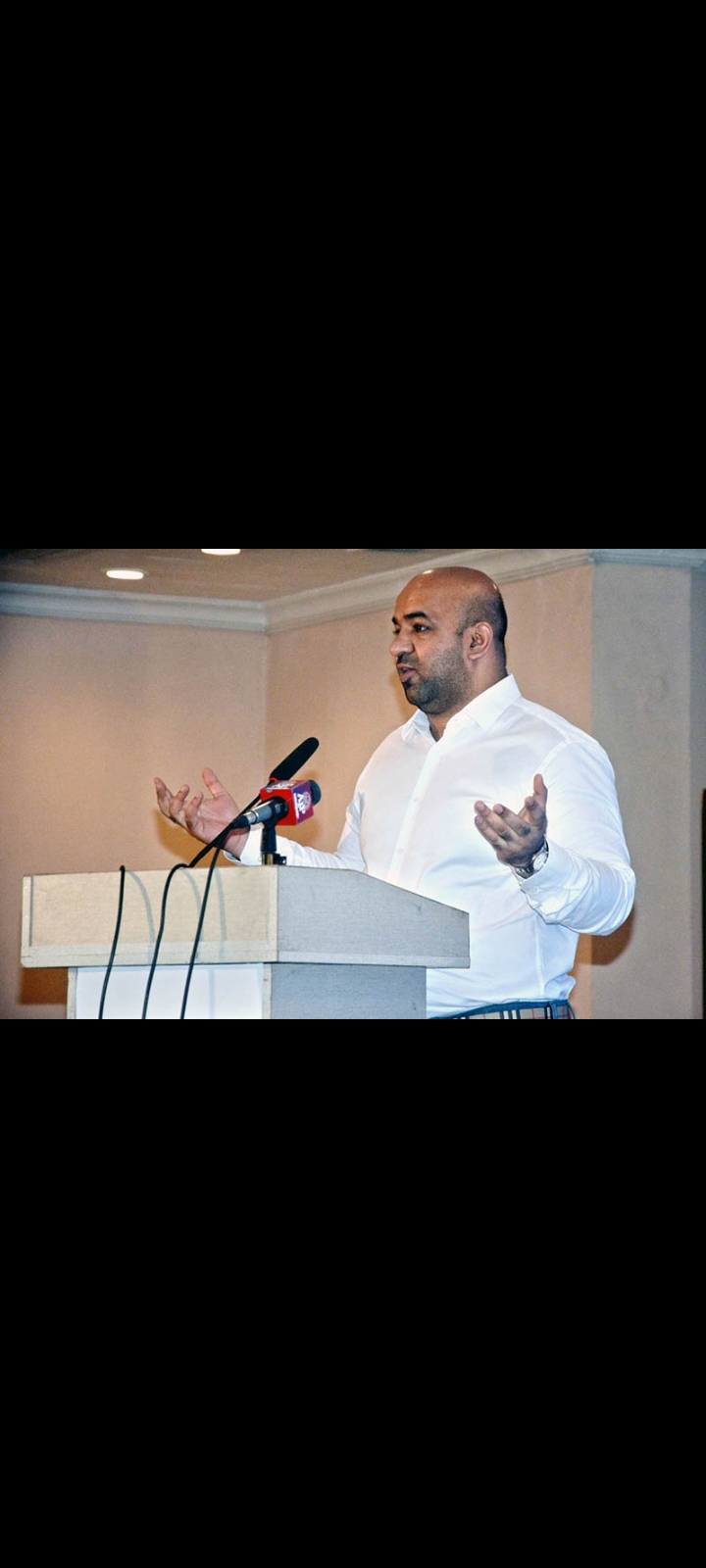
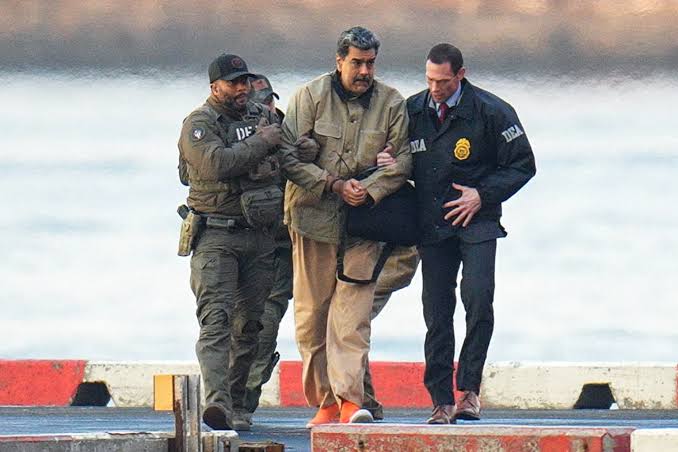
three killed four
| |

Three killed, four injured in family dispute shoot…


At least three people were killed and four others sustained injuries in a shooting incident near Charsadda Adda in Peshawar, according to local police authorities. The tragic incident, which occurred following a heated domestic dispute, has shocked residents of the area and prompted an immediate police investigation.

Police officials stated that the shooting took place after an argument between two groups of relatives escalated into a violent confrontation. What initially began as a disagreement over family matters quickly turned deadly when firearms were used. The exchange of gunfire resulted in the deaths of three individuals at the scene, while four others were injured and rushed to nearby hospitals for medical treatment. The condition of the injured has not yet been officially disclosed.

Law enforcement authorities responded swiftly after receiving reports of the incident. Police teams reached the crime scene, secured the area, and began collecting evidence. The bodies of the deceased were shifted to a hospital for legal formalities and post-mortem examinations, while investigators interviewed witnesses to determine the exact sequence of events.

According to the police, a formal case has been registered at Faqirabad Police Station, and efforts are underway to identify and arrest those responsible for the shooting. Authorities have launched a search operation to locate the suspects, who reportedly fled the scene immediately after the incident. Police officials expressed confidence that those involved would soon be brought to justice.

Preliminary investigations indicate that both groups involved in the incident are closely related. Police believe the violence stemmed from a long-standing domestic dispute that escalated beyond control. Although the exact nature of the disagreement has not been officially revealed, investigators are examining all aspects of the family conflict to establish the motive behind the shooting.

Family disputes turning violent remain a serious concern in various parts of Pakistan, where disagreements over property, inheritance, financial issues, or personal matters can sometimes escalate into deadly confrontations. Law enforcement agencies have repeatedly urged citizens to resolve conflicts through legal and peaceful means rather than resorting to violence.

The incident has created an atmosphere of fear and sadness among local residents, many of whom expressed concern over the increasing use of firearms in personal disputes. Community members have called on authorities to ensure that those responsible are held accountable and to strengthen measures aimed at preventing similar tragedies in the future.

Police officials emphasized that the investigation is still in its early stages and that additional details will be made public as evidence is collected and witness statements are recorded. Authorities are also reviewing forensic evidence from the crime scene to support the investigation.

The tragic shooting serves as a reminder of the devastating consequences of unresolved family conflicts and the dangers associated with the misuse of weapons. As the investigation continues, the families of the victims await justice, while local authorities remain committed to apprehending the suspects and uncovering the full circumstances surrounding the incident.

The police have assured the public that every effort is being made to complete the investigation promptly and transparently. Further updates are expected as the search for the accused continues and more information becomes available through the ongoing inquiry.

Similar Posts

  • |

    Shaheen Afridi pulls out of LPL 2026

    COLOMBO: Pakistan fast bowler Shaheen Shah Afridi has reportedly withdrawn from the Lanka Premier League (LPL) 2026, bringing an early end to a turbulent campaign that was overshadowed by an administrative mix-up and below-par performances. According to media reports, the 26-year-old informed his franchise, Kandy Royals, that he was leaving the tournament for personal reasons. Neither Afridi nor the franchise has disclosed further details, while Kandy Royals are yet to announce a replacement. Afridi’s departure comes just days after he was at the centre of an unusual selection controversy. Reports claimed he had initially been listed as the team’s Impact Player for a match against Colombo Capitals, but was unable to feature after an administrative error left his name off the official team sheet. The mistake reportedly occurred after Kandy Royals elected to bat first, with team officials later informing Afridi that an analyst had accidentally omitted his name from the final squad submitted before the match. The incident prompted the Pakistan pacer to raise the issue with an official from the tournament’s Anti-Corruption Unit, after which the matter was referred to the match referee for review. Franchise officials and tournament organisers later apologised to Afridi for the error. Reports suggested the left-arm fast bowler had briefly considered leaving the competition immediately after the incident but decided to stay with the squad following the apology. Despite remaining in the tournament, Afridi struggled to make his usual impact with the ball. He claimed seven wickets in six matches, averaging 32.00, while conceding runs at an economy rate of 10.18, figures well below the standards expected from one of Pakistan’s premier fast bowlers. Meanwhile, the LPL continues to see changes in team combinations, with two more Pakistani cricketers joining the competition as replacement signings. Young batter Khawaja Nafay has been drafted by Jaffna Kings to replace Afghanistan opener Ibrahim Zadran, while experienced all-rounder Iftikhar Ahmed has signed with Dambulla Sixers as a replacement for Afghanistan fast bowler Fazalhaq Farooqi. Shaheen’s reported withdrawal marks another twist in an eventful LPL campaign and is likely to spark further discussion about player management and tournament administration as the competition heads toward its decisive stages.

  • |

    Anurag Kashyap’s T-shirt steals spotlight at dinner party

    Indian filmmaker Anurag Kashyap recently found himself at the centre of online attention after a casual dinner outing with filmmaker Imtiaz Ali and a group of friends. While the gathering brought together two well-known names from the Indian film industry, it was Kashyap’s unusual T-shirt that quickly became the main talking point on social media. Kashyap shared several pictures from the dinner on social media, giving fans a glimpse of the gathering. Alongside the photographs, he joked that although it was supposed to be a family dinner, his T-shirt ended up attracting more attention than anything else. The red T-shirt featured the words “dimagi nakal” prominently, followed by the phrase “been into this since my school days”. The unusual wording immediately caught the attention of social media users, particularly because it appeared to be a playful reference to the phrase “dimagi naxals”, which has recently featured in political discussions in India. Kashyap’s humorous choice of clothing quickly prompted a variety of reactions. Some users appreciated the filmmaker’s sense of humour and found the design amusing, while others were impressed enough to suggest that the T-shirt should be made available as merchandise. One social media user expressed admiration for the design and proudly referred to themselves as a “dimagi nakal”. Another directly encouraged Kashyap to consider launching merchandise featuring the slogan. Beyond the T-shirt, the dinner pictures also generated excitement because of Kashyap’s meeting with Imtiaz Ali. Fans were delighted to see the two acclaimed filmmakers together and filled the comments section with reactions to their reunion. The reference behind the T-shirt gained additional significance because the phrase “dimagi naxal” had recently become part of a political conversation following remarks made by Indian Prime Minister Narendra Modi during his Independence Day speech. The comment prompted reactions and debate across political and social circles. Meanwhile, Kashyap remains busy with several projects across the Indian film industry. He has been involved in directing, producing and acting in a number of films. His recent directorial work includes Nishaanchi, while he has also been associated with projects such as Bad Girl, Bandar and the Kannada film Vaghachipani. As an actor, Kashyap is also set to appear in the Telugu film Dacoit: A Love Story. Known for his distinctive filmmaking style and outspoken personality, he frequently attracts attention both for his creative work and his candid presence on social media.

  • | | |

    KP eyes M-1 motorway BRT service to connect 4 majo…

    PESHAWAR: The Khyber Pakhtunkhwa government is exploring a plan to extend its Bus Rapid Transit (BRT) network onto the M-1 Motorway, with the proposed service aimed at improving public transport links between Peshawar and several major cities. Officials from the provincial Transport Department said the proposed BRT service could connect passengers with Nowshera, Mardan, Swabi and Charsadda, potentially providing a faster and more convenient travel option for thousands of daily commuters. Under the initial proposal, buses would pick up and drop off passengers at designated toll plazas along the motorway. The exact locations and number of stops, however, have yet to be determined. Officials said a detailed feasibility study would establish where stations should be developed and assess the operational requirements of the proposed service. If approved and implemented, the initiative could strengthen regional connectivity and provide commuters with an expanded public transport option across key areas of Khyber Pakhtunkhwa.

  • | | |

    91 trade exhibitions, 11 foreign delegations but n…

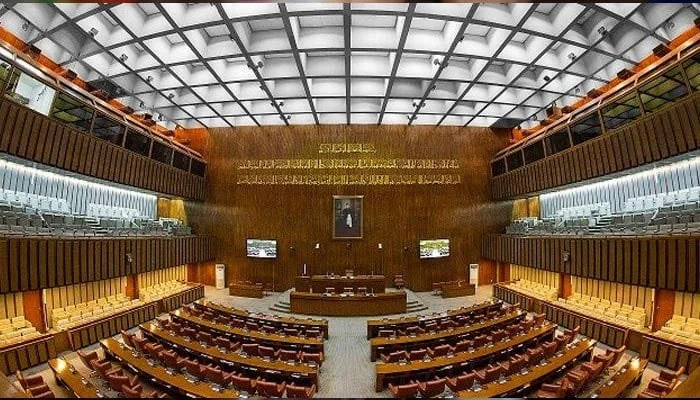
    Islamabad:Pakistan has preferential trade arrangements with 93 countries. Its trade promotion authority participated in 91 international exhibitions and sent 11 trade delegations abroad in the last financial year, yet the country still has no registered Pakistani trade representative organisation or joint chamber in China. The absence of a formal Pakistani commercial organisation in China became a major point of concern before the Senate Standing Committee on Commerce, as senators questioned why Pakistan has not established a stronger private sector trade presence in one of its most important international markets. The committee, chaired by Senator Anusha Rahman, was told that no Pakistani joint chamber is currently registered in China and no Pakistani trade representative organisation is operating there. The Secretary Commerce said a Pakistani chamber could be established in China either as a joint chamber or as a branch, but it would have to meet the requirements set by Chinese authorities. He further explained that only one joint chamber from Pakistan could register itself in China under the relevant arrangements. Senators questioned why such an organisation had not been established despite the large scale business relationship between Pakistan and China. The Secretary Commerce said the reason could best be explained by the trade organisations themselves. The issue became more important when senators asked what real benefit Pakistan would gain from establishing a joint chamber or representative office. The Secretary Commerce said the Ministry of Commerce could not give a clear position on the matter and suggested that the Federation of Pakistan Chambers of Commerce and Industry and other chambers should provide their views. He said Pakistani private sector organisations could establish a chamber in major Chinese commercial centres such as Beijing or Shanghai, while the Ministry of Commerce would provide full support to interested chambers if they fulfilled Chinese requirements. Senator Anusha Rahman said a chamber could help Pakistani companies follow up more effectively on commercial opportunities in China. The discussion exposed a gap between Pakistan’s growing trade ambitions and its physical commercial presence in an important foreign market. The committee also examined the performance of the Trade Development Authority of Pakistan and its efforts to increase exports. The Chief Executive of TDAP said the authority was often blamed whenever Pakistan’s exports failed to grow, but export performance depended on several factors beyond the authority’s direct control. He pointed to production costs, electricity prices and the cost of financing as major factors affecting the ability of Pakistani businesses to compete in international markets. This means that simply sending trade delegations or participating in international exhibitions cannot guarantee higher exports if Pakistani products remain expensive to produce. The Commerce Minister, Jam Kamal Khan, told the committee that the Ministry of Commerce regularly sends policy proposals and recommendations to the government to improve the country’s trade environment. He said he had also proposed to the Prime Minister that reciprocal incentives should be pursued to increase exports. The minister said the Ministry of Commerce was working on new proposals to improve international marketing and increase Pakistani exports. He stressed that Pakistan could not become more competitive in international markets without dealing with the underlying costs faced by businesses and improving the investment environment. The figures presented by TDAP showed that the authority remained active in promoting Pakistani products abroad. During the last financial year, TDAP participated in 91 international exhibitions. The authority also organised or supported 11 trade delegations to foreign countries to search for new markets and strengthen business connections. Pakistan currently has preferential trade arrangements with 93 countries, giving Pakistani businesses access to special trade opportunities in international markets. However, the Senate committee stressed that trade agreements and international relationships must produce visible economic results. Members said Pakistan’s trade agreements should not remain only on paper. They should lead to higher exports, more investment and greater access for Pakistani businesses in foreign markets. The Chief Executive TDAP also clarified an important point about the authority’s financing. TDAP does not receive funding from the Export Development Fund. Instead, it receives government financing for specific projects. The committee also discussed the importance of stronger cooperation between Pakistani and Chinese institutions and private sector organisations. Senator Saleem Mandviwalla highlighted the role that Chinese international cooperation and trade specialists could play in developing stronger business and investment links. The discussion suggested that Pakistan needs to connect several areas of economic policy instead of treating export promotion as a separate activity. Lower production costs, cheaper and reliable electricity, easier access to finance, stronger investment policies, better international marketing and effective trade representation are all important if Pakistani companies are to compete successfully abroad. TDAP’s participation in 91 international exhibitions and 11 foreign trade delegations shows that the authority is actively trying to open doors for Pakistani exporters. But the Senate discussion also made clear that opening doors is only the first step. Pakistan must ensure that its businesses are able to walk through those doors with competitive products, attractive prices and the capacity to supply international buyers. The committee appreciated TDAP’s efforts but stressed the need for a coordinated national strategy linking trade policy, investment, industrial competitiveness, export promotion and overseas market representation.

  • | |

    PML-N rejects rigging claims as AJK polls head tow…

    ISLAMABAD: Pakistan’s ruling Pakistan Muslim League-Nawaz (PML-N) has strongly rejected allegations of election rigging in the ongoing Azad Jammu and Kashmir (AJK) legislative assembly elections, maintaining that the electoral process has remained transparent and democratic despite criticism from opposition parties. The three-phase election, being held under heightened security arrangements, has become one of the most closely watched political contests in recent years. The process has been marked by the boycott of the polls by Pakistan Tehreek-e-Insaf (PTI), accusations of irregularities by the Pakistan Peoples Party (PPP), and weeks of unrest linked to the Joint Awami Action Committee (JAAC), which has challenged the existing electoral structure, particularly the controversial refugee constituencies. Addressing a press conference after the completion of the second phase of polling, Prime Minister’s Adviser on Political Affairs Rana Sanaullah expressed confidence that the PML-N had already secured enough seats to form the next AJK government. He predicted the party would strengthen its position further after the remaining constituencies complete voting in the final phase. Sanaullah described the elections as free, fair and credible, crediting election officials, law enforcement agencies and the AJK administration for ensuring a peaceful voting process under difficult circumstances. He dismissed the PPP’s allegations of rigging, arguing that any complaints should be formally presented before the Election Commission, which has the constitutional authority to investigate and order re-polling wherever necessary. The senior PML-N leader also alleged that elements associated with the PPP and JAAC attempted to create unrest in Muzaffarabad before polling day to discourage voter turnout in areas considered favorable to his party. He said the PML-N would seek an official investigation into those incidents. The PPP, however, continues to challenge the credibility of the elections. Party Chairman Bilawal Bhutto Zardari has alleged widespread irregularities and insisted that several constituencies require independent investigations, claiming that the electoral process has not provided a level playing field for all contestants. One of the central issues surrounding the election remains the 12 refugee constituencies, which represent refugees from Indian-administered Kashmir residing in different parts of Pakistan. Critics argue that these seats allow Islamabad greater influence over government formation in AJK, while the government maintains they are constitutionally protected. Earlier this year, the AJK Supreme Court ruled that the constituencies cannot be abolished without a constitutional amendment. The political atmosphere has also been shaped by protests led by the Joint Awami Action Committee, which initially mobilized against rising electricity prices, taxation and the increasing cost of living before expanding its campaign to demand electoral reforms. Following weeks of demonstrations and clashes with security forces, the AJK government declared JAAC a banned organization under anti-terrorism laws. With unofficial results from the first two phases placing the PML-N in a leading position, attention has now shifted to the third and final phase of polling in Poonch Division, scheduled for August 10. The outcome will determine the composition of the next AJK government and conclude an election that has generated intense political debate across Pakistan.

  • | | | | |

    Pakistan played key role in easing US-Iran tensions: analysis

    Pakistan played an important mediating role in efforts to ease tensions between the United States and Iran and helped bring the two sides to the negotiating table, according to an analysis by South Asian Voices, a policy platform focusing on security, political and economic developments in South Asia. The analysis said Pakistan stepped in at a critical stage when tensions between Washington and Tehran had escalated sharply and both sides had suffered significant losses. According to the assessment, Islamabad successfully facilitated communication between the United States and Iran and helped bring a global power and a major regional power into direct negotiations. The report described Pakistan’s diplomatic engagement as significant, arguing that Islamabad managed to perform a role that several major powers, including China, France, Germany, India and the United Kingdom, had been unable to achieve. The analysis further noted that talks between American and Iranian representatives in Islamabad continued for more than 20 hours. It described the discussions as the highest-level direct contact between the United States and Iran since the 1979 Iranian Revolution. Although Washington and Tehran subsequently accused each other of violating the terms of a ceasefire, the two sides did not completely abandon the diplomatic process, according to the analysis. The report therefore argued that it would be inaccurate to hold the mediator responsible for the failure of the process, stressing that Pakistan’s role should instead be viewed in the context of its efforts to keep communication channels open between the two sides. The assessment highlights Islamabad’s growing diplomatic role in attempts to reduce tensions between Washington and Tehran and underscores Pakistan’s efforts to facilitate dialogue during a period of heightened regional instability.

Leave a Reply

Your email address will not be published. Required fields are marked *