china japan give
|

China and Japan give conflicting accounts of ministers’ ASEAN meeting

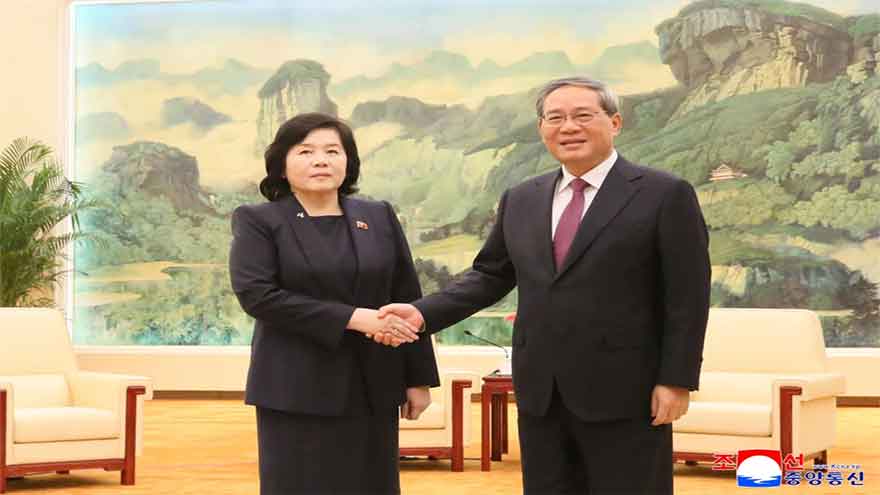
China and Japan have offered different versions of whether their foreign ministers spoke during last week’s ASEAN meetings in the Philippines, highlighting the continued strain in relations between the two neighboring countries.

Japanese Foreign Minister Toshimitsu Motegi said after the regional gathering that he had briefly spoken with Chinese Foreign Minister Wang Yi when the two crossed paths during the event. According to Motegi, the short conversation included discussion about bilateral relations, which Japan considers an important step in maintaining communication despite ongoing tensions.

However, China’s Foreign Ministry rejected that account. Speaking at a regular press briefing on Monday, spokesperson Lin Jian said Wang Yi had no meeting scheduled with the Japanese side during his visit to Manila and insisted that no informal conversation or exchange took place at the venue.

The conflicting statements reflect the growing diplomatic divide between Beijing and Tokyo, whose relationship has worsened significantly since last November. The decline followed comments by Japanese Prime Minister Sanae Takaichi regarding Taiwan, which China strongly condemned.

Japan has expressed interest in improving ties with China and continues to support dialogue at every level. Motegi said maintaining communication is essential because both countries play a major role in preserving peace and stability across the region. Although he described his interaction with Wang as a discussion on bilateral relations, Japanese media reported that the exchange was limited to greetings and brief pleasantries.

Prime Minister Takaichi said on Monday that contacts between the two governments remain active through various diplomatic channels, including the exchange Motegi referred to during the ASEAN meeting.

The current tensions stem from remarks Takaichi made shortly after becoming prime minister. During a parliamentary session, she was asked whether a Chinese military blockade or attack on Taiwan could trigger Japan’s collective self defense policy. She replied that such a situation could threaten Japan’s survival and therefore might meet the legal conditions for military involvement alongside an ally, most likely the United States.

China viewed those comments as crossing a major diplomatic red line. Beijing considers Taiwan part of its territory and strongly opposes any statement or action that it believes supports Taiwan’s independence or suggests foreign military involvement in a future conflict. Taiwan, meanwhile, governs itself independently despite China’s territorial claims.

Although Takaichi later said she would avoid discussing specific military scenarios in future parliamentary debates, she has refused to withdraw her original remarks. Her position has continued to frustrate Beijing and has made efforts to restore stable relations more difficult.

The dispute has affected more than diplomacy. Economic ties have also been impacted, with reports of fewer Chinese tourists visiting Japan and growing concern in both countries over each other’s expanding military capabilities. The disagreement over what happened during the ASEAN meeting has become another sign of the deep mistrust that continues to shape relations between Asia’s two largest economies.

Similar Posts

  • |

    Oil prices climb on fears of prolonged Middle East supply disruptions

    LONDON: Global oil prices moved higher on Friday and remained on course for weekly gains as fresh threats from the United States to maintain an indefinite naval blockade of Iran heightened concerns over the security of crude shipments from the Middle East. Brent crude futures gained $1.43, or 1.64%, to reach $88.50 a barrel by 0810 GMT. US West Texas Intermediate (WTI) crude also advanced, rising $1.56, or 1.92%, to $82.81 a barrel. The latest rally reflected growing market anxiety that the conflict in the region could persist for an extended period, potentially placing further pressure on one of the world’s most important oil supply routes. Bjarne Schieldrop, chief analyst at SEB Research, said the prospect of prolonged US pressure on Iran had increased uncertainty in the oil market. He noted that the latest developments offered little indication of a quick return to normal conditions in the region. US pressure raises supply concerns Oil markets reacted strongly after the United States warned on Thursday that its naval blockade of Iran could continue indefinitely while Washington considers additional economic measures against Tehran. US Treasury Secretary Scott Bessent said the administration was preparing further measures aimed at increasing economic pressure on Iran, signalling that Washington could take steps beyond those already announced. The comments added to concerns that tensions between the United States and Iran could remain elevated, making it more difficult for shipping and energy companies to operate normally in the region. Schieldrop said expectations for a rapid restoration of regular shipping through the Strait of Hormuz had weakened significantly as a result of the latest developments. The waterway is particularly important to global energy markets. Before the current conflict began in late February, roughly one-fifth of the world’s daily oil and liquefied natural gas supplies passed through the Strait of Hormuz. Any prolonged disruption could therefore have consequences far beyond the Middle East, potentially affecting crude availability, transportation costs and fuel prices in major consuming markets. Strait of Hormuz traffic under pressure Shipping activity through the strategic waterway declined below the monthly average toward the end of the week as tensions increased and both sides issued competing claims regarding control of the passage. The situation escalated further on Thursday when two vessels belonging to Abu Dhabi National Oil Company were attacked while travelling through the strait, according to the UAE’s state news agency WAM. The UAE government condemned the incident and attributed the attack to Iran, adding another layer of uncertainty for commercial shipping operators using the vital route. Market participants are closely monitoring developments in the strait because even a partial disruption could force vessels to take longer and more expensive alternative routes. Demand outlook limits oil gains Despite the immediate supply concerns, expectations of weaker global oil demand growth are acting as a counterweight to the price rally. Recent forecasts from the Organisation of the Petroleum Exporting Countries (OPEC) and the International Energy Agency (IEA) have pointed towards slower growth in oil consumption, suggesting that demand may not be strong enough to absorb a prolonged increase in prices without affecting economic activity. US inventory data also provided a bearish signal. American crude stockpiles recorded their biggest weekly increase in more than three and a half years, indicating that supplies in the world’s largest oil-consuming economy remain relatively comfortable. Norbert Rucker, head of economics and next-generation research at Julius Baer, said recent reports from the IEA and US Energy Information Administration showed that oil storage levels were holding up better than markets had initially feared. According to Rucker, stronger-than-expected inventories could eventually put downward pressure on crude prices if geopolitical risks ease. For now, however, the possibility of further escalation between Washington and Tehran is keeping traders focused on supply risks. The market is expected to remain highly sensitive to developments surrounding the Strait of Hormuz, particularly any signs of prolonged restrictions on tanker movements. Analysts said the direction of oil prices in the coming sessions would depend on whether geopolitical tensions intensify further or whether diplomatic efforts succeed in restoring more predictable shipping and energy flows from the region.

  • | |

    PCB Chairman Mohsin Naqvi announces Independence d…

      Pakistan Cricket Board (PCB) Chairman Mohsin Naqvi has announced a special Independence Day surprise for cricket fans across the country, inviting them to celebrate the national occasion by watching their favourite stars in action at the stadium. Mohsin Naqvi said that the action in the National Championship Cup is currently underway, with several prominent Pakistani cricketers taking part in the tournament. He highlighted that fans will have the opportunity to watch some of their favourite players perform live on the field. According to the PCB chairman, players including Shadab Khan, Sahibzada Farhan and Fakhar Zaman are among the stars featuring in the ongoing matches. He encouraged cricket enthusiasts to come to the stadium with their friends and families and enjoy the exciting cricket action together. In a special announcement for fans in Multan, Mohsin Naqvi said that entry to Multan Cricket Stadium would be free for spectators from 3pm. The initiative is aimed at giving cricket lovers an opportunity to enjoy live domestic cricket without having to pay an entry fee. The PCB chairman also urged families and groups of friends to take advantage of the opportunity and attend the matches. With several well-known players participating, the matches are expected to attract a large number of spectators and create a festive atmosphere at the stadium. Mohsin Naqvi further announced that fans would receive another special surprise at 10pm on the night of Independence Day. Although he did not reveal the details of the surprise, his announcement has generated excitement among cricket supporters who are looking forward to celebrating August 14 with a special event. The announcement comes as Pakistan celebrates its Independence Day, making the occasion particularly significant for cricket fans. Cricket remains one of the country’s most popular sports, and opportunities to watch leading players perform in front of a home crowd often attract considerable public interest. The National Championship Cup provides an important platform for established players as well as emerging cricketers to demonstrate their skills. The participation of experienced names such as Shadab Khan and Fakhar Zaman, alongside players such as Sahibzada Farhan, is expected to add further interest to the competition. The PCB has increasingly focused on providing fans with greater access to domestic cricket and creating an atmosphere that encourages spectators to attend matches. Free entry for the Multan Cricket Stadium matches is another step aimed at bringing supporters closer to the sport and increasing public engagement with domestic competitions. Fans in Multan and surrounding areas can therefore look forward to an exciting day of cricket, followed by the much-anticipated Independence Day surprise at night. With free stadium entry from 3pm and prominent Pakistani players scheduled to feature, cricket lovers have been given an opportunity to celebrate the national occasion through live sporting entertainment. Mohsin Naqvi’s announcement is likely to further boost interest in the National Championship Cup, while the mystery surrounding the 10pm surprise has added an extra element of anticipation for fans waiting to discover what the PCB has planned for Independence Day.

  • | |

    ECP backs Punjab polls from December 15

    The Election Commission of Pakistan has agreed in principle to hold long-delayed local government elections in Punjab between December 15, 2026, and January 15, 2027. The decision was reached during an ECP meeting chaired by Chief Election Commissioner Sikandar Sultan Raja on Thursday. The meeting was held to discuss the proposed schedule and preparations for local polls in the province. A Punjab government delegation attended the meeting. The delegation included Local Government Minister Zeeshan Rafiq, Mines and Minerals Minister Sardar Sher Ali Gorchani, Agriculture Minister Syed Muhammad Ashiq Hussain Shah and Education Minister Rana Sikandar Hayat. The Punjab chief secretary and senior local government officials were also present. The ECP was informed that the delimitation process for Punjab had been completed, clearing an important hurdle in preparations for the elections. Chief Election Commissioner Sikandar Sultan Raja stressed that elected local governments are a constitutional requirement under Article 140-A. He also pointed out that election authorities are legally required to conduct local government elections within the prescribed period after the expiry of elected local bodies. Punjab officials said the provincial government needed sufficient time to complete administrative preparations, arrange financial resources and deploy staff for the electoral process. The provincial government proposed the December 15 to January 15 window as the most suitable period for polling. Officials said school examinations would have concluded by then, allowing educational staff to be available for election duties. The government also cited weather conditions as a factor. Holding the elections during the proposed period could help avoid difficulties associated with heavy fog during other parts of the winter season. Punjab authorities further informed the ECP that they preferred conducting the elections in phases. Officials said phased polling would allow better security arrangements and make it easier for the administration to manage the large-scale electoral exercise. The ECP accepted the proposed timeframe in principle and directed the Punjab government to submit a detailed plan promptly if it wanted the elections to be conducted in multiple phases. The commission said the proposed arrangements could help move the province toward fulfilling its constitutional obligation of establishing elected local governments. The Punjab government has already allocated Rs12.52 billion for the local elections. It has also approved the recruitment of 900 Union Council secretaries to support the functioning of local bodies. Punjab has not held local government elections since 2015. The previous polls were conducted in several phases between October and December that year. The elected local councils began functioning in 2017 after mayors and chairpersons were selected through indirect elections. The local governments were dissolved in April 2019 by the then Punjab government before completing their full term. The Supreme Court subsequently ordered their restoration, and the councils eventually completed their tenure on December 31, 2021. Since then, local government elections have remained pending amid repeated changes to Punjab’s local government laws. Successive provincial administrations amended or replaced the relevant legislation, forcing the ECP to repeatedly revise its preparations and carry out fresh delimitation exercises.

  • | |

    Pakistan urges UN to enforce Gaza peace Plan

    UNITED NATIONS: Pakistan has called on the United Nations Security Council (UNSC) to ensure the immediate and complete implementation of the Gaza ceasefire and the UN-backed peace framework, warning that continued delays could jeopardise hopes for lasting peace and the creation of an independent Palestinian state. Speaking during a UN Security Council debate on the Middle East, Pakistan’s Permanent Representative to the UN, Ambassador Asim Iftikhar Ahmad, said the current situation presented a critical opportunity to advance peace but stressed that urgent action was needed to prevent further deterioration. He said the ceasefire and the internationally endorsed peace initiative offered a pathway to reduce humanitarian suffering and support Palestinian self-determination. However, he cautioned that failure to fully implement the agreement and Security Council Resolution 2803 would seriously undermine efforts to achieve a just and durable settlement. The Pakistani envoy voiced concern over developments in the occupied West Bank, accusing Israel of expanding settlements, establishing new outposts and allowing increased settler violence, which he said was changing the demographic and geographic landscape of the occupied territories. He also criticised the proposed “Crimson Thread” project, describing it as a network of military infrastructure that would isolate Palestinian communities, divide the Jordan Valley from the rest of the West Bank and weaken the prospects of a contiguous Palestinian state. Addressing the humanitarian crisis in Gaza, Ahmad said conditions remained extremely fragile despite the ceasefire. He noted that millions of Palestinians continued to face severe hardship, with widespread food insecurity, continued civilian casualties and large-scale displacement raising concerns over the full implementation of the peace plan. Pakistan urged the Security Council to take immediate action by ensuring the ceasefire agreement is fully enforced, demanding an end to Israeli settlement expansion, rejecting annexation and forced displacement, providing international protection for Palestinian civilians and ensuring the release of withheld Palestinian revenues to support essential public services. Reaffirming Islamabad’s longstanding position, Ahmad said the only sustainable solution remained the establishment of an independent, sovereign and viable Palestinian state based on the pre-1967 borders, with Al-Quds Al-Sharif (East Jerusalem) as its capital. The ambassador also expressed concern over wider instability across the Middle East, urging all parties to exercise restraint and pursue dialogue to prevent further escalation. He reaffirmed Pakistan’s support for the sovereignty and territorial integrity of regional states and backed diplomatic efforts aimed at restoring peace in Lebanon, Syria and Yemen. Highlighting concerns over attacks targeting Saudi Arabia and commercial shipping routes, Ahmad said such actions threatened regional stability and global trade, while reiterating Pakistan’s unwavering support for Saudi Arabia’s security and sovereignty. Concluding his address, the Pakistani envoy said lasting peace in the Middle East would remain impossible as long as occupation continued and the Palestinian people were denied their right to self-determination. He reaffirmed Pakistan’s commitment to supporting international efforts aimed at achieving a comprehensive and lasting peace based on UN resolutions and international law.

  • | |

    Drew Starkey recalls hilarious on-set adventure wh…

    Drew Starkey is looking back on one of the funniest moments from the set of Lucky, and it turns out the action-packed Apple TV+ series gave him plenty of unforgettable memories. The 32-year-old actor recently spoke with People while promoting the upcoming thriller, sharing his favorite behind-the-scenes experience from filming. Although Lucky features intense action sequences and emotional drama, Starkey revealed that one particular stunt left the cast and crew laughing long after the cameras stopped rolling. (people.com⁠) According to Starkey, his most memorable day involved filming scenes that required him to drive an all-terrain vehicle through rugged terrain. While the sequence looked exciting on screen, he admitted that things became much funnier behind the scenes than anyone had expected. The actor recalled that he had never driven that type of vehicle before production. As he tried to navigate the course, the experience quickly turned into a comedy of errors. Despite the unexpected challenges, everyone on set remained supportive, and the mishaps eventually became one of the production’s favorite memories. (people.com⁠) “It was one of the most fun days we had,” Starkey shared, explaining that filming action scenes often creates unpredictable moments that cannot be planned. He said those unexpected experiences helped build a strong bond among the cast and crew, making long filming days more enjoyable. (people.com⁠) Lucky, based on Marissa Stapley’s bestselling novel, stars Anya Taylor-Joy as a young woman forced to confront her past after becoming caught in a dangerous criminal conspiracy. Starkey plays Cary, a mysterious figure who becomes involved in the unfolding drama. The Apple TV+ series combines suspense, action and emotional storytelling, offering a different role from the ones fans have previously seen Starkey portray. (apple.com⁠) The actor explained that working on Lucky challenged him in new ways because many scenes demanded physical performances alongside emotional intensity. He praised the production team for creating an environment where actors felt comfortable experimenting, even when action sequences did not go exactly as planned. Those moments, he said, often became the most enjoyable part of filming. (people.com⁠) Starkey has enjoyed a busy year, balancing promotional duties for Lucky with the release of the final season of Netflix’s Outer Banks. In recent interviews, he has reflected on saying goodbye to the long-running series while embracing exciting new opportunities in film and television. His latest role demonstrates his growing versatility as an actor willing to explore different genres and characters. (people.com⁠) As anticipation builds for Lucky, Starkey’s lighthearted story offers fans a glimpse behind the scenes of a production filled with both thrilling action and genuine laughter. While audiences will see high-stakes drama on screen, the actor says some of the best memories came from the unexpected moments that had everyone smiling between takes.

  • | | |

    AJK reserved seats election: Polling set for Augus…

    The AJK reserved seats election will be held on August 24, with the Azad Jammu and Kashmir Election Commission announcing the schedule for polling in the Legislative Assembly. According to the notification, voting will take place at the AJK Assembly from 10am to 1pm. The reserved seats include five for women, one for Ulema-e-Deen or Mashaikh, one for Jammu and Kashmir state subjects living abroad, and one for technocrats and other professionals. Candidates will be able to submit their nomination papers on August 20 between 9am and 2pm. The returning officer will subsequently scrutinise the papers and publish the list of valid candidates. Appeals against decisions on nomination papers can be filed on August 21. The Chief Election Commissioner will hear the appeals on August 22, while candidates can withdraw their nominations before 2pm on August 23. The AJK Assembly has 53 members, including 45 directly elected members and eight members elected through reserved seats. However, polling on seven directly elected seats could not take place because of law and order concerns. As a result, the reserved-seat election will initially be conducted by the 38 directly elected members elected so far. The development comes as AJK’s three-phase electoral process continues amid political and security challenges.

Leave a Reply

Your email address will not be published. Required fields are marked *