ajk reserved seats
| | |

AJK reserved seats election: Polling set for Augus…

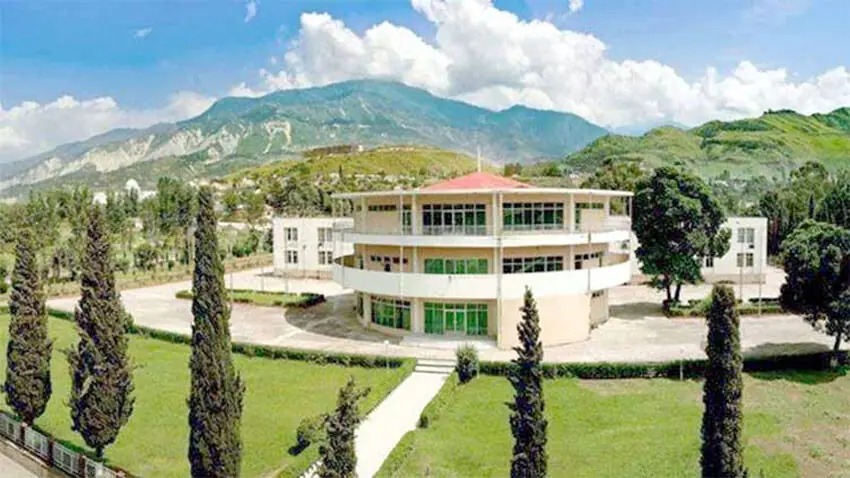
The AJK reserved seats election will be held on August 24, with the Azad Jammu and Kashmir Election Commission announcing the schedule for polling in the Legislative Assembly.

According to the notification, voting will take place at the AJK Assembly from 10am to 1pm. The reserved seats include five for women, one for Ulema-e-Deen or Mashaikh, one for Jammu and Kashmir state subjects living abroad, and one for technocrats and other professionals.

Candidates will be able to submit their nomination papers on August 20 between 9am and 2pm. The returning officer will subsequently scrutinise the papers and publish the list of valid candidates.

Appeals against decisions on nomination papers can be filed on August 21. The Chief Election Commissioner will hear the appeals on August 22, while candidates can withdraw their nominations before 2pm on August 23.

The AJK Assembly has 53 members, including 45 directly elected members and eight members elected through reserved seats.

However, polling on seven directly elected seats could not take place because of law and order concerns. As a result, the reserved-seat election will initially be conducted by the 38 directly elected members elected so far.

The development comes as AJK’s three-phase electoral process continues amid political and security challenges.

Similar Posts

  • |

    Sri Lankan court sentences two former security chiefs to death over Easter bombings

    A special court in Sri Lanka has sentenced two former senior security officials to death after finding them guilty of failing to prevent the devastating Easter Sunday bombings that killed 279 people in 2019. The ruling marks one of the country’s most significant legal decisions related to the attacks, which also claimed the lives of 45 foreign nationals and injured more than 500 others. The three judge bench ruled by majority that former police chief Pujith Jayasundara and former defence ministry secretary Hemasiri Fernando neglected their responsibilities despite receiving advance warnings about the possibility of extremist attacks. The court concluded that their failure to act contributed directly to one of the deadliest terrorist incidents in Sri Lanka’s history. Jayasundara, 66, and Fernando, 76, were taken into judicial custody following the verdict. Although both have been sentenced to death, they have the right to challenge the ruling before Sri Lanka’s Supreme Court. They will remain in custody until they are granted bail during the appeals process. Despite the sentence, executions are unlikely to take place. Sri Lanka has not carried out a death sentence since 1976 and has maintained an unofficial moratorium on capital punishment for decades. Government figures presented to parliament earlier this year showed that around 800 prisoners are currently on death row, with most death sentences later reduced to life imprisonment. Friday’s ruling overturned an earlier decision that had cleared both men of criminal responsibility. In 2022, a lower court acquitted the former officials, but prosecutors appealed the verdict, leading to a fresh review of the case before the special fast track court. During the trial, prosecutors presented evidence showing that Indian intelligence agencies had warned Sri Lankan authorities on April 4, 2019 about the possibility of suicide attacks by extremist groups. The warning came more than two weeks before the coordinated bombings on April 21, yet the court found that adequate preventive measures were never taken. The Easter Sunday attacks targeted three churches during religious services and three luxury hotels across the country. The coordinated explosions shocked Sri Lanka and drew international condemnation, becoming one of the country’s worst terrorist attacks since the end of its civil war. Both Jayasundara and Fernando were arrested later in 2019 and spent four months in custody before being released on bail. In a separate civil case, they were ordered to pay 125 million Sri Lankan rupees in compensation to victims and survivors for failing to fulfil their duties. Prosecutors argued that the negligence of the two senior officials amounted to an extremely serious offence because they ignored credible intelligence that could have prevented the attacks. They initially sought murder convictions, claiming their failure to respond to the warnings resulted in hundreds of avoidable deaths. The court ultimately convicted both men of negligence leading to the deaths of 279 people. During earlier parliamentary investigations, Jayasundara and Fernando testified that then President Maithripala Sirisena had not followed established national security procedures before the attacks. They claimed weaknesses in communication and decision making at the highest levels of government contributed to the failure to respond effectively to the intelligence warnings. The verdict is expected to renew debate over accountability for the Easter Sunday bombings and the responsibilities of senior officials in protecting national security. Families of the victims have repeatedly demanded justice and greater transparency over the events leading up to the attacks, while the case remains one of the most closely watched legal proceedings in Sri Lanka’s recent history.

  • | | |

    Gold prices rise in Pakistan

      KARACHI: Gold prices climbed in Pakistan on Monday, even though international gold rates experienced a slight decline. The increase in local prices was mainly attributed to continued uncertainty surrounding the Middle East conflict, concerns over rising inflation, and investor caution ahead of key US economic data expected later this week. According to the All-Pakistan Gems and Jewellers Sarafa Association, the price of 24-karat gold increased by Rs1,700 per tola, taking it to Rs428,436. Similarly, the price of 10 grams of goldrose by Rs1,457, reaching Rs367,314. The latest increase came after a significant decline on Saturday, when gold prices had fallen by Rs3,700 per tola to settle at Rs426,736. In contrast, the international gold market remained under slight pressure. Spot gold slipped by 0.1% to $4,037.01 per ounce, while US gold futures for August delivery declined by 0.3% to $4,035.80 per ounce during trading. Despite the minor drop, analysts believe global investors remain cautious because of ongoing geopolitical tensions and expectations of fresh economic developments in the United States. Silver prices in Pakistan also moved higher. The price of silver gained Rs54 per tola, taking it to Rs6,291, reflecting continued demand for precious metals in the local market. Adnan Agar, Director at Interactive Commodities, said that international gold prices had eased slightly after fluctuating throughout the trading session. According to him, gold touched a high of $4,080 per ounce before falling to a low of$4,019, eventually stabilising near $4,038. He noted that gold remains under pressure and the market is closely monitoring upcoming US economic indicators, particularly employment data, which could influence the Federal Reserve’s future monetary policy decisions. Agar added that gold has remained within a broad trading range of approximately $3,950 to $4,250 per ounce since June. However, he expects this range to break within the next one or two weeks, potentially leading to a stronger upward or downward price movement depending on market conditions. Market participants are now awaiting a series of important US labour market reports, as these will provide further insight into the Federal Reserve’s interest rate outlook. Higher interest rates generally reduce the appeal of non-yielding assets like gold, while expectations of rate cuts tend to support bullion prices. Another factor attracting attention in the global market is reports that South Korea’s central bank intends to purchase gold from domestic producers, a move that could provide additional support to demand in the coming months. Meanwhile, oil markets have also remained highly volatile. Brent crude futures surged by more than 20% last month, driven largely by geopolitical tensions in the Middle East, raising concerns that higher energy prices could fuel inflation worldwide. Edward Meir, an analyst at Marex, said gold has traded within a narrow range of $4,000 to $4,200 per ounce for over a month. He explained that the possibility of inflation picking up again, particularly after July’s economic data, is helping support gold prices despite the recent weakness. Separately, the Pakistani rupee posted another modest gain against the US dollar. The local currency appreciated by 0.01%, closing at Rs277.77 per dollar, compared with Rs277.80 at the end of the previous trading session, reflecting continued stability in the foreign exchange market.

  • | |

    Motorcycle fire during one-wheeling leaves 8 injur…

    LAHORE: Eight people sustained burn injuries after a motorcycle caught fire during a one-wheeling stunt in Lahore’s Defence area on Sunday. According to police, the motorcycle suddenly caught fire while a young man was performing one-wheeling, causing flames to spread and injure eight people in the vicinity. SP Cantt Investigation said the injured were immediately shifted to a nearby hospital for medical treatment. Police have also registered a case against the motorcyclist following a complaint lodged by the police. Authorities are using CCTV footage and Safe City cameras to trace and arrest the suspect, who remains at large.

  • |

    Trump approves landmark US-Saudi nuclear pact

    US President Donald Trump has approved a landmark civilian nuclear agreement with Saudi Arabia, marking a major step in expanding strategic cooperation between the two countries. The proposed deal is expected to remain in effect for 30 years and is valued at tens of billions of dollars. The agreement is designed to support the development of Saudi Arabia’s civilian nuclear energy program while giving American companies a leading role in building the kingdom’s nuclear infrastructure. It is expected to create significant investment opportunities for US firms and strengthen long-term energy cooperation between Washington and Riyadh. Under the proposed framework, American companies could participate in constructing nuclear facilities across Saudi Arabia. The agreement also allows for the possibility of building a uranium enrichment plant in the kingdom if future joint studies by both governments determine that such a project is necessary. US officials say the deal will enable Washington to remain closely involved in the development of Saudi Arabia’s nuclear program. They believe this cooperation will help ensure that the kingdom’s nuclear activities remain focused on peaceful civilian purposes. The Trump administration is expected to submit the agreement to the US Congress in the coming days. The pact is being introduced under Section 123 of the US Atomic Energy Act of 1954, which provides the legal framework for civilian nuclear cooperation between the United States and foreign countries. Once submitted, Congress will have about 90 days to review the agreement. If lawmakers do not reject it during the review period, the agreement will automatically enter into force. Blocking the deal would require Congress to pass a joint resolution with enough votes to override a possible presidential veto. According to officials familiar with the proposal, the agreement does not include the “Gold Standard,” a condition that permanently bars partner countries from enriching uranium or reprocessing spent nuclear fuel. These activities can potentially be used in the production of nuclear weapons. The proposed agreement also reportedly does not include the International Atomic Energy Agency’s Additional Protocol. This protocol allows international inspectors to conduct broader inspections and monitor undeclared nuclear facilities. Its absence has raised concerns among some non-proliferation experts and lawmakers. US officials, however, insist that the agreement contains strong safeguards required under American law. They stress that the deal does not obligate the United States to transfer sensitive uranium enrichment technology or nuclear fuel cycle capabilities to Saudi Arabia. Instead, it establishes a legal pathway for future civilian cooperation while requiring separate approvals for any advanced technology transfers. The agreement follows earlier discussions between senior US and Saudi officials, who signed a preliminary framework last year to expand cooperation in the peaceful use of nuclear energy. The proposal has generated debate in Washington. Several Democratic lawmakers, along with some Republicans, have argued that stronger safeguards should be included before the agreement is approved. They believe stricter restrictions are necessary to reduce the risk of nuclear weapons proliferation in the Middle East. Saudi Arabia has repeatedly stated that its nuclear program is intended to meet growing energy demands and diversify the country’s energy resources. However, Crown Prince Mohammed bin Salman has previously said that if Iran were to acquire a nuclear weapon, Saudi Arabia would also seek similar capabilities. His remarks have fueled international concerns about a possible regional nuclear arms race.

  • |

    Current Petroleum prices to remain unchanged until…

    The federal government has announced that current petroleum product prices will remain unchanged until July 27. According to sources from the Petroleum Division, petrol will continue to be sold at Rs335.18 per litre, while high-speed diesel will remain at Rs383.46 per litre. The price of kerosene oil has also been maintained at Rs301.14 per litre. This decision comes after the government introduced a daily fuel price revision mechanism on July 18 to reflect fluctuations in the international market. Since then, prices have seen multiple adjustments. On July 18, petrol became more expensive by Rs5.44 per litre and diesel by Rs31.05 per litre. Due to the closure of international markets, prices were revised on July 21, with petrol decreasing by Rs0.35 per litre while diesel increased by Rs5.71 per litre. Subsequent revisions saw petrol and diesel prices rise by Rs4.93 and Rs7.15 per litre on July 22, followed by further increases of Rs6.39 and Rs7.83 per litre on July 23. On July 24, petrol was hiked by Rs4.40 and diesel by Rs3.62 per litre. The latest decision to freeze prices until July 27 provides temporary relief to consumers after a series of increases driven by volatility in global oil markets. The daily price revision mechanism, introduced amid rising geopolitical tensions in the Middle East, aims to ensure timely adjustments to international market trends. However, the frequent changes have drawn criticism from dealers and consumers alike. The government has assured that it is monitoring the situation closely and will continue to make adjustments as needed to balance the impact on the economy and the public. The current freeze offers a brief respite before the next scheduled revision, with consumers hoping for stability in the coming days.

  • |

    Lahore crime rate declines, DIG Faisal Kamran says

    LAHORE: DIG Operations Lahore Faisal Kamran visited the Lahore Press Club and attended the “Meet the Press” programme as the chief guest. President Lahore Press Club Arshad Ansari, Senior Vice President Salman Qureshi, General Secretary Afzal Talib, Joint Secretary Imran Sheikh, Finance Secretary Salik Nawaz, Governing Body members Syed Sajjad Kazmi, Sarmad Farrukh Khawaja, Asad Mahmood, Syed Badr Saeed and Kamran Khan, along with office-bearers of the Crime Reporters Association and senior journalists, attended the event. Welcoming the distinguished guest, Lahore Press Club President Arshad Ansari said that the police and journalists had a close working relationship and both professions were jointly striving to eliminate crime from society. He appreciated the tireless efforts and policies of DIG Operations Faisal Kamran, saying that they had contributed to a decline in the crime rate in Lahore. Speaking to the media, DIG Operations Faisal Kamran said that in June 2023, as many as 9,149 incidents used to be reported in a single month, whereas the number had now come down to around 900 calls. He said tackling crime in any major city was a major challenge, adding that metropolitan cities such as New York also faced numerous challenges in this regard. He said that the Safe City, CCD and Lahore Police had worked jointly to control crime. Safe City’s assistance was sought in tracing reported incidents, he added. He said that Lahore had witnessed a decline in its crime index compared with 380 cities around the world. Faisal Kamran said that in 2026, major events including Basant, Ramazan, Sehri, Eid shopping and other public events, as well as Eid-ul-Azha and Muharram-ul-Haram, were held peacefully. Lahore Police continued to perform its duties during all these events, he added. The DIG Operations said that, besides these measures, the accountability system within the police had also been strengthened. “Wherever there is corruption, I will take strict action,” he said. He said that in 2023, Rs3.6 million had been provided for the welfare of police personnel, whereas Rs60 million had so far been provided for their welfare. He further stated that during the past two and a half years, he had personally heard the grievances of 55,050 people at open courts, adding that 70 to 80 per cent of the complainants had expressed satisfaction with the resolution of their complaints. The DIG Operations said that an MoU had also been signed between Lahore Police and the legal fraternity under which free legal assistance was being provided to deserving and underprivileged people. He added that Lahore Police was also taking strict action against usury and illegal money-lending. At the conclusion of the programme, Lahore Press Club President Arshad Ansari and representatives of the Crime Reporters Association presented commemorative shields and bouquets to DIG Operations Lahore Faisal Kamran.  

Leave a Reply

Your email address will not be published. Required fields are marked *