pti social media
| |

PTI social media faces internal differences, group…

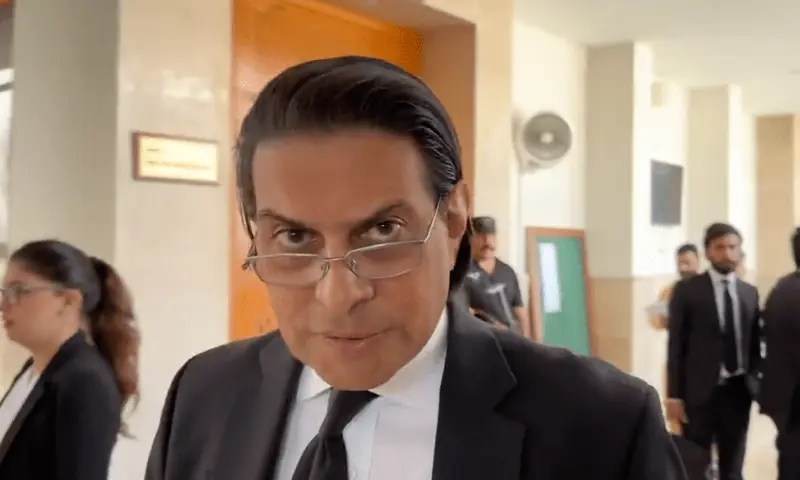
ISLAMABAD: Pakistan Tehreek-e-Insaf (PTI) Secretary General Salman Akram Raja has acknowledged that the party is facing internal differences and grouping, saying that the lack of contact with party founder Imran Khan for the past nine months has made decision-making much more difficult.

In a post on X, Salman Akram Raja said that, for the first time in the party’s history, there has been no contact with Imran Khan for nine months. He said that issues and disputes that were previously resolved within minutes through the party founder’s guidance now become the subject of long discussions.

His remarks suggest that the absence of the jailed PTI founder has created a leadership gap, allowing disagreements within the party to become more visible.

Raja also admitted that PTI had faced what he described as a “planned campaign” to weaken the party during this period. According to him, efforts were made from within the party to create problems, but senior leaders remained united and resisted those attempts.

“I am grateful to Imran Khan’s senior colleagues who stood firm against these failed attempts,” he said.

The PTI secretary general also claimed that another challenge comes from social media, where he said three different groups are active against the party’s interests.

According to Raja, the first group consists of people who are formally linked to the media teams of PTI’s political opponents. The second group, he said, includes people within PTI who are seeking party positions and view certain leaders as obstacles to their ambitions.

His statement is being seen as a rare public acknowledgment that internal rivalries and competition for positions exist within the party.

Raja said the third group includes sincere PTI supporters who genuinely want Imran Khan’s release and the party’s success. He described them as passionate young people and older supporters who may not be fully aware of all developments.

He argued that while emotional slogans are easy to raise, developing and following an effective political strategy requires patience, understanding and careful planning.

Referring to calls for immediate action, Raja said that a political revolution cannot be achieved simply by gathering “one truck and 20,000 to 30,000 people.” He stressed that successful movements require well-thought-out strategies rather than emotional decisions.

He added that every PTI worker wants Imran Khan to be released as soon as possible, but said the party must adopt practical and successful methods instead of relying on slogans alone.

Raja’s comments come at a time when PTI has faced repeated speculation about internal divisions, disagreements over strategy and criticism exchanged on social media by supporters of different leaders.

While he blamed external forces for trying to weaken the party, his remarks also indicate that internal competition, differences over leadership and disagreements about political strategy have become significant challenges for PTI during the prolonged absence of direct communication with its founder. His statement is likely to fuel further debate about unity within the party as it continues to navigate political and organisational challenges.

Similar Posts

  • | |

    Pakistan removed from Lloyd’s war risk insur…

    Pakistan’s Deputy Prime Minister and Foreign Minister, Ishaq Dar, has welcomed the decision by the Lloyd’s Market Association’s Joint War Committee to remove Pakistan from its list of regions classified as high-risk for war insurance. The announcement marks a significant development for the country’s maritime and trade sectors and is being viewed as a positive sign of increasing international confidence in Pakistan’s security and economic environment. Sharing his reaction on the social media platform X, Ishaq Dar described the decision as an important milestone that reflects the international community’s growing trust in Pakistan. He said the move demonstrates recognition of the country’s improving security situation and its continued efforts to strengthen economic stability and regional connectivity. The removal of Pakistan from the war risk insurance list is expected to provide several economic benefits. Ships entering Pakistani ports will no longer face the additional insurance premiums that are typically imposed on vessels operating in areas considered vulnerable to conflict or instability. As a result, shipping companies are likely to experience lower operational costs, making maritime trade with Pakistan more cost-effective and attractive. According to Ishaq Dar, reduced insurance expenses are expected to lower overall shipping costs, which will benefit both importers and exporters. Businesses engaged in international trade may see reduced transportation expenses, helping Pakistani products become more competitive in global markets while also decreasing the cost of imported goods. These developments could contribute to increased trade activity and support the country’s broader economic growth. The Deputy Prime Minister emphasized that the decision is not only an economic achievement but also a reflection of Pakistan’s improving international image. He noted that the country’s efforts to maintain stability, enhance security, and build stronger relations with international partners have helped restore confidence among global institutions and businesses. Ishaq Dar also expressed appreciation to the Lloyd’s Market Association for its constructive engagement throughout the review process. He acknowledged the organization’s professional approach and thanked its Joint War Committee for carefully assessing the situation before making its decision. He said the outcome reflects a balanced evaluation based on changing ground realities and demonstrates confidence in Pakistan’s progress. Industry experts believe that the removal of Pakistan from the war risk list could encourage greater commercial shipping activity at the country’s ports, including Karachi, Port Qasim, and Gwadar. Lower insurance costs may also attract more international shipping lines and investors, strengthening Pakistan’s position as an important regional trade hub. The development is expected to complement the government’s ongoing efforts to improve trade, attract foreign investment, and boost economic recovery. Reduced logistics costs could benefit multiple sectors of the economy, including manufacturing, agriculture, and exports, while creating a more favorable environment for business and investment. Overall, the decision by the Lloyd’s Market Association’s Joint War Committee is being regarded as a major positive step for Pakistan. It not only reduces financial burdens on international shipping but also sends a strong message that the country’s security and business environment are gaining international recognition. Government officials hope this milestone will further enhance investor confidence, promote trade, and contribute to long-term economic development.

  • | | | |

    Trump says US-Iran talks to resume Monday

    US President Donald Trump has announced that fresh negotiations between the United States and Iran are expected to begin on Monday, saying he decided to suspend planned military action after being encouraged by signs of progress toward a possible agreement. Speaking to reporters aboard Air Force One, Trump said discussions with Tehran would resume through diplomatic channels, expressing hope that negotiations could help prevent further escalation in the region. He did not disclose the venue of the talks or identify the officials expected to participate. Earlier, Trump stated that he had delayed what he described as a large-scale military operation after receiving requests from Iran and several key US allies in the Middle East to give diplomacy another opportunity. According to him, regional partners believed a negotiated settlement was within reach and urged Washington to avoid immediate military action. Trump said Saudi Arabia, the United Arab Emirates and Qatar had all encouraged restraint, arguing that continued dialogue offered the best chance for reducing tensions. He added that discussions were expected to cover issues related to the Strait of Hormuz as well as Iran’s nuclear programme. Despite Trump’s comments, Iranian authorities have not officially confirmed the planned negotiations. Iran’s semi-official Mehr News Agency rejected claims that Tehran had requested the United States to postpone military action, describing the assertion as inaccurate. Iranian Foreign Minister Abbas Araghchi, however, said negotiations involving Oman over the future of the Strait of Hormuz were progressing toward a final stage, indicating that diplomatic contacts remain active. Trump also declined to set a deadline for reaching an agreement, saying his administration was prepared for different outcomes but preferred a peaceful resolution over military confrontation. The announcement had an immediate impact on global energy markets. Oil prices fell sharply in early Asian trading as investors reacted to the possibility of reduced tensions in the Gulf region. Brent crude and US benchmark oil both recorded notable declines following Trump’s remarks. The Strait of Hormuz remains one of the world’s most strategically important shipping routes, with roughly one-fifth of global crude oil and liquefied natural gas supplies passing through the narrow waterway. Any disruption in the area has the potential to significantly affect international energy markets.

  • | | |

    Govt increases petrol by Rs1.63, diesel by Rs1.55

    The government on Tuesday increased the price of petrol by Rs1.63 and high-speed diesel (HSD) by Rs1.55 per litre, passing on the impact of fluctuating global oil prices following renewed hostilities in the Persian Gulf. Following the changes, the price of petrol stands at Rs335.81 per litre, while HSD is now priced at Rs388.38 per litre. The government is charging a total of Rs110 per litre in taxes and duties on petrol and Rs96 on diesel. The Petroleum Division’s notification said the new prices would be applicable for July 29 (Wednesday). The diesel price has come down from a peak of Rs520.35 recorded on April 3, after beginning its upward trajectory from Rs281 per litre when the US-Iran war broke out on February 28. Similarly, petrol had peaked at Rs458.41 on April 3 after rising from Rs266 in the first week of March. Earlier, Petroleum Minister Ali Pervaiz Malik announced that fuel prices would now be fixed on a daily basis due to fluctuations in international market prices. The government had been announcing weekly revisions since early March, alongside conservation measures amid possible oil supply disruptions due to the ongoing Middle East conflict. In April, the federal government also announced targeted relief measures to provide subsidised fuel. The petroleum minister stated that the cabinet and prime minister had decided to give the Oil and Gas Regulatory Authority (OGRA) the responsibility of deciding fuel prices daily based on international market trends. The daily pricing decision was rejected by the All Pakistan Dealers Association, which said it would consider a protest plan this week. Petrol is mainly used in private transport, small vehicles, rickshaws and two-wheelers, and changes in its price affect the middle and lower-middle classes. Similarly, diesel price changes impact the public at large, as it is primarily used in the heavy transport sector, power plants and large generators. Petrol and HSD are the major revenue earners, with monthly sales of about 700,000 to 800,000 tonnes, compared to just 10,000 tonnes of monthly demand for kerosene.

  • HEC bans two universities after baseball final controversy

    Islamabad: A women’s inter university baseball championship has become a major controversy after the Higher Education Commission (HEC) banned two Lahore based universities, their players and officials for one year over alleged violence and misconduct. However, affected students and some stakeholders are demanding a separate investigation, claiming that the complete facts of the incident have not been made public. According to an HEC order issued on July 21, 2026, the University of the Punjab, Lahore and Lahore College for Women University (LCWU) have been suspended from participating in HEC/Pakistan University Sports Board (PUSB) women’s baseball activities for one year. According to documents, HEC stated that the action was taken after “serious incidents of violence, physical altercation, indiscipline and misconduct” during and after the final match and closing ceremony of the HEC Intervarsity Women’s Baseball Championship 2025–26 held at the Pakistan Sports Board (PSB), Islamabad. The order also imposed a one year ban on team managers, coaches and accompanying officials, while players from both teams were barred from participating in HEC/PUSB sports events during the suspension period. However, the decision has triggered criticism from some students and supporters, who are demanding an independent inquiry before any punishment is considered final. They questioned whether all sides were properly heard and whether complete evidence was reviewed before imposing the ban. Students and representatives claimed that several issues surrounding the event require investigation, including security arrangements, availability of CCTV footage, alleged loss of personal belongings, and arrangements for students’ transport after the closing ceremony. They alleged that students faced difficulties after the event ended, claiming that transport arrangements were delayed and some students had to wait late at night for vehicles. They also questioned why CCTV footage and other evidence were not made publicly available to clarify what exactly happened. The students demanded that an independent investigation committee should be formed, all available evidence should be examined, and a detailed report should be presented publicly so that responsibility can be fixed fairly. The controversy also raised questions about event management. Some stakeholders questioned the selection of the host arrangements and demanded clarity about the responsibilities assigned during the championship. Meanwhile, HEC has maintained that disciplinary action was taken under Article 2.11.12 of the Pakistan University Sports Board Constitution and Rules, which allows action against teams, players or officials involved in violence during or after inter university championships. The HEC order said the decision was approved by the competent authority and would be circulated to all public and private sector higher education institutions for implementation. The matter has now become a test for sports governance in universities, with one side demanding strict action against indiscipline while the other demanding transparency and a fair investigation before deciding the future of students involved. HEC’s version was also sought regarding the matter. The HEC media team was contacted for its official response and comments on the allegations raised by students and stakeholders. However, at the time of filing this report, no response, clarification, or additional version had been received from HEC. The story will be updated if HEC provides further information or its official position on the issue.

  • |

    Zainab Raja makes serious allegations about Tamasha

    Tamasha has become one of Pakistan’s most popular reality television shows since its launch on ARY Digital in 2022. Based on the format of Big Brother, the show brings celebrities and public figures together under one roof, where they compete in a variety of tasks while dealing with interpersonal conflicts, alliances and eliminations. After four successful seasons between 2022 and 2025, the fifth season is currently attracting considerable attention from viewers. The ongoing season has introduced several contestants who have quickly gained popularity among fans. Babrik Shah, Zee Khan, Laila, Samia Hijab and Esra are among the contestants who have emerged as prominent players this year. Tamasha Season 4, which aired last year, also received widespread attention. The season featured contestants including Saif Ali Khan, Muslim, Ommy, Zainab Raja, Kanwal Farooq and Yaseen. Zainab Raja, in particular, became known for her strong presence and performance during the competition. Following her appearance on the show, Zainab has remained active on social media, regularly sharing videos, opinions and updates with her followers. In a series of recent Instagram stories, she made several serious allegations concerning the reality show and claimed that certain aspects of the competition were not as they appeared on television. Zainab alleged that Tamasha was scripted and claimed that winners could be decided before the conclusion of a season. She also accused the show of providing preferential treatment to certain contestants. Among her most notable claims, Zainab alleged that one of the popular male contestants had been married and had two children while presenting himself as unmarried during his participation in the show. She claimed that contestants inside the house were aware of his marital status and that he eventually became one of the Top 5 contestants. However, she did not publicly name the contestant in her statements. Zainab also claimed that her comments about the show being scripted were edited from the broadcast. According to her, she directly told host Adnan Siddiqui, “Scripted hai aapka show,” but alleged that viewers were shown only her facial expressions while her actual response was removed from the final episode. She further claimed that contestants were not permitted to reveal certain details about what happened behind the scenes. The former contestant also raised questions about promotional activities surrounding the show. She claimed that public relations campaigns were carried out for contestants who eventually won or performed strongly in different seasons. Zainab suggested that software operators could be consulted to determine which contestants received promotional support and argued that several participants had benefited from such campaigns. Another issue she highlighted concerned the treatment of male contestants inside the house. Zainab alleged that male participants were permitted to leave the house to offer Friday prayers and were also given opportunities to communicate with their families through phone calls. She described what she considered differences in privileges as unfair treatment. Zainab’s allegations have generated discussion among fans of the reality show. However, the claims remain allegations made by the former contestant, and there has been no independent confirmation of the specific accusations mentioned in her social media posts. Tamasha continues to attract strong public interest, with viewers closely following the contestants, their relationships and the developments taking place inside the house.

  • |

    Rs1.12 trillion tobacco case sparks Senate probe

    Islamabad: A Senate subcommittee investigating cigarette smuggling and tax exemption misuse has raised serious questions regarding the possible recovery of Rs 1.12 trillion from the tobacco industry, alleged leakage of Customs data to private media, corruption complaints against officials and incomplete records provided by government departments. The committee ordered strict action, sought bank and asset details, and demanded a full investigation into the possible misuse of tax exemptions and consumption certificates. The committee strongly questioned how confidential Customs data reached private media organisations. Members observed that such information could not have been leaked without the involvement of Customs officials. The committee also questioned the conduct of media organisations regarding professional ethics. Federal Board of Revenue officials told the committee that an investigation into the data leak was already underway. The convener directed the FBR to take strict action against any official involved in leaking Customs data to the media and to submit a complete report. A major part of the meeting focused on the reported recovery of Rs 1.12 trillion linked to the tobacco industry’s consumption certificates. The committee questioned why complete details of consumption certificates issued for goods imported into tax exempt areas had not been provided. Officials informed the committee that the Peshawar High Court had ordered an audit before consumption certificates could be issued and had also stopped Pakistan Customs from cashing security cheques. The convener urged the FBR to challenge the court order before the Federal Constitutional Court and report back to the committee. The committee also reviewed the alleged misuse of tax exemptions by industries operating in tax exempt areas. Senator Talha Mahmood alleged that some industrialists were operating two or more factories, including one in a tax exempt area and another in a settled area. He further alleged that some Customs officials helped such businesses take advantage of the system. The Federal Investigation Agency told the committee that a team had been formed to investigate the matter. Senator Talha Mahmood said the FIA could help improve the process of issuing consumption certificates if the issue was handled seriously. He also recalled that Pakistan Customs had previously installed tracking chips on containers to check their movement and confirm whether goods reached their declared destinations. He called for stronger tracking and monitoring systems to stop smuggling and misuse of tax exemptions. The committee directed authorities to send letters to all factories operating in tax exempt areas, demanding complete details of imported materials, materials used, brand names and taxes paid during the last two years. Members were informed that Pakistan Customs had issued consumption certificates worth around Rs 378 billion. The committee also sought bank and account details of the companies in whose names those certificates were issued. The Chair observed that anyone refusing to provide required records or information could face legal action. The committee also examined serious allegations of corruption and theft involving officials. Three investigating officers identified as Shahzaib Ali, Fakhar Gondal and Christopher were presented before the committee regarding corruption allegations. The committee was informed that 22 people were allegedly involved in theft incidents and that 11 had been arrested. The committee directed authorities to provide details of assets allegedly beyond the known income of the accused officials. It also sought forensic examination reports of their mobile phones. Senator Talha Mahmood recommended that the Senate Standing Committee on Interior also take up the corruption case. The committee further examined tobacco industry consumption data and asked departments to provide records from earlier years in addition to the data already submitted. Officials briefed members about major raw materials imported by tobacco companies. The committee was told that around 20,002 metric tons of acetate tow had been imported. Around 97 percent of this quantity was reportedly used by two major companies, while the remaining 3 percent was linked to other companies. Officials also reported the import of around 15,639 metric tons of tobacco paper. Of this amount, around 10,840 metric tons was imported by Pakistan Tobacco Company, while Philip Morris imported around 3,118 metric tons. Other companies imported the remaining quantity. The committee was also told that around 533 metric tons of filter rods had been imported. Two major companies accounted for around 96 percent of this quantity, while other companies accounted for the remaining 4 percent. According to the briefing, Pakistan Tobacco Company and Philip Morris together accounted for around 94 percent of imported material consumed by the tobacco industry. Local companies accounted for the remaining 6 percent. The Chair expressed concern that government departments had still failed to provide complete and combined information to the committee. Officials informed the committee that Pakistan Tobacco Company and Philip Morris did not fall under the jurisdiction of RTO Peshawar. Pakistan Tobacco Company was under LTU Islamabad, while Philip Morris was under LTU Karachi. The committee directed the concerned tax offices to provide full details of taxes collected and imported material linked to both companies. The committee was also informed that four illegal cigarette manufacturing companies operating in Khyber Pakhtunkhwa had recently been sealed. Authorities were directed to provide full details of all companies operating under RTO Peshawar. The convener also asked officials to provide the formula used to calculate taxes on cigarettes. Senator Bilal raised concerns that Balochistan was still not receiving enough industrial development. He also complained that legal goods were sometimes being treated as smuggled items even when borders in Balochistan were sealed. Another controversy emerged over conflicting figures related to people arrested in theft cases. One briefing told the committee that 22 people were involved and 11 had been arrested. However, the Inspector General of the National Highways and Motorway Police also reported that 11 people had been apprehended. The committee sought clarification over the figures and demanded one accurate and complete position. Members expressed serious concern over what they described as a misleading statement made before the committee. The committee directed that a letter be sent to the Ministry of Communications and ordered that the matter also be referred to the Privileges Committee. The FBR representative told members that the department

Leave a Reply

Your email address will not be published. Required fields are marked *