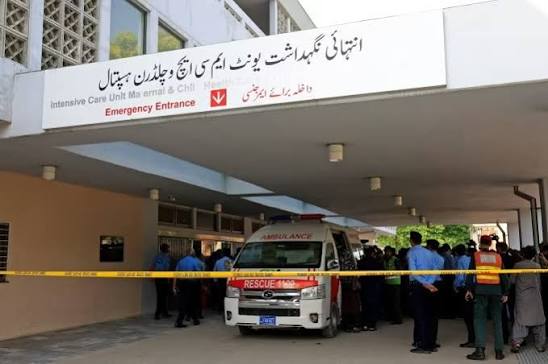
ghazi university chinese
| |

Ghazi University, Chinese academy sign MoU for agr…

By MIR HUNBAL BIRMANI

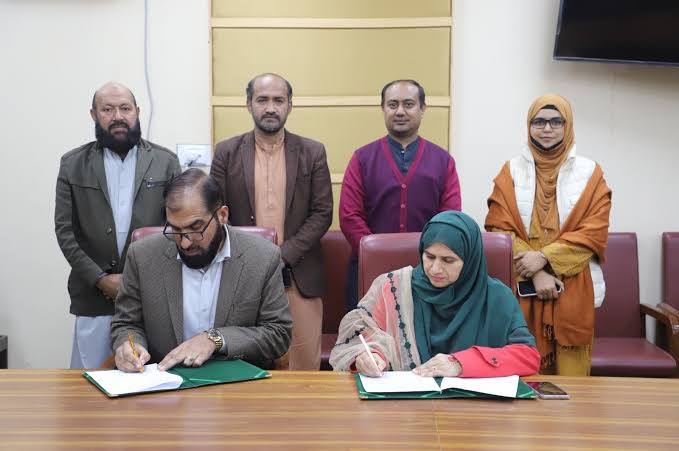
DG Khan: Ghazi University has formally signed a Memorandum of Understanding (MoU) with the Chinese Academy of Agricultural Sciences (CAAS), China, establishing a strategic partnership aimed at advancing agricultural research and academic excellence.The agreement was officially signed by Dr. Muhammad Asif (Registrar, Ghazi University) and Dr. Zahoor Hussain on behalf of Ghazi University, alongside Prof. Dr. Xiaohui Zhang and Prof. Dr. Haiping Wang representing CAAS

According to details , Department of Horticulture at Ghazi University, Dera Ghazi Khan, successfully organized a comprehensive one-day international workshop attended by scientists from china titled “Sustainable Vegetables Production Under Changing Climate” to address the growing challenges posed by global climate fluctuations on agricultural security.

Registrar of Ghazi University, Dr. Muhammad Asif, who underscored the immense value of the event in enhancing the technical capacity and research aptitude of the university’s faculty members and senior students in attendance.

The workshop’s core highlight featured keynote addresses delivered by a delegation of distinguished international agricultural scientists from the Chinese Academy of Agricultural Sciences (CAAS) in Beijing, China. The visiting panel included Prof. Dr. Xiaohui Zhang, Prof. Dr. Haiping Wang—Director, Chief Scientist of the Department of Vegetable Germplasm, and Curator of the National Vegetable Germplasm Resources Bank—and Dr. Jiangping Song, also a scientist and curator at the institution. During the technical sessions, these experts presented advanced, climate-resilient strategies tailored to modern horticultural demands, focusing on improved cultural practices, vegetable forcing techniques to optimize growth cycles, and controlled greenhouse production systems designed to maintain high yield quality despite extreme weather conditions. An interactive question-and-answer session was also part of the workshop, providing attendees with a valuable opportunity to engage directly with the keynote speakers and clarify complex concepts.

The event concluded with a vote of thanks from Dr. Zahoor Hussain, Chairperson of the Department of Horticulture, who expressed deep gratitude to the honorable international guests, administration, and participants for contributing to the event’s success. Ultimately, the workshop served as a vital academic platform for knowledge transfer and scientific exchange, strengthening bilateral ties between Pakistani and Chinese agricultural researchers while setting a clear path forward for sustainable vegetable cultivation in the region.

Ghazi University has formally signed a Memorandum of Understanding (MoU) with the Chinese Academy of Agricultural Sciences (CAAS), China, establishing a strategic partnership aimed at advancing agricultural research and academic excellence.

The agreement was officially signed by Dr. Muhammad Asif (Registrar, Ghazi University) and Dr. Zahoor Hussain on behalf of Ghazi University, alongside Prof. Dr. Xiaohui Zhang and Prof. Dr. Haiping Wang representing CAAS. This bilateral agreement lays the groundwork for joint research initiatives, faculty and student exchange programs, and the provision of specialized scholarships. Additionally, the collaboration will focus on hosting joint workshops, technical training sessions, and capacity development programs designed to build expertise and strengthen global academic cooperation in agricultural sciences.
Similar Posts

  • | |

    Pakistani showbiz stars who built careers beyond family legacy

    The debate around nepotism in Pakistan’s entertainment industry has continued for years, particularly after similar discussions gained momentum in neighbouring India following the death of actor Sushant Singh Rajput. While several Pakistani celebrities have faced criticism for entering showbiz through family connections, there is another group of artists whose talent has largely overshadowed their famous family backgrounds. A recent Reviewit feature highlighted stars who, despite coming from influential showbiz families, established their own identities through years of hard work and consistent performances. The article notes that many viewers are unaware of the family backgrounds of these celebrities because they earned recognition on the strength of their own careers. Among them is actor and television host Adeel Hashmi, widely known for his memorable Ufone advertisements and versatile acting. Although he comes from a distinguished family—his mother is veteran media producer Muneeza Hashmi and he is the grandson of legendary poet Faiz Ahmed Faiz—Adeel has built his reputation through his own work in television and live performances. Another name on the list is Ali Tahir, who has spent over two decades in Pakistan’s television industry. Known for his performances in dramas such as Sher and Zard Patton Ka Bunn, Ali belongs to a family with a rich literary and broadcasting legacy. His grandfather was celebrated playwright Imtiaz Ali Taj, while his parents, Naeem Tahir and Yasmeen Tahir, also made significant contributions to the arts and media. The feature also highlights Momina Duraid, one of Pakistan’s most successful television producers. While she is connected to HUM Network founder Sultana Siddiqui through marriage, Reviewit credits Momina for establishing herself through acclaimed productions and for leading major projects, including Pakistan’s first Netflix series, Jo Bachay Hain Sang Samait Lo. Actress Hina Rizvi is another celebrity whose family has deep roots in the film industry. Despite being the sister of Lollywood veterans Sangeeta and Kavita, she has created a successful acting career of her own through diverse television roles. Similarly, producer Sana Shahnawaz, sister of Samina Humayun Saeed, has earned recognition by producing successful dramas including Man Mayal, Sinf-e-Aahan, Alif and Jaan-e-Jahan. The article also includes Ushna Shah, whose mother Ismat Tahira, sister Irsa Ghazal and brother Shah Sharabeel are all established names in Pakistani entertainment. Nevertheless, Ushna has become known for her own performances in dramas such as Bashar Momin and Alif Allah Aur Insaan. Other names featured are Fahad Mustafa, who successfully stepped out of the shadow of his father, Sindhi actor Salahuddin Tunio; Sheheryar Munawar, nephew of media entrepreneur Sultana Siddiqui; Nida Yasir, daughter of veteran PTV producer Kazim Pasha; and Bilal Maqsood, son of renowned writer Anwar Maqsood. According to Reviewit, each of these personalities has earned public recognition through individual achievements rather than relying solely on their family’s legacy, proving that while connections may open doors, long-term success depends on talent, dedication and consistent work. 

  • |

    KP cabinet approves tax exemptions for merged districts, Malakand

    PESHAWAR: The Khyber Pakhtunkhwa government has approved a package of measures aimed at providing tax relief to businesses and industries operating in the province’s merged tribal districts and Malakand Division, while also expanding welfare and education initiatives. According to Khyber Pakhtunkhwa Information Minister Shafiullah Jan, the provincial cabinet has endorsed exemptions from certain provincial taxes for service providers and industries operating in areas previously covered by the Federally Administered Tribal Areas (FATA), Provincially Administered Tribal Areas (PATA) and Malakand Division. Under the decision, service providers operating in the former FATA, PATA and Malakand areas will be exempted from provincial sales tax on services. Industries established in these regions will also receive relief from withholding sales tax. The government said the tax measures were intended to encourage investment, facilitate businesses and support economic activity in areas that have historically faced developmental and infrastructure challenges. Ehsaas Nawaz funding increased The cabinet also approved a significant increase in the financial allocation for the Ehsaas Nawaz programme. According to the information minister, the programme’s funding has been raised from Rs3 billion to Rs5 billion. The increase is expected to provide additional financial support under the government’s welfare initiatives and expand the programme’s reach among deserving segments of the population. Ashra Rahmat Lil-Aalameen programme approved The provincial cabinet also approved arrangements for observing Ashra Rahmat Lil-Aalameen (PBUH) across Khyber Pakhtunkhwa. The celebrations will formally begin from the first day of Rabi-ul-Awwal, with the cabinet approving a schedule for programmes to be organised across the province. The initiative is expected to include a range of activities aimed at highlighting the teachings, life and message of the Holy Prophet Muhammad (PBUH). Education sector measures Several decisions concerning education were also approved during the cabinet meeting. The provincial government sanctioned funds for schools and colleges in various districts to address educational requirements and improve facilities. The cabinet also approved a system for providing textbooks according to the semester system up to Grade 5. In another major education-related decision, the cabinet approved the provision of 100 percent free textbooks for students from Grade 9 to Grade 12. The measures are aimed at reducing the financial burden on students and their families while improving access to educational resources, particularly for students enrolled in government institutions. Public-private partnership legislation The cabinet further approved the Khyber Pakhtunkhwa Public Private Partnership Authority Bill 2026 for enactment. The proposed legislation is intended to establish a formal framework for public-private partnerships in the province and facilitate greater participation of the private sector in development projects. The government believes stronger public-private cooperation can help mobilise investment, improve service delivery and accelerate infrastructure development across Khyber Pakhtunkhwa.

  • |

    Protests erupt in Bologna after man’s death during police restraint

    Thousands of people marched through the Italian city of Bologna after the death of a Moroccan born man who died while being restrained by police, prompting a criminal investigation and violent clashes that left dozens of officers injured. The protests were held in memory of Abderrahim Fakir, whose death on Sunday has sparked widespread public anger and renewed debate over police conduct in Italy. Demonstrators gathered to demand justice before a smaller group broke away from the main rally and clashed with riot police late into the night. Authorities said 64 police officers were injured during the unrest as protesters threw objects, confronted security forces and set two vehicles on fire. Police eventually brought the situation under control. The incident that led to the demonstrations began after officers responded to reports of a man behaving erratically in Bologna’s Pilastro neighbourhood. According to police, Fakir was seen kicking garage doors before officers attempted to calm him. They later used pepper spray during the confrontation. A video widely shared by Italian media shows two police officers holding Fakir face down on the ground while another man restrains his legs. Emergency medical workers are also visible nearby. In the footage, Fakir can be heard asking the officers to stop before he gradually stops moving. After he became unresponsive, officers handcuffed him and attempted to wake him before medical staff intervened. Prosecutors have opened a manslaughter investigation involving the police officers and emergency workers who were present at the scene. The inquiry will examine whether the restraint methods or medical response contributed to Fakir’s death. Several witnesses told local media that although Fakir appeared distressed, he was unarmed and did not pose a threat to anyone nearby. His sister, Khadija Fakir, called for a full investigation and said the family wanted answers about how he died while in police custody. Bologna Mayor Matteo Lepore also expressed shock after watching the video and organised Monday’s public demonstration in support of Fakir’s family. During the rally, Fakir’s niece addressed the crowd, describing her uncle as a caring and respected member of the community. She said he deserved compassion, dignity and help rather than the outcome that followed. Although the main demonstration remained peaceful, officials said a small number of protesters later turned violent. Mayor Lepore condemned the unrest while drawing a distinction between peaceful demonstrators and those who resorted to violence. The police union defended the officers’ actions and argued that the available video showed they had acted appropriately under difficult circumstances. Union representatives said the officers immediately handed over body camera footage to investigators and insisted the use of force was justified because officers faced resistance during the incident. Prime Minister Giorgia Meloni called for a thorough investigation into Fakir’s death while strongly condemning the violence that followed. She said determining the truth about the incident was essential but stressed that attacks on law enforcement could not be justified. Fakir’s death has drawn comparisons with previous high profile cases involving deaths in police custody in Italy. Opposition politicians have criticised the government’s strong support for police, while human rights advocates say the investigation must establish whether officers followed proper procedures during the arrest. The case has intensified public discussion over policing practices and accountability across the country.

  • | |

    Fazlur Rehman urges peace as Kashmir protests cont…

    ISLAMABAD: Jamiat Ulema-e-Islam-Fazl (JUI-F) chief Maulana Fazlur Rehman has called for restraint and dialogue amid the ongoing protest movement in Kashmir, urging state institutions to prioritize reconciliation over confrontation. In a video message released on Friday, the veteran religious and political leader said demonstrations in Kashmir have continued for nearly two months, describing the movement as a reflection of public frustration. He paid tribute to the patience and resilience of the Kashmiri people, saying they had shown remarkable endurance despite prolonged unrest. According to Fazlur Rehman, tensions escalated on June 5, prompting efforts by a mediation committee to help resolve the crisis through negotiations. He said the committee had approached him with confidence to support a peaceful settlement, but claimed its efforts did not receive the attention they deserved from the authorities. The JUI-F chief alleged that the government had remained focused on suppressing the movement through the use of force rather than engaging in meaningful dialogue. He appealed to the protest committee to allow more time for mediation and avoid taking any major step that could further escalate the situation. “I salute the patience and perseverance of the Kashmiri people,” Fazlur Rehman said, adding that the movement was spreading across Kashmir and drawing attention from audiences around the world. He also urged state institutions to adopt a path of peace instead of violence, emphasizing that reconciliation and mutual understanding were essential for resolving political disputes and restoring stability. The remarks come at a time of heightened political activity and continued demonstrations in parts of Kashmir, where various groups have been calling for action on governance and public concerns. While political leaders continue to offer differing assessments of the situation, Fazlur Rehman stressed that dialogue remains the most effective way to reduce tensions and move toward a lasting solution.

  • |

    Pakistan’s Got Talent performance sparks social media backlash

    Pakistan’s Got Talent, the Pakistani adaptation of the internationally recognised Got Talent franchise, has been attracting attention for showcasing performers with a wide variety of skills. The reality competition provides a platform for singers, dancers, musicians, comedians, magicians, acrobats, beatboxers and stunt performers from across the country. The first season features a judging panel consisting of Ali Zafar, Mehwish Hayat, Tabish Hashmi and Usman Bashir. The judges assess contestants on their creativity, stage presence and individual abilities as they compete for recognition on the national platform. A recent episode, however, sparked a heated debate on social media after contestant Yousha Hussain from Karachi delivered a bold belly dance performance. Yousha appeared on stage wearing feminine-style clothing, makeup and jewellery while performing to “Jey Deyo Ijazat Tey,” the OST of the Geo TV drama Shahrukh Ki Saaliyaan. The contestant’s appearance and performance quickly became a major talking point online. Viewers particularly discussed the styling and outfit, which some considered revealing, while others focused on the decision to feature the performance on mainstream television. Following the episode, several social media users criticised the programme’s producers and questioned whether such performances were appropriate for Pakistani television. Some viewers described the performance as an attempt to promote LGBTQ-related themes, while others expressed concerns about cultural and religious values. One social media user accused the programme of promoting an “LGBTQ agenda” and linked the performance to religious beliefs surrounding the punishment of the people of Lut. Another criticised the show for allegedly promoting LGBTQ themes and called the decision a “big shame.” Other comments similarly questioned whether the performance was intended to promote LGBT representation. Some users also criticised the style of belly dancing and the contestant’s clothing, arguing that the performance did not fit their understanding of Pakistani cultural and religious values. The controversy has consequently shifted attention away from the contestant’s dancing ability and towards a broader discussion about entertainment, personal expression, cultural expectations and the type of content presented on national television. While some viewers have strongly objected to the performance, the debate also highlights the increasingly intense reactions Pakistani television programmes can receive when performers challenge conventional expectations surrounding appearance, gender expression and stage performances.

  • | |

    PIMS tragedy revives questions over delayed hospit…

    ISLAMABAD: Almost three years after the caretaker federal government proposed appointing officers from the Pakistan Army Medical Corps to lead the Pakistan Institute of Medical Sciences (PIMS) and Federal Government Polyclinic (FGPC), the proposal remains unimplemented. Following the August 26, 2026 fire in the PIMS Mother and Child Health (MCH) Ward that claimed the lives of several newborns, questions are being raised over whether prolonged administrative delays contributed to weaknesses in   hospital management On October 9, 2023, the Ministry of National Health Services approached the Ministry of Defence seeking BS-21 officers from the Army Medical Corps for three-year deputations as Executive Directors of PIMS and FGPC. The ministry cited vacant executive positions and a shortage of eligible officers in the relevant cadre as reasons for seeking experienced hospital managers. The proposal was described as an interim measure intended to improve the management and service delivery of two of Islamabad’s busiest public hospitals. The proposal faced opposition from sections of the medical community. On October 30, 2023, the Islamabad chapter of the Pakistan Medical Association criticized the plan, arguing that bringing military officers into civilian hospitals could undermine the role of civilian doctors. Legal complications subsequently emerged. The Islamabad High Court restricted the appointment of outside deputationists as permanent heads, pushing authorities toward appointments from within the existing health system. The health ministry also maintained that appointments would ultimately be made according to established procedures and merit. Nearly three years later, the absence of permanent leadership at the hospitals has renewed criticism of the government’s handling of the issue. A senior health-sector observer argued that timely implementation of the original proposal might have improved management, reduced financial leakages and strengthened oversight of procurement, medicines, machinery, construction and renovation projects. PIMS has already faced concerns over staffing and expenditure. Figures cited in the debate include Rs22 billion allocated over three years, an alleged Rs670 million over spend against a budget of Rs6.84 billion last year, and 949 vacant positions out of 2,451 sanctioned posts at PIMS. More than 1,470 posts are reportedly vacant across four federal hospitals in Islamabad. The August 26 fire has intensified these concerns. Prime Minister Shehbaz Sharif took notice of the incident, while Health Minister Mustafa Kamal was directed to submit a report. Health Secretary Aslam Ghauri was suspended and a high-powered inquiry was ordered. The controversy has now moved beyond the question of who should manage federal hospitals to whether those responsible for prolonged administrative shortcomings should be held accountable. Critics are questioning whether officials who managed billions of rupees in public funds should face consequences if negligence or poor oversight is established. They have also warned against allowing the inquiry to end with routine transfers, suspensions or committees without meaningful reforms. Supporters of the original proposal point to the management of military-run Combined Military Hospitals (CMHs), arguing that they demonstrate stronger discipline, cleanliness and operational management. However, opponents maintain that civilian healthcare institutions should be strengthened through transparent, merit-based appointments rather than relying on military deputations. With legal restrictions and opposition to military appointments, the government may need to move quickly toward permanent, merit-based leadership for PIMS and FGPC. The recent tragedy has made the issue more urgent. The central question is no longer simply whether the 2023 proposal should have been implemented, but whether years of administrative uncertainty contributed to systemic weaknesses. Ultimately, an independent inquiry must determine the causes of the fire and establish responsibility based on evidence. The priority now should be ensuring that Islamabad’s major public hospitals have competent leadership, adequate staffing, effective safety systems and transparent financial oversight. August 25, 2023: Health ministry stresses merit-based appointments. October 9, 2023: Defence ministry approached for Army Medical Corps officers. October 30, 2023: PMA Islamabad opposes the proposal. Late 2023–2024: Legal restrictions emerge over outside deputations. August 26, 2026: Fire breaks out in PIMS MCH Ward, resulting in multiple deaths.

Leave a Reply

Your email address will not be published. Required fields are marked *