three pakistanis killed
|

Three Pakistanis killed in Houthi attack on Red Sea commercial vessel

At least three Pakistani nationals were killed and another sustained injuries after Houthi forces attacked a commercial vessel in the Red Sea, according to Deputy Prime Minister and Foreign Minister Ishaq Dar.

The incident has raised fresh concerns over the safety of Pakistani nationals working aboard commercial ships and the wider security of one of the world’s most important maritime trade routes.

Dar confirmed the deaths on Wednesday and strongly condemned the attack, saying that targeting a civilian commercial vessel posed a serious threat to maritime security and international navigation.

In a statement posted on X, the deputy prime minister said Pakistan rejected attacks on non-combatant commercial shipping, warning that such incidents put innocent lives at risk and amounted to a violation of international law.

He said attacks of this nature could also disrupt freedom of navigation and create further risks for international trade passing through the Red Sea.

Pakistan contacts Saudi, Yemen authorities

Dar said the Pakistani government was coordinating with Saudi authorities and the internationally recognised government of Yemen to establish further details surrounding the attack.

He also instructed the Pakistani embassy in Riyadh to remain in close contact with the relevant authorities and take all necessary steps regarding the deceased Pakistani nationals.

The embassy has been directed to facilitate the recovery and repatriation of the victims’ remains to Pakistan, while efforts are also underway to ensure that the injured Pakistani receives all possible assistance.

The foreign minister said Islamabad was closely monitoring developments and would maintain contact with the concerned authorities as more information emerged.

Islamabad raises concern over Red Sea security

Pakistan has repeatedly expressed concern over attacks and threats against commercial shipping in the Red Sea, particularly amid growing instability across the Middle East.

On July 22, the Foreign Office warned that continued threats to maritime traffic could undermine freedom of navigation, weaken the rules-based international maritime order and disrupt global commerce.

The following day, Pakistan and Saudi Arabia agreed to strengthen coordination aimed at supporting regional peace and security and ensuring the continued movement of legitimate commercial shipping through the Red Sea.

The understanding was reached during a telephone conversation between Prime Minister Shehbaz Sharif and Saudi Crown Prince and Prime Minister Mohammed bin Salman.

During the conversation, Sharif strongly condemned Houthi attacks targeting Saudi oil tankers operating in the Red Sea and reiterated Pakistan’s concerns over the potential consequences for regional stability and international trade.

Makkah defence pact adds regional dimension

The latest attack also comes against the backdrop of growing security cooperation between Pakistan, Saudi Arabia and Turkiye.

The three countries recently signed the Makkah Joint Defence Agreement, establishing a collective security arrangement under which an armed attack against one member would be treated as an attack against all three.

Dar has described the agreement as defensive in character, stressing that its objective is to contribute to peace, stability and prosperity rather than escalate regional tensions.

Naqvi visits Iran amid diplomatic efforts

The latest Red Sea incident occurred as Pakistan stepped up diplomatic efforts to reduce tensions in the wider Middle East.

Interior Minister Mohsin Naqvi is currently in Iran, where he held meetings with Iranian President Masoud Pezeshkian and Foreign Minister Abbas Araghchi.

During his meeting with Pezeshkian, Naqvi conveyed a special message from Prime Minister Shehbaz Sharif and Chief of Defence Forces and Chief of Army Staff Field Marshal Asim Munir, according to sources.

Sources said Naqvi also briefed the Iranian president about the Makkah Joint Defence Agreement and discussed regional security developments.

Pakistan and Qatar have been involved in diplomatic efforts to help de-escalate the conflict, which has resulted in thousands of deaths, particularly in Iran and Lebanon, following US and Israeli attacks on Iran on February 28.

Shipping attacks fuel fears over global trade

The latest violence comes as tensions surrounding critical maritime routes remain elevated.

The United States and Houthi forces reported separate attacks involving shipping on Tuesday, adding to concerns that diplomatic efforts to end the broader Middle East conflict could face further obstacles.

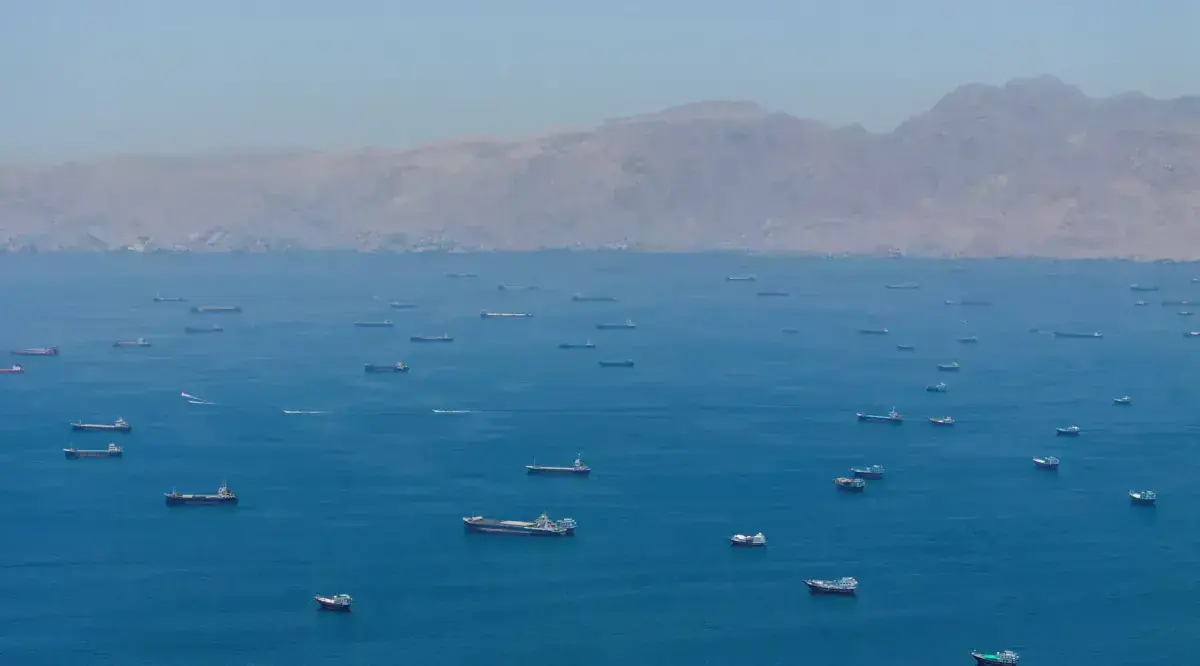
The Gulf of Oman and the Red Sea are strategically important waterways, with the Strait of Hormuz and the Red Sea serving as major routes for global energy and commercial shipments.

Any prolonged disruption to these routes could increase transportation costs, affect energy markets and create further pressure on international supply chains.

Iran has reiterated that the Strait of Hormuz will remain closed unless Washington accepts its conditions, adding to uncertainty surrounding the future of maritime traffic through the strategically vital waterway.

Despite the worsening security environment, Defence Minister Khawaja Asif said on Tuesday that the United States and Iran were moving closer to a possible agreement.

Speaking to Bloomberg News, Asif said recent developments suggested that negotiations could again be moving in the direction of a peace arrangement.

Qatar, which has also been involved in mediation efforts, has said discussions concerning the management of maritime traffic through the Strait of Hormuz had reached an advanced stage.

Similar Posts

  • | |

    Over 300 patients receive free medical treatment a…

    KETI BUNDER: More than 300 patients benefited from free healthcare services during a one-day medical camp organized at the Town Committee Gharobari in Taluka Keti Bunder, District Thatta. The camp focused on the diagnosis and treatment of oral diseases, hepatitis screening, and general health consultations, aiming to improve access to quality healthcare for residents of the area. The medical camp was held under the supervision of Assistant Commissioner Gharobari Sorath Mazhar Abro, Mukhtiarkar Gharobari Maqsood Ahmed Jokhio, and Chairman Town Committee Gharobari Muhammad Ramzan Panhwar. Local residents, including women, children, and elderly patients, attended the camp in large numbers and received free medical examinations, medicines, and professional consultations. A team of experienced healthcare professionals, led by renowned dental surgeon Dr. Shyam Kumar of Civil Hospital Makli and Dr. Mehran Abro, conducted detailed examinations and provided treatment for various oral and dental diseases. Patients were also screened for hepatitis, while doctors educated them about preventive measures, personal hygiene, and the importance of early diagnosis and timely treatment. District Health Officer (DHO) Thatta, Syed Safdar Shah, visited the camp to review the arrangements and interact with the medical staff. He appreciated the dedicated efforts of the doctors, paramedics, and organizers in delivering quality healthcare services to the local community. Speaking on the occasion, he said that free medical camps are essential for improving public health, particularly in remote and underserved areas, as they provide timely medical assistance and create awareness about disease prevention. Residents expressed gratitude to the district administration and health department for organizing the camp and hoped that similar healthcare initiatives would continue regularly to benefit people living in rural areas of Thatta.

  • |

    Greek wonderkid Karetsas joins Dortmund

    Borussia Dortmund have officially confirmed the signing of Konstantinos Karetsas. The young Greek forward joins from Belgian side Genk. He has put pen to paper on a five-year contract. The transfer news broke on Monday. Reports peg the fee at around 30 million euros. That translates to roughly $34 million. Additional bonuses are also included in the package. Karetsas is only 18 years old. But his numbers already speak volumes. He has scored three goals in ten appearances for Greece’s national team. His club form last season was just as impressive. He delivered 11 assists in the Belgian top flight. Dortmund had a clear gap to fill. The club recently lost Julian Brandt. The experienced playmaker left on a free transfer after years of service. His departure left a creative void in midfield. Karetsas now steps in as the man tasked with filling it. The teenager didn’t hold back his excitement after signing. He called Borussia Dortmund a special club. He said he feels proud to wear the black and yellow jersey. Club officials are equally thrilled. Dortmund’s sporting director praised the young forward’s game. He highlighted Karetsas’s technical skill and sharp footballing brain. According to him, the youngster has a real talent for finding quick solutions under pressure. That skill becomes especially valuable in tight spaces near goal. This transfer likely won’t be Dortmund’s last this summer. The club has also shown interest in another rising star. Cologne’s young German international, Said El Mala, is reportedly on their radar too. Context matters here. Dortmund finished last season as runners-up. Bayern Munich once again claimed the title. That gap is clearly on the club’s mind this transfer window. Signing proven young talent like Karetsas suggests a plan to close it. For Karetsas, this move marks a major step in his career. Moving from Belgian football to one of Europe’s most storied clubs is no small leap. Expectations will be high given his price tag and reputation. Dortmund fans will now watch closely to see how quickly he adapts. If his club and international form are any indication, he could become a key piece in Dortmund’s push to reclaim the title next season.

  • |

    Mustafa Kamal calls for more administrative units

    MULTAN:Federal Minister for Health Mustafa Kamal has once again called for the creation of additional administrative units in Pakistan, arguing that the country’s existing governance structure is no longer capable of effectively addressing its growing challenges. Speaking at a ceremony in Multan, Kamal said Pakistan currently operates through a federal government and four provinces, but the system needs major restructuring to improve governance and service delivery. He said Pakistan is larger than around 180 countries in terms of population and administrative needs, making it necessary to consider creating more administrative units to ensure better management and development. Reflecting on his political career, Kamal said he became Karachi’s mayor 21 years ago and was elected as a member of the provincial assembly 12 years ago. He added that political leaders often remain caught up in a continuous race without fully understanding whether the existing system is delivering the desired results. The federal minister also focused on the country’s healthcare challenges, saying that simply constructing more hospitals would not solve Pakistan’s health crisis. He pointed out that hospitals across the country remain overcrowded, while the government must focus more on preventive healthcare and improving public health infrastructure. Kamal said effective healthcare begins with measures such as ensuring adequate gaps between births and completing childhood vaccination schedules. He warned that a large number of children remain vulnerable to waterborne diseases due to inadequate sanitation and unsafe water supplies. He also highlighted the lack of an effective sewage treatment system in Pakistan, saying poor sanitation continues to contribute to the spread of preventable diseases. He stressed the need to address the root causes of health problems instead of relying solely on hospitals and medicines after people fall ill. Discussing population growth and maternal health, Kamal said Pakistan’s birth rate stands at around 3.5 percent, while the population growth rate is approximately 2.5 percent. He claimed that around 11,000 mothers die every year in the country, describing the situation as a serious public health concern. The minister said Pakistan also faces a major shortage of trained nurses. According to him, the country needs around 900,000 nurses, while international demand for Pakistani-trained nursing professionals could reach 2.5 million. He said the government should focus on developing professional skills so that trained workers can contribute to the national economy and earn valuable foreign exchange for the country. Kamal also addressed concerns surrounding medicine prices and availability. He clarified that the federal health minister alone does not have the authority to decide whether medicine prices should increase or decrease. He said the Drug Regulatory Authority of Pakistan (DRAP) has deregulated the prices of certain medicines, while decisions regarding price reductions fall within the broader domain of the federal cabinet. He added that a cabinet committee is currently examining the issue of reducing medicine prices. The minister further pointed out that although Pakistan manufactures a large number of medicines locally, the pharmaceutical industry still relies heavily on imported active pharmaceutical ingredients (APIs). He said shortages of some medicines have also created difficulties for patients, with certain drugs disappearing from the regular market and becoming available through agents at significantly higher prices. Kamal’s remarks came a day after Interior Minister Mohsin Naqvi also called for the creation of new administrative units, describing such reforms as essential for the country’s development. Addressing an event in Islamabad, Naqvi reportedly said the existing system had failed to deliver effectively and argued that new administrative units or provinces could provide a way forward. The repeated calls from senior federal ministers for additional administrative units have renewed debate over whether Pakistan needs a major restructuring of its administrative and governance framework to improve public service delivery, strengthen local administration and address the growing demands of its expanding population.

  • | | |

    Oil prices surge as US-Iran talks falter and suppl…

    Global oil prices climbed on Friday as stalled efforts to end the conflict involving Iran heightened concerns over possible disruptions to crude supplies. Markets remained focused on developments in the tense US-Iran negotiations, with traders also weighing the risk of further military and economic escalation. Brent crude futures rose 1.45 per cent to $88.33 a barrel, while US West Texas Intermediate crude gained 1.26 per cent to $82.27. Both benchmarks were on course for substantial weekly gains as uncertainty surrounding regional oil supplies continued to influence trading. Concerns intensified after the United States indicated that economic pressure on Iran could be increased, including the possibility of extending a naval blockade. Analysts warned that any significant escalation in the conflict could cause a much sharper increase in energy prices by threatening supplies from the region. Market strategist Kyle Rodda of Capital.com said geopolitical uncertainty remained a major obstacle for financial markets despite otherwise supportive economic conditions. Investors have so far absorbed considerable uncertainty without demanding substantially higher risk premiums, but analysts cautioned that this balance could change quickly if tensions worsen. Rising crude prices also weighed on European equities, which ended the week lower and broke a four-week run of gains. In the United States, major stock indexes also declined, with the Dow Jones Industrial Average falling 0.14 per cent, the S&P 500 losing 0.19 per cent and the Nasdaq Composite dropping 0.39 per cent. Meanwhile, the US dollar weakened after disappointing retail sales data reduced expectations of another Federal Reserve rate increase. The softer dollar provided support to gold, with spot gold advancing 0.69 per cent to $4,380.03 an ounce. Currency markets also remained focused on Japan, where the yen edged higher against the dollar amid speculation that the Bank of Japan could raise interest rates as early as September. The currency nevertheless remained close to the 160-per-dollar level, which traders believe could prompt further intervention from Japanese authorities. Investors are now watching the next developments in US-Iran relations closely. A breakthrough in negotiations could ease pressure on energy markets, while any major escalation could trigger a renewed surge in oil prices and broader financial market volatility.

  • |

    Younis Khan says give me freedom to deliver, not power

    KARACHI: Former Pakistan captain Younis Khan has said he is ready to serve Pakistan cricket in any capacity, provided he is given the freedom to perform his responsibilities without unnecessary interference. Speaking to reporters in Karachi, the legendary batter said he has consistently conveyed the same message to successive Pakistan Cricket Board (PCB) chairmen: if entrusted with a role, he should be allowed to carry it out independently. “I have always told PCB chairmen that if you give me a role, give me the complete opportunity to do the job. Don’t tie my hands,” Younis said. Addressing speculation that he seeks greater authority within the cricket setup, the former skipper dismissed the perception, insisting that his focus has always been on delivering results rather than acquiring power. “I often hear people saying Younis Khan wants power. What would I do with power?” he remarked, adding that he has never pursued positions for influence but has instead emphasized the importance of professional autonomy. Younis said that whenever he discussed working with the PCB, his only condition was to be allowed to build and develop the team according to the responsibilities assigned to him. He also downplayed the importance of financial incentives, saying that freedom to work effectively mattered more than salary or contractual packages. “For me, independence in my work and the ability to deliver are far more important than any package,” he said. “If I were ever to negotiate over financial matters, it would be for the player in the weakest position, not for myself.” Reflecting on Pakistan cricket’s future, Younis expressed confidence that the national team could regain its former strength if players accepted greater responsibility and adopted a long-term mindset. He recalled the period after the 2003 ICC Cricket World Cup, when the departure of senior players created challenges but also opened opportunities for younger cricketers to step up. “We accepted responsibility after the 2003 World Cup. If today’s players think bigger and take ownership, the results will also be bigger and more positive,” he said. Younis’ comments come amid ongoing discussions about Pakistan cricket’s direction and the role experienced former players can play in rebuilding the national team’s competitiveness.

  • | |

    Egypt confirms drone strike behind blaze at two ga…

    A drone strike caused the fire that engulfed two gas vessels at Egypt’s Mediterranean port of Damietta, the Egyptian cabinet confirmed Thursday, ending speculation over whether the blaze that broke out a day earlier was an accident or an attack. No group has claimed responsibility for the strike, which occurred close to the Suez Canal, now serving as the last safe route for Saudi oil shipments reaching global markets. Egyptian authorities said they are continuing their investigation and taking steps to safeguard national security. British maritime security firm Ambrey said Wednesday that a drone had struck a US owned gas storage tanker at the port, an early assessment that raised fears the wider regional conflict could spread further. Three trading sources familiar with the incident said the drone hit the floating storage vessel Energos Winter, sparking a fire that then spread to a second ship, Gaslog Salem. According to maritime risk group Vanguard, the Energos Winter was struck on its starboard side, and the resulting fire was later extinguished. Egypt’s petroleum ministry said firefighting and security teams responded immediately and that the incident caused no injuries or fatalities. Petroleum Minister Karim Badawi traveled to the port to personally oversee the emergency response, according to the ministry. The strike came shortly after Iran launched a missile attack targeting US forces in Jordan, prompting Washington and Saudi Arabia to carry out strikes against Iran backed paramilitary groups in Iraq. President Donald Trump warned of retaliation against Iran, while Yemen’s Houthi movement declared a naval blockade against Saudi Arabia, marking what appears to be the widest expansion of the conflict since the United States and Israel began bombing Iran in February. The Energos Winter is a floating storage and regasification unit owned by the US based firm Energos Infrastructure. Its technical, safety and commercial operations are managed by Wilhelmsen Ship Management, a Singapore based subsidiary of the Norwegian company Wilhelmsen Group. In a first for the five month war, Saudi Arabia publicly joined US forces in striking Iran aligned groups in eastern Iraq on Wednesday, responding to drone attacks on Saudi oil facilities that were launched from Iraqi territory. Following the joint operation, Saudi Arabia’s defense minister met with US Vice President JD Vance in Washington to urge the Trump administration against further escalation, according to two people familiar with the meeting. The conflict began in February when the United States and Israel launched a bombing campaign against Iran that Trump initially said would last only a few weeks. A temporary ceasefire reached in June collapsed amid renewed fighting centered on the Strait of Hormuz, a critical waterway that Iran now claims to control. The latest strikes in Iraq and Egypt threaten to pull additional countries into the conflict, coming after Yemen’s Houthi forces declared a naval blockade on Saudi Arabia last week, putting the alternative Red Sea shipping route for Saudi oil bound for Asia at risk. Attacks on vessels by Houthi fighters have already prompted London’s marine insurance market to expand its high risk zone in the Red Sea to cover a larger stretch of coastline near Saudi ports. Trump said the United States would respond forcefully to Iran’s missile attack on American forces, while maintaining that Washington remains open to a negotiated peace deal to end a war that has unsettled global energy and financial markets. Oil prices jumped more than eight percent on Wednesday before easing slightly on Thursday amid volatile trading, with benchmark Brent crude hovering just under 90 dollars a barrel. Iran said Wednesday that it had struck three tankers attempting to pass through the Strait of Hormuz along what it called an unauthorized route. Even so, a QatarEnergy controlled liquefied natural gas tanker exited the strait overnight, the first such vessel tracked leaving the waterway since July 11. Iran’s semi official Fars news agency reported that Tehran had specifically authorized the tanker’s passage. Oman has presented Iran with a Gulf backed proposal to manage traffic through the Strait of Hormuz, including a system of voluntary usage fees, according to sources familiar with the talks. Iran rejected that proposal on Wednesday, though foreign ministry spokesperson Esmaeil Baghaei said discussions with Oman over the strait’s management are continuing, according to the semi official ILNA news agency. Separately, sources familiar with the matter said Iran is expected to receive its first shipment within weeks of up to 400 Chinese made shoulder fired air defense missile launchers, part of an effort to shore up gaps in its ability to protect military sites and strategic infrastructure exposed during the war. Iran’s foreign ministry did not immediately respond to a request for comment, while China’s foreign ministry denied the report. The expanding pattern of strikes across Iraq, Egypt and the Red Sea underscores how a conflict initially centered on Iran has increasingly drawn in neighboring states and global shipping lanes, complicating efforts by mediators to contain the fighting before it further disrupts international energy markets.

Leave a Reply

Your email address will not be published. Required fields are marked *