armed men storm
| |

Armed men storm prison van, free murder suspect on…

JHELUM: In a major security lapse, armed men intercepted a prison van on the busy GT Road near Mandra and forcibly freed a murder suspect who was being taken back to District Jail Jhelum after appearing in court.

The escape involved Malik Hamad, who is facing a murder case registered with Saddar Beruni police. He had initially been held at Adiala Central Jail before being transferred to Jhelum following the recovery of a mobile phone and other prohibited items during a surprise inspection.

Hamad was brought to Rawalpindi on Tuesday for a court hearing. While the prison van was returning to Jhelum, it slowed near Galaxy Hotel at Bacha Stop, where another vehicle approached the van.

According to sources, the occupants told prison officials that Hamad’s mother was seriously ill and requested a brief meeting with him. Taking advantage of the confusion, several armed men surrounded the van with their vehicles, pulled Hamad out and escaped.

The incident immediately triggered a security alert, with senior police and jail officials rushing to the location. Police teams were subsequently formed to track down and arrest the escaped suspect.

The incident has raised fresh concerns about the security arrangements for transporting prisoners. It comes weeks after 14 high-risk prisoners escaped from another prison van while returning from Kahuta in late June. All of them were later recaptured following an extensive search operation, while cases were registered against the policemen responsible for their security.

Following that escape, Rawalpindi police introduced new standard operating procedures aimed at strengthening prisoner transportation security. The latest incident, however, has renewed questions about whether those measures are being properly implemented.

Four policemen reportedly assigned to guard Hamad have been detained for questioning. Sources also claimed that the suspect had links with an influential individual associated with a private housing society.

Despite the seriousness of the incident, senior police officials declined to comment publicly, while a search operation to recapture Hamad remained underway.
Similar Posts

  • | | | |

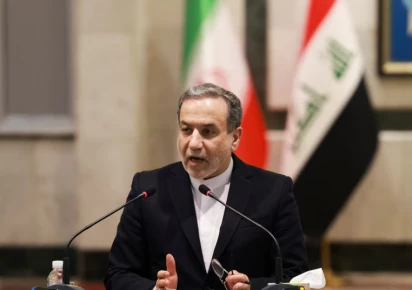
    Iran rules out US talks until demands are met

    Iran has ruled out direct negotiations with the United States for now, saying Washington must first comply with the terms of an interim agreement reached in June. Iranian Foreign Minister Abbas Araghchi said on Sunday that Tehran and Washington were not holding direct talks. He said messages were still being exchanged through intermediaries. Araghchi also reiterated Iran’s position on the Strait of Hormuz. He said the strategic waterway would not reopen simply because Iran and Oman reached an agreement on shipping arrangements. According to Iranian reports, Tehran and Muscat are close to finalising an understanding on a temporary shipping route. However, Iran says the route can only be used after other conditions are met. The Strait of Hormuz has remained at the centre of the wider conflict. Iran has repeatedly linked its reopening to demands directed at Washington. Iranian officials have called for an end to US threats and military action. They have also demanded the lifting of sanctions and blockades and the release of Iranian assets. Iran’s Revolutionary Guard has separately warned that the strait will remain closed until Tehran’s conditions are accepted. The force accused its opponents of shifting their focus toward reopening the vital waterway. The strait is one of the world’s most important energy routes. A significant share of global oil and gas shipments normally passes through it. Oman, meanwhile, said discussions with Iran over arrangements for shipping through the waterway had been positive and constructive. Muscat also urged all sides to avoid actions that could undermine the negotiations. Iranian President Masoud Pezeshkian has suggested that the current situation could provide an opportunity for an agreement. He said Iran remained united and strong despite the ongoing conflict. The diplomatic uncertainty comes as tensions continue to affect commercial shipping in the region. The United Arab Emirates said Iran had attacked a vessel linked to its state-owned oil company while it was travelling through the Strait of Hormuz. No injuries were reported. The United Kingdom Maritime Trade Operations agency also reported that a vessel caught fire after being struck by an unidentified projectile. The fire was later brought under control, with no environmental damage reported. Iranian authorities have not immediately commented on the individual incident. Saudi Arabia reports fires at energy facilities Tensions have also spread across the Gulf. Saudi Arabia said firefighters had extinguished a blaze at an Aramco facility in Jizan. The Saudi Energy Ministry said there were no fatalities. Yemen’s Houthi movement claimed responsibility for an attack on the site, saying it had used a drone in response to alleged Saudi strikes in Yemen. A separate explosion was also reported in the industrial area of Jubail. Regional sources said gas facilities were targeted and that a fire broke out. The exact cause remained unclear. It was not immediately established whether the incidents in Jizan and Jubail were connected. US defence industry ordered to increase weapons production Meanwhile, the United States has asked its defence industry to accelerate weapons production amid shortages linked to the war with Iran. US Deputy Defence Secretary Steve Feinberg reportedly instructed defence companies to submit plans aimed at speeding up deliveries and increasing production of critical military equipment. The demand comes amid reports of pressure on US ammunition supplies, including stocks of Patriot missile interceptors. The Trump administration has maintained that the United States has substantial weapons reserves and that additional supplies are being manufactured and delivered. The conflict has also triggered threats from armed groups in the region. The leader of Iraq’s Harakat Hezbollah al-Nujaba, Akram al-Kaabi, has threatened retaliation for US-Saudi strikes on sites belonging to Iraq’s Popular Mobilisation Forces. The group has warned that further military action could lead to a response. Iranian military officials, meanwhile, have claimed that the United States and Israel failed to achieve their objectives against Iran. They have praised the country’s military preparedness and vowed to continue resisting pressure. With the Strait of Hormuz still closed and negotiations remaining indirect, the prospect of restoring normal shipping remains uncertain. Iran insists that reopening the waterway depends on Washington accepting its conditions. The United States, meanwhile, has linked the lifting of its blockade to Iran fulfilling commitments under any future agreement.

  • | |

    FCC to hear PTI ‘Release Force’ and May 9 case…

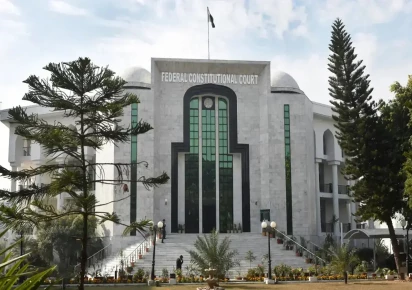
    The Federal Constitutional Court (FCC) has fixed July 29 for hearing two important petitions linked to Pakistan Tehreek-e-Insaf (PTI) founder Imran Khan. The hearings come at a time when PTI is preparing to launch a nationwide campaign demanding the release of its founding chairman. A three-member bench headed by Chief Justice Aminuddin Khan will hear a petition challenging the proposed formation of what has been described as the “Imran Khan Release Force.” On the same day, the bench will also hear another petition concerning the Khyber Pakhtunkhwa government’s decision to withdraw selected criminal cases related to the May 9, 2023 violence. The first constitutional petition argues that the formation or mobilisation of any organisation under the title of the “Imran Khan Release Force” would be unconstitutional and contrary to Pakistani law. The petitioner has requested the court to declare such an organisation illegal, arguing that private forces or militias are prohibited under the Constitution and relevant legislation. The petition also states that citizens and public office holders are constitutionally bound to remain loyal to the state and act within the framework of the law. It argues that any attempt to organise a private force would violate constitutional principles and existing legal provisions. The issue first came before the court after public statements were made earlier this year regarding the creation of a movement aimed at securing Imran Khan’s release. At that time, the court sought a response from the Khyber Pakhtunkhwa chief minister. The matter has now been scheduled for detailed hearing after several months. However, some legal experts have disputed the interpretation presented in the petition. They argue that the term “Release Force” refers to a political campaign or public movement seeking Imran Khan’s release rather than the creation of any armed organisation. According to their view, there is no proposal to establish a private militia, and the movement has no official connection with the provincial government. The same bench will also hear a petition filed by the Pakistan Broadcasting Corporation (PBC) concerning the attack on Radio Pakistan Peshawar during the May 9 unrest. The petition requests that the criminal case be transferred from Khyber Pakhtunkhwa to an anti-terrorism court in Islamabad or another province to ensure an impartial trial. The petitioner argues that political influence and executive interference could affect the fairness of judicial proceedings if the case continues within the province. Earlier, the Federal Constitutional Court issued an interim order preventing the withdrawal of certain May 9-related cases while the matter remains under consideration. Officials from the Khyber Pakhtunkhwa Law Department have questioned that interim order. They maintain that the provincial government had not yet filed any formal application before the anti-terrorism court seeking withdrawal of cases. According to provincial authorities, the cabinet had only approved the withdrawal of cases considered politically motivated or those lacking sufficient evidence. Provincial officials have stated that 23 out of 29 terrorism-related cases linked to the May 9 incidents have already been decided. They also said that 285 of the 319 cases registered in ordinary courts have been concluded, while the remaining cases are still under trial.

  • |

    Arshad Nadeem was not fit enough for Glasgow, says former coach

    Fayyaz Hussain Bukhari, who previously coached Olympic champion Arshad Nadeem, has said the javelin thrower was not at peak fitness ahead of the Glasgow Commonwealth Games. Nadeem’s campaign there ended in disappointment. Speaking to The Express Tribune from Lahore, Bukhari said he had watched Nadeem during throwing sessions and didn’t see the intensity needed to challenge for medals at a major event. According to him, fitness is the single most important factor for any athlete. He added that if an athlete is not fit, competing should not even be considered an option. Bukhari coached Nadeem for eight years and played a key role in helping him qualify for the Tokyo Olympics. He said fitness had always been central to his coaching philosophy during that period. Reflecting on the lead-up to Tokyo, Bukhari recalled that Nadeem had contracted COVID-19 and was also nursing an elbow injury at the time. He said Nadeem had insisted he wouldn’t compete unless he reached full fitness. Through focused work together, they managed to get him back in shape. Bukhari pointed to Nadeem’s strong throw at the Tokyo Games as evidence that the effort had paid off. He also called for mandatory fitness testing before athletes are cleared for international events. He expressed concern that such checks appear to have been abandoned altogether in recent years. Nadeem’s Glasgow campaign ended in a surprising early exit. He failed to progress past the qualifying round, finishing ninth out of twelve finalists based on his first three throws. The result stood in sharp contrast to his performance at the 2024 Paris Olympics, where he won gold with a record-breaking throw of 92.97 metres. While Nadeem has claimed several medals since his Olympic win, his recent form has not matched that historic peak. This has raised some concern, given the immense potential he continues to carry as an athlete. Bukhari was removed from his coaching role by the Athletics Federation of Pakistan after Nadeem finished fifth in Tokyo. Salman Butt has since taken over as his coach. Despite the recent setback, Bukhari remains confident Nadeem can regain his top form. He said the athlete doesn’t necessarily need another massive throw, since he’s already delivered one on the world’s biggest stage. Instead, he believes Nadeem needs to focus on correcting his mindset and overall approach. Bukhari also criticized Butt, alleging he has distanced Nadeem from both the federation and his former coach. He added that he remains willing to help if needed, and called for stronger cooperation among Pakistan’s sports bodies to improve the country’s standing internationally.

  • |

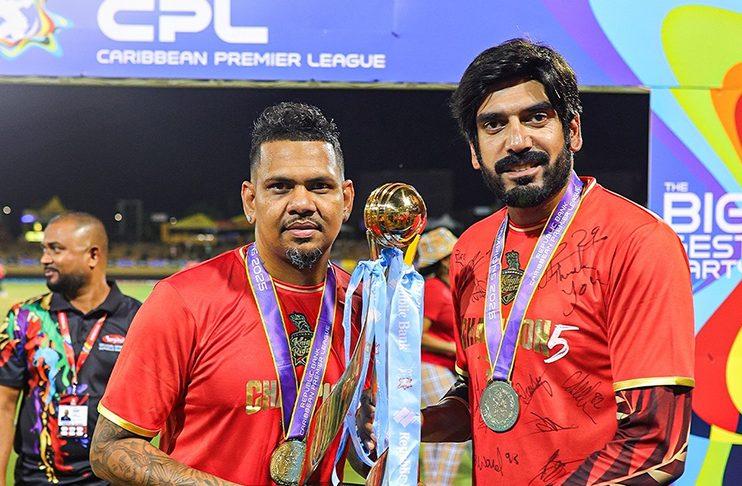
    Narine’s quiet advice helped Tariq silence the noise on his action

    Pakistan spinner Usman Tariq has shared how a call from West Indies great Sunil Narine helped him push through one of the toughest stretches of his career, as questions swirled around the legality of his bowling action. Tariq broke into international cricket last year, earning his debut against South Africa after a string of impressive performances for Trinbago Knight Riders in the Caribbean Premier League. Since then, his unconventional action has become a talking point almost every time he takes the ball. The 28-year-old has repeatedly had to defend himself, after both England batter Tom Banton and Australian all-rounder Cameron Green appeared to signal suspicion over a possible throw during separate matches. ICC regulations allow bowlers to straighten their arm by up to 15 degrees mid-delivery, and Tariq maintains he stays well within that limit. He puts the unusual look of his action down to the natural structure of his elbow rather than anything illegal. He made a similar point earlier this year while playing in the ILT20, explaining that his elbow simply does not allow him to straighten his arm fully, regardless of how his action might appear from the outside. The debate resurfaced ahead of Pakistan’s blockbuster clash with India at the ICC Men’s T20 World Cup 2026, when parts of the Indian media suggested he was being held back from earlier games purely to keep him fresh for that one fixture. The theory did not hold up for long, since Tariq had already featured in Pakistan’s second T20I against Australia before the tournament, and he went on to play his part throughout the World Cup. Speaking with former Pakistan batter Fawad Alam, Tariq revealed that Narine had called him directly during the most intense period of criticism. According to Tariq, the two spoke for close to 30 minutes, with Narine telling him to tune out the noise, stay consistent with his cricket, and remember that critics were only targeting him because they struggled to counter his bowling. Tariq’s action has been reported twice across his career, and both times he was cleared after review. The most recent clearance followed testing at an ICC-accredited biomechanics laboratory, where he bowled 24 deliveries for analysis before being given the green light to continue.

  • | |

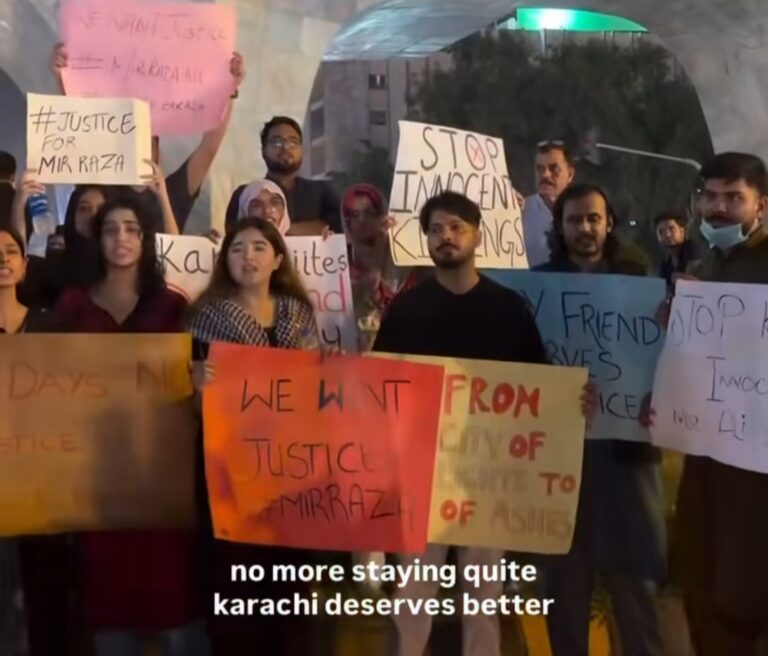
    Police probe deepens into Mir Raza Ali Khan’…

    Police have intensified their investigation into the death of 25-year-old former Institute of Business Administration (IBA) student and aspiring entrepreneur Mir Raza Ali Khan, saying several pieces of evidence point toward the possibility of suicide. However, investigators have not ruled out other possibilities as key questions remain unanswered. The young businessman was found dead with a gunshot wound to his chest in bushes near Shahi Qila in Gulistan-i-Jauhar, opposite the University of Karachi. His body was recovered two days after he was reported missing from his residence in PECHS. According to investigators, Raza had returned home after closing his business in Bahadurabad before leaving again after collecting a pistol from his office. Before departing, he reportedly left the keys to his house and car, along with his wristwatch and some cash for his mother. Police also found that all data on his iPhone had been deleted before his disappearance. The investigation revealed that he booked an online ride to Gulistan-i-Jauhar. The cab driver told police that Raza requested his favourite song during the journey and paid more than the required fare. CCTV footage reviewed by investigators showed him walking alone after being dropped off, with no one seen accompanying him. Police later recovered his mobile phone after tracing it to a person who inserted a SIM card into the device. The individual was detained, and investigators recovered the phone for forensic examination. Authorities also found the holster of Raza’s pistol hanging from a tree near the location where his body was discovered. However, the firearm used in the incident has not yet been recovered. Investigators believe it may have been taken away by someone passing through the area after the incident. The investigation has further revealed that Raza had been facing significant financial difficulties. Police said he had suffered losses worth millions of rupees through business investments and was under pressure to repay investors. Investigators also learned that he had sought a loan of Rs30 million from one investor, but the request was declined. According to statements recorded by police, the investor claimed Raza had spoken about experiencing disturbing thoughts before his death. His fiancée also told investigators that he had become deeply focused on cryptocurrency investments, particularly Bitcoin. She said she sent him a message on the night of his disappearance, but it was never delivered because his phone had already gone offline. Despite the evidence gathered so far, investigators say three major questions remain unresolved. They are trying to determine why Raza chose the isolated location where his body was found, where the missing pistol is, and why forensic experts did not detect gunshot residue on his hands despite the bullet being fired from close range. Officials noted that the body’s partial decomposition may have affected forensic findings.

  • | | | |

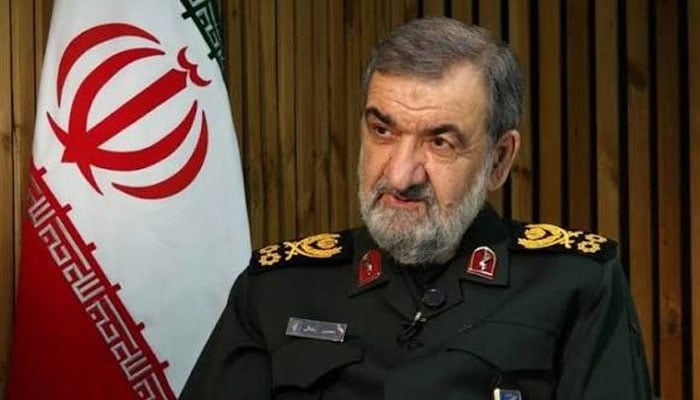
    Iran threatens action over US economic support

    Iran’s National Security Council chief Mohsen Rezaei has warned that the interests of countries assisting the United States in its economic war against Iran could be targeted. In an interview, Major General Mohsen Rezaei urged Iran’s neighbouring countries not to cooperate with Washington against Tehran. He warned that Iran could consider them hostile if they joined the US economic campaign. Rezaei said Iran did not want to escalate the conflict. However, he warned that any neighbouring country supporting the economic war could face attacks on its interests. He also threatened to prevent even a single drop of oil from passing through the Persian Gulf or the Strait of Hormuz. He said other routes used to import oil through the Persian Gulf could also be targeted. Rezaei further warned that locations linked to Iranian opposition groups could also come under attack if the United States continued meeting groups opposed to the Iranian government. According to Rezaei, the US had expected to end the conflict within a few days and take control of Iran’s oil and gas resources. He claimed that around 1,200 oil tankers had become unusable during the conflict, affecting 15 per cent of the global fleet. He said Tehran should reconsider its approach to the conflict and its diplomatic engagement with the international community. Rezaei accused Washington of failing to honour its commitments. Rezaei said Iran was no longer the same country it was before the conflict. He described new military appointments by Supreme Leader Mojtaba Khamenei as a sign that Iran was preparing for war. He added that the perception of the United States among Iranian youth had also changed. According to him, many young Iranians no longer view America as a country committed to peace. Rezaei accused Washington of betraying negotiations, diplomacy and agreements it had signed. He also warned that US policies could encourage more countries to seek nuclear weapons. He criticised US President Donald Trump and claimed that the world had begun viewing Iran differently. Rezaei said Iran would change its approach to warfare and use the lessons learned from the current conflict in any future war. Asked about the Makkah agreement involving Pakistan, Türkiye and Saudi Arabia, Rezaei said it indicated that the United States had informed those countries of its intention to leave the region. On former Crown Prince Reza Pahlavi, Rezaei said those who believed his return would turn Iran into a “paradise” should reconsider their view. He claimed that bringing Pahlavi back to power could instead lead to Iran being divided into five parts.

Leave a Reply

Your email address will not be published. Required fields are marked *