condemns swat blast
| |

UN condemns Swat blast as Pakistan warns of Afghan…

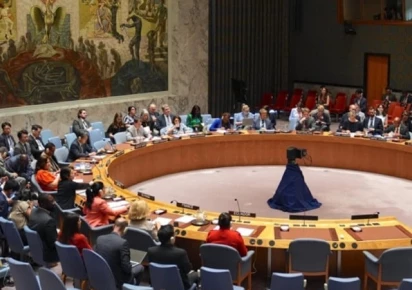
UNITED NATIONS: The United Nations Security Council has strongly condemned the deadly suicide bombing in Swat, describing the attack as “heinous and cowardly” as Pakistan renewed its warning that terrorist groups continue to operate from alleged safe havens inside Afghanistan.

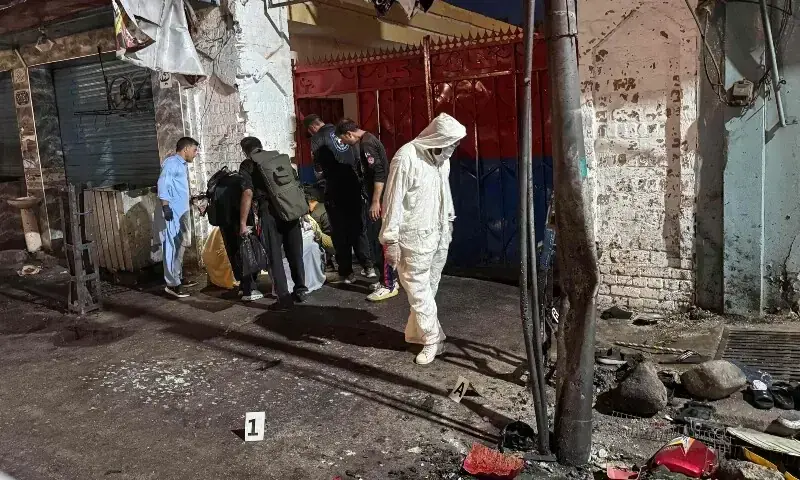
The attack took place outside a police station in Kabal, Swat, on August 2, killing at least 16 Pakistani nationals, mostly civilians, and leaving dozens injured, according to the UN statement cited by Pakistan’s Dawn.

The Tehreek-i-Taliban Pakistan (TTP) claimed responsibility for the bombing.

In a statement issued through the office of the UN secretary general’s spokesperson, Security Council members expressed deep sympathy to the families of those killed and wished the injured a speedy recovery.

The council also stressed that those behind the attack must be held accountable, calling for perpetrators, organisers, financiers and sponsors of terrorism to be brought to justice.

The UN body reiterated its longstanding position that terrorism, regardless of its motivation, location or perpetrators, remains a serious threat to international peace and security. It also urged member states to cooperate with Pakistan in accordance with international law and relevant Security Council resolutions.

Pakistan Raises Alarm Over Afghan Sanctuaries

The condemnation came shortly after Pakistan raised concerns at a UNSC briefing over what it described as the growing threat from terrorist organisations operating from Afghan territory.

Pakistan’s Permanent Representative to the UN, Ambassador Asim Iftikhar, said several groups continue to maintain safe havens inside Afghanistan and pose an increasing threat to Pakistan and regional security.

He specifically named the banned TTP, Balochistan Liberation Army (BLA) and its Majeed Brigade, Islamic State Khorasan (IS-K), East Turkistan Islamic Movement (ETIM), and Al Qaeda affiliates.

Pakistan urged the international community to ensure that Afghan soil is not used to launch terrorist attacks against neighbouring countries, while calling for stronger international cooperation to counter cross-border terrorism.

The latest developments have added fresh pressure to an already sensitive security relationship between Pakistan and Afghanistan.

They also came after the fourth US-Pakistan Counterterrorism Dialogue in Washington, where officials from both countries reaffirmed their commitment to combating terrorist organisations.

For Pakistan, the UNSC condemnation provides international recognition of the seriousness of the Swat attack, while Islamabad continues to push for stronger action against militant networks it says operate across its western border.


Similar Posts

  • |

    Akshay Kumar lands special role in R.D. Burman biopic

    Akshay Kumar is set to reunite with filmmaker Neeraj Pandey after more than a decade, marking another collaboration between one of Bollywood’s most successful actor-director partnerships. The actor has reportedly signed on for a special appearance in Pandey’s upcoming biographical film based on the life of legendary music composer Rahul Dev Burman, popularly known as R.D. Burman. While the makers have not officially revealed details about Akshay’s character, reports suggest that his role, though brief, will play an important part in the narrative. The appearance is expected to leave a lasting impact on the story and add further excitement to the highly anticipated project. According to industry insiders, Akshay Kumar agreed to join the film almost immediately after Neeraj Pandey narrated the role to him. The actor and director are known to share a strong professional bond built on mutual admiration and trust. Their successful collaborations in the past have earned praise from both audiences and critics, making this reunion one of the most talked-about developments in Bollywood. The duo first worked together in the 2013 crime thriller Special 26, which received widespread acclaim for its gripping storyline and performances. They reunited in 2015 for the action thriller Baby, another critically appreciated film that strengthened their reputation as a successful actor-director team. Their latest collaboration is expected to generate significant interest among moviegoers eager to see them work together once again. The upcoming biopic will feature Farhan Akhtar in the lead role as R.D. Burman, one of India’s greatest music composers. Known for revolutionising Hindi film music with his innovative compositions and unforgettable melodies, Burman’s life and career continue to inspire generations of musicians and fans. The film aims to celebrate his extraordinary contribution to Indian cinema and showcase the creative genius that made him a musical icon. Production on the film is scheduled to begin in September. Directed by Neeraj Pandey, the project is being produced in association with Excel Entertainment. The filmmakers have reportedly started extensive pre-production work, with special attention being given to recreating Burman’s iconic music. Music sessions are already underway as the creative team works to capture the essence of the composer’s timeless sound while paying tribute to his remarkable legacy. The biopic is also expected to feature a large ensemble cast, with several well-known actors likely to join the project in significant roles. Official announcements regarding additional cast members are anticipated in the coming weeks. Meanwhile, Akshay Kumar was last seen in Welcome to the Jungle, the latest instalment in the popular comedy franchise. Released on June 26, the film featured an ensemble cast and blended action with comedy. It received mixed reviews from critics and audiences but performed reasonably well at the global box office, earning around ₹186 crore worldwide. With Akshay Kumar’s addition and Farhan Akhtar leading the cast, the R.D. Burman biopic is shaping up to be one of the most anticipated Bollywood projects currently in development. Fans are eagerly awaiting further announcements as production moves closer to its official start.

  • |

    Rising fuel prices drive global surge in electric vehicle sales

    Global sales of electric vehicles rose sharply during the second quarter of 2026 as soaring fuel prices linked to the conflict in the Middle East encouraged more consumers to switch away from petrol and diesel powered cars, according to a new report by the International Energy Agency. The agency said electric vehicle sales increased by 35 percent between April and June compared with the first three months of the year. Record sales were reported across 50 countries despite a slowdown in the overall global automobile market. According to the IEA, the renewed interest in electric vehicles was largely driven by the sharp rise in oil prices following the conflict involving Iran, Israel, and the United States. The report said the resulting energy crisis reminded governments and consumers of the economic risks associated with dependence on imported oil. Oil prices climbed dramatically during the year after Iran effectively closed the Strait of Hormuz, one of the world’s busiest energy shipping routes, in response to military strikes carried out by Israel and the United States. Crude prices rose from around 60 dollars per barrel at the beginning of the year to nearly 120 dollars, increasing fuel costs around the world and putting additional pressure on households and businesses. The IEA said the situation has brought energy security back to the centre of government policy discussions. Since road transport accounts for nearly half of global oil consumption, the agency noted that expanding the use of electric vehicles can reduce reliance on imported fuel while protecting consumers from sudden increases in fuel prices. The report said electric vehicles are now being viewed as an important tool for improving national energy security, particularly in countries that rely heavily on imported oil. By reducing dependence on global oil markets, governments hope to make their economies more resilient during periods of international instability. Several countries in Southeast Asia that were particularly affected by rising fuel costs responded by introducing temporary tax incentives to encourage people to buy electric vehicles. Similar government support measures have also been expanded in parts of Latin America and Europe as officials seek to accelerate the transition to cleaner transport. Based on the strong performance in the second quarter and continued policy support in many regions, the IEA expects global electric vehicle sales to increase by around 10 percent over the full year. If that forecast is achieved, electric cars are expected to account for approximately 29 percent of all new vehicle sales worldwide in 2026. The agency also predicted that the overall global car market will shrink this year, meaning electric vehicles are continuing to gain market share even as total vehicle demand weakens. The report noted that the year began on a slower pace for the electric vehicle industry. Sales dropped during the first quarter, mainly because of weaker demand in China and the United States, the world’s two largest EV markets. In the United States, the removal of government subsidies reduced consumer demand, while China’s slowing economy and reductions in financial incentives also affected purchases. Because China represents the largest electric vehicle market in the world, weaker sales there had a significant impact on global figures despite healthy growth in many other regions. Europe recorded the strongest performance during the first half of the year. According to the IEA, electric vehicle sales across the continent rose by more than 30 percent as supportive government policies, expanding charging infrastructure, and higher fuel prices encouraged more drivers to choose electric cars over conventional vehicles. The agency believes these trends could continue if governments maintain incentives and energy prices remain elevated.

  • | |

    Fresh monsoon spell to hit Pakistan from July 29

    Pakistan is expected to receive another widespread spell of monsoon rains from July 29 to August 5, with the weather system likely to affect several parts of the country. The Pakistan Meteorological Department (PMD) has warned of heavy and very heavy rainfall in several areas. It has also cautioned about urban flooding, flash floods and landslides. According to the weather advisory, moist monsoon currents from the Arabian Sea and Bay of Bengal are expected to enter the upper and central parts of the country from July 29. A westerly weather system affecting northern areas is also likely to strengthen from August 1. It may bring widespread rain and thunderstorms to upper and central regions. Islamabad, Rawalpindi, Murree and the Galliyat are expected to receive rain and thunderstorms from July 29 to August 4. Attock, Chakwal, Jhelum, Gujrat, Gujranwala, Hafizabad, Sialkot and nearby areas may also experience heavy rainfall. Several districts of central and southern Punjab are also likely to receive rain. These include Lahore, Narowal, Kasur, Okara, Sheikhupura, Faisalabad, Jhang, Sargodha and Sahiwal. Southern Punjab may see rainfall between July 31 and August 3. Bahawalpur, Rahim Yar Khan, Multan, Vehari, Khanewal, Lodhran, Muzaffargarh, Dera Ghazi Khan and Rajanpur are among the areas expected to be affected. Sindh is likely to receive rain from July 31 to August 2. Karachi, Hyderabad, Tharparkar, Umerkot, Mirpurkhas, Badin, Sanghar and several other districts may experience thunderstorms and moderate to heavy rainfall. Other parts of Sindh, including Sukkur, Larkana, Khairpur, Ghotki, Jacobabad, Shikarpur and Thatta, are also expected to receive rain. Khyber-Pakhtunkhwa is likely to face widespread rain and thunderstorms from July 29 to August 5. Dir, Chitral, Swat, Kohistan, Malakand, Nowshera, Charsadda, Bannu, Dera Ismail Khan and several other districts may receive heavy or very heavy rain. Peshawar, Mardan, Swabi, Mansehra, Abbottabad, Haripur, Bajaur, Mohmand, Khyber, Kurram, Orakzai and Waziristan are also expected to experience rainfall during the forecast period. Balochistan is likely to receive rain and thunderstorms from July 31 to August 3. Zhob, Loralai, Kohlu, Sibi, Kalat, Khuzdar, Lasbela, Awaran, Turbat, Panjgur, Gwadar and several surrounding areas may be affected. Kashmir and Gilgit-Baltistan are also expected to receive rain and thunderstorms. Kashmir may experience rainfall from the night of July 28 to August 5, while parts of Gilgit-Baltistan may remain affected until August 6. The PMD has issued a specific warning about urban flooding. Low-lying areas of Islamabad, Rawalpindi, Peshawar, Nowshera, Gujranwala, Gujrat, Sialkot, Lahore, Multan and Faisalabad could face flooding between July 30 and August 4. Several cities and districts in Sindh may also face urban flooding from July 31 to August 2. These include Hyderabad, Sukkur, Shaheed Benazirabad, Thatta, Badin, Sanghar, Khairpur, Mithi, Mirpurkhas and Umerkot. The weather department has also warned of landslides in vulnerable mountainous areas. Upper Khyber-Pakhtunkhwa, Gilgit-Baltistan, Murree, Galliyat and Kashmir could be affected. Heavy rainfall may also cause flash floods in streams and nullahs. Hill torrents in Dera Ghazi Khan and parts of northeastern Balochistan could also experience sudden flooding. Strong winds and lightning may damage weak structures during the spell. Solar panels, electricity poles, billboards and other vulnerable installations could be affected. The PMD has advised tourists and travellers to exercise caution during the rainy period. People travelling through mountainous areas have been urged to remain alert. Farmers have also been advised to plan agricultural activities according to weather conditions. They have been asked to take precautionary measures to protect crops and livestock.

  • | |

    Yami Gautam recalls nearly quitting Bollywood

    Actor Yami Gautam has revealed that she was once on the verge of leaving Bollywood after years of struggling to find meaningful roles despite the success of her debut film. In a recent interview, the Vicky Donor star reflected on one of the most difficult phases of her career, admitting that she had almost returned to her hometown in Himachal Pradesh before her breakthrough with Uri: The Surgical Strike changed everything. Gautam made her Bollywood debut opposite Ayushmann Khurrana in the 2012 hit Vicky Donor. Although the film was well received, she said the success did not translate into the kind of opportunities she had hoped for. Instead, she spent years waiting for substantial roles while being labelled an “unconventional” actress because she had not been introduced as a typical Bollywood heroine. Recalling that difficult period, Gautam told Filmfare: “Just before Uri and Bala, I had made peace with leaving the industry altogether. I thought I’d return to Himachal. We have farmland there. I imagined beginning a completely different life. My parents were incredibly supportive. They simply said, ‘Come home.’” The actress explained that she had become disheartened by the lack of opportunities and had accepted the possibility of stepping away from acting altogether. However, everything changed when she was cast opposite Vicky Kaushal in the 2019 blockbuster Uri: The Surgical Strike. The film proved to be a turning point in her career and restored her confidence in the industry. She recalled: “And strangely, the moment I stopped clinging to the industry out of fear, everything changed. Uri happened. Bala happened. Life changed almost overnight.” During the interview, Gautam also spoke candidly about the challenges of being an outsider in Bollywood. While she said she never viewed being an outsider as the biggest obstacle, she admitted that constantly having to prove herself was emotionally exhausting. She said: “The difficult part wasn’t being an outsider. It was constantly having to prove yourself. Sometimes you’d feel you were ready for a particular opportunity, yet someone else would receive repeated chances simply because they already belonged to the ecosystem.” The Article 370 actor noted that star children often receive multiple opportunities even after unsuccessful projects, while outsiders frequently have to wait years for a single meaningful role. She added: “You’d think, If I were given that many opportunities, wouldn’t I also continue growing as an actor? That was the real frustration.” Despite those experiences, Gautam believes the industry has evolved in recent years and that audiences are placing greater importance on talent rather than background. She concluded: “But I genuinely believe things have changed. Today, audiences don’t care where you come from. They care whether you’re a good actor. Whether your films are worth watching. Whether they trust your choices. That gives me tremendous hope for the next generation.” On the personal front, Yami Gautam married Uri: The Surgical Strike director Aditya Dhar on June 4, 2021. The couple welcomed their first child, a son named Vedavid, on May 10, 2024. Today, Gautam is regarded as one of Bollywood’s most respected performers, with her journey serving as an example of perseverance despite years of setbacks. 

  • | | | |

    Iran says US strikes kill 55, injure 645 as confli…

    TEHRAN: Iran’s Ministry of Health has claimed that at least 55 people were killed and 645 others injured in the latest wave of US military strikes across the country, as hostilities between Tehran and Washington continue to escalate. According to Iranian officials, the heaviest casualties were reported in the country’s southern and southwestern provinces, where several sites were allegedly targeted during the attacks. Iran’s state-affiliated Fars News Agency quoted a Health Ministry spokesperson as saying that the death toll had reached 55, while the number of injured had climbed to 645. The ministry described the strikes as among the deadliest incidents since the recent escalation in military tensions. Officials said Khuzestan Province suffered the highest number of casualties, followed by Hormozgan and Sistan and Baluchestan, where hospitals reportedly received dozens of wounded civilians following the attacks. The Health Ministry added that 586 of the injured have already been discharged after receiving treatment, while several others were treated for minor injuries and allowed to return home shortly afterward. According to the ministry, eight people remain hospitalized, with some expected to undergo additional surgeries due to the severity of their injuries. Iranian authorities condemned the attacks as an act of “American aggression” and called on the international community to respond to what they described as violations of international law. Officials urged global organizations to investigate the reported strikes and their humanitarian consequences. As of the time of publication, the United States had not issued an official response to the casualty figures released by Iran’s Health Ministry. The reported death toll and injury count have also not been independently verified, and international monitoring organizations have yet to confirm the claims. The latest figures come as military tensions between Iran and the United States continue to rise, fueling concerns about the humanitarian impact of the conflict and the risk of further regional instability. Security analysts warn that continued military exchanges could deepen the crisis across the Middle East, with civilians increasingly caught in the crossfire. They say the absence of verified information from independent sources makes it difficult to assess the full scale of the damage, but the competing claims from both sides underscore the rapidly evolving nature of the conflict. With diplomatic efforts showing little sign of progress, observers fear that further escalation could lead to additional civilian casualties and heightened security risks across the region, while the international community continues to monitor developments closely.

  • | |

    Pakistan rejects India’s statements at UN securi…

      ISLAMABAD: Pakistan has strongly rejected India’s remarks at the United Nations Security Council (UNSC) concerning the Indus Waters Treaty (IWT) and allegations of terrorism, describing them as an attempt to misrepresent facts and divert attention from issues raised by Pakistan. The response came after India’s Permanent Representative to the United Nations, Ambassador Harish Parvathaneni, accused Pakistan of supporting cross-border terrorism and suggested that the issue had affected bilateral cooperation under the Indus Waters Treaty. Pakistan dismissed these allegations during the UNSC’s High-Level Open Debate on “Natural Resource Governance: The Foundation of Peace, Security and Prosperity.” Speaking in a right of reply, Pakistan’s First Secretary to the UN, Ansar Shah, said India’s statement was misleading and represented a futile effort to distort the facts surrounding the treaty and regional security issues. He maintained that the Indus Waters Treaty remains legally valid and binding, rejecting India’s claim that the agreement could be placed in abeyance through unilateral action. Shah stated that the treaty contains no provision allowing either party to suspend or set it aside on its own. He referred to the Court of Arbitration’s August 2025 award, which, according to Pakistan, reaffirmed that the treaty continues to remain fully in force along with its dispute resolution mechanisms. He argued that India’s unilateral approach violated the terms of the agreement as well as established principles of international law. Pakistan also accused India of using shared water resources as a political tool. Shah said any attempt to weaponise water for political pressure or to restrict water access would amount to a serious breach of international legal obligations and norms. He added that such actions could undermine regional stability and pose risks to international peace and security, making the issue relevant to discussions at the Security Council. Responding to India’s allegations regarding terrorism, Shah rejected the accusations and instead claimed that India was attempting to conceal its own involvement in activities that Pakistan says have contributed to terrorism within its borders. He alleged that militant groups such as the Tehreek-e-Taliban Pakistan (TTP), the Balochistan Liberation Army (BLA), and the Majeed Brigade had been responsible for attacks that claimed the lives of thousands of Pakistani civilians and security personnel, including women and children. Pakistan reiterated its long-standing allegation that India supports and finances these groups, a claim India has consistently denied. Shah also referred to reports of alleged extraterritorial operations involving India, saying such incidents had raised international concerns. He further argued that India could not portray itself solely as a victim of terrorism while ignoring accusations directed against it. Addressing the situation in Indian Illegally Occupied Jammu and Kashmir, Shah said the people of the region continue to be denied their right to self-determination. He maintained that the territory remains internationally recognised as disputed and asserted that no unilateral measures could alter its legal or historical status. He also urged India to fulfil its obligations under the UN Charter and implement relevant UN Security Council resolutions. Earlier in the debate, Pakistan’s Permanent Representative to the United Nations, Ambassador Asim Iftikhar, reaffirmed that the Indus Waters Treaty remains effective and legally binding. He called on the UN Security Council to remain vigilant against the misuse or weaponisation of natural resources and encouraged greater use of preventive diplomacy, peaceful dispute resolution, monitoring mechanisms, and other international measures to prevent disputes over shared resources from escalating into broader conflicts.

Leave a Reply

Your email address will not be published. Required fields are marked *