ariana grande sues
| |

Ariana Grande sues hackers over unreleased music

Ariana Grande has taken legal action against those responsible for years of music leaks, filing a lawsuit against two unidentified individuals she alleges hacked into the private digital accounts of photographers and producers within her inner circle and walked away with hundreds of unreleased songs, behind-the-scenes photographs, and private video and audio recordings from her creative process.
The complaint, filed on Monday, July 27, paints a picture of sustained and deliberate theft that stretches back years. According to the filing, the stolen material was never intended for public consumption and was subsequently sold on the dark web, turning the private moments of Grande’s creative life into a commodity traded without her knowledge or consent.
The scale of what was taken is considerable. “In 2023 alone, 45 unreleased songs belonging to Ms. Grande were hacked, stolen, and leaked by Defendants,” the complaint alleged. “Since her music debut in 2011, hundreds of similar leaks have taken place.” The cumulative picture that emerges is of an artist who has spent over a decade watching work she had not chosen to release being stripped from her and shared with the world on someone else’s timeline.
Grande is also asking the court to assist in identifying the individuals behind the alleged cyberattacks, suggesting that the full extent of who is responsible remains under investigation.
A source close to the singer framed the lawsuit in terms that extended beyond her own situation. “The lawsuit is intended to serve as a deterrent against future acts of this nature, not only targeting Ariana, but also the many artists who have faced similar invasions of their privacy and theft of their creative work,” the source told People magazine. “Artists deserve the right to control how and when their art is shared with the world. The unlawful theft and distribution of creative work undermines that right and should not be tolerated.”
The lawsuit carries a particular irony given what Grande herself said publicly years before it became reality. While promoting Eternal Sunshine on the Zach Sang Show, she had reacted to the viral leak of Fantasize with a warning that now sounds entirely prophetic. “We were, before I left for Wicked, a few studio sessions that I did which are all over TikTok, thank you so much, I’ll see you in jail. Literally,” she had said. She described the leaked material as having been written for a separate television project and was unambiguous about her feelings toward those responsible. “These pirates, crooks, illegal!” she said.
For Grande, the filing of this lawsuit is a statement that the theft of an artist’s creative work is not a victimless act. It is an invasion, and she intends to hold those responsible accountable for it.

Similar Posts

  • |

    Pakistan’s trade deficit widens 26% in July as imports surge

    ISLAMABAD: Pakistan’s trade deficit increased by 26% during the first month of the fiscal year 2026-27, mainly driven by a sharp rise in imports, according to the latest data released by the Pakistan Bureau of Statistics (PBS). The widening gap between imports and exports highlights growing pressure on the country’s external trade position at the beginning of the new fiscal year. Imports increased by around 19% in July, with higher purchases recorded across several major categories, including food products, machinery, transport equipment, textiles, agricultural inputs and metals. According to the PBS data, the country’s food import bill reached $805.4 million in July 2026, equivalent to more than Rs224 billion. The increase reflects continued reliance on imported food products and essential raw materials to meet domestic demand. Among food items, imports of milk, cream and food products prepared for infants rose by 25% to $18.7 million. Pakistan also imported significant quantities of spices, soybeans, palm oil and pulses during the month. Sugar imports were also recorded during July, with the country importing around 112 metric tonnes, adding to the overall food import bill. Machinery imports rise sharply Machinery emerged as one of the major contributors to the increase in the import bill. Machinery imports jumped by 41% to $1.31 billion during July compared with the corresponding period. The increase covered a wide range of equipment used in key sectors of the economy. Imports included machinery for power generation, offices, textile manufacturing, agriculture, construction and telecommunications. The rise in machinery imports could indicate increased demand for equipment and investment-related goods across different industries, although it also contributed significantly to the expansion of the overall trade gap. Vehicle imports register strong growth Imports of transport equipment, including vehicles, also witnessed substantial growth during the month. The import bill for the category increased by 40% to $420 million. The increase in vehicle and transport-related imports added further pressure to the country’s import expenditure, particularly as several other major import categories also recorded double-digit growth. Textile-related imports increase Pakistan’s textile sector also recorded higher imports during July. Imports of textile-related products, including raw cotton, increased by 15% to $680 million. The rise in raw cotton and other textile inputs indicates continued demand from the country’s large textile manufacturing and export industry. Since the textile sector remains a major contributor to Pakistan’s exports, higher imports of production inputs can also be linked to industrial activity. Agricultural inputs and chemicals Imports of agricultural machinery, equipment and chemicals increased by 23%, taking the combined import bill for the category to more than $1 billion. The increase comes as demand remains high for inputs and equipment required by the agriculture sector. Higher imports of such goods can support domestic production but simultaneously add to the country’s foreign exchange requirements. Metals import bill also rises The country also witnessed a significant increase in imports of metals, including gold, iron and steel. Imports under the category increased by around 23%, while the import bill for precious metals alone crossed $730 million. The broad-based rise across food, machinery, transport, textiles, agricultural inputs and metals suggests that the increase in imports was not confined to a single sector. The latest figures indicate that controlling the trade gap will remain an important challenge for policymakers during the new fiscal year. While higher imports of machinery, industrial inputs and agricultural equipment may support economic activity, a sustained increase in imports without a corresponding rise in exports could place additional pressure on Pakistan’s external account.

  • | |

    Saudi Arabia rolls over $3bn loan to Pakistan

    ISLAMABAD: Saudi Arabia has extended the tenure of its $3 billion financial facility to Pakistan, providing significant relief to the country’s external financing position and reducing immediate repayment pressure. Federal Finance Minister confirmed the development, describing it as a timely boost for Pakistan’s economy. The financial support, which was initially arranged to help Pakistan meet its payment obligations to the United Arab Emirates (UAE), was originally granted for a three-month period. With the extension now in place, Pakistan has gained additional fiscal breathing space as it continues to manage its external liabilities and strengthen foreign exchange reserves. Officials at the State Bank of Pakistan said the rollover of external financial support, amounting to $5 billion in total, has further reinforced the country’s foreign exchange position while easing short-term external payment obligations. According to government officials, Saudi Arabia currently holds $8 billion in deposits with Pakistan. They added that Pakistan had secured the $3 billion facility from the Kingdom in April this year. For the fiscal year 2026–27, Pakistan’s external financing requirement has declined to $21.5 billion, reflecting an improvement in the country’s financial outlook. Officials also noted that interest payments on foreign debt have fallen by nearly half a billion dollars, helping reduce the overall debt-servicing burden. The State Bank further revealed that Pakistan repaid $2.2 billion in external loans during July. Despite these repayments, Saudi Arabia’s decision to extend the loan has provided a crucial financial cushion, supporting economic stability and strengthening investor confidence.

  • | | | |

    Iran rules out US talks until demands are met

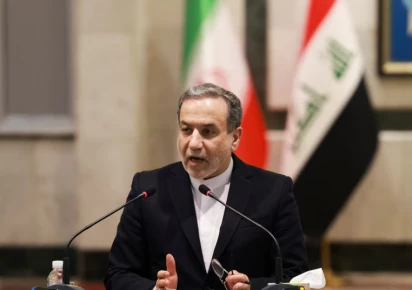
    Iran has ruled out direct negotiations with the United States for now, saying Washington must first comply with the terms of an interim agreement reached in June. Iranian Foreign Minister Abbas Araghchi said on Sunday that Tehran and Washington were not holding direct talks. He said messages were still being exchanged through intermediaries. Araghchi also reiterated Iran’s position on the Strait of Hormuz. He said the strategic waterway would not reopen simply because Iran and Oman reached an agreement on shipping arrangements. According to Iranian reports, Tehran and Muscat are close to finalising an understanding on a temporary shipping route. However, Iran says the route can only be used after other conditions are met. The Strait of Hormuz has remained at the centre of the wider conflict. Iran has repeatedly linked its reopening to demands directed at Washington. Iranian officials have called for an end to US threats and military action. They have also demanded the lifting of sanctions and blockades and the release of Iranian assets. Iran’s Revolutionary Guard has separately warned that the strait will remain closed until Tehran’s conditions are accepted. The force accused its opponents of shifting their focus toward reopening the vital waterway. The strait is one of the world’s most important energy routes. A significant share of global oil and gas shipments normally passes through it. Oman, meanwhile, said discussions with Iran over arrangements for shipping through the waterway had been positive and constructive. Muscat also urged all sides to avoid actions that could undermine the negotiations. Iranian President Masoud Pezeshkian has suggested that the current situation could provide an opportunity for an agreement. He said Iran remained united and strong despite the ongoing conflict. The diplomatic uncertainty comes as tensions continue to affect commercial shipping in the region. The United Arab Emirates said Iran had attacked a vessel linked to its state-owned oil company while it was travelling through the Strait of Hormuz. No injuries were reported. The United Kingdom Maritime Trade Operations agency also reported that a vessel caught fire after being struck by an unidentified projectile. The fire was later brought under control, with no environmental damage reported. Iranian authorities have not immediately commented on the individual incident. Saudi Arabia reports fires at energy facilities Tensions have also spread across the Gulf. Saudi Arabia said firefighters had extinguished a blaze at an Aramco facility in Jizan. The Saudi Energy Ministry said there were no fatalities. Yemen’s Houthi movement claimed responsibility for an attack on the site, saying it had used a drone in response to alleged Saudi strikes in Yemen. A separate explosion was also reported in the industrial area of Jubail. Regional sources said gas facilities were targeted and that a fire broke out. The exact cause remained unclear. It was not immediately established whether the incidents in Jizan and Jubail were connected. US defence industry ordered to increase weapons production Meanwhile, the United States has asked its defence industry to accelerate weapons production amid shortages linked to the war with Iran. US Deputy Defence Secretary Steve Feinberg reportedly instructed defence companies to submit plans aimed at speeding up deliveries and increasing production of critical military equipment. The demand comes amid reports of pressure on US ammunition supplies, including stocks of Patriot missile interceptors. The Trump administration has maintained that the United States has substantial weapons reserves and that additional supplies are being manufactured and delivered. The conflict has also triggered threats from armed groups in the region. The leader of Iraq’s Harakat Hezbollah al-Nujaba, Akram al-Kaabi, has threatened retaliation for US-Saudi strikes on sites belonging to Iraq’s Popular Mobilisation Forces. The group has warned that further military action could lead to a response. Iranian military officials, meanwhile, have claimed that the United States and Israel failed to achieve their objectives against Iran. They have praised the country’s military preparedness and vowed to continue resisting pressure. With the Strait of Hormuz still closed and negotiations remaining indirect, the prospect of restoring normal shipping remains uncertain. Iran insists that reopening the waterway depends on Washington accepting its conditions. The United States, meanwhile, has linked the lifting of its blockade to Iran fulfilling commitments under any future agreement.

  • |

    North Korea fires missile ahead of US-South Korea drills

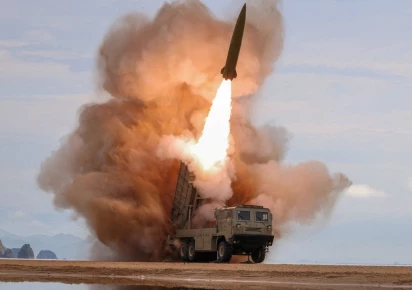
    SEOUL: North Korea launched a suspected ballistic missile into waters off the Korean Peninsula’s eastern coast on Wednesday, raising tensions just days before major military exercises between South Korea and the United States. South Korean and Japanese authorities detected the launch from the Wonsan area on North Korea’s east coast at around 6am local time. The missile travelled approximately 700 kilometres before falling into the sea, according to South Korean and Japanese defence officials. The launch came only days before the annual Ulchi Freedom Shield exercises, scheduled to begin on August 17 and continue through August 27. The drills are designed to strengthen the allies’ ability to respond to security threats from North Korea. Pyongyang has repeatedly criticised the exercises, describing them as preparations for a potential attack. Seoul and Washington maintain that the drills are defensive and necessary to improve their combined military readiness. South Korean officials said Wednesday’s launch was the latest in a series of weapons tests conducted by North Korea this year. It was assessed as the country’s 11th suspected ballistic missile test of 2026. North Korea had also launched a missile from the Wonsan region on August 6. Pyongyang did not publicly acknowledge that test. Analysts said the latest launch could have been part of North Korea’s ongoing weapons development programme. However, its timing may also have been intended to send a political and military message ahead of the upcoming US-South Korean exercises. South Korean authorities have not yet confirmed the exact type of missile involved. Officials said a detailed analysis was under way to determine its specifications. The missile’s reported range and launch location have prompted speculation that it could have been a hypersonic weapon or another advanced missile system. Officials have not confirmed those assessments. Seoul and Tokyo condemn launch South Korea and Japan strongly criticised the missile test. South Korean authorities convened an emergency security meeting and called on Pyongyang to stop activities that violate United Nations Security Council resolutions. South Korea’s military said it remained fully prepared to respond to any further provocation and would maintain its combined defence posture with the United States. Japan also lodged a formal protest through diplomatic channels. Japanese Defence Minister Shinjiro Koizumi condemned the launch and said Tokyo was closely monitoring developments. The latest test follows growing tensions over North Korea’s expanding weapons programme and Japan’s plans to strengthen its defence capabilities. North Korean state media had criticised Japan’s latest defence policy document a day earlier, accusing Tokyo of using the North Korean threat to justify an increase in military spending and capabilities. The US Indo-Pacific Command said it was coordinating closely with South Korea and Japan. Its initial assessment was that the missile launch did not pose an immediate threat to US territory, American personnel or its allies.

  • |

    Come to streets, we’ll serve you water’: Nasir

    Sindh Local Government Minister Syed Nasir Hussain Shah has responded strongly to recent statements by MQM-P leaders Khalid Maqbool Siddiqui and Mustafa Kamal. The remarks have sparked a fresh political exchange between the Sindh government and the MQM-P leadership. Shah reacted to the MQM-P leaders’ calls for political mobilisation and protests. He said they were free to take to the streets if they wanted to. In a sarcastic remark, he said the weather was hot and that “water would be provided” to them. The minister also questioned MQM-P’s demand for an account of the past 18 years. He asked the party leaders to explain how much accountability they had themselves provided during their political tenure. Shah also rejected suggestions about changing the existing structure of Sindh. He said the constitutional and geographical status of the province could not be changed according to the wishes of an individual political leader. He also criticised Mustafa Kamal’s remarks about the creation of new provinces. Shah said the country was already facing difficulties in managing its existing four provinces. He questioned why there was now a demand for additional provinces. The minister accused the MQM-P of turning towards public issues as elections approach. He said the party had previously enjoyed the benefits of political power but was now raising issues concerning the people. Shah’s comments came after Khalid Maqbool Siddiqui accused the Pakistan Peoples Party of creating an ethnic and linguistic divide in Sindh. Siddiqui had also demanded an accurate population count and stronger local governments. MQM-P leader Mustafa Kamal had separately said that the party would take to the streets to demand its rights. The statements have increased political tension between the MQM-P and the Sindh government. Sindh Culture Minister Zulfiqar Shah also criticised the MQM-P leadership. He said Khalid Maqbool Siddiqui was struggling to protect his position as party chairman. Zulfiqar Shah described the differences between Khalid Maqbool and Mustafa Kamal as the result of what he called divisive politics. He said the MQM-P leadership should first resolve its own differences. He also questioned the competing positions within the party. According to Zulfiqar Shah, the divided leadership should first decide whose statements should be taken seriously. The latest exchange comes amid renewed political debate over Sindh’s governance, representation and local government system. MQM-P has been demanding greater authority for local governments and an accurate population census. The party has also raised concerns about political representation and resource distribution in Sindh. The Sindh government, however, has rejected calls that could affect the province’s existing constitutional and geographical structure.

  • | |

    Balochistan to bring 1.8 million out-of-school chi…

    The Balochistan government has approved the implementation of a large-scale non-formal education programme aimed at bringing 1.8 million out-of-school children back into the education system. The decision was made during a meeting chaired by the provincial chief secretary, where officials reviewed plans to expand access to education for children who have been unable to attend formal schools due to various social and economic challenges. Under the initiative, children who have missed out on formal education will be provided with alternative learning opportunities through a structured non-formal education system. The programme is designed to help them continue their studies and improve literacy across the province. Officials said the project will be implemented over the next five years. For the current fiscal year, the provincial government has allocated Rs8 billion to launch and support the initiative. The chief secretary said the programme will operate under the supervision of the Social Welfare Department, which will oversee its implementation and ensure educational services reach children in underserved communities. Special priority will be given to children between the ages of 9 and 16, a group considered most vulnerable to dropping out of school or never enrolling in formal education. The initiative is expected to expand educational access, reduce the number of out-of-school children, and improve learning opportunities for thousands of young people across Balochistan.

Leave a Reply

Your email address will not be published. Required fields are marked *