vicky kaushal prepares
| |

Vicky Kaushal prepares for major transformation in Mahavatar

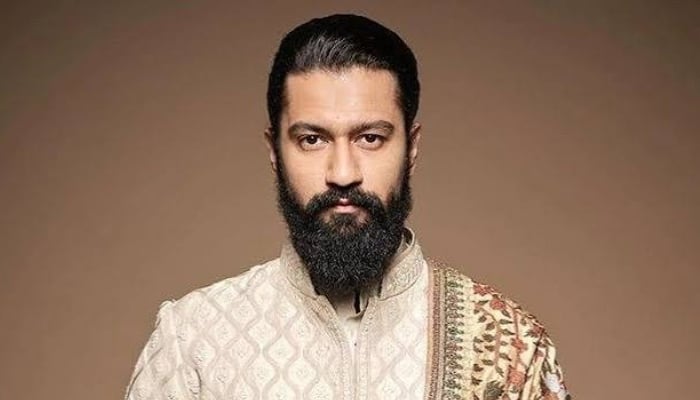
Vicky Kaushal is reportedly preparing for one of the most demanding physical transformations of his career as he gears up to play the legendary warrior sage Parashurama in the upcoming mythological film Mahavatar. According to recent reports, the actor will undergo an intensive fitness programme that includes gaining more than 25 kilograms to achieve the larger-than-life physique required for the role.

As reported by Mid-Day, Kaushal is set to reunite with celebrity fitness coach Tejas Lalwani, who previously helped him transform for the historical blockbuster Chhaava. The actor reportedly plans to begin training in September, nearly three months before the film goes on floors in December. The makers are said to be aiming for a transformation even more challenging than the one he underwent for Chhaava.

For Chhaava, Kaushal increased his weight from 80 kg to 105 kg to portray Chhatrapati Sambhaji Maharaj. However, Mahavatar will reportedly require an even bigger and more muscular frame to accurately portray Parashurama, one of Hindu mythology’s most powerful warrior sages. According to the report, the character demands a commanding screen presence and the physical strength to convincingly perform intense action sequences involving the iconic parashu (battle axe).

The report states that Kaushal’s preparation will focus on three key areas: training, nutrition and recovery. Fitness coach Tejas Lalwani and nutritionist Alkesh Sharotri have reportedly designed a rigorous programme to help the actor build size and strength while maintaining overall fitness.

His workout routine is expected to revolve around compound exercises, including squats, deadlifts, bench presses and pull-ups, with the intensity gradually increasing over the training period. Alongside the workouts, Kaushal is reportedly expected to consume an additional 250 to 500 calories daily, following a protein-rich diet that includes nuts, dairy products and whole grains to support healthy muscle gain.

Recovery is also expected to play a crucial role in the transformation. According to the report, Kaushal will follow a strict recovery schedule that includes eight hours of sleep every night and 48-hour rest periods for each muscle group to minimise fatigue and maximise muscle growth during the demanding preparation.

Mahavatar reunites Kaushal with Tejas Lalwani after their successful collaboration on Chhaava, a performance that earned widespread praise for the actor’s commitment to physically embodying the Maratha ruler. The upcoming film is expected to present an even greater challenge as Kaushal steps into a mythological role requiring extraordinary physical presence.

While Mahavatar remains one of his most anticipated future projects, Kaushal’s next major theatrical release will be Sanjay Leela Bhansali’s period drama Love & War, scheduled to arrive in cinemas on January 21, 2027. Fans are now eagerly waiting to see the actor’s dramatic transformation once filming for Mahavatar begins.
Similar Posts

  • | |

    Roma Ria steps into national director role for Mis…

    Roma Ria is entering a new chapter in her pageant journey as she officially steps into the role of National Director for Miss Universe Pakistan. The announcement marks an important moment for Ria, who previously represented Pakistan as Miss Universe Pakistan 2025. Sharing her feelings about the new responsibility, Ria described the appointment as a deeply meaningful achievement. She said she was “incredibly humbled, grateful, and honored” to be officially announced as the national director. The new position places Ria in a role that goes beyond the spotlight, giving her an opportunity to help shape the future of Pakistan’s participation in the Miss Universe competition. As national director, she will have a greater role in guiding the pageant, supporting contestants and helping prepare future representatives for the international stage. Ria’s transition from titleholder to leadership also adds a personal touch to the development of Miss Universe Pakistan. Having experienced the competition herself, she understands the preparation, expectations and pressure that come with representing the country internationally. Her journey has also been connected with advocacy and community work. Online references to Ria describe her as the founder of Rehmat Foundation, an initiative associated with supporting girls’ access to education. (Instagram⁠) This gives her new position a wider dimension, as her public platform has increasingly extended beyond fashion and pageantry. For Ria, the national director role appears to be about creating opportunities as much as celebrating beauty. Pageants today increasingly place emphasis on confidence, communication, social causes and leadership, allowing contestants to use their visibility to represent something larger than themselves. Her appointment could therefore signal an evolving direction for Miss Universe Pakistan, with greater attention on empowering contestants and preparing them to become confident representatives of the country. Ria’s announcement has also highlighted the significance of her own journey. From wearing the national title on an international stage to helping guide the next generation of Pakistani contestants, she is now moving from competitor to mentor and decision-maker. With gratitude at the heart of her announcement, Ria is embracing the responsibility with optimism. Her new role gives her a chance to contribute to the pageant from behind the scenes while helping future contestants step onto the global stage with confidence. As Miss Universe Pakistan continues to build its presence, Roma Ria’s move into the national director position represents a fresh beginning — one that combines pageantry, leadership and a commitment to creating meaningful opportunities for women in Pakistan. (Instagram⁠)

  • | | |

    Weak bureaucracy lies at heart of governance crisi…

    Recent remarks by Interior Minister Mohsin Naqvi, who said that Pakistan’s governance system has “collapsed,” have once again sparked debate over the country’s administrative failures. However, the real issue goes far beyond the number of provinces or administrative units and cannot be attributed solely to a lack of political will at the highest level. The core problem, according to the analysis, is the gradual weakening of Pakistan’s civil administrative structure, which has steadily lost its ability to govern effectively over the past several decades. Instead of identifying this institutional failure, the minister’s comments appear to focus on the symptoms of the crisis rather than its root causes. The repeated reliance on extraordinary measures, task forces, and parallel administrative structures itself reflects the inability of the regular civil bureaucracy to perform its responsibilities efficiently. Under the leadership of Army Staff Field Marshal Asim Munir,the military leadership has consistently emphasized economic revival, action against organized mafias, and restoring investor confidence. The establishment of the Special Investment Facilitation Council (SIFC) also emerged as a response to the inability of the civil bureaucracy to deliver timely economic solutions. However, such initiatives cannot permanently replace an efficient civilian administrative system. The governance crisis stems from the persistent decline in the effectiveness of Pakistan’s civil bureaucracy across the federation, provinces, divisions, and districts. Political interference, weak accountability, and poor human resource management have significantly undermined its performance. Punjab is often cited as a partial exception, where relatively limited political interference in routine administration has enabled the bureaucracy to function more effectively. This reinforces the argument that sustainable governance depends on institutional autonomy and merit-based administration rather than temporary or emergency arrangements. Governance experts have long advocated restoring the Establishment Division at the federal level and the Services and General Administration Departments (S&GADs) in the provinces to their original role as independent institutions responsible for managing human resources. Their objective is to ensure that appointments, promotions, and career planning remain protected from political influence and external pressure. The analysis further argues that Pakistan’s civil service should adopt a structured personnel management system similar to the military’s Military Secretary Branch at General Headquarters (GHQ), where recruitment, promotions, training, and career progression are managed through institutional discipline based on merit and performance rather than political considerations. The military’s internal human resource management system is often regarded as organized, merit-based, and largely insulated from political interference. In contrast, the civil Establishment Division is frequently viewed as a bureaucratic office where transfers and appointments are influenced by political lobbying, personal connections, and pressure from powerful groups instead of institutional needs. These practices have produced long-term consequences. Civil servants are often assigned to positions unrelated to their expertise, career planning remains weak or absent, and accountability mechanisms continue to be inconsistent and ineffective. As a result, governance across various sectors has suffered. The report notes that these shortcomings have been identified repeatedly over the years. More than 20 commissions and reform committees have reviewed Pakistan’s civil service structure during the country’s history. Between 1996 and 2008 alone, at least six major studies highlighted the same concerns, including politicization of the bureaucracy, the absence of merit-based appointments, and weak institutional management of human resources. Despite these findings, most recommendations were never implemented. Successive governments, whether civilian or military, have shown little willingness to reduce their influence over administrative appointments and transfers. Consequently, repeated attempts at civil service reform have failed to produce lasting institutional change. The analysis concludes that Pakistan’s governance crisis is not the result of a failure to identify the problem but rather a lack of political commitment to implementing meaningful institutional reforms. In this context, Mohsin Naqvi’s recent remarks do not fully address the deeper structural weaknesses within the state. The central issue is not merely that the system has collapsed, but that the country’s primary administrative engine—the civil bureaucracy—has been allowed to deteriorate without comprehensive reform. The proposed solution is not the creation of additional provinces but the rebuilding of the civil administrative system on the principles of merit, protection from political interference, and professional career management comparable to the military’s administrative framework.

  • | |

    Fahad Sheikh responds to Syed Mohammad Ahmed controversy

    Pakistani actor and host Fahad Sheikh has addressed the controversy surrounding allegations that he mistreated veteran actor Syed Mohammad Ahmed on a drama set. The controversy began after Syed Mohammad Ahmed spoke about an unpleasant experience involving a younger lead actor. Although he did not publicly name the actor, Fahad Sheikh was later identified by social media users as the person allegedly involved in the incident. The allegations quickly attracted attention across social media, with several Pakistani celebrities and fans expressing support for the veteran actor. Fahad also faced criticism over the incident and was urged to explain his side of the story. Responding to the controversy, Fahad Sheikh said the video circulating online was taken from what he described as a joking interaction among members of the cast. He maintained that the actors had developed a family-like bond while working together. Fahad also addressed Syed Mohammad Ahmed directly and offered an apology. He said he was willing to apologise publicly again if the senior actor wanted him to do so. However, Fahad expressed anger over the leaked footage. He warned that legal action could be taken against those responsible for recording or sharing the video without permission. His response has failed to end the controversy, as social media users continue to debate whether the incident should be dismissed as a joke or treated as inappropriate behaviour towards a senior colleague. Some users criticised Fahad for focusing on the leaked video and possible legal action rather than giving a stronger apology. Others argued that the complete context of the incident should be considered before reaching a final conclusion. The controversy has also reignited discussions about workplace behaviour and respect for senior artists in Pakistan’s entertainment industry. Syed Mohammad Ahmed remains a respected figure in Pakistani television and has received considerable support from fellow actors and viewers following his account of the incident.

  • |

    KATSEYE’s ‘Hootie Frutti’ sparks mixed reaction from fans

    KATSEYE’s latest song, “Hootie Frutti,” has sparked a divided reaction among fans following its release as part of the group’s new WILD EP. The track arrived on August 14 alongside the six-song extended play, released through HYBE UMG and Geffen Records. While some fans have welcomed the song’s upbeat and playful sound, others have expressed disappointment with its repetitive lyrics, musical style and the overall concept presented in its music video. A section of the group’s fanbase has also raised concerns about the visuals and choreography, particularly because KATSEYE has a significant younger audience. Some viewers argued that certain elements of the video appeared too suggestive and were not appropriate for younger fans who may be watching the group’s content. The criticism quickly spread across social media, with several listeners openly sharing their disappointment. One fan questioned whether the group’s younger audience had been properly considered when the music video was created, while another criticised the song’s writing and suggested that the members themselves should have questioned the quality of the track. Another commenter admitted that they had not expected to dislike a KATSEYE release but described “Hootie Frutti” as a particularly weak song. The mixed response has created a noticeable debate among fans, with some defending the group’s playful approach while others remain unimpressed by the track. Despite the criticism, “Hootie Frutti” forms part of a wider musical era for KATSEYE with the release of the WILD EP. The project features “Pinky Up,” “Animal,” “Hootie Frutti,” “Bel Air,” “That Way” and “Unloveu.” The latter is available exclusively on the physical edition of the EP. KATSEYE began introducing the project earlier this year with “Pinky Up,” which was released on April 9. The group later followed it with “Animal” on July 24 before unveiling “Hootie Frutti” alongside the complete EP in August. The release also comes as KATSEYE prepares for a major international touring schedule. The group’s Wildworld Tour is set to begin in Dublin on September 1 before travelling through several cities. The tour is scheduled to wrap up in Mexico City on November 27. As the group moves into its next phase, the reaction to “Hootie Frutti” highlights the different expectations surrounding KATSEYE’s music and image. While the song has found support among listeners who enjoy its energetic style, the criticism surrounding its lyrics, visuals and choreography shows that not every fan is convinced by the direction. With the Wildworld Tour approaching, KATSEYE will have an opportunity to present the WILD EP to audiences on stage and potentially give songs such as “Hootie Frutti” a different reception through live performances.

  • | |

    Dr Nabiha Ali Khan addresses Haris Khokhar’s divorce notice

    Social media personality and medical professional Dr. Nabiha Ali Khan has formally addressed receiving a divorce notice from her husband, Haris Khokhar, bringing a definitive end to months of intense public speculation surrounding their fractured marriage. ​The couple, whose lavish wedding celebrations previously went viral across Pakistani digital platforms, found themselves at the center of overwhelming online scrutiny following rumors of a rift. Public concern intensified after Dr. Nabiha spoke candidly during a live television appearance, breaking down in tears as she detailed severe emotional distress and alleged ongoing interference from her in-laws. ​Confirming the latest legal developments, Dr. Nabiha acknowledged the receipt of the formal divorce notice initiated by Khokhar, stating that personal differences and mounting friction had made reconciliation impossible. She shared that despite making genuine efforts to preserve her home and prioritize family life over her professional commitments, the relationship deteriorated beyond repair. ​The dispute sparked a fierce online debate, particularly after Khokhar issued public statements refuting his wife’s claims. Denying allegations of mistreatment, Khokhar maintained that his family had been unfairly maligned on live broadcasts and asserted that the decision to part ways stemmed from irreconcilable personal incompatibilities rather than domestic misconduct. ​Responding to the ongoing media storm, Dr. Nabiha voiced deep frustration over how their private ordeal has been monetized by content creators and digital news outlets. She issued a direct plea to netizens and social media commentators, asking them to refrain from sensationalizing the dissolution of her marriage for online engagement. ​”I request everyone to please stop making content out of our personal life. This is a private family matter, and turning someone’s emotional pain into social media debate is deeply unfair. I built my home with love, and despite the differences that led us here, I ask that people respect both sides and refrain from spreading further hostility.” ​Reflecting on the painful transition, Dr. Nabiha emphasized that while she had consistently hoped for a peaceful resolution, the legal notice officially sets the divorce process in motion. She urged her followers and the wider public to give both families the necessary space and privacy to navigate the formal legal proceedings dignifiedly without enduring further public trials on social media.

  • | |

    Chinese suspects seek bail in organ trade case

    Three Chinese nationals arrested in a case involving the alleged illegal sale of human organs have approached the Islamabad High Court (IHC) seeking post-arrest bail. The bail petitions were heard by IHC Justice Arbab Muhammad Tahir. The petitioners include Li Gang Chai, Ping Fei Guo and Wang Bao. The three suspects are facing a case registered by the Federal Investigation Agency’s (FIA) Corporate Crime Circle. A trial court had earlier rejected their bail applications. Appearing on behalf of the petitioners, Barrister Yawar Qureshi requested the court to transfer the cases to another bench. He told the court that petitions involving similar circumstances were already pending before a different bench. The lawyer requested that the three cases also be transferred to the bench of Justice Muhammad Azam Khan. Justice Arbab Muhammad Tahir observed that Justice Muhammad Azam Khan was currently on summer vacation and transferring the cases could delay the proceedings by around a month. However, following the lawyer’s insistence, the court accepted the request for consideration of the bench change. The court directed that the case file be sent to the Chief Justice’s Office for a decision regarding the transfer of the petitions.

Leave a Reply

Your email address will not be published. Required fields are marked *