iran displays wreckage
| | | | |

Iran displays wreckage of US, Israeli aircraft in …

Iran’s Islamic Revolutionary Guard Corps (IRGC) has put the wreckage of US and Israeli aircraft on public display, offering a dramatic glimpse of the military hardware Tehran says was destroyed during the recent war.

Images released by Iranian state-linked media show sections of aircraft arranged as part of an exhibition, including what has been identified as the remains of a US F-15 fighter jet. The display reportedly includes the aircraft’s ejection seat, canopy and part of its tail.

The exhibition appears designed not only to showcase recovered wreckage but also to underline Iran’s claims about the effectiveness of its air-defence capabilities during the conflict.

The appearance of the F-15 debris is particularly significant. Recent reporting has identified the wreckage as belonging to an F-15E Strike Eagle, while Iranian authorities have presented it as evidence of a successful engagement against US airpower.

However, claims surrounding aircraft losses have been contested throughout the conflict. In earlier incidents, Iranian officials announced that US aircraft had been destroyed, while American officials disputed some of the claims. Independent identification of battlefield wreckage has also sometimes proved difficult.

Iranian forces have previously showcased captured or downed US military equipment as symbols of resistance. A similar exhibition in Tehran in 2019 displayed wreckage of a US Global Hawk drone claimed to have been shot down by Iran.

The latest display comes after Iran also claimed on July 30 that three US F-35 fighter jets had been destroyed at Jordan’s Al Azraq airbase. That claim has not been independently established.

By placing the aircraft remnants on display, Tehran is turning battlefield debris into a powerful political and military message—one intended to demonstrate that even advanced American and Israeli aircraft can be targeted during wartime.

The exhibition is likely to fuel further debate over the scale of aircraft losses during the conflict and the competing narratives presented by Iran, the US and Israel.

Similar Posts

  • | | |

    US military reports diverting 35 ships amid Iran m…

    The United States Central Command (CENTCOM) has reportedly stated that 35 commercial vessels were diverted as part of ongoing maritime operations involving Iran, according to media reports citing an official statement. The reported developments have drawn attention to maritime security in the strategically important Gulf region. According to the statement shared by CENTCOM, the U.S. military continues to enforce maritime measures that were reportedly reintroduced last month. Officials claimed that 35 commercial ships had been redirected during the operation. The statement also alleged that two vessels were disabled, while two others were boarded for inspection or brought under operational control. These claims have not been independently verified. The Strait of Hormuz remains one of the world’s most critical maritime chokepoints, serving as a major transit route for global oil and gas exports. Any military activity or disruption in the area has the potential to affect international shipping, energy markets, and regional stability. As a result, developments involving the waterway are closely monitored by governments, businesses, and security analysts worldwide. Separate reports indicated that Iranian officials denied speculation regarding any change in policy concerning the Strait of Hormuz. According to those reports, Iran maintained that there had been no new decision affecting the waterway and that its existing policy remained unchanged. Independent confirmation of these statements is limited, and official positions may evolve as the situation develops. Tensions between the United States and Iran have periodically affected maritime security in the Gulf over the years. Military deployments, sanctions, and regional disputes have contributed to an environment where commercial shipping operators closely follow official advisories and security updates before entering the region. As the situation continues to develop, additional information from official government statements, international maritime organizations, and independent reporting will be important in providing a clearer understanding of events. Given the strategic significance of the Strait of Hormuz, any confirmed changes in maritime operations could have broader implications for global trade, energy supplies, and regional security.

  • | |

    Naqvi warns against disrupting peace, backs lawful…

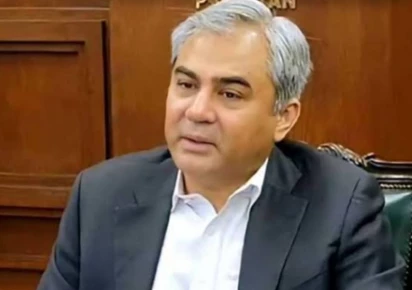
    ISLAMABAD: Federal Interior Minister Mohsin Naqvi has made it clear that the government will not allow anyone to undermine peace and public order, while reaffirming that citizens have the right to hold peaceful protests within the limits of the law. Speaking during a visit to the Frontier Corps (FC) Training Center in Shabqadar, Naqvi said peaceful demonstrations were a legitimate democratic right and would not be opposed as long as they remained lawful. However, he stressed that protests could not be used as a pretext for violence, vandalism or activities that threaten public safety and disrupt law and order. During the visit, the minister reviewed the training standards and operational preparedness of FC personnel stationed at the facility. He also received briefings on the security situation and challenges facing the region, along with measures being taken to protect citizens and maintain stability. Naqvi praised the Frontier Corps for its contribution to maintaining peace and security in Khyber Pakhtunkhwa and acknowledged the role of its personnel in dealing with security challenges. The Interior Minister reiterated that maintaining peace and protecting public safety remained a priority, adding that lawful political and public activity would be respected while any attempt to disturb the peace would be dealt with according to the law.

  • |

    Progressive Abdul El-Sayed and moderate Haley Stevens lock horns in high-stakes Michigan Democratic Senate primary

    Voters across Michigan headed to the polls on Tuesday for a pivotal Democratic Senate primary that has emerged as a major battleground testing the ideological direction of the party. Former public health director Abdul El-Sayed faced four-term US Representative Haley Stevens in a fierce contest to secure the nomination to replace retiring Democratic Senator Gary Peters. The election night watch party for El-Sayed in Detroit saw left-wing commentator Hasan Piker launch a sharp critique against the Democratic political establishment while speaking to media representatives. Piker praised El-Sayed’s campaign as an “issues-first” movement, asserting that grassroots engagement carried greater weight than financial backing. Piker drew specific attention to external campaign funding, taking aim at the more than $30 million (£23.5 million) poured into the race by political action committees affiliated with the American Israel Public Affairs Committee (AIPAC) in support of Stevens. Describing the influx of negative advertising against El-Sayed as a “heinous smear campaign”, Piker expressed hope that mainstream Democrats would learn from El-Sayed’s approach. He also dismissed suggestions that the candidate or his high-profile backers would prove to be a general election liability, arguing that voters are disillusioned with personality-driven politics and seeking structural policy changes. Throughout the primary, the candidates presented starkly contrasting visions for the party’s future in the battleground state. El-Sayed, who gained endorsement from Senator Bernie Sanders, focused his platform on reducing corporate influence in politics, expanding healthcare access, and providing economic support to working families. Responding to characterisations regarding his political stance, El-Sayed clarified that he advocates for regulated capitalism rather than socialism. Conversely, Stevens leaned on her tenure in the US House of Representatives and her previous role in the Obama administration, positioning herself as a pragmatic candidate with the legislative track record needed to retain the seat. While earlier polling indicated El-Sayed held a slight edge, surveys suggested Stevens might hold broader appeal amongst moderate voters in the upcoming general election. The political friction surrounding the primary also drew public commentary from US President Donald Trump, who characterised the race as a contest between a “communist and a socialist.” The winning Democratic nominee will move on to face Republican candidate Mike Rogers in the November general election, a race anticipated to play a crucial role in determining party control of the US Senate.

  • | |

    10 India-backed terrorists killed in security oper…

      At least 10 terrorists affiliated with the India-backed group Fitna al-Hindustan were killed during an exchange of fire with security forces in Balochistan’s Khuzdar district, according to security sources. The sources said the operation was launched in the Shor Parod mountainous region after intelligence reports indicated the presence of militants linked to Fitna al-Hindustan, which Pakistani authorities describe as an Indian proxy group. During the operation, security personnel engaged the militants in an intense exchange of fire. At least 10 terrorists were killed, while several others sustained injuries, according to the security sources. The operation was carried out as part of ongoing efforts to counter militant activity in the province. Security officials reiterated their resolve to continue intelligence-based and targeted operations against terrorist groups until the threat of terrorism is eliminated from the country. They said security forces would remain vigilant and take action against militants involved in attacks and other violent activities. The latest development comes three days after another major security operation in Balochistan in which at least eight terrorists affiliated with Fitna al-Hindustan were killed following the premature detonation of a vehicle-borne improvised explosive device (VBIED). According to security officials, the explosive device detonated while the militants were reportedly preparing it in Surab district. The premature blast killed several terrorists and disrupted what was believed to be an attempt to prepare an attack. Security forces subsequently launched an operation in the area. During the operation, personnel detected the movement of terrorists who were attempting to flee from the area. The security forces pursued the militants and killed 10 of them, according to officials. The incidents highlight the continuing security challenges faced by Balochistan, which has witnessed repeated militant attacks and counterterrorism operations in recent years. Pakistan has experienced a significant increase in terrorist activity, particularly in Khyber Pakhtunkhwa (KP) and Balochistan, since 2021, when the Afghan Taliban returned to power in Afghanistan. Both provinces have remained major areas of concern for Pakistani security authorities because of the frequency and intensity of militant attacks. According to a report published by the Centre for Research and Security Studies (CRSS), KP and Balochistan continued to be the country’s primary hotspots for violence during the second quarter of 2026. The report identified Khyber Pakhtunkhwa as the worst-affected region during the period. It said the two provinces together accounted for nearly 96% of all violence-related fatalities recorded across Pakistan during the quarter. Of the total number of deaths reported, more than 61%, or 475 fatalities, occurred in KP. Balochistan recorded 265 deaths, accounting for approximately 34% of the total. Khyber Pakhtunkhwa also registered the highest number of violent incidents during the quarter. According to the CRSS report, the province recorded 151 incidents, representing 57% of all such incidents reported nationwide. Balochistan followed with 94 violent incidents, making up around 35% of the national total. The figures underline the concentration of militant activity and violence in the two provinces. Security forces have continued conducting operations in both regions to disrupt militant networks, prevent planned attacks and target individuals involved in terrorism. The latest operation in Khuzdar is part of these continuing counterterrorism efforts.

  • | |

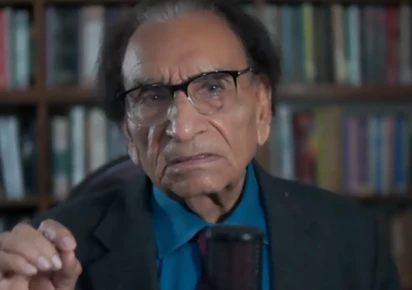
    Ainak Wala Jin creator Hafeez Tahir condemns AI remake

    Veteran writer and director Hafeez Tahir, the creator of the iconic Pakistani fantasy television series Ainak Wala Jin, has strongly criticised the makers of the recently released AI-generated film adaptation, alleging that his original work was used without his permission. The AI-based adaptation was released in cinemas earlier this month, prompting Tahir to share a video on Instagram in which he expressed his disappointment and urged the public to spread awareness about what he described as the unauthorised use of his creation. In the caption accompanying the video, he referred to the matter as “daylight robbery.” Speaking directly to viewers, Tahir asserted that Ainak Wala Jin was entirely his original creation. “Today I am very angry because my life’s work, Ainak Wala Jin, is being taken and its name is being used in an AI-generated film that has been released in theatres. I’d like to tell you all that this is my idea, my concept, my creation,” he said. The veteran filmmaker further explained his role in developing the beloved television series. “I am the concept writer. I created the name, I directed it and made a quality serial,” Tahir stated. He added that he later sold the rights to a private television channel, which, according to him, continues to benefit from the show’s popularity by attracting millions of views through YouTube uploads. Tahir also alleged that neither the filmmaker nor the cinema releasing the AI adaptation sought his approval before using the title and concept. “Neither the filmmaker nor the cinema that released the film sought my permission,” he claimed. The creator further criticised the heavy reliance on artificial intelligence in the adaptation, arguing that it stripped away the originality and emotional appeal of the classic television series. “To take a series and base it on AI is to ruin an iconic idea. They’ve changed the appearance of the characters and destroyed them,” he said. Expressing particular disappointment over the portrayal of one of the show’s most recognisable characters, Tahir added, “My main character, Nastoor Jin, looks like a dacoit here. They have changed the original characters, their voices and replaced them with AI-generated music. In this way, they have ruined such a beautiful idea.” Concluding his statement, Tahir suggested he may pursue legal action over the matter. “Now tell me, should we stay quiet or move forward and take legal action?” he asked. The video drew significant attention online, with many fans supporting Tahir and expressing concern over the use of artificial intelligence to recreate a cherished Pakistani television classic without the creator’s involvement. Several users criticised the filmmakers for relying on AI, while others said the controversy was upsetting because Ainak Wala Jin remains an important part of their childhood memories. One fan described the series as a defining part of growing up, while another said the situation was “so upsetting.” Originally broadcast in 1993, Ainak Wala Jin became one of Pakistan’s most popular children’s fantasy dramas. Running for 152 episodes, the series followed Nastoor Jin, portrayed by Shahzad Qaiser, a genie who travels to the human world in search of a cure for his weak eyesight. The show remains one of the country’s most memorable television productions decades after its original release.

  • |

    Russia condemns EU’s 21st sanctions, warns of consequences

    Russia has sharply criticized the European Union after the bloc approved its 21st package of sanctions, saying the new measures will damage European economies more than Russia and further increase tensions between Moscow and Brussels. In a statement released by Russia’s Permanent Mission to the European Union, officials said the approval process for the latest sanctions exposed growing divisions within the EU. According to Moscow, many member states were reluctant to support additional restrictions because of the economic burden they are already facing. Russia claimed the lengthy negotiations reflected increasing concern among European governments over the impact of sanctions on businesses, energy supplies and overall economic growth. The Russian mission accused the European Union of continuing a policy of confrontation despite rising economic challenges across Europe. It said EU leaders were ignoring the financial costs of sanctions while pursuing what Moscow described as a political campaign against Russia. The statement also referred to comments by EU High Representative for Foreign Affairs Kaja Kallas, who indicated that further sanctions could be introduced in the future. According to Russia, discussions on new sanctions have become a political ritual aimed at showing unity among EU member states rather than achieving practical results. Moscow argued that the restrictions have failed to weaken Russia in the way European leaders had expected. Instead, it claimed that European citizens and businesses are paying the price through higher energy costs, inflation and slower economic growth. The statement further argued that Europe’s economic difficulties have been intensified by the EU’s decision to reduce imports of Russian energy, continued financial and military support for Ukraine, and instability in global energy markets caused by ongoing tensions in the Middle East. Russian officials also pointed to a recent assessment by the European Central Bank, which highlighted geopolitical conflicts and energy market uncertainty as major risks to the European economy. Moscow said this assessment supports its argument that continued sanctions are creating additional pressure on European countries. Using a road journey as a comparison, the Russian mission said the European Union was following a path that could lead its economy into serious difficulties. It argued that EU policymakers should reconsider their current strategy instead of introducing more restrictions that, in Russia’s view, have produced limited results while increasing costs for Europe. The statement concluded by reaffirming that Russia considers the EU sanctions to be illegal unilateral measures. Moscow warned that any additional restrictions imposed by the European Union would receive what it described as an effective and appropriate response from Russia.

Leave a Reply

Your email address will not be published. Required fields are marked *