forest service chief
|

US Forest Service chief reportedly pressed staff to deploy extra aircraft for fire near his Idaho ranch

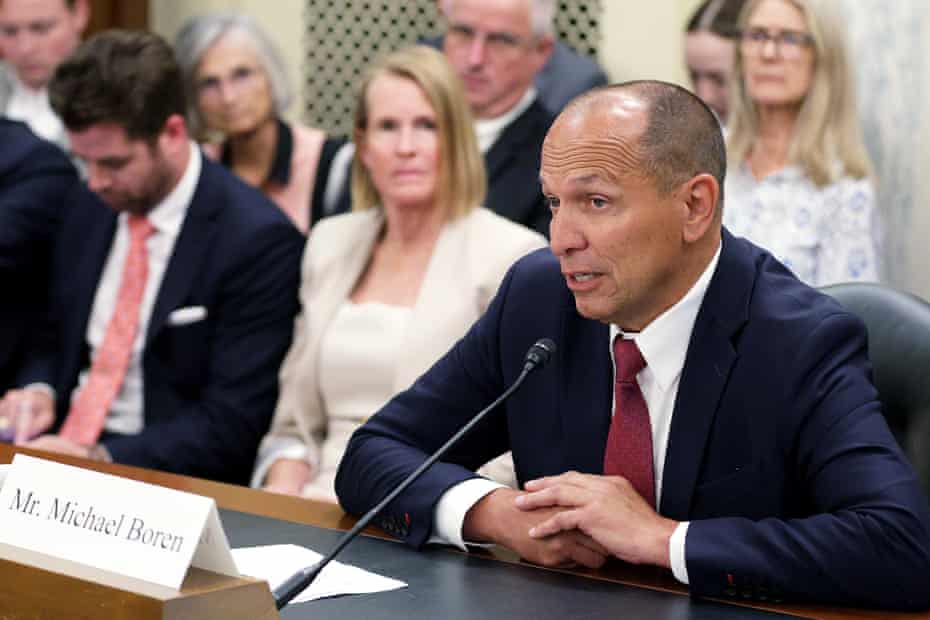
Michael Boren, the US Undersecretary of Agriculture for Natural Resources and Environment who oversees the US Forest Service, reportedly pressured agency staff to deploy additional aircraft to a small 7-acre wildfire burning near his private property in Idaho.

According to agency communications and current and former Forest Service officials, the Cabin Creek fire began on 12 July 2026 in the Sawtooth National Forest due to an unattended campfire. Boren, who owns a 480-acre ranch in the nearby Sawtooth National Recreation Area, repeatedly contacted regional and national operations leadership to question why more aircraft were not assigned to the blaze. Flight data reveals that approximately nine aircraft—including air tankers, tactical planes, and helicopters—were dispatched to the small fire, with some assets diverted from other active wildfires in Idaho.

Insiders noted that the emergency response was unusually heavy for a minor outbreak that ground crews could easily access and which posed no immediate threat to life or major infrastructure. In response, a spokesperson for the Department of Agriculture maintained that Boren merely reported the fire as any local landowner would and denied that he ordered or pressured staff to shift resources. The fire was fully contained by 15 July.

Similar Posts

  • |

    SNGPL faces billions in losses after LPG air-mix project abandoned

    Pakistan’s state-owned gas utility, Sui Northern Gas Pipelines Limited (SNGPL), has incurred losses worth billions of rupees after a major liquefied petroleum gas (LPG) air-mix project was shelved despite substantial investments in land, equipment, and infrastructure. The issue surfaced during a recent meeting of the Economic Coordination Committee (ECC), where the Ministry of Energy (Petroleum Division) presented a detailed briefing on the fate of the long-delayed project and proposed options for utilising the idle assets. The LPG air-mix initiative was originally approved between 2016 and 2018 under the Pakistan Muslim League-Nawaz (PML-N) government to provide gas to remote and mountainous regions where extending conventional natural gas pipelines was either technically challenging or financially unviable. The project envisioned the installation of 16 LPG air-mix plants, backed by an estimated government subsidy of around Rs16 billion. However, after the Pakistan Tehreek-e-Insaf (PTI) government assumed office, concerns over the project’s financial sustainability prompted a review. In March 2020, the Petroleum Division informed the ECC that the scheme required substantial government support and would place an additional financial burden on already struggling gas companies. The committee was presented with two options: continue the project with government subsidies or abandon it altogether. On March 25, 2020, the ECC decided to halt the installation of all LPG air-mix plants where construction had not yet commenced. Despite this decision, SNGPL had already acquired land, imported specialised equipment, and completed procurement for several planned facilities, resulting in significant sunk costs. The Petroleum Division later sought clarification regarding three proposed plants in Drosh, Ayun, and Chitral, where procurement activities had already been completed. In December 2020, the ECC directed SNGPL to discontinue these projects as well and dispose of the purchased land and equipment through an open and transparent process while minimising financial losses. According to officials, SNGPL subsequently issued tenders on three separate occasions to sell the unused assets. However, the company failed to receive any serious offers. As a result, the equipment remains stored in Lahore, while the sale of land is still awaiting approval from the Board of Revenue, Khyber Pakhtunkhwa. The Petroleum Division informed the ECC that SNGPL now estimates approximately Rs60 million will be required merely to conduct an operational health assessment of the idle machinery before any future use can be considered. The original project was estimated to cost Rs2.775 billion over a 15-year period. Of this amount, Rs943 million was allocated for plant installation, land acquisition, and civil works, while another Rs1.832 billion was earmarked for developing a gas distribution network capable of serving around 12,000 consumers in Chitral. Financial projections prepared at the time painted a challenging picture. SNGPL estimated an annual revenue shortfall of Rs419 million in the first year, increasing to approximately Rs815 million by the sixth year. In addition, the cost of producing synthetic natural gas through the LPG air-mix system was projected at nearly Rs25,000 per million British thermal units (mmBtu) during the initial year of operations. Despite these concerns, the Petroleum Division has now proposed a revised and more cost-effective plan. Officials told the ECC that by redesigning the project, optimising engineering specifications, and utilising existing company resources, the overall capital requirement could be reduced significantly to Rs1.779 billion. The revised proposal includes cutting civil construction costs and using surplus pipeline materials already available in SNGPL’s inventory. The company also believes operational expenses can be lowered by reducing unaccounted-for-gas (UFG) losses based on operational experience from similar facilities in Gilgit, while also improving fuel and power efficiency. Under the updated estimates, the annual revenue deficit could decline to Rs119 million in the first year, rising to Rs432 million by the sixth year. Likewise, the cost of producing synthetic natural gas could be brought down to around Rs7,229 per mmBtu, assuming an initial consumer base of approximately 2,000 households. To avoid further financial losses and make productive use of equipment already purchased, the Petroleum Division has recommended that one LPG air-mix plant be established in Chitral, subject to a technical health assessment of the stored equipment and approval from the original equipment vendor.

  • | |

    Pakistan, Iran reaffirm goal to boost bilateral tr…

    ISLAMABAD: Pakistan and Iran have reaffirmed their commitment to expanding bilateral trade to $10 billion, underscoring their determination to strengthen economic cooperation and deepen commercial ties. The pledge was made during the 10th session of the Pakistan-Iran Joint Trade Committee, where representatives from both countries reviewed trade relations and explored measures to enhance economic collaboration. Addressing the meeting, Pakistan’s Federal Minister for Commerce, Jam Kamal Khan, said the longstanding brotherly relationship between Pakistan and Iran should now be transformed into a robust economic partnership. He emphasized the importance of finalizing the proposed Pakistan-Iran Free Trade Agreement, saying it would open new opportunities for businesses and significantly increase trade between the two neighboring countries. The minister stressed the need to remove barriers affecting cross-border logistics, customs procedures, and cargo transportation to ensure smoother and more efficient trade flows. He also highlighted the potential of establishing joint border markets and implementing an electronic data interchange system to facilitate commerce and improve connectivity. Jam Kamal Khan noted that the private sectors of both countries are ready to expand trade and investment, adding that it is the responsibility of governments to provide a stable, business-friendly, and predictable environment that encourages commercial activity. He expressed confidence that the outcomes of the Joint Trade Committee meeting would produce a practical roadmap for strengthening Pakistan-Iran economic relations and accelerating progress toward the shared trade target of $10 billion.

  • |

    Pakistan, Kazakhstan agree to accelerate trade and agricultural cooperation

    ISLAMABAD: Pakistan and Kazakhstan have agreed to speed up the implementation of previously signed agreements and memorandums of understanding (MoUs), with both sides seeking to convert existing commitments into practical trade, investment and business opportunities. The understanding was reached during a meeting between Federal Minister for National Food Security and Research Rana Tanveer Hussain and Kazakhstan’s Ambassador to Pakistan Yerzhan Kistafin in Islamabad, where the two sides reviewed a broad range of issues related to agriculture, food security, connectivity, farm mechanisation and private-sector cooperation. According to the Ministry of National Food Security and Research, the meeting focused on identifying areas where bilateral cooperation could produce commercially viable projects and contribute to stronger economic relations between the two countries. Rana Tanveer Hussain said agriculture represented one of the most promising areas for expanding Pakistan-Kazakhstan relations, particularly given the potential for increased trade in agricultural commodities, machinery and technology. The minister stressed that bilateral agreements should move beyond formal commitments and result in concrete projects that could benefit businesses and farmers in both countries. He also called for closer coordination among government departments, research institutions, agricultural organisations and the private sector to facilitate investment and technology transfer. Joint agriculture working group to meet in Kazakhstan Pakistan and Kazakhstan also agreed to hold the next meeting of their Joint Working Group on Agriculture in Kazakhstan. The forum is expected to assess progress on previously identified areas of cooperation and explore additional opportunities in agricultural trade, food security, mechanisation and related fields. The proposed meeting is also expected to provide a platform for officials and private-sector representatives to discuss practical barriers to trade and develop proposals aimed at increasing agricultural exchanges between the two countries. Kazakhstan, meanwhile, showed interest in supplying wheat to Pakistan. Pakistani authorities agreed to examine the proposal while taking into account factors including the prevailing price, quality standards and reliability of supply. The development comes as Pakistan continues to explore ways to diversify its sources of food commodities and strengthen trade relationships with Central Asian economies. Pakistan seeks greater access for agricultural exports During the discussions, Pakistan highlighted the export potential of several agricultural products, including mangoes, guava, dates, bananas, potatoes and onions. The Pakistani side expressed interest in securing greater access for these products in Kazakhstan and other Central Asian markets. Improved market access, the officials noted, could create new opportunities for Pakistani growers, exporters and agribusinesses. The two sides also discussed the importance of improving transport and logistics infrastructure to support agricultural trade. Connectivity was identified as a critical factor in expanding commercial relations, particularly through proposed rail and regional transportation routes linking Central Asian countries with Pakistan. Better transport links could reduce freight and transit costs, improve the movement of perishable agricultural goods and provide businesses in both regions with access to new markets. Mechanisation offers new area of cooperation Agricultural mechanisation was also identified as an area with considerable potential for joint ventures and investment. Particular attention was given to affordable tractors and agricultural machinery that could be used by small and medium-sized farmers. Cooperation in this field could help improve farm productivity while creating opportunities for manufacturers and investors from both countries. The Pakistani side also emphasised the importance of exchanging agricultural technology and research expertise, saying stronger institutional links could support innovation and improve agricultural productivity. The minister underscored the need for closer engagement between research organisations, agricultural institutions and business communities so that technical cooperation could be translated into commercially sustainable ventures. Kyrgyzstan supports stronger Pakistan business ties Separately, Pakistan’s private sector has also taken steps to deepen economic engagement with another Central Asian country, Kyrgyzstan. Kyrgyzstan’s Chargé d’Affaires Aibek Tilebaliev held a meeting with Federation of Pakistan Chambers of Commerce and Industry (FPCCI) President Atif Ikram Sheikh, during which the two sides discussed bilateral trade, investment and direct business-to-business contacts. The participants agreed that stronger interaction between companies from Pakistan and Kyrgyzstan would be essential for expanding bilateral commerce and identifying new investment opportunities. Atif Ikram Sheikh welcomed the increasing high-level engagement between the two countries, saying that considerable potential existed to expand trade and investment but that greater efforts were needed to convert this potential into actual business activity. He suggested that a Pakistani business delegation could visit Kyrgyzstan under the FPCCI platform to explore commercial opportunities, establish direct contacts with local companies and develop partnerships in different sectors. Joint Business Council proposed A key outcome of the meeting was agreement to accelerate the establishment of a Joint Business Council between Pakistan and Kyrgyzstan. The proposed council is expected to provide a formal platform for representatives of the two countries’ business communities to discuss trade barriers, investment opportunities, market access and potential joint ventures. Both sides agreed to expedite the necessary steps for setting up the council. Sheikh also highlighted the importance of regional forums, particularly the Shanghai Cooperation Organisation (SCO), in facilitating greater economic integration among member states. He said the platform could be used more effectively to promote trade, investment and business-to-business cooperation across the region. Tilebaliev reaffirmed Kyrgyzstan’s interest in strengthening economic and commercial relations with Pakistan. He stressed that more frequent and direct interaction between business communities would be important for translating political goodwill into tangible economic gains. The parallel initiatives involving Kazakhstan and Kyrgyzstan reflect Pakistan’s broader efforts to deepen economic engagement with Central Asia. Improved connectivity, stronger private-sector links and greater agricultural and industrial cooperation could provide new avenues for Pakistani exporters while opening opportunities for investment and regional trade.

  • |

    Tadej Pogacar returns to Vuelta a España, eyes first career title

    MONACO: Cycling superstar Tadej Pogacar is set to return to the Vuelta a España for the first time since 2019, as the Slovenian aims to capture the only Grand Tour title missing from his glittering career. His team, UAE Team Emirates, confirmed on Monday that the reigning Tour de France champion will compete in this year’s Vuelta, which begins on August 22. The announcement has immediately made the 27-year-old the overwhelming favourite for the prestigious 21-stage race, as he looks to add another milestone to an already remarkable career. Pogacar last competed in the Vuelta in 2019, where he finished an impressive third overall and claimed three stage victories, performances that introduced him to the global cycling stage. “I’m excited to say I’m going back to La Vuelta,” Pogacar said in a statement released by his team. “It was my first-ever Grand Tour back in 2019 and an amazing experience. Spain is a country I love to visit and race in, and I think the time is right to go back.” The Slovenian added that his motivation remains high following another successful Tour de France campaign and described the Vuelta as one of his biggest goals for the remainder of the season. Pogacar heads into the race with history within reach. Having already won the Tour de France this year and previously claimed the Giro d’Italia in 2024, victory in Spain would complete his collection of all three Grand Tours. He could also become only the fourth cyclist in history to win both the Tour de France and the Vuelta a España in the same season. With UAE Team Emirates expected to field a strong supporting squad, Pogacar will be determined to end the year on another high and further strengthen his reputation as one of cycling’s greatest riders of the modern era. The Vuelta is expected to feature many of the sport’s leading names, but all eyes will be on Pogacar as he chases another historic achievement and bids to complete one of cycling’s rarest career accomplishments.

  • Junk food companies caught suing the laws meant to stop them

    The World Health Organization says something troubling is happening behind the scenes of the global obesity fight. Many of the same companies profiting from junk food sales are also dragging governments to court. Their goal is to block laws designed to curb the crisis. A joint investigation by The Guardian and Lighthouse Reports dug into this pattern. Academics and media groups across four continents took part. Together, they uncovered 235 lawsuits filed against governments over ultra-processed food policies. The cases span 2010 to 2025. Countries hit hardest include Mexico, Colombia, Brazil, the US, and the UK. Labelling rules were the most challenged policies. Junk food taxes came next, followed by marketing restrictions. Food companies did not fare well in court. They lost about 75 percent of decided cases. But WHO chief Tedros Adhanom Ghebreyesus says the scoreboard misses the real damage. It is the time these lawsuits consume that hurts most. Combined, the litigation added up to nearly 600 years. Each case dragged on for two and a half years on average. The costs go beyond legal bills. Governments spend billions on healthcare and courtroom battles alike. Tedros calls the resulting hesitation a “regulatory chill.” Long, expensive lawsuits make officials think twice before trying similar reforms. Researchers managed to trace plaintiffs in many of these cases. Of those identified, 38 percent came from just eight companies. The list includes Coca-Cola, PepsiCo, Mondelēz, Kellogg’s, Danone, Ferrero, Xignux, and Heartland Food Products Group. Some of these firms went a step further. They asked courts to keep their names hidden entirely. That secrecy tactic is not new. Researchers say it echoes moves once made by tobacco and alcohol companies. Both industries faced similar scrutiny in the past and used the same playbook. Tedros gave credit where it is due. He noted some companies have reformulated their products in good faith. Still, he insists that’s not enough while lawsuits keep piling up. There is also a wealth gap at play. Most legal battles are happening in richer nations. Poorer countries face the same obesity burden. But they have far fewer resources to defend new health policies if challenged in court. The scale of the crisis makes all this urgent. Nearly a billion people worldwide are currently living with obesity, per WHO estimates.

  • |

    Netflix traps man in billboard to promote new horror film

    Netflix has gone with an unconventional approach to promote its upcoming horror film, The Last House. The streaming giant transformed a regular billboard into a live psychological stunt above Hollywood traffic. The bizarre campaign involves a man hired by Netflix, who is now “living” inside a small room built into the billboard structure itself. Footage circulating widely on social media shows him going about everyday routines like reading and stretching in full public view. Commuters and passersby along Sunset Boulevard can watch him throughout the day. Unable to speak directly to the crowd below, the performer communicates using a whiteboard instead. The billboard itself is designed to resemble a vine-covered house, complete with a front door, drainage pipe and chimney. Beneath a window, an ominous message reads: how long can you survive? According to Netflix, the man will remain inside the structure from August 6 through August 8. The company described the stunt as an eerie echo of the film’s central storyline. In an official post, Netflix explained that the performer would try to carry on as normally as possible inside the enclosed space. His interactions with the public, they said, deliberately mirror the trapped predicament faced by the film’s characters. The Last House is a Netflix-presented horror thriller starring Greta Lee and Wagner Moura as parents Ann and Jason. The film also features Riley Chung and Noah Alexander Sosnowski as their children, Ruth and Graham. The story follows a family who find themselves trapped inside their own home, with a sinister threat lurking somewhere within its walls. The unconventional marketing push appears designed to build intrigue ahead of the film’s streaming debut. The Last House officially premiered on Netflix on August 7, giving audiences their first chance to see how the trapped-family concept plays out on screen.

Leave a Reply

Your email address will not be published. Required fields are marked *