overseas pakistanis verify
| |

Overseas Pakistanis to verify Islamabad properties…

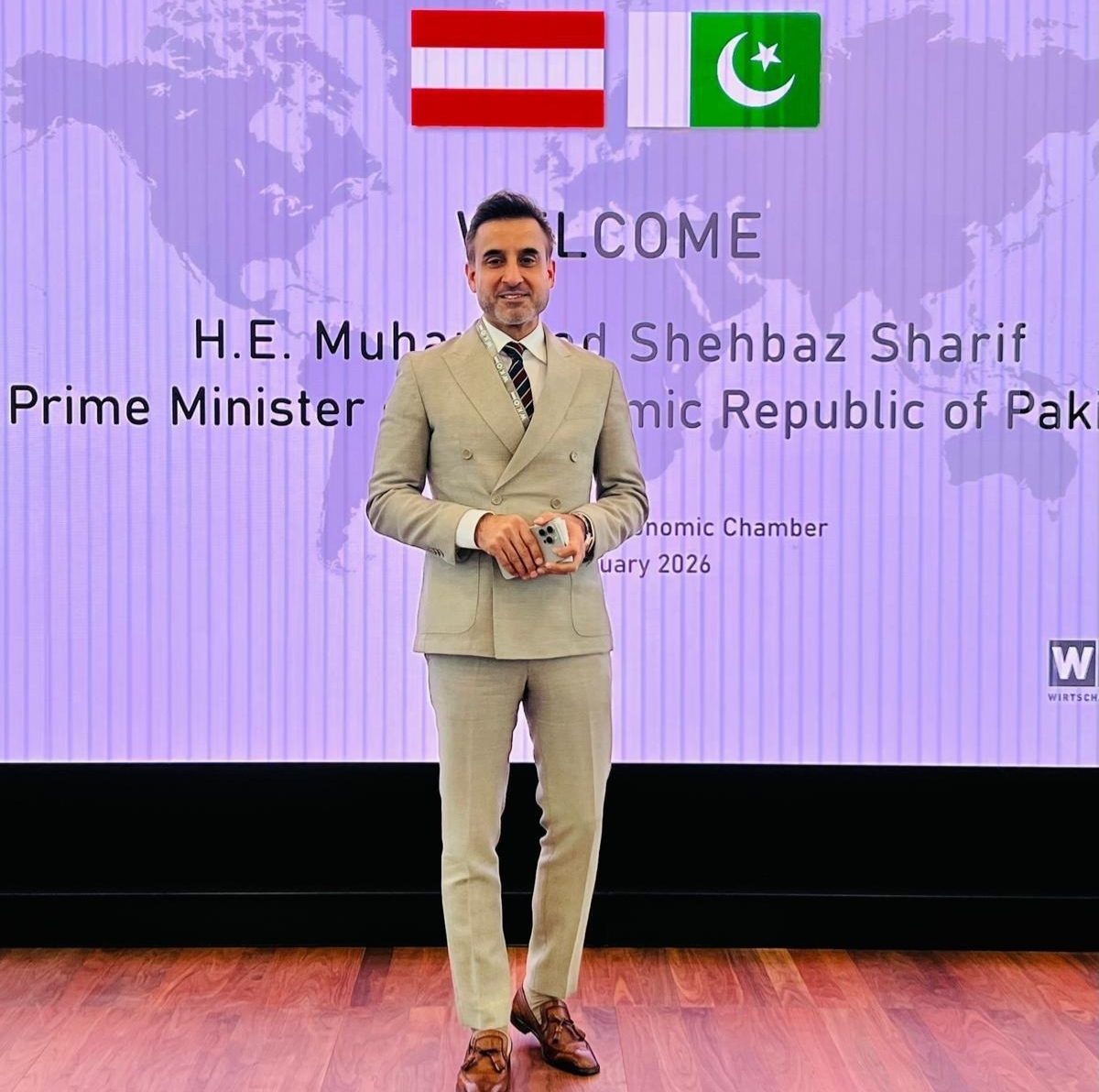
MANCHESTER: British-Pakistani entrepreneur Shafiq Akbar has announced that an online property verification service in Pakistan will be launched next month, describing it as a major step towards protecting overseas Pakistanis from property fraud and restoring confidence in the country’s real estate sector.

Speaking at an investment event in Manchester, Akbar said many overseas Pakistanis want to invest in Pakistan, whether to own a home, establish a base in the country or build long-term wealth. However, he said the biggest concern preventing many from investing is the fear of fraud and uncertainty over whether their investment will be secure.

He said overseas Pakistanis need confidence that the promises made to them will be fulfilled, whether that is receiving ownership of a home or achieving the expected returns on their investment. “It is our responsibility, as Pakistanis, together with the Government of Pakistan and the private sector, to ensure their investments are protected,” he said.

Akbar revealed that an online property verification service will be launched in Pakistan next month, allowing overseas buyers to verify the legal status and ownership of properties remotely before making a purchase. He said Pakistanis living in countries such as the UK will be able to check online whether a property in Islamabad has any legal, ownership or other issues before investing, helping them make informed decisions with greater peace of mind.

He said the initiative is aimed at improving transparency in Pakistan’s real estate market and reducing the risk of fraudulent transactions, which have discouraged some overseas Pakistanis from investing.

Highlighting Pakistan’s investment potential, Akbar said his experience over the past decade has convinced him that the country offers significantly greater growth opportunities than more mature economies. Comparing Islamabad with London, he said the Pakistani capital has witnessed remarkable infrastructure development over the past five to ten years, including new roads, underpasses, motorways, airport expansion and major public infrastructure projects.

He said Pakistan’s growing population, expanding infrastructure and status as a developing economy continue to create strong long-term investment opportunities.

Akbar also urged the Government of Pakistan to prioritise the protection of overseas Pakistanis’ investments by strengthening legal safeguards and providing greater security for investors. He said giving overseas Pakistanis confidence that their investments are safe would encourage them to invest back home with peace of mind.

The online property verification service has yet to be launched, and further details regarding its implementation, regulatory oversight and the mechanism for verifying property records have not yet been disclosed.

Similar Posts

  • |

    Oil prices rise as Hormuz tensions escalate

    Oil prices climbed on Monday as uncertainty over a possible diplomatic breakthrough between the United States and Iran increased, while a sharp slowdown in tanker movements through the Strait of Hormuz heightened concerns about disruptions to global crude supplies. Brent crude futures gained as much as 1% during early trading to reach $89.40 per barrel. The benchmark was later up 72 cents, or about 0.8%, at $89.20 a barrel by 0229 GMT. US West Texas Intermediate (WTI) crude also moved higher, rising 44 cents to $82.83 per barrel. Both international benchmarks posted gains of more than 5% last week after a series of attacks involving energy and shipping assets in and around the strategically important Strait of Hormuz. The incidents have intensified fears that further escalation could affect one of the world’s most important oil transit routes. Market sentiment was further affected by developments over the weekend, when Iranian Foreign Minister Abbas Araqchi said Tehran had yet to decide whether it would resume negotiations with Washington. US President Donald Trump, meanwhile, told Americans to prepare for somewhat higher gasoline prices as the conflict continues. Analysts said the renewed uncertainty had brought geopolitical risk back into crude markets after oil prices had previously come under pressure on expectations that diplomatic efforts could ease tensions. “Oil prices have now rebounded almost completely from the lows seen in early August, as hopes for a more permanent resolution between the US and Iran have faded and geopolitical risk premiums have returned to the market,” said Priyanka Sachdeva, head of market insights at Phillip Nova in Singapore. Sachdeva cautioned, however, that the rally could lose momentum unless there is evidence of a further deterioration in the situation. She said the market would need to see renewed aggression in the Strait of Hormuz, particularly significant damage to oil tankers or energy infrastructure, before prices were likely to move substantially higher. Hormuz shipping activity slows Concerns over physical supply disruptions increased after ship-tracking data showed a marked decline in vessel traffic through the Strait of Hormuz over the weekend. According to data from Kpler, only five commodity vessels crossed the strategic waterway on Saturday, while no such transits were recorded on Sunday. This compared with 31 commodity vessel crossings during the previous weekend. The slowdown is significant because the Strait of Hormuz is a critical route for international energy shipments. Any prolonged disruption could increase transportation risks, raise insurance costs and place additional upward pressure on crude prices. The United Arab Emirates also accused Iran of attacking another vessel operated by Abu Dhabi National Oil Company (ADNOC) while it was passing through the strait on Friday, according to the Emirati state news agency WAM. The UAE had earlier blamed Iran for two separate incidents involving ADNOC-operated vessels on Thursday evening. The latest incidents have added to concerns among traders that the conflict could increasingly affect commercial shipping and energy infrastructure, rather than remaining confined to military and diplomatic confrontation. Markets remain focused on escalation risks The Strait of Hormuz remains particularly important to global oil markets because a substantial volume of crude and petroleum products moves through the waterway. Any sustained interruption could therefore have consequences well beyond the region. For now, traders are closely monitoring developments involving US-Iran diplomatic contacts, attacks on shipping and the movement of tankers through the strait. While the latest price gains reflect a higher geopolitical risk premium, analysts remain cautious about predicting a prolonged rally. If shipping activity resumes and diplomatic channels reopen, some of the premium built into crude prices could quickly unwind. Conversely, additional attacks on tankers, oil facilities or other critical infrastructure could trigger a stronger market reaction and push prices higher as traders reassess the security of regional supplies.

  • Fake NA officer arrested as FIA seizes phone and laptop for forensics

    Islamabad: A man accused of preparing fake National Assembly identity cards and a false appointment letter showing himself as an Assistant Director has been arrested. His mobile phone and laptop were seized for forensic examination, a parliamentary committee was informed. The fake appointment document, falsely carrying the name of the National Assembly Secretariat, had been circulated on social media. The Standing Committee on Rules of Procedure and Privileges expressed serious concern over the case and directed the Federal Investigation Agency to continue its investigation and submit a detailed report at the committee’s next meeting. The committee was chaired by MNA Muhammad Afzal at Parliament House. According to the briefing by the Additional Director General of the FIA, the accused, Abdul Wajid, had been arrested and produced before a court. The FIA told the committee that investigators had obtained his physical remand to continue questioning him. According to the FIA briefing, Abdul Wajid admitted during interrogation that he had prepared fake National Assembly identity cards bearing his own name. The agency further informed the committee that he had also prepared a fake appointment letter showing himself as an Assistant Director of the National Assembly of Pakistan. The committee was told that the fake appointment or offer letter had also appeared on different social media platforms, falsely presented as a document issued by the National Assembly Secretariat. Investigators took the accused’s mobile phone and laptop into custody through a formal seizure process. Investigators seized the accused’s mobile phone and laptop through a formal process. The devices will now undergo forensic analysis as investigators try to determine how the fake documents were prepared and circulated. After discussing the matter, the committee ordered the FIA to investigate the case further and provide a complete report. The committee also took notice of the absence of Jawad ul Hassan, Metropolitan Officer Regulation of the Metropolitan Corporation Lahore. Members expressed concern over his failure to attend the meeting and directed that he be summoned to appear before the committee at its next sitting. Another privilege matter involving the former Director General of the Solid Waste Management Board Imtiaz Ali Shah was also discussed. The question of privilege had been raised by MNA Khawaja Izhar ul Hassan. The committee was informed that the former Director General had not obtained written permission from the committee for his absence. The committee therefore decided to summon him at its next meeting. Members also reviewed several proposed changes to the Rules of Procedure and Conduct of Business in the National Assembly. Amendments proposed by MNA Dr Nafisa Shah to rules 295, 296, 30, 31 and 205 were examined after the committee received views from the Ministry of Parliamentary Affairs and the Ministry of Law and Justice. After discussion, the committee recommended that the proposed changes to rules 295, 296 and 205 should not be approved. However, the committee recommended approving the proposed amendments to rules 30 and 31. The committee also considered amendments proposed by MNA Aliya Kamran to rule 44. After receiving views from the concerned ministries and discussing the proposal, the committee recommended that the amendment to rule 44 should not be approved. Members separately reviewed amendments relating to rules 118 and 119 as well as a proposal to remove rule 234A. The committee recommended that the amendment to rule 118 should be approved with changes. It also recommended removing rule 234A as proposed. A final decision on the proposed amendment to rule 119 was delayed until the committee’s next meeting. Questions of privilege moved by MNA Makhdoom Syed Sami ul Hassan Gillani were also postponed because the mover was unavailable. The committee also adopted a report prepared by a sub committee led by MNA Azhar Qayyum Nahra. The fake appointment letter case remained one of the most serious matters before the committee. Lawmakers are now waiting for the FIA forensic examination and detailed investigation report to establish the full circumstances behind the preparation and circulation of the false National Assembly documents.

  • | |

    PM Shehbaz orders audit of Discos’ billing s…

    ISLAMABAD: Prime Minister Shehbaz Sharif has directed a comprehensive technical audit of the billing systems of electricity distribution companies (Discos), reaffirming that reforming Pakistan’s power sector remains one of the government’s top priorities. Chairing a high-level meeting on the performance of the Power Division, the prime minister acknowledged that distribution companies had shown noticeable improvement but stressed that further reforms were essential to enhance efficiency and service delivery. He described the nationwide installation of smart electricity meters as a key step toward modernising the sector and improving transparency. Shehbaz Sharif also called for strict action against electricity theft, instructing authorities to strengthen enforcement mechanisms at every level. He ordered the Power Division to establish clear performance benchmarks for distribution companies, supported by measurable targets and specific implementation timelines. To encourage better performance, the prime minister announced that the country’s best-performing distribution company would receive formal recognition and awards, promoting healthy competition among power utilities. Addressing the issue of prolonged electricity shortages in rural areas, he directed officials to prepare village-level solarisation projects, saying decentralised solar energy systems could reduce pressure on the national electricity grid while improving access to reliable power. During the meeting, officials informed the prime minister that technical and commercial losses across distribution companies had continued to decline. Islamabad, Lahore and Gujranwala electricity companies recorded the lowest transmission and distribution losses during the last fiscal year, while power utilities in Islamabad, Lahore, Gujranwala, Faisalabad and Multan achieved full recovery of billed electricity dues in the 2025–26 fiscal year. The meeting was also told that specialised Disco Support Units have been established in Hyderabad, Sukkur, Lahore, Multan and Hazara to combat electricity theft, improve bill recovery and resolve technical challenges more effectively. Officials further briefed the prime minister that the first phase of the Asset Performance Management System (APMS) at the transformer level is expected to be completed by the end of September. The system is designed to improve monitoring of transformers, helping reduce both power theft and load-shedding. In addition, the government is considering the installation of 16.2 million Advanced Metering Infrastructure (AMI) single-phase smart meters across the Multan, Lahore, Peshawar, Hazara and Quetta regions as part of its broader strategy to modernise Pakistan’s electricity distribution network.

  • | |

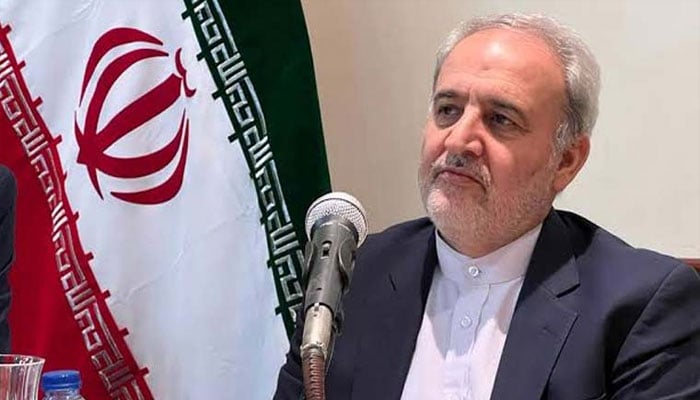
    Iran envoy questions UK leadership shift, links it…

    ISLAMABAD: Iran’s Ambassador to Pakistan, Reza Amiri Moqadam, has raised questions over the political developments in the United Kingdom, suggesting that the leadership transition in London coincided with a major shift in British policy towards Iran. Speaking on recent geopolitical developments, the ambassador claimed that former British Prime Minister Sir Keir Starmer came under intense political pressure after allegedly refusing to support the United States and Israel during the Iran conflict. According to Amiri Moqadam, Starmer was subsequently accused of incompetence and forced to step down. The Iranian envoy further alleged that Britain’s new prime minister moved swiftly after assuming office by granting military base access to the United States and recalling British diplomats from Iran, describing the rapid policy changes as noteworthy. Amiri Moqadam questioned whether the timing of Starmer’s departure and the immediate foreign policy decisions taken by the incoming government were merely coincidental, implying that the sequence of events deserved closer scrutiny. The remarks come amid heightened regional tensions and ongoing diplomatic friction involving Iran and Western powers, as Tehran continues to criticise what it describes as coordinated political and military pressure from the United States and its allies.

  • | | |

    Iran calls Kurdistan drone attack a ‘false-flag?…

    TEHRAN: Iranian Foreign Minister Abbas Araghchi has condemned a drone attack targeting the office of the Kurdistan Regional Government’s prime minister in Iraq, while warning Kurdish authorities to remain alert to what he described as possible “false-flag” operations. The remarks came after two drones targeted the office of Kurdistan Region Prime Minister Masrour Barzani in Erbil on Monday. Kurdish authorities said the attack caused no casualties, although the incident has added to concerns over the increasingly tense security environment in northern Iraq. Araghchi said nothing justified what he called a reckless attack and urged Iran’s Kurdish neighbours to be cautious of attempts to create divisions and discord between neighbouring countries. In a statement posted on social media, the Iranian foreign minister said Kurdish communities and officials should remain vigilant against operations designed to provoke tensions. He also referred to Iran’s past support for Kurdish people during conflicts with Saddam Hussein’s government and the Islamic State group. The comments came as questions remained over who was responsible for the latest attack. The Kurdistan Regional Government’s security agency said the drones originated from Iranian territory, according to Reuters. Iranian officials, however, have not directly accepted responsibility for the strike. Instead, Tehran has highlighted the possibility that the attack could have been carried out as a “false-flag” operation aimed at damaging relations between Iran and Iraq’s autonomous Kurdish region. The attack has further complicated an already sensitive regional security situation. Erbil has experienced repeated drone incidents in recent months amid the wider confrontation involving Iran, the United States and Israel. In July, several drones were intercepted over the city, with local authorities reporting no casualties. Kurdistan Region President Nechirvan Barzani has also condemned the latest attack, describing the incident as unacceptable and calling for Iraq’s federal government to fulfil its responsibility to protect the region’s security and stability. The latest confrontation comes as Iraqi Kurdistan attempts to avoid being drawn deeper into wider regional hostilities. The region’s strategic location and close ties with Western partners have repeatedly made it a sensitive point in the broader Middle Eastern conflict. With competing claims surrounding the drone attack, the incident is likely to increase diplomatic pressure on Baghdad, Erbil and Tehran to prevent further escalation and clarify responsibility for attacks on Kurdish territory.

  • | |

    Fahad Mustafa’s second wife spotted on film set?

    Pakistani actor and television host Fahad Mustafa has once again attracted attention on social media after sharing new pictures from the sets of his upcoming film Aag Lagay Basti Mein. The actor, who is also a successful producer and the founder of Big Bang Productions, has remained one of the most prominent figures in Pakistan’s entertainment industry. His latest social media post has generated renewed discussion because a woman previously linked to reports about his alleged second marriage was also spotted at the film’s sets. Fahad had previously faced speculation regarding an alleged second marriage with Hina Aman. The reports gained significant attention online after photographs of the two surfaced on social media. However, Fahad Mustafa did not publicly confirm or deny the reports at the time. Hina Aman also did not issue a public statement regarding the claims. The matter therefore remained unconfirmed. Now, nearly a year after the earlier speculation, Fahad has shared photographs from the sets of Aag Lagay Basti Mein. Hina Aman was reportedly seen at the location alongside the actor, prompting social media users to revisit the previous marriage rumours. The new pictures quickly attracted attention from fans and entertainment followers. Many users began discussing the woman’s presence at the film’s sets and its connection with the earlier reports surrounding Fahad’s personal life. Another detail that caught the attention of social media users was that comments on Fahad Mustafa’s latest post had been disabled. This further fuelled online discussion, although there has been no official statement from the actor explaining the decision. The photographs themselves do not confirm any marriage or relationship. Fahad Mustafa has not made a public announcement regarding the allegations, and the renewed speculation remains based on social media discussions and the reported appearance of Hina Aman at the film’s sets. Fahad Mustafa has generally maintained a private approach to his personal affairs while remaining highly active professionally. Alongside acting and hosting, he has established himself as a producer through Big Bang Productions, which has produced several successful Pakistani television projects. His latest film project has also kept him in the public spotlight. The appearance of Hina Aman at the shooting location has now brought renewed interest in a controversy that had largely faded from public discussion.

Leave a Reply

Your email address will not be published. Required fields are marked *