iran envoy questions
| |

Iran envoy questions UK leadership shift, links it…

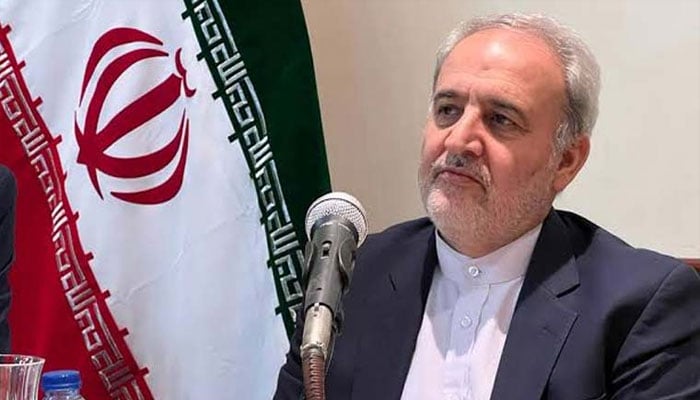
ISLAMABAD: Iran’s Ambassador to Pakistan, Reza Amiri Moqadam, has raised questions over the political developments in the United Kingdom, suggesting that the leadership transition in London coincided with a major shift in British policy towards Iran.

Speaking on recent geopolitical developments, the ambassador claimed that former British Prime Minister Sir Keir Starmer came under intense political pressure after allegedly refusing to support the United States and Israel during the Iran conflict. According to Amiri Moqadam, Starmer was subsequently accused of incompetence and forced to step down.

The Iranian envoy further alleged that Britain’s new prime minister moved swiftly after assuming office by granting military base access to the United States and recalling British diplomats from Iran, describing the rapid policy changes as noteworthy.

Amiri Moqadam questioned whether the timing of Starmer’s departure and the immediate foreign policy decisions taken by the incoming government were merely coincidental, implying that the sequence of events deserved closer scrutiny.

The remarks come amid heightened regional tensions and ongoing diplomatic friction involving Iran and Western powers, as Tehran continues to criticise what it describes as coordinated political and military pressure from the United States and its allies.
Similar Posts

  • | |

    Salman Raja demands Imran’s medical access

    ISLAMABAD: Pakistan Tehreek-e-Insaf leader Salman Akram Raja has called for meetings between the party’s founder, Imran Khan, and his sisters and medical team. Speaking to the media in Islamabad, Raja said PTI representatives had met the Registrar of the Supreme Court. During the meeting, they requested that the cases involving the party founder be taken up for hearing without further delay. The PTI leader also demanded that Imran Khan be allowed to meet his sisters. He said access to his doctors should also be restored so that his health can be properly monitored. Raja said the party had been assured that the pending cases would be scheduled for hearing next week. He added that the relevant cause list would also be issued. He expressed concern over the long gap between Imran Khan and his doctors. According to Raja, the PTI founder has not been able to meet his medical team for around one and a half years. Raja questioned the reason for preventing regular medical consultations. He said the issue was particularly important because of concerns about Imran Khan’s health. The PTI leader also discussed the former prime minister’s political activities. He said Imran Khan had the right to express his political views. However, Raja said the party was prepared to ensure that political discussions did not take place if they could affect Imran Khan’s health. He said the priority at present was his medical well-being and access to proper healthcare. Raja said the matter would be taken before the court next week. He indicated that the party would seek judicial intervention on meetings with family members and doctors. The PTI has repeatedly raised concerns over access to Imran Khan and his medical care. The latest demand comes as the party awaits hearings in several cases involving its founder.

  • | |

    NAB chairman grilled over bureau’s performance

    A meeting of the Senate Standing Committee on Law and Justice was held under the chairmanship of Senator Farooq H Naek, where National Accountability Bureau (NAB) Chairman Nazir Ahmed Butt appeared before the committee on its instructions. During the meeting, Senator Farooq H Naek remarked that the NAB chairman had perhaps appeared before the committee for the first time. In response, Nazir Ahmed Butt said that it was his first appearance before the committee as NAB chairman. He added that he had appeared before the committee several times while performing his previous responsibilities. The NAB chairman said he had been assigned the responsibility in 2023. He recalled that ministers he met during his tenure repeatedly complained that the bureaucracy was afraid to make decisions and was therefore reluctant to work. During the meeting, NAB Director General Operations briefed the committee on the bureau’s powers and performance. The official said NAB had received 505,799 complaints since its establishment. He said NAB also operates as an investigative agency under the Anti-Money Laundering Act, 2010. According to the briefing, NAB has so far completed 12,147 inquiries, conducted 7,339 investigations and filed 4,105 references. The DG Operations further told the committee that NAB had been allocated Rs22.556 billion over the past three-and-a-half years. Despite the expenditure, the bureau reported significantly higher recoveries during the same period. The committee was informed that NAB had recovered Rs1.069 trillion over the past three-and-a-half years. The briefing highlighted the bureau’s role in investigating corruption, financial crimes and other cases falling under its legal mandate. The committee members discussed NAB’s powers, investigations, recoveries and its overall performance during the meeting. The NAB chairman and officials responded to questions from the committee and provided details about the bureau’s operations and financial performance.

  • |

    Shaheen, Naseem should play more domestic cricket, Usman Shinwari

    Former Pakistan fast bowler Usman Shinwari has urged Shaheen Shah Afridi and Naseem Shah to play more domestic and first-class cricket, arguing that regular competitive cricket can help the two premier pacers maintain their pace, fitness and longevity. Speaking to the media, Shinwari said Pakistan has traditionally placed too much emphasis on bowling speed, often overlooking the impact of workload and continuous cricket on a fast bowler’s body. “Even if your fitness is like Cristiano Ronaldo’s, bowling continuously can eventually affect your pace,” he said. Shinwari described Shaheen and Naseem as outstanding bowlers and said he was not in a position to offer them personal advice. However, he stressed that playing selected domestic cricket could help them retain their rhythm and speed while reducing the risk of injuries. The former pacer also discussed Pakistan’s upcoming challenges in England, saying tours of the country have historically been difficult for Pakistan. He believes the team can still produce a strong series if it carries its current momentum forward. Reflecting on Pakistan’s recent Test performances against the West Indies, Shinwari said the team’s first-match performance was disappointing but praised the side for making a strong comeback in the second Test. He emphasised the importance of consistency, saying better continuity within the team would ultimately produce better results. Shinwari also backed the decision to restore Babar Azam to the Test captaincy, describing it as a positive move and saying Babar has the ability to lead Pakistan in the longest format. Another major point raised by Shinwari was Pakistan’s approach to selecting players across different opponents. He argued that the same combination should not automatically be used against teams with vastly different playing conditions and strengths. Discussing Mohammad Abbas, Shinwari questioned the excessive focus on speed. He noted that Abbas had taken eight wickets at around 125kph in a recent match, arguing that the pacer’s best years were affected because too much importance had been attached to increasing his pace. “Speed is important, but it should not be given excessive importance,” he said. On Ihsanullah, Shinwari said the fast bowler had expressed grievances and suggested that his disciplinary issues should be addressed. Despite his experience, Shinwari made it clear that he has no plans to become Pakistan’s national team coach. He argued that coaches, like players, should progress through a structured system rather than being appointed directly to the national side. His comments have once again highlighted the debate over workload management, pace, domestic cricket and long-term planning in Pakistan’s fast-bowling system.

  • Special event held in Manchester to mark Kashmir Exploitation Day

    Manchester – A special event was organized by the Consulate General of Pakistan in Manchester to mark Kashmir Exploitation Day. Member of Parliament Afzal Khan and prominent Kashmiri leader Raja Najabat Hussain addressed the gathering, while Consul General Imtiaz Feroz Gondal read out a special message from the Prime Minister of Pakistan. The event was also attended by Nina Khan Mashriqi, Chairperson of JKSDMI Cheshire, UK, an international award-winning businesswoman and social activist, who works under the leadership of Kashmiri leader Raja Najabat Hussain. She participated in the event as a special guest and expressed strong solidarity with the people of Kashmir. A large number of community leaders and prominent personalities also attended the event, including Haroon Afzal Khattana, former Lord Mayor of Manchester Yasmin Dar, Chaudhry Tahir Siddiq, Mahmood Khan, PML-N leader Nabeel Butt, Rasib Khan, Father Falak Sher, Tajammul Gurmany, and Dr. Younis Parvez. Addressing the gathering, the speakers urged the international community to take notice of the human rights situation in Indian Illegally Occupied Jammu and Kashmir (IIOJK) and play an effective role in finding a peaceful resolution to the Kashmir dispute. The speakers said that the people of Pakistan and Kashmir share historic, religious and cultural bonds. They emphasized that overseas Pakistani and Kashmiri communities would continue their efforts to highlight the Kashmir issue at international forums and raise their voice for the rights of the Kashmiri people. Expressing concern over Indian actions in occupied Kashmir, the speakers stressed that the political and fundamental rights of the Kashmiri people must be respected. Nina Khan Mashriqi said that the Indian measures imposed on August 5, 2019, should be reversed and that the people of Kashmir must be given their fundamental right to self-determination. She reaffirmed her commitment to continuing diplomatic and political efforts to highlight the Kashmir issue at international forums and to make the voice of the Kashmiri people heard around the world. The event concluded with special prayers for the right to self-determination of the Kashmiri people, the security and prosperity of Pakistan, and peace in the region.

  • | |

    Acid traces found as Mir Raza probe widens

    The Sindh government has decided to establish a judicial commission to investigate the death of 25-year-old businessman Mir Raza Ali in Karachi. Sindh Home Minister Zia-ul-Hassan Lanjar said the decision was taken during a meeting with Chief Minister Murad Ali Shah. He said the investigation would now be conducted with the involvement of judges from the Sindh High Court. Speaking about the case, Lanjar said the government wanted to ensure justice for Mir Raza’s family. He expressed sympathy with the family and said authorities were committed to uncovering the facts surrounding the young businessman’s death. The minister also confirmed that the police investigation team had already been changed. Deputy Inspector General Amir Farooqui is heading the new team. According to Lanjar, the family has also been given the option of suggesting police officers who could be included in the investigation team. He said authorities had so far found no evidence indicating the involvement of any high-profile personality. Lanjar said the formation of a judicial commission had become necessary because of questions surrounding the investigation and conflicting findings related to the case. The decision comes after a second post-mortem examination reportedly raised serious questions about the circumstances of Mir Raza’s death. Preliminary findings indicated that he had sustained a gunshot wound from behind, challenging earlier assumptions about the case. The minister also addressed concerns regarding the initial post-mortem examination. He said doctors responsible for the examination should have immediately informed their superiors if they believed there were shortcomings in the report. Meanwhile, a new development has emerged in the investigation. According to forensic sources, there was an alleged attempt to damage or burn Mir Raza’s body with acid. Sources said traces of acid were reportedly found on the shirt worn by the 25-year-old businessman. Investigators are expected to examine the finding as part of the wider forensic inquiry. Mir Raza’s body was discovered in bushes in Karachi’s Gulistan-i-Jauhar area after he went missing. His family has maintained that he was kidnapped, tortured and murdered. The latest developments have intensified questions surrounding the circumstances of his death. The proposed judicial commission is expected to examine the available forensic, medical and investigative evidence and determine what happened to the young businessman.

  • |

    Trump claims progress in extended negotiations with Iran as warnings of escalation persist

    US President Donald Trump stated in a televised interview that American officials engaged in an “all-day negotiation” with Iranian representatives, describing the discussions in optimistic terms while reiterating threats of severe military action should an accord fail to materialise. Speaking on Fox News, President Trump indicated that diplomatic exchanges were advancing constructively, expressing expectations that the strategic Strait of Hormuz, closed since the onset of hostilties in late February, would reopen to commercial transit shortly. However, the chief executive cautioned that failure to reach a finalised agreement would prompt intensive military strikes against Iranian targets. The remarks stand in contrast to official statements from Tehran, where Iranian diplomatic representatives continue to deny direct bilateral engagements with Washington. Qatari officials, serving alongside Omani representatives as regional mediators, verified that progress has been made toward establishing navigation protocols through the waterway. The diplomatic friction occurs against the backdrop of broader international concern regarding potential strikes on energy and civil infrastructure, which legal scholars and human rights monitoring organisations note could constitute violations under the Geneva Conventions.

Leave a Reply

Your email address will not be published. Required fields are marked *