fahad mustafas second
| |

Fahad Mustafa’s second wife spotted on film set?

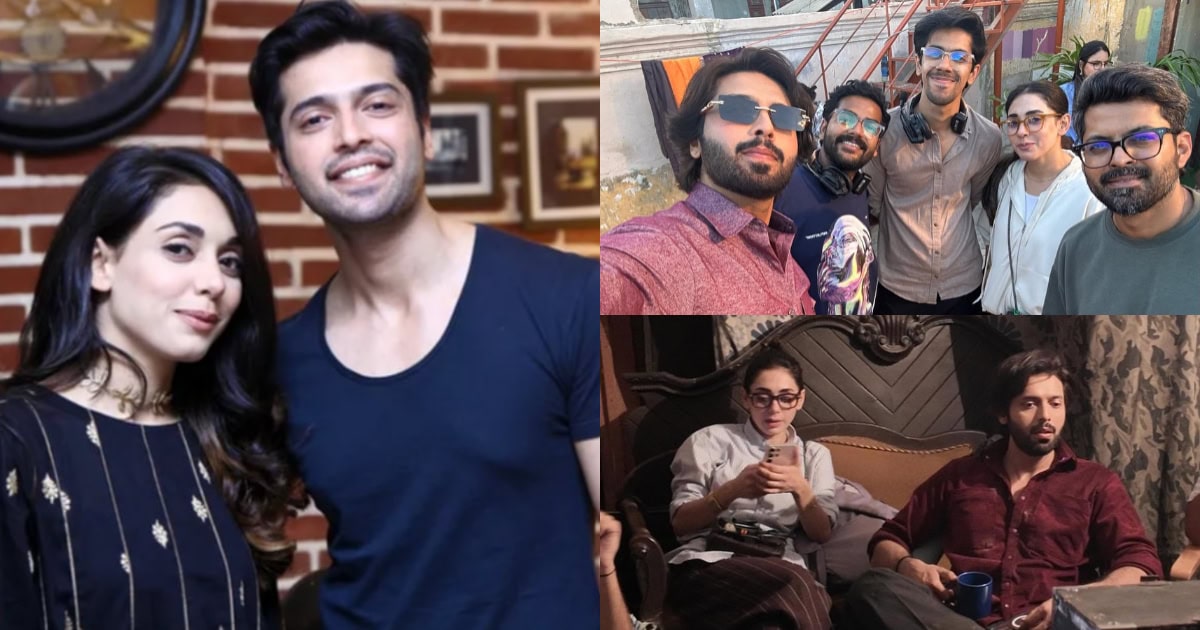
Pakistani actor and television host Fahad Mustafa has once again attracted attention on social media after sharing new pictures from the sets of his upcoming film Aag Lagay Basti Mein.

The actor, who is also a successful producer and the founder of Big Bang Productions, has remained one of the most prominent figures in Pakistan’s entertainment industry. His latest social media post has generated renewed discussion because a woman previously linked to reports about his alleged second marriage was also spotted at the film’s sets.

Fahad had previously faced speculation regarding an alleged second marriage with Hina Aman. The reports gained significant attention online after photographs of the two surfaced on social media.

However, Fahad Mustafa did not publicly confirm or deny the reports at the time. Hina Aman also did not issue a public statement regarding the claims. The matter therefore remained unconfirmed.

Now, nearly a year after the earlier speculation, Fahad has shared photographs from the sets of Aag Lagay Basti Mein. Hina Aman was reportedly seen at the location alongside the actor, prompting social media users to revisit the previous marriage rumours.

The new pictures quickly attracted attention from fans and entertainment followers. Many users began discussing the woman’s presence at the film’s sets and its connection with the earlier reports surrounding Fahad’s personal life.

Another detail that caught the attention of social media users was that comments on Fahad Mustafa’s latest post had been disabled. This further fuelled online discussion, although there has been no official statement from the actor explaining the decision.

The photographs themselves do not confirm any marriage or relationship. Fahad Mustafa has not made a public announcement regarding the allegations, and the renewed speculation remains based on social media discussions and the reported appearance of Hina Aman at the film’s sets.

Fahad Mustafa has generally maintained a private approach to his personal affairs while remaining highly active professionally. Alongside acting and hosting, he has established himself as a producer through Big Bang Productions, which has produced several successful Pakistani television projects.

His latest film project has also kept him in the public spotlight. The appearance of Hina Aman at the shooting location has now brought renewed interest in a controversy that had largely faded from public discussion.
Similar Posts

  • |

    Vijay demands complete abolition of NEET, backs student protests

    Tamil Nadu Chief Minister and actor-turned-politician Vijay has voiced strong opposition to the National Eligibility cum Entrance Test (NEET), calling for the examination system to be abolished entirely while expressing support for students protesting in New Delhi. In a statement shared on social media on Wednesday, the 52-year-old leader reiterated that his party has consistently opposed NEET and believes the entrance exam has placed an unfair burden on students and their families across the country. Vijay stated that his party’s position on the issue remains firm and uncompromising. According to him, the current examination system has caused significant stress for aspiring medical students, many of whom face intense pressure while preparing for the highly competitive test. He argued that the impact extends beyond students themselves, affecting parents and families who invest considerable time, effort and resources into the preparation process. The actor-turned-politician also rejected what he described as political opportunism surrounding the issue. He said his party would not make unrealistic promises or use the NEET debate merely to gain electoral support, insisting that meaningful and lasting reforms are needed instead of temporary political statements. Vijay further argued that the long-term solution lies in returning education to the State List, allowing individual state governments to exercise greater control over educational policies and admission procedures. He maintained that such a move would enable states to develop systems that better reflect local educational needs and priorities. Acknowledging that constitutional or legal challenges could delay such a change, Vijay proposed an interim alternative. He suggested creating a Special Concurrent List that would provide state governments with expanded authority over education until broader constitutional reforms become possible. Under this proposed arrangement, states would receive greater powers to regulate all aspects of education, including medical education and admissions. Vijay said empowering state governments in this manner would help address concerns surrounding NEET while ensuring that educational policies are better aligned with regional requirements. His remarks come as discussions over the future of NEET continue to generate debate in several parts of India. Supporters of the examination argue that it establishes a uniform standard for admissions to medical colleges across the country. Critics, however, contend that it disadvantages students from different educational backgrounds and places excessive pressure on candidates preparing for a single nationwide examination. The issue has remained particularly sensitive in Tamil Nadu, where opposition to NEET has been a significant political and public concern for several years. Various political parties and student groups in the state have repeatedly called for exemptions or the complete withdrawal of the examination system, arguing that it affects equal access to medical education. By once again reaffirming his opposition to NEET and advocating greater autonomy for state governments in educational matters, Vijay has added his voice to the ongoing national debate over the future of medical admissions and the balance of powers between the Centre and the states.

  • |

    PSX plunges amid investor jitters

    The Pakistan Stock Exchange (PSX) came under heavy selling pressure on Wednesday as investors turned cautious amid rising geopolitical uncertainty and external market risks. The benchmark KSE-100 Index surrendered its early gains and remained in negative territory throughout most of the trading session. The market opened on a slightly positive note, with the KSE-100 Index posting modest gains during early trading. However, the positive momentum quickly faded as investors began selling shares across major sectors, causing the benchmark index to reverse course. Selling pressure intensified as the session progressed, dragging the KSE-100 Index down by more than 1,000 points. During intraday trading, the benchmark also touched a low of over 1,800 points below the previous close, reflecting weak investor confidence and heightened market volatility. Analysts said investors remained cautious due to uncertainty surrounding global developments, prompting many traders to reduce exposure to equities and book profits after recent gains. The decline was broad-based, with losses recorded across several key sectors of the market. Automobile assemblers, oil marketing companies, cement manufacturers, fertilizer producers and power generation companies were among the worst-performing segments during the session. The widespread selling indicated that investors were avoiding risk rather than reacting to company-specific developments, highlighting concerns over the broader economic and geopolitical environment. Despite the decline in share prices, trading activity remained healthy. More than 172 million shares changed hands during the session, while the total value of traded shares exceeded Rs9 billion, indicating continued participation by investors despite market weakness. The latest decline came a day after the stock market ended slightly higher following a volatile session. On Tuesday, the KSE-100 Index had climbed more than 2,000 points during intraday trading before profit-taking erased most of the gains, allowing the market to close with only a modest increase.

  • | |

    10 electric buses arrive in Azad Kashmir

    Ten electric buses have been delivered to Azad Jammu and Kashmir (AJK) from Islamabad as part of a new public transport initiative for the region. The buses have been provided by Punjab Chief Minister Maryam Nawaz. The initiative follows an announcement made by Pakistan Muslim League-Nawaz (PML-N) leader Nawaz Sharif during a public gathering in Muzaffarabad. Nawaz Sharif had announced that electric buses would be provided to AJK to improve public transport facilities in the region. The arrival of the first 10 buses marks progress towards implementing that announcement. The new buses are expected to provide residents with a modern transport option. They are also aimed at improving the quality of public transportation and making daily travel more convenient for citizens. The electric buses were transported from Islamabad to Azad Kashmir. Their arrival is likely to support efforts to upgrade the region’s existing public transport system. The initiative is also significant because electric buses can help reduce dependence on conventional fuel-powered public transport. Their use can contribute to lower emissions and cleaner urban environments. The provision of the buses reflects cooperation between Punjab and the AJK administration in the transport sector. The initiative is expected to benefit commuters, particularly those who rely on public transport for work, education and other daily activities. The announcement was made during Nawaz Sharif’s address in Muzaffarabad, where he spoke about development and public welfare initiatives for Azad Kashmir. The arrival of the buses is expected to be followed by further steps to put them into service for the public. Authorities will determine their routes and operational arrangements. The initiative is being viewed as part of broader efforts to introduce modern and environmentally friendly transportation facilities in AJK.

  • |

    US Senate moves forward with bipartisan Russia sanctions bill

    The US Senate has taken the first major step toward approving a bipartisan sanctions package aimed at increasing pressure on Russia by targeting its energy sector and financial network. The legislation advanced with strong support on Tuesday as Ukrainian President Volodymyr Zelensky visited Washington to urge American lawmakers to strengthen measures against Moscow and continue backing Ukraine. Senators voted 86 to 12 to begin formal debate on the bill, allowing it to clear its first procedural stage. Although the proposal still requires further discussion and a final vote before becoming law, the overwhelming support highlighted broad agreement in the Senate on increasing economic pressure against Russia as the war in Ukraine continues. The proposed legislation would expand sanctions on Russian government officials, wealthy business figures, financial institutions and the network of ships often referred to as the shadow fleet. These vessels have been used to transport Russian oil while avoiding existing international restrictions. Lawmakers believe cutting off these channels would reduce Russia’s ability to earn revenue from energy exports. Another major feature of the bill would give President Donald Trump the authority to impose tariffs of up to 100 percent on imports from countries that continue buying large amounts of Russian oil and natural gas. Nations such as China and India could be affected if the measure is implemented. Supporters argue that reducing demand for Russian energy is one of the most effective ways to weaken Moscow’s financial resources and limit its ability to fund military operations in Ukraine. The Senate vote came only hours after Zelensky met President Trump at the White House during his visit to the United States. The Ukrainian leader also attended the funeral of Republican Senator Lindsey Graham in Washington. Graham had been one of Ukraine’s strongest supporters in Congress and spent more than a year helping build bipartisan backing for the sanctions proposal before his death earlier this month. After meeting with lawmakers, Zelensky urged senators to maintain strong support for Ukraine and approve tougher sanctions against Russia as fighting on the battlefield continues and diplomatic efforts led by the United States remain at a standstill. Ukrainian officials have repeatedly argued that increasing economic pressure on Moscow is necessary to reduce Russia’s ability to continue the conflict. The legislation has been named in honor of Senator Graham, whose work played a key role in shaping the proposal. Shortly before his death, he reached an agreement with the White House on a revised version of the bill. In a joint statement, six Republican and Democratic senators said moving the legislation forward was the best way to recognize Graham’s commitment to supporting Ukraine and strengthening sanctions against Russia. The updated measure also includes provisions requested by President Trump to extend existing sanctions authority related to Iran’s energy and weapons sectors. Lawmakers said the changes broaden the scope of the legislation while maintaining its primary focus on increasing pressure on Russia. Despite receiving strong bipartisan backing, the proposal has faced some criticism from Democratic lawmakers. Some have expressed concern that allowing the president to impose high tariffs gives the White House too much authority. Others warned that such tariffs could increase costs for American consumers and create economic difficulties for European allies that maintain trade relationships with countries affected by the measure. Even if the Senate approves the bill, it will not become law immediately. The House of Representatives has already begun its summer recess and is not expected to return to Washington until September. As a result, final congressional action on the legislation is likely to be delayed for several weeks before lawmakers can decide whether to send it to the president for approval.

  • |

    Mike Hesson holds key meeting ahead of Champions Cup

    MULTAN: Pakistan white-ball head coach Mike Hesson has arrived in Multan for the National Champions Cup, where he held an important meeting with the coaching staff of all four participating teams as the domestic tournament gets ready to kick off the 2026-27 season. Hesson met the head coaches of the four sides — Misbah-ul-Haq, Ijaz Junior, Iqbal Imam and Aizaz Cheema — to discuss ways of improving players’ one-day cricket skills and ensuring that the tournament serves as a meaningful platform for national selection and development. Pakistan bowling coach Ashley Noffke and National Cricket Academy (NCA) Head of Coach Education Shahid Aslam also attended the meeting, adding further weight to discussions around player development and coaching standards. The meeting comes at an important time for Pakistan cricket, with the Champions Cup being viewed as the first major step towards preparations for next year’s World Cup in South Africa. Hesson’s presence in Multan signals the national team management’s focus on closely monitoring domestic performances while identifying players capable of making the jump to international cricket. Particular attention is expected to be given to players’ consistency, tactical awareness and ability to handle pressure in the 50-over format. The tournament will also provide coaches with an opportunity to assess emerging talent in a competitive environment. The National Champions Cup will begin on August 11, coinciding with the official start of Pakistan’s 2026-27 domestic cricket season. With the World Cup on the horizon, the tournament could prove crucial in shaping Pakistan’s next generation of one-day performers.

  • |

    Javeria Saud calls out obsession with surgeries and size-zero

    Pakistani actress and television host Javeria Saud has spoken openly about the growing obsession with cosmetic procedures, beauty filters, and extremely slim body figures among women. Known for her outspoken personality and candid views, the actress recently addressed the topic during a podcast, where she questioned the pressure many women feel to change their natural appearance. Javeria Saud has remained a familiar face in the Pakistani entertainment industry for years. Alongside acting and hosting, she has also worked as a producer and earned recognition for her performances in several popular television dramas, including Yeh Zindagi Hai, Nand, Paristan, Baby Baji, Baby Baji Ki Bahuwain, and Muhabbat Starangi. She has also been appreciated for her appearances in projects such as Bajjo and Muhabbat Aur Mehngai. During the podcast, Javeria discussed how beauty standards have changed and how social media has contributed to people’s desire to alter their looks. She revealed that even her own children do not approve when she uses filters on her pictures. According to Javeria, her children often question why she feels the need to use filters and remind her that people should be comfortable with the way they were naturally created. She shared that her children have even gone as far as deleting the application she uses for editing her pictures. However, she humorously admitted that she eventually downloads the app again. The actress also criticized what she described as an increasing fascination with Bollywood-inspired beauty standards. She claimed that many women in Pakistan want to resemble famous Indian actresses such as Kajol, Kareena Kapoor and Katrina Kaif, which can lead some of them to consider cosmetic procedures or other ways of changing their facial features. Javeria also spoke about the pressure surrounding body size, particularly the trend of trying to achieve a “size-zero” figure. She questioned the idea that becoming extremely thin automatically makes a person more attractive. She particularly expressed concern about women over the age of 30 who follow strict diets in an attempt to become extremely slim. According to her, excessive dieting can result in the loss of muscle and collagen, which may affect a person’s overall appearance and make them look unhealthy rather than glamorous. Using a humorous comparison, Javeria said that women can end up looking like a “dehydrated mango” when they lose too much weight and their skin and body lose their natural fullness. Her comments have once again highlighted the ongoing conversation around beauty standards, cosmetic enhancements, social media filters and body image. While cosmetic procedures and dieting remain personal choices, Javeria’s remarks encourage women to reconsider the pressure to achieve unrealistic beauty ideals and to appreciate their natural appearance.

Leave a Reply

Your email address will not be published. Required fields are marked *