iran calls kurdistan
| | |

Iran calls Kurdistan drone attack a ‘false-flag?…

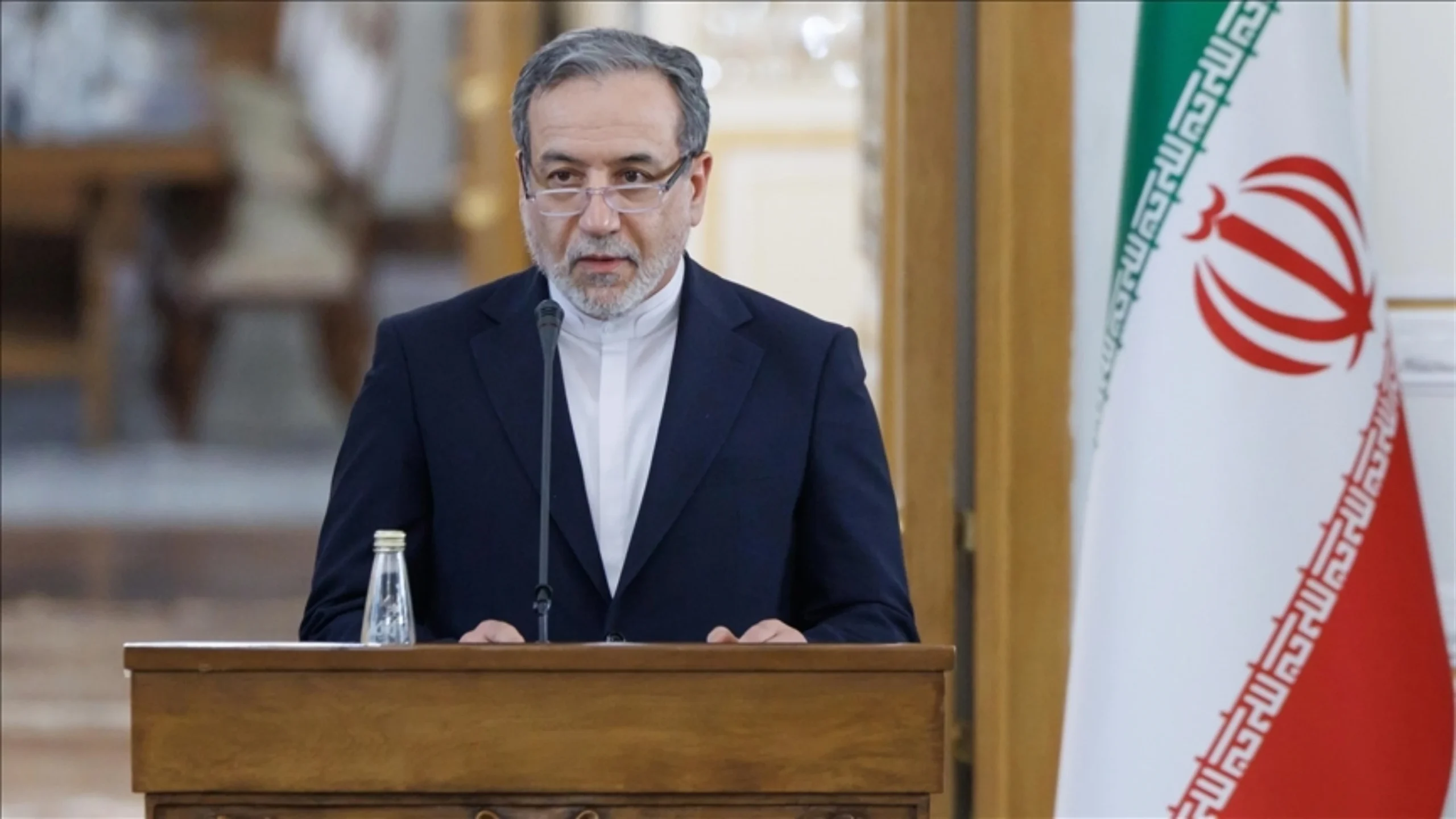
TEHRAN: Iranian Foreign Minister Abbas Araghchi has condemned a drone attack targeting the office of the Kurdistan Regional Government’s prime minister in Iraq, while warning Kurdish authorities to remain alert to what he described as possible “false-flag” operations.

The remarks came after two drones targeted the office of Kurdistan Region Prime Minister Masrour Barzani in Erbil on Monday. Kurdish authorities said the attack caused no casualties, although the incident has added to concerns over the increasingly tense security environment in northern Iraq.

Araghchi said nothing justified what he called a reckless attack and urged Iran’s Kurdish neighbours to be cautious of attempts to create divisions and discord between neighbouring countries.

In a statement posted on social media, the Iranian foreign minister said Kurdish communities and officials should remain vigilant against operations designed to provoke tensions. He also referred to Iran’s past support for Kurdish people during conflicts with Saddam Hussein’s government and the Islamic State group.

The comments came as questions remained over who was responsible for the latest attack. The Kurdistan Regional Government’s security agency said the drones originated from Iranian territory, according to Reuters.

Iranian officials, however, have not directly accepted responsibility for the strike. Instead, Tehran has highlighted the possibility that the attack could have been carried out as a “false-flag” operation aimed at damaging relations between Iran and Iraq’s autonomous Kurdish region.

The attack has further complicated an already sensitive regional security situation. Erbil has experienced repeated drone incidents in recent months amid the wider confrontation involving Iran, the United States and Israel. In July, several drones were intercepted over the city, with local authorities reporting no casualties.

Kurdistan Region President Nechirvan Barzani has also condemned the latest attack, describing the incident as unacceptable and calling for Iraq’s federal government to fulfil its responsibility to protect the region’s security and stability.

The latest confrontation comes as Iraqi Kurdistan attempts to avoid being drawn deeper into wider regional hostilities. The region’s strategic location and close ties with Western partners have repeatedly made it a sensitive point in the broader Middle Eastern conflict.

With competing claims surrounding the drone attack, the incident is likely to increase diplomatic pressure on Baghdad, Erbil and Tehran to prevent further escalation and clarify responsibility for attacks on Kurdish territory.

Similar Posts

  • |

    Hamas agrees to disarm as Gaza peace plan gains momentum

      A significant breakthrough appears to have been achieved in efforts to end the conflict in Gaza, although many challenges remain before lasting peace and recovery can become a reality. According to reports, Hamas has accepted a key proposal presented by international mediators, agreeing in principle to surrender its heavy weapons if Israeli forces completely withdraw from the Gaza Strip. The development has been described as an important step in a broader 20-point peace framework aimed at ending months of violence and creating conditions for rebuilding the war-ravaged territory. Despite this progress, several major issues remain unresolved. One of the biggest questions concerns who will take control of Hamas’s heavy weapons once they are surrendered. The agreement has yet to clarify whether an international peacekeeping force, a regional authority, or another body will oversee the disarmament process. Another critical issue is the sequence of implementation. It is still unclear whether Hamas will be expected to disarm before Israeli troops leave Gaza or whether both actions will occur simultaneously. The timeline is considered one of the most sensitive parts of the agreement because each side wants guarantees that the other will fulfill its commitments. Israeli officials have maintained a firm position on the matter. A senior Israeli official stated that the Israel Defense Forces (IDF) would not withdraw from the current military positions, known as the Yellow Line, unless Hamas undergoes what Israel considers genuine and verifiable disarmament. This stance highlights the deep mistrust that continues to exist between the two sides despite the latest diplomatic progress. Meanwhile, US President Donald Trump expressed optimism about the reported agreement while speaking at Camp David. He described Hamas’s decision as “a big step for the Middle East” and acknowledged that the situation remains extremely complicated. Trump suggested that while the agreement is encouraging, its success will ultimately depend on careful implementation and continued international engagement. For the people of Gaza, who have endured years of conflict, destruction, and humanitarian suffering, the agreement offers a rare sense of hope. Although the proposed deal will not immediately restore homes, hospitals, schools, or other essential infrastructure destroyed during the war, it could provide the foundation for a more stable future. If both parties fully implement the agreement, humanitarian organisations may be able to deliver significantly greater amounts of aid to civilians. The plan could also create opportunities for reconstruction projects, restore basic public services, and gradually re-establish more stable civilian governance across Gaza. However, the success of the peace initiative will depend on more than Hamas’s willingness to disarm. Israel will also need to fulfill its commitments, including the agreed military withdrawal, if the process is to move forward. Equally important will be the role of international mediators, who must ensure that both sides carry out their obligations at the same time. Previous ceasefire and peace agreements have frequently collapsed because of delays, disagreements, and mutual accusations of non-compliance. While many uncertainties remain, the latest development represents one of the most promising diplomatic openings in recent months. If implemented in good faith by all parties, it could become a decisive turning point, bringing Gaza closer to peace, humanitarian recovery, and long-term stability after years of devastating conflict.

  • | | | |

    Meta rejects claims it sought to hook children to Facebook, Instagram as landmark trial begins

    A bipartisan group of 29 US states is suing Meta, seeking potentially tens or hundreds of billions of dollars in penalties and changes to how Meta does business

  • | | | |

    Iran says US strikes kill 55, injure 645 as confli…

    TEHRAN: Iran’s Ministry of Health has claimed that at least 55 people were killed and 645 others injured in the latest wave of US military strikes across the country, as hostilities between Tehran and Washington continue to escalate. According to Iranian officials, the heaviest casualties were reported in the country’s southern and southwestern provinces, where several sites were allegedly targeted during the attacks. Iran’s state-affiliated Fars News Agency quoted a Health Ministry spokesperson as saying that the death toll had reached 55, while the number of injured had climbed to 645. The ministry described the strikes as among the deadliest incidents since the recent escalation in military tensions. Officials said Khuzestan Province suffered the highest number of casualties, followed by Hormozgan and Sistan and Baluchestan, where hospitals reportedly received dozens of wounded civilians following the attacks. The Health Ministry added that 586 of the injured have already been discharged after receiving treatment, while several others were treated for minor injuries and allowed to return home shortly afterward. According to the ministry, eight people remain hospitalized, with some expected to undergo additional surgeries due to the severity of their injuries. Iranian authorities condemned the attacks as an act of “American aggression” and called on the international community to respond to what they described as violations of international law. Officials urged global organizations to investigate the reported strikes and their humanitarian consequences. As of the time of publication, the United States had not issued an official response to the casualty figures released by Iran’s Health Ministry. The reported death toll and injury count have also not been independently verified, and international monitoring organizations have yet to confirm the claims. The latest figures come as military tensions between Iran and the United States continue to rise, fueling concerns about the humanitarian impact of the conflict and the risk of further regional instability. Security analysts warn that continued military exchanges could deepen the crisis across the Middle East, with civilians increasingly caught in the crossfire. They say the absence of verified information from independent sources makes it difficult to assess the full scale of the damage, but the competing claims from both sides underscore the rapidly evolving nature of the conflict. With diplomatic efforts showing little sign of progress, observers fear that further escalation could lead to additional civilian casualties and heightened security risks across the region, while the international community continues to monitor developments closely.

  • | |

    Pakistan auto sales jump 80% in July

    Pakistan’s automobile sector started fiscal year 2026-27 on a strong note, with overall vehicle sales rising nearly 80% year-on-year in July 2026, according to data from the Pakistan Automotive Manufacturers Association (PAMA). Sales of cars, light commercial vehicles, vans, jeeps and electric vehicles reached 19,818 units during the month, compared with 11,034 units in July 2025. However, sales fell 13% month-on-month from the 22,741 units recorded in June. Analysts attributed the annual increase to stronger passenger-car demand, new vehicle launches, the entry of new manufacturers and growing auto financing. Leena Abid of Arif Habib Limited said passenger-car sales led the overall growth, jumping 141% year-on-year. She noted that June had benefited from pre-budget purchases, while uncertainty over the new Auto Policy affected bookings in July. Pak Suzuki recorded the highest sales at 10,120 units, representing a 175% year-on-year increase, although its sales declined 12% from June. Indus Motor Company sold 5,089 units, up 53% annually and 45% from the previous month. Honda Atlas Cars reported 2,640 units, marking a 76% annual increase but an 11% monthly decline. Sazgar Engineering sold 663 passenger vehicles. The two-wheeler market also performed strongly, with industry sales increasing 39% year-on-year to around 169,713 units, although volumes slipped slightly from June. Atlas Honda continued to dominate the segment. Commercial vehicles also recorded substantial annual growth. Truck sales surged 169% year-on-year, while bus sales increased 14%. Ghandhara Automobiles sold 111 trucks, up 247% annually and 31% month-on-month. Ghandhara Industries reported 424 units, a 212% year-on-year increase. Meanwhile, tractor sales rose 4% year-on-year to 1,242 units but plunged 59% from June. Al-Ghazi Tractors sold 414 units, up 29% annually, while Millat Tractors recorded 828 units, down 5% year-on-year. Analysts expect market performance to remain closely linked to the new Auto Policy, financing conditions and consumer demand in the coming months.

  • | |

    PTI rejects AJK polls, demands fresh elections

    Pakistan Tehreek-e-Insaf (PTI) has rejected the first phase of the Azad Jammu and Kashmir (AJK) elections. The party has described the July 27 polls as unacceptable and demanded a judicial inquiry into the violence reported in the region. PTI leaders also called for the cancellation of the remaining two phases of the elections. They demanded fresh elections across AJK in a single phase under an independent and impartial election commission. Speaking at a press conference on Wednesday, PTI Chairman Barrister Gohar Ali Khan appeared alongside former AJK prime minister Sardar Qayyum Niazi. The leaders strongly criticised the violence reported in Rawalakot, Mirpur and other areas. Multiple reports of deaths and injuries have emerged since Monday. Videos showing unrest have also circulated on social media, although the reported casualties could not be independently verified. Both security agencies and the Joint Awami Action Committee (JAAC) have reported casualties during clashes. Niazi said Kashmiris were facing what he described as unprecedented oppression. He said the situation was particularly concerning because Kashmiris had historically supported the cause of accession to Pakistan. He claimed protesters had attempted to resolve their grievances through negotiations. According to him, the situation deteriorated after their demands were not addressed. Niazi maintained that the protesters were peaceful. He questioned the use of force against them and urged authorities to avoid further escalation. He also criticised the decision to conduct the AJK elections in three phases. Niazi argued that the region has a relatively small population and questioned why the elections could not have been held on a single day. He said the ongoing violence was damaging Pakistan’s position on the Kashmir issue. According to him, AJK is considered an important base for the wider Kashmir cause. Niazi warned that the unrest could send a negative message internationally. He said Pakistan had previously highlighted alleged human rights violations in Indian-administered Kashmir at international forums. He argued that developments in AJK could make it difficult for Pakistan to effectively present its position on Kashmir before the international community. The former AJK prime minister also rejected the portrayal of protesters as terrorists. He said the same people had previously been engaging with authorities through negotiations. Niazi called for dialogue and urged the government to avoid further use of force. He proposed the establishment of a national government in AJK until conditions returned to normal. He said free and transparent elections should then be held across the region, with PTI participating in the process. Gohar also strongly criticised the July 27 elections. He alleged that the polls had failed to reflect the will of the people. The PTI chairman said using force to silence protesters could not resolve political and public grievances. He argued that listening to citizens was a fundamental part of democracy. Gohar criticised both the Pakistan Peoples Party (PPP) and the Pakistan Muslim League-Nawaz (PML-N) for turning the election dispute into a political contest. He said political parties should focus on the violence and reported casualties rather than exchanging allegations over electoral gains and losses. The PTI leader also pointed to the low voter turnout. He claimed that the limited participation represented public dissatisfaction with the existing political system. Gohar said the Kashmir issue was extremely sensitive and should not be used for political interests. He urged all stakeholders to act responsibly and resolve the crisis through dialogue. PTI has now formally demanded a judicial investigation into the reported violence. The party also wants the remaining election phases, scheduled for August 2 and August 10, cancelled. The party has further called for the resignation of the AJK government and the formation of a national government to manage the situation. PTI wants fresh elections to be held across AJK in a single phase. It has called for the process to be conducted under the supervision of an independent and impartial election commission. The party says dialogue should be prioritised to address public grievances and restore normalcy before a fresh electoral process begins.

  • | | |

    SC orders Imran’s transfer to Shifa Hospital

    The Supreme Court has directed authorities to transfer Pakistan Tehreek-e-Insaf founder Imran Khan from Adiala Jail to Shifa International Hospital for medical assessment and treatment. The order was issued by a three-member bench headed by Justice Shahid Waheed. Justice Naeem Akhtar Afghan and Justice Ishtiaq Ibrahim were also part of the bench. The court was hearing petitions related to Imran’s medical treatment, access to his personal doctors and meetings with family members. The bench also ordered authorities to submit Imran’s complete medical record before the next hearing. Justice Waheed questioned why the court had been provided with only a summary instead of the full medical file. The judge said the court wanted the complete record to properly assess Imran’s health condition. The matter came under discussion after a medical report submitted by Adiala Jail authorities highlighted concerns about Imran’s health. Justice Waheed noted that the reports indicated abnormalities in his pulse and heart condition and suggested that his vital organs could be affected. The bench also discussed a recommendation for angiography. Justice Afghan asked whether the procedure could be performed inside the jail. The Islamabad advocate general told the court that angiography could be carried out at a hospital outside the prison. PTI lawyer Uzair Bhandari raised concerns about the cause of an alleged blood clot and requested access for Imran’s personal physicians. He sought permission for Dr Asim Yusuf and Dr Faisal Sultan to meet Imran. The court discussed the qualifications of the doctors proposed for the visit and noted that no formal challenge had been made to the doctors who had already examined the former premier. The court also addressed the issue of media statements following meetings with Imran. Bhandari assured the bench that family members and doctors would not speak to the media after meeting the PTI founder. The Islamabad advocate general said an earlier undertaking regarding media interactions had allegedly been breached. The matter is also pending before the Islamabad High Court. Senior PTI lawyer Salman Akram Raja argued that responsibility should not automatically be placed on others if an undertaking had been violated. Justice Waheed warned that if contempt proceedings were initiated against officials for violating court directions, similar action could also be considered against lawyers or other individuals who breached court orders. The bench said the PTI and Imran’s family would have to provide an undertaking that no media briefing would take place after meetings. Justice Afghan also urged the PTI to avoid turning Imran’s medical condition into a political dispute. The court separately examined restrictions on meetings between Imran and his sisters. Justice Waheed said meeting family members was a fundamental right and should not be treated as a special favour. Authorities told the court that Imran had met his sisters 48 times during the past three years. The court ordered officials to submit complete details of all those meetings. It also sought records concerning Imran’s communication with his sons, including call detail records. The bench further directed authorities to provide comprehensive information about the cases against Imran. The court wants details of cases in which he is an under-trial prisoner, cases resulting in convictions and matters where sentences have been suspended. Adiala Jail officials were summoned to appear before the court at the next hearing. The court also questioned the implementation of Islamabad High Court directions concerning meetings with Imran. The Islamabad advocate general said the matter was pending before the high court in an intra-court appeal. The hearing was adjourned until after the summer vacation. Medical report submitted to court A two-page medical report submitted by the Adiala Jail superintendent provided details of Imran’s treatment and health monitoring during his imprisonment. The report said Imran had received treatment from ophthalmologists in Islamabad and Rawalpindi for central retinal vein occlusion, an eye condition diagnosed previously. According to the report, his affected eye had shown significant improvement and had almost returned to normal vision. The report also contained a summary of 39 medical examinations conducted by various specialists between November 4, 2023 and August 10, 2026. Several government doctors examined Imran during this period. Jail authorities said records of the consultations had been maintained. Medical officers at the jail also monitored his food and fluid intake three times a day and conducted regular health checks. The report stated that Imran and his wife had been meeting every Tuesday under jail rules. A total of 84 such meetings had reportedly taken place.

Leave a Reply

Your email address will not be published. Required fields are marked *