orders imrans transfer
| | |

SC orders Imran’s transfer to Shifa Hospital

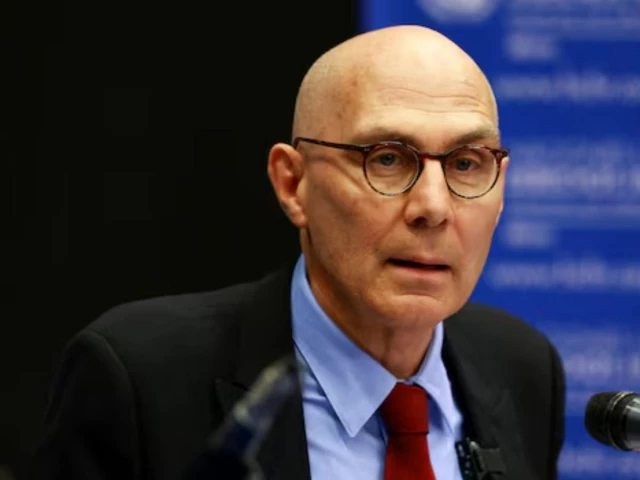
The Supreme Court has directed authorities to transfer Pakistan Tehreek-e-Insaf founder Imran Khan from Adiala Jail to Shifa International Hospital for medical assessment and treatment.

The order was issued by a three-member bench headed by Justice Shahid Waheed. Justice Naeem Akhtar Afghan and Justice Ishtiaq Ibrahim were also part of the bench.

The court was hearing petitions related to Imran’s medical treatment, access to his personal doctors and meetings with family members.

The bench also ordered authorities to submit Imran’s complete medical record before the next hearing. Justice Waheed questioned why the court had been provided with only a summary instead of the full medical file.

The judge said the court wanted the complete record to properly assess Imran’s health condition.

The matter came under discussion after a medical report submitted by Adiala Jail authorities highlighted concerns about Imran’s health. Justice Waheed noted that the reports indicated abnormalities in his pulse and heart condition and suggested that his vital organs could be affected.

The bench also discussed a recommendation for angiography. Justice Afghan asked whether the procedure could be performed inside the jail.

The Islamabad advocate general told the court that angiography could be carried out at a hospital outside the prison.

PTI lawyer Uzair Bhandari raised concerns about the cause of an alleged blood clot and requested access for Imran’s personal physicians.

He sought permission for Dr Asim Yusuf and Dr Faisal Sultan to meet Imran. The court discussed the qualifications of the doctors proposed for the visit and noted that no formal challenge had been made to the doctors who had already examined the former premier.

The court also addressed the issue of media statements following meetings with Imran.

Bhandari assured the bench that family members and doctors would not speak to the media after meeting the PTI founder.

The Islamabad advocate general said an earlier undertaking regarding media interactions had allegedly been breached. The matter is also pending before the Islamabad High Court.

Senior PTI lawyer Salman Akram Raja argued that responsibility should not automatically be placed on others if an undertaking had been violated.

Justice Waheed warned that if contempt proceedings were initiated against officials for violating court directions, similar action could also be considered against lawyers or other individuals who breached court orders.

The bench said the PTI and Imran’s family would have to provide an undertaking that no media briefing would take place after meetings.

Justice Afghan also urged the PTI to avoid turning Imran’s medical condition into a political dispute.

The court separately examined restrictions on meetings between Imran and his sisters.

Justice Waheed said meeting family members was a fundamental right and should not be treated as a special favour.

Authorities told the court that Imran had met his sisters 48 times during the past three years.

The court ordered officials to submit complete details of all those meetings. It also sought records concerning Imran’s communication with his sons, including call detail records.

The bench further directed authorities to provide comprehensive information about the cases against Imran. The court wants details of cases in which he is an under-trial prisoner, cases resulting in convictions and matters where sentences have been suspended.

Adiala Jail officials were summoned to appear before the court at the next hearing.

The court also questioned the implementation of Islamabad High Court directions concerning meetings with Imran. The Islamabad advocate general said the matter was pending before the high court in an intra-court appeal.

The hearing was adjourned until after the summer vacation.

Medical report submitted to court

A two-page medical report submitted by the Adiala Jail superintendent provided details of Imran’s treatment and health monitoring during his imprisonment.

The report said Imran had received treatment from ophthalmologists in Islamabad and Rawalpindi for central retinal vein occlusion, an eye condition diagnosed previously.

According to the report, his affected eye had shown significant improvement and had almost returned to normal vision.

The report also contained a summary of 39 medical examinations conducted by various specialists between November 4, 2023 and August 10, 2026.

Several government doctors examined Imran during this period. Jail authorities said records of the consultations had been maintained.

Medical officers at the jail also monitored his food and fluid intake three times a day and conducted regular health checks.

The report stated that Imran and his wife had been meeting every Tuesday under jail rules. A total of 84 such meetings had reportedly taken place.

Similar Posts

  • |

    Protests erupt in Bologna after man’s death during police restraint

    Thousands of people marched through the Italian city of Bologna after the death of a Moroccan born man who died while being restrained by police, prompting a criminal investigation and violent clashes that left dozens of officers injured. The protests were held in memory of Abderrahim Fakir, whose death on Sunday has sparked widespread public anger and renewed debate over police conduct in Italy. Demonstrators gathered to demand justice before a smaller group broke away from the main rally and clashed with riot police late into the night. Authorities said 64 police officers were injured during the unrest as protesters threw objects, confronted security forces and set two vehicles on fire. Police eventually brought the situation under control. The incident that led to the demonstrations began after officers responded to reports of a man behaving erratically in Bologna’s Pilastro neighbourhood. According to police, Fakir was seen kicking garage doors before officers attempted to calm him. They later used pepper spray during the confrontation. A video widely shared by Italian media shows two police officers holding Fakir face down on the ground while another man restrains his legs. Emergency medical workers are also visible nearby. In the footage, Fakir can be heard asking the officers to stop before he gradually stops moving. After he became unresponsive, officers handcuffed him and attempted to wake him before medical staff intervened. Prosecutors have opened a manslaughter investigation involving the police officers and emergency workers who were present at the scene. The inquiry will examine whether the restraint methods or medical response contributed to Fakir’s death. Several witnesses told local media that although Fakir appeared distressed, he was unarmed and did not pose a threat to anyone nearby. His sister, Khadija Fakir, called for a full investigation and said the family wanted answers about how he died while in police custody. Bologna Mayor Matteo Lepore also expressed shock after watching the video and organised Monday’s public demonstration in support of Fakir’s family. During the rally, Fakir’s niece addressed the crowd, describing her uncle as a caring and respected member of the community. She said he deserved compassion, dignity and help rather than the outcome that followed. Although the main demonstration remained peaceful, officials said a small number of protesters later turned violent. Mayor Lepore condemned the unrest while drawing a distinction between peaceful demonstrators and those who resorted to violence. The police union defended the officers’ actions and argued that the available video showed they had acted appropriately under difficult circumstances. Union representatives said the officers immediately handed over body camera footage to investigators and insisted the use of force was justified because officers faced resistance during the incident. Prime Minister Giorgia Meloni called for a thorough investigation into Fakir’s death while strongly condemning the violence that followed. She said determining the truth about the incident was essential but stressed that attacks on law enforcement could not be justified. Fakir’s death has drawn comparisons with previous high profile cases involving deaths in police custody in Italy. Opposition politicians have criticised the government’s strong support for police, while human rights advocates say the investigation must establish whether officers followed proper procedures during the arrest. The case has intensified public discussion over policing practices and accountability across the country.

  • |

    Arshad Nadeem powers through to Commonwealth Games javelin final

    Arshad Nadeem, Pakistan’s reigning Olympic champion, has punched his ticket to the men’s javelin throw final at the 2026 Commonwealth Games. He came through a tricky qualification round in Glasgow on Thursday to get there. Strong winds made life hard for every thrower in the field. None of them managed to reach the automatic qualifying distance of 84 metres, which made the round unusually unpredictable. Arshad, seen by many as a top medal contender, got things going with a throw of 78.63 metres on his first attempt. His second try was ruled a foul. He then closed out the round with a throw of 75.65 metres. That mark was not enough to hit the automatic cutoff, but it easily secured his place among the twelve finalists heading into Friday. Sri Lanka’s Rumesh Pathirage led all qualifiers with a throw of 82.84 metres. Anderson Peters of Grenada, the current world champion, was next best at 81.29 metres. Only two other athletes crossed the 80-metre line, South Africa’s Douw Smit, who reached 80.64 metres, and England’s Benjamin East, who managed 80.38 metres. India’s Neeraj Chopra, who has long been Arshad’s fiercest competitor, also booked his spot in the final. He started with a throw of 76.28 metres, then pushed further to 79.61 metres on his second attempt to confirm qualification. India actually secured three finalists in total. Rohit Yadav joined Chopra after throwing a best of 78.37 metres, while Yashveer Singh kept improving across his attempts and eventually settled for 78.36 metres. It was not such good news for Pakistan’s other entrant, Muhammad Yasir Sultan. He fouled his first throw, then followed up with attempts of 71.42 and 74.36 metres. Unfortunately, that wasn’t enough to carry him into the final. Friday’s javelin final is scheduled for 7:45 PM Pakistan Standard Time. Pakistan has a long history at the Commonwealth Games, having first competed back in 1954. Since then, the country has amassed 82 medals overall, including 27 gold, 27 silver, and 28 bronze. Its most successful campaign in recent memory came at the 2022 Birmingham Games. A 68-member Pakistani contingent took part across 12 sports and ultimately finished 18th in the medal table with eight medals. That edition also marked one of Arshad’s finest moments. He won javelin gold with a Games record throw of 90.18 metres, delivering Pakistan’s first athletics gold at the Commonwealth Games since 1962.

  • | |

    SHC orders independent probe into HIV cases at Kar…

    KARACHI: The Sindh High Court has directed the provincial government to establish an independent committee to conduct a comprehensive investigation into the reported spread of HIV among children treated at Karachi’s Kulsum Bai Valika Hospital. A two-member bench, headed by Justice Adnanul Karim Memon and comprising Justice Muhammad Jaffer Raza, issued the directions while announcing its reserved judgment on a petition seeking an impartial investigation, medical treatment and compensation for affected children. The court noted that the departmental inquiries and reports submitted so far were not sufficient to establish the actual number of affected patients, determine how the virus was transmitted or assess whether proper infection-control procedures were followed. According to figures presented by the Sindh government, 78 children were identified as HIV-positive at the hospital, while screening in the surrounding area detected another 120 cases. However, the petitioner claimed that the number of infected children could be around 200. The court ordered the Sindh chief secretary to head the inquiry committee and include two senior government officers of at least BS-20 rank. The officers should preferably have no direct administrative connection with the hospital or the investigations already conducted. The committee has been directed to establish the exact number and identities of HIV-positive children and other patients who were treated at the hospital during the relevant period. It will also investigate the possible source and method of HIV transmission on the basis of medical and scientific evidence. The committee will examine whether disposable syringes or other medical equipment were reused, improperly discarded or inadequately sterilised in violation of medical standards and applicable laws. It will also review the hospital’s infection-prevention arrangements, including the procurement, storage and use of auto-lock, auto-destruct and auto-break syringes. The roles of doctors, nurses, technical staff, administrative officials and supervisors will also come under scrutiny. The committee will determine whether any official failed to fulfil a legal, administrative or supervisory responsibility. The inquiry will further assess ongoing departmental proceedings against 37 officials and determine whether those proceedings adequately address individual responsibility. Officials will also examine whether the Sindh Regulation and Control of Disposable Syringes Act, 2010, or any other relevant law was violated and identify those responsible if evidence establishes wrongdoing. The committee has been authorised to examine medical and laboratory reports, screening records, procurement and stock registers, syringe records, duty rosters, infection-control reports, inspection documents, departmental inquiry material and relevant CCTV footage. The inquiry must provide an opportunity for a fair hearing to anyone against whom adverse findings are proposed. The committee has been directed to submit its report to the competent authority and the high court within two months of its formation. The court also directed the Sindh chief secretary to ensure that all affected HIV-positive children and other identified patients receive uninterrupted medical care while the inquiry continues. The treatment must include medicines, diagnostic tests, counselling and follow-up care and must be provided completely free of cost. The government and SESSI will bear all expenses, and no costs are to be recovered from affected children or their families. Treatment should continue for as long as medically necessary. Given the vulnerability of the children, the court also ordered authorities to determine whether affected families are entitled to compensation, financial assistance or other relief under the relevant laws and government policies. The court stressed that no affected child or family should face discrimination, stigma or denial of lawful assistance because of HIV status. It further ordered authorities to protect the privacy and confidentiality of the children’s identities and medical records. The Sindh chief secretary and health department secretary were directed to take immediate corrective and preventive measures at the hospital to prevent further avoidable risks to patients. Authorities were also ordered to ensure strict compliance with infection-control procedures and the law governing disposable syringes. The court said the case involved fundamental rights, including the rights to life, health, dignity and fair treatment. It observed that the matter could not be treated merely as an administrative issue because the state has a constitutional responsibility to protect life and ensure proper public health and medical safety. At the same time, the court cautioned that allegations or departmental proceedings alone cannot establish the guilt of individual officials. Responsibility must be determined through evidence and after providing the concerned persons an opportunity to defend themselves. The court also took notice of an incident involving the petitioner, Advocate Tariq Mansoor, during proceedings. According to the order, Mansoor allegedly raised his voice and encouraged people accompanying him, while some individuals reportedly recorded videos inside the courtroom. The court said the incident disrupted proceedings and affected the dignity and decorum of the courtroom. It also noted that the situation was serious enough for the bench to retire to chambers before completing the order. The court issued a show-cause notice to Mansoor, asking why contempt and criminal proceedings should not be initiated against him. Court security officials were also directed to explain an alleged security lapse that allowed a group of people to enter the courtroom and disrupt proceedings. The Sindh High Court Bar Association and Sindh Bar Council were asked to intervene and take appropriate measures regarding the alleged misconduct.

  • |

    Javeria Saud calls out obsession with surgeries and size-zero

    Pakistani actress and television host Javeria Saud has spoken openly about the growing obsession with cosmetic procedures, beauty filters, and extremely slim body figures among women. Known for her outspoken personality and candid views, the actress recently addressed the topic during a podcast, where she questioned the pressure many women feel to change their natural appearance. Javeria Saud has remained a familiar face in the Pakistani entertainment industry for years. Alongside acting and hosting, she has also worked as a producer and earned recognition for her performances in several popular television dramas, including Yeh Zindagi Hai, Nand, Paristan, Baby Baji, Baby Baji Ki Bahuwain, and Muhabbat Starangi. She has also been appreciated for her appearances in projects such as Bajjo and Muhabbat Aur Mehngai. During the podcast, Javeria discussed how beauty standards have changed and how social media has contributed to people’s desire to alter their looks. She revealed that even her own children do not approve when she uses filters on her pictures. According to Javeria, her children often question why she feels the need to use filters and remind her that people should be comfortable with the way they were naturally created. She shared that her children have even gone as far as deleting the application she uses for editing her pictures. However, she humorously admitted that she eventually downloads the app again. The actress also criticized what she described as an increasing fascination with Bollywood-inspired beauty standards. She claimed that many women in Pakistan want to resemble famous Indian actresses such as Kajol, Kareena Kapoor and Katrina Kaif, which can lead some of them to consider cosmetic procedures or other ways of changing their facial features. Javeria also spoke about the pressure surrounding body size, particularly the trend of trying to achieve a “size-zero” figure. She questioned the idea that becoming extremely thin automatically makes a person more attractive. She particularly expressed concern about women over the age of 30 who follow strict diets in an attempt to become extremely slim. According to her, excessive dieting can result in the loss of muscle and collagen, which may affect a person’s overall appearance and make them look unhealthy rather than glamorous. Using a humorous comparison, Javeria said that women can end up looking like a “dehydrated mango” when they lose too much weight and their skin and body lose their natural fullness. Her comments have once again highlighted the ongoing conversation around beauty standards, cosmetic enhancements, social media filters and body image. While cosmetic procedures and dieting remain personal choices, Javeria’s remarks encourage women to reconsider the pressure to achieve unrealistic beauty ideals and to appreciate their natural appearance.

  • |

    UN General Assembly extends rights chief’s term despite US objections

    The United Nations General Assembly has voted by a large majority to grant UN High Commissioner for Human Rights Volker Turk a second four-year term, despite strong opposition from the United States, Russia and Israel. The decision came after member states rejected calls to delay the vote and instead backed Secretary General Antonio Guterres’ recommendation to keep Turk in office when his current term expires in October. The 193-member General Assembly approved the extension with 144 countries voting in favor, while 10 countries voted against the proposal and 13 abstained. Before the final vote, member states also rejected a Russian proposal that would have extended Turk’s mandate only until the end of 2026 instead of giving him another full term. Turk has become one of the UN’s most outspoken voices on global human rights issues during his first term. He has repeatedly criticized Russia’s military actions in Ukraine and raised concerns over Israel’s conduct during the conflict in Gaza. He has also called for investigations into deaths that occurred in US immigration detention facilities. His willingness to publicly challenge major world powers has drawn criticism from several governments, including Washington, Moscow and Tel Aviv. The vote reflected growing tensions between the United States and the United Nations under President Donald Trump’s administration. In recent years, Washington has reduced financial support for several UN agencies and withdrawn from multiple international bodies. The administration has argued that reforms are needed before the United States continues its current level of participation and funding. Before the vote, the United States urged the General Assembly to postpone the decision for further consultations. US Representative for UN Management and Reform Jeff Bartos warned member states that approving the appointment without additional debate would damage the organization’s credibility. He said the United States would review its future engagement, participation and financial contributions if the assembly ignored its concerns. The US State Department also criticized the process before the vote, describing it as rushed and lacking sufficient discussion among member countries. Officials argued that member states should have been given more time to examine the proposal before making a final decision. Despite those objections, a broad coalition of countries supported Turk’s reappointment. The European Union strongly backed the extension, along with many African and Latin American nations. China also voted in favor of the proposal, helping secure the overwhelming majority needed for approval. UN Secretary General Antonio Guterres nominated Turk for a second term after working closely with him for several years. Guterres, who is due to leave office in December, praised Turk’s experience and commitment to defending human rights around the world. Turk, an Austrian lawyer, has spent decades working within the United Nations in senior positions based in Geneva as well as field assignments, including Kosovo. With the latest vote, he will become the first UN High Commissioner for Human Rights to serve two full four-year terms since the position was established in 1993. Human Rights Watch welcomed the decision, arguing that strong and independent leadership is needed at a time when democratic freedoms are facing increasing pressure in many parts of the world. The organization’s UN director, Louis Charbonneau, said the global human rights situation requires a commissioner willing to challenge powerful governments regardless of their influence. Russia and Israel strongly criticized the outcome after the vote. Russia’s deputy ambassador to the United Nations accused Turk of showing political bias and making unfair allegations against Moscow. Israeli officials also condemned the decision, describing it as a mistake and arguing that the appointment should have been left to the next UN secretary general rather than being decided during Guterres’ final months in office. The result highlights the continuing divisions within the United Nations over human rights issues and the organization’s relationship with some of its most influential member states. While a large majority of countries supported Turk’s leadership, the objections raised by the United States, Russia and Israel suggest that debates over the UN’s role and future direction are likely to continue throughout his second term.

  • |

    BJP lawmaker alleges son-in-law married 25 women

    An Indian politician has accused his son-in-law of fraud after allegedly discovering that the man had married around 25 women using different identities. Bharatiya Janata Party (BJP) lawmaker Gyan Tiwari, who represents the Sevata constituency in Uttar Pradesh, filed a complaint against his son-in-law’s family. He alleged that his daughter was deceived into marrying a man who had concealed his alleged criminal background and previous relationships. According to the complaint, Tiwari’s daughter Pragya married Prakhar Trivedi in 2024. Prakhar is the son of Anuj Trivedi, a resident of Chandrawal. Tiwari alleged that Anuj presented himself during the marriage arrangements as a well-known real estate businessman based in Mumbai. He claimed that the family had also received positive information about the prospective groom from local sources and influential people before approving the marriage. However, the lawmaker said his family later learned about Prakhar’s alleged activities through social media and other sources. Tiwari alleged that Prakhar had used fake identities to establish relationships with women in different Indian states, particularly Maharashtra. He further accused him of allegedly obtaining large sums of money from several women. The politician claimed that Prakhar had entered into around 25 marriages. The allegations have not been independently established. Tiwari said the revelations caused severe emotional distress to his family. He also said that the incident affected his reputation as a public representative. Following the allegations, Tiwari said he had severed social and personal ties with the accused family and brought his daughter back home. Police said a case had been registered following Tiwari’s complaint at the Reusa police station. Anuj Trivedi and his son Prakhar Trivedi have reportedly been arrested as the investigation continues. Authorities are now investigating the allegations of fraud, the alleged use of multiple identities and the claims involving several marriages.

Leave a Reply

Your email address will not be published. Required fields are marked *