shehbaz orders audit
| |

PM Shehbaz orders audit of Discos’ billing s…

ISLAMABAD: Prime Minister Shehbaz Sharif has directed a comprehensive technical audit of the billing systems of electricity distribution companies (Discos), reaffirming that reforming Pakistan’s power sector remains one of the government’s top priorities.

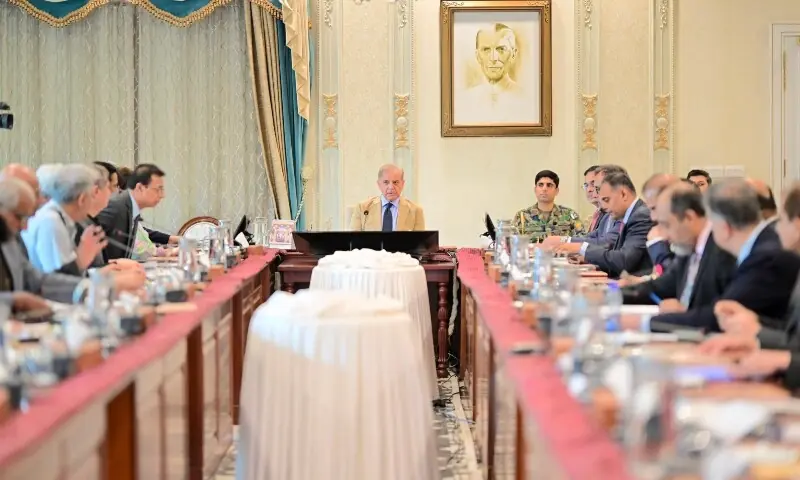
Chairing a high-level meeting on the performance of the Power Division, the prime minister acknowledged that distribution companies had shown noticeable improvement but stressed that further reforms were essential to enhance efficiency and service delivery. He described the nationwide installation of smart electricity meters as a key step toward modernising the sector and improving transparency.

Shehbaz Sharif also called for strict action against electricity theft, instructing authorities to strengthen enforcement mechanisms at every level. He ordered the Power Division to establish clear performance benchmarks for distribution companies, supported by measurable targets and specific implementation timelines.

To encourage better performance, the prime minister announced that the country’s best-performing distribution company would receive formal recognition and awards, promoting healthy competition among power utilities.

Addressing the issue of prolonged electricity shortages in rural areas, he directed officials to prepare village-level solarisation projects, saying decentralised solar energy systems could reduce pressure on the national electricity grid while improving access to reliable power.

During the meeting, officials informed the prime minister that technical and commercial losses across distribution companies had continued to decline. Islamabad, Lahore and Gujranwala electricity companies recorded the lowest transmission and distribution losses during the last fiscal year, while power utilities in Islamabad, Lahore, Gujranwala, Faisalabad and Multan achieved full recovery of billed electricity dues in the 2025–26 fiscal year.

The meeting was also told that specialised Disco Support Units have been established in Hyderabad, Sukkur, Lahore, Multan and Hazara to combat electricity theft, improve bill recovery and resolve technical challenges more effectively.

Officials further briefed the prime minister that the first phase of the Asset Performance Management System (APMS) at the transformer level is expected to be completed by the end of September. The system is designed to improve monitoring of transformers, helping reduce both power theft and load-shedding.

In addition, the government is considering the installation of 16.2 million Advanced Metering Infrastructure (AMI) single-phase smart meters across the Multan, Lahore, Peshawar, Hazara and Quetta regions as part of its broader strategy to modernise Pakistan’s electricity distribution network.

Similar Posts

  • | | |

    Aurangzeb, Baker discuss stronger Pak-US economic …

    Federal Minister for Finance Muhammad Aurangzeb met US Chargé d’Affaires Natalie Baker on Monday to discuss ways to strengthen Pakistan-US economic relations, trade and investment cooperation. According to the Finance Ministry, Aurangzeb briefed the US diplomat on his recent visit to Washington and meetings with senior American officials, including the US Treasury secretary. He also shared details of discussions with officials from the International Monetary Fund (IMF), US International Development Finance Corporation (DFC) and US Export-Import Bank. The meeting focused on increasing US investment and financing for commercially viable projects in Pakistan. Both sides also discussed improving Pakistan’s access to US markets and expanding Pakistani exports. The two sides agreed to advance a framework aimed at increasing bilateral trade and investment. They also discussed Pakistan’s participation in international capital markets and efforts to diversify the country’s sources of financing. According to the ministry, discussions also covered measures to strengthen foreign exchange reserves and improve Pakistan’s credit profile. Opportunities for greater investment by US financial institutions in Pakistan were reviewed. Cooperation in key sectors, including ports, logistics, energy and telecommunications, also came under discussion. The two sides explored potential collaboration in digital technology and artificial intelligence. Aurangzeb said significant progress had been made in negotiations on a bilateral trade framework between Pakistan and the United States. He said the government was working to create a more favourable environment for private-sector investment. The finance minister welcomed the interest of US companies and investors in Pakistan. He said the government was continuing reforms aimed at improving the business and investment climate. Aurangzeb also briefed the US chargé d’affaires on Pakistan’s new system for daily adjustments in petroleum product prices. He explained that the mechanism was designed to align domestic prices more closely with developments in the international market. He said the government’s priorities included maintaining fiscal discipline, strengthening foreign exchange reserves and increasing exports. He added that reforms were underway to improve economic stability and attract investment. Natalie Baker appreciated Pakistan’s efforts to manage its economic situation during a period of regional tensions. She also praised the country for maintaining economic and financial stability despite rising energy prices.

  • | |

    Nawaz Sharif calls for better governance in AJK

    Pakistan Muslim League-Nawaz (PML-N) President Nawaz Sharif has urged political parties to keep their differences within the bounds of democratic competition, saying political rivalry should never turn into personal hostility. Addressing a meeting of the PML-N Azad Jammu and Kashmir (AJK) parliamentary party in Murree, Nawaz congratulated the candidates who won seats in the AJK elections and called for greater financial support for the region. He said the federal government should provide AJK with maximum possible development funds so that the territory can improve its infrastructure and public services. He also directed the party leadership to examine the reasons behind the defeat of several strong PML-N candidates and learn from the election results. Nawaz said the party had secured victories in two phases of the electoral process, describing the results as another expression of public confidence in the PML-N. However, he cautioned that the party must deliver on its promises to retain that trust. “If the PML-N fails to deliver, the people here will become disappointed,” he said. The former prime minister stressed the need to improve roads, hospitals and other basic facilities across AJK. He said children in the region should also have access to modern educational opportunities and technology, including laptops. Nawaz credited Prime Minister Shehbaz Sharif’s efforts for the country’s ongoing development, saying Pakistan was moving forward. He called for AJK to experience similar progress and said the region should develop along the lines of Punjab. He stressed that the PML-N could not afford to disappoint voters who had placed their confidence in the party. Nawaz also expressed concern over complaints that emerged during the political process involving the Pakistan Peoples Party (PPP). He said he had not expected the PPP to provide an opportunity for complaints, particularly given that the party had previously led the AJK government. “Some complaints reached us, and I was saddened by them,” Nawaz said, while emphasising the need for political parties to maintain respectful relations despite their differences. He said previous AJK governments had failed to fully meet public expectations and stressed that improving the welfare and living standards of the region’s people should remain the top priority. Nawaz maintained that the PML-N would continue to focus on development and public service while working to strengthen its political position in AJK.

  • |

    Petrol, diesel prices may fall further

    Petroleum product prices in Pakistan may see another reduction from August 5, offering potential relief to consumers already facing high fuel costs. According to sources within the Oil and Gas Regulatory Authority (OGRA), the price of petrol could decrease by Rs3.39 per litre, while high-speed diesel may become cheaper by Rs4.07 per litre. The latest calculations suggest that the price of petrol could fall to approximately Rs328.56 per litre after the proposed reduction. Similarly, the price of high-speed diesel may come down to an estimated Rs385.86 per litre. OGRA sources said the initial working for the possible price adjustment has been completed. The final decision, however, will depend on the government’s review of the latest calculations and other relevant factors before announcing the new prices. The possible reduction comes shortly after the government announced a cut in petroleum prices. In the previous adjustment, the government reduced the price of petrol by Rs4.08 per litre, while the price of diesel fell by Rs2.45 per litre. If the latest proposed cuts receive approval, consumers could see another decline in fuel prices within a short period. A reduction in petrol prices would directly benefit motorists and households that rely on private vehicles for daily commuting. Lower diesel prices could also provide some relief to the transport sector, as diesel powers a large number of commercial vehicles, buses, trucks and other heavy transport used to move people and goods across the country. A decline in fuel prices may also help reduce pressure on transportation and logistics costs. Since diesel plays a major role in the movement of agricultural produce, industrial goods and essential commodities, any reduction in its price could potentially ease some of the cost burden on businesses and consumers. However, the impact of the proposed reduction on overall inflation will depend on several factors, including transportation costs, exchange rate movements and international oil prices. The government is expected to announce the final petroleum prices after completing its review and approving the new rates. The expected adjustment comes as consumers continue to closely monitor fuel prices because of their direct impact on household budgets and the cost of everyday goods and services. Any further reduction in petrol and diesel prices could provide some short-term financial relief to the public and businesses.

  • | |

    Goats caught riding a green bus in Oregon in viral…

    An unusual incident in Portland, Oregon, has caught the attention of social media users after two stray goats were spotted entering a public bus station and briefly boarding a green bus. The bizarre incident reportedly took place at a bus station on Division Street, where authorities received a 911 call about two goats wandering freely around the area. What happened next turned an ordinary day into an amusing story for local commuters. According to the local transport authority, security camera footage showed the two goats calmly entering the station. The animals then appeared to board a nearby bus before eventually getting off and walking toward a shopping center in the area. The sight of the unexpected passengers quickly became the highlight of the incident. Rather than causing major disruption, the goats seemed to explore the station and bus as if they were simply looking for their next destination. Police were alerted and began searching the area after receiving the report. However, by the time officers arrived, the goats had disappeared. Their whereabouts remained unknown. The local transport authority also responded to the unusual incident with a humorous message, jokingly raising questions about where the goats had come from, where they were going and whether they had valid tickets for their journey. The incident has since attracted attention online, with the unusual footage providing plenty of entertainment for viewers. While public transportation is normally associated with human passengers, the appearance of two goats on a bus created a memorable and amusing moment. The goats ride green bus incident is another example of how unexpected moments captured on security cameras can quickly become viral stories. For the goats, however, the brief bus adventure may simply have been another day of exploring their surroundings. The incident ended without reports of injuries, and authorities were left with more questions than answers about the animals’ unexpected public-transit adventure

  • 15,000+ free heart surgeries completed under Punjab CM’s Programme

    Lahore – More than 15,000 free cardiac surgeries for children from Punjab and other parts of the country have been successfully completed since the launch of the Chief Minister’s Children Heart Treatment Programme in September 2024. The Hospital Management Information System (HMIS) developed by the Punjab Information Technology Board (PITB) has played a key role in the programme. The system has helped manage patients medical records, prepare patient lists, make electronic referrals to private hospitals and ensure timely coordination between public and private hospitals. This was revealed at a meeting chaired by PITB Chairman Faisal Yousaf at the Arfa Software Technology Park (ASTP). The meeting was briefed that HMIS is providing hospitals participating in the programme across Punjab with quick and easy access to patient records. This is helping doctors make better medical decisions while also making it easier for hospital administrations to monitor and coordinate patient treatment, referrals and other related matters. The digital system has also played an important role in making the patient referral and treatment process more organized, transparent and integrated. It has accelerated the exchange of information between hospitals and helped reduce unnecessary delays in treatment. Speaking on the occasion, PITB Chairman Faisal Yousaf said that the completion of more than 15,000 free heart surgeries for children was a major achievement of the Chief Minister’s programme. He said HMIS had played a significant role in speeding up, organizing and improving the treatment process through digital records, electronic referrals and effective coordination among hospitals. Faisal Yousaf further said that PITB would continue its support for promoting the use of modern digital technology in the healthcare sector to ensure the timely provision of quality medical facilities to citizens. He said that the effective use of digital systems in healthcare not only facilitates patient treatment but also improves hospital administrative efficiency, transparency and coordination among different institutions.

  • |

    Petrol sold Rs139, diesel Rs116 per litre above basic cost

    Consumers continue to bear a substantial burden of taxes, levies and distribution margins on petroleum products, with a significant portion of the prices of petrol and high-speed diesel (HSD) going towards government charges and other components rather than the basic fuel cost. According to official documents, petrol is currently priced at Rs327.62 per litre, while the basic cost of the product stands at Rs197.69 per litre. This means consumers are paying around Rs130 per litre in the form of petroleum levy, taxes, freight-related charges and margins. The documents indicate that the government has imposed a petroleum levy of Rs80 per litre on petrol, making it one of the largest components of the additional charges paid by consumers. In addition to the petroleum levy, petrol carries a climate support levy of Rs5 per litre and customs duty of Rs21.24 per litre. The price also includes an inland freight equalisation margin of Rs7.48 per litre. Meanwhile, oil marketing companies (OMCs) receive a margin of Rs7.87 per litre, while petroleum dealers are entitled to a margin of Rs8.64 per litre. Taken together, these taxes, levies, freight charges and commercial margins add a sizeable amount to the underlying cost of petrol, resulting in a significant difference between the basic product cost and the final price paid at filling stations. Diesel also carries substantial charges A similar situation is visible in the pricing structure of high-speed diesel. According to the documents, the basic cost of HSD has been calculated at Rs264.76 per litre, whereas its notified consumer price stands at Rs380.86 per litre. The difference of approximately Rs116 per litre represents taxes, levies and various margins included in the final price of diesel. The petroleum levy on HSD stands at Rs74.28 per litre, while a climate support levy of Rs5 per litre is also included in the price structure. Consumers are additionally paying Rs15.68 per litre in customs duty on HSD. The inland freight equalisation margin accounts for another Rs4.63 per litre. The pricing structure also provides Rs7.87 per litre as the margin for oil marketing companies and Rs8.64 per litre as the dealers’ margin. The figures highlight the significant role played by government levies and other charges in determining retail petroleum prices. While the basic cost reflects the underlying price of the petroleum product, the final amount paid by consumers also incorporates a range of taxes, levies, freight costs and margins. The petroleum levy remains one of the most prominent components of the pricing structure for both petrol and diesel. The government uses petroleum-related levies as an important source of revenue, while other components are intended to cover costs associated with transportation, marketing and retail distribution. The high level of charges has a direct impact on consumers and businesses, particularly because petrol and diesel are widely used for transportation and commercial activities. Changes in fuel prices can also influence the cost of transporting goods and passengers and may eventually affect prices across different sectors of the economy.

Leave a Reply

Your email address will not be published. Required fields are marked *