over 4000 cops
| |

Over 4,000 cops to secure AJK elections in Rawalpi…

More than 4,000 police personnel will be deployed in Rawalpindi division to ensure security during the Azad Jammu and Kashmir (AJK) Legislative Assembly elections on August 2.

Police officials have prepared a detailed security plan for polling in four constituencies of the division, including Attock, Jhelum, Chakwal and Murree. A total of 4,029 police officers will be assigned duties at 175 polling stations.

The polling stations have been divided into three categories according to their security requirements. Category A includes highly sensitive stations, Category B covers sensitive locations, while Category C consists of normal polling stations.

Rawalpindi Regional Police Officer Babar Sarfraz Alpa said providing voters with a safe and peaceful environment is the top priority. He added that all available resources would be used to ensure free and transparent elections.

He said strict monitoring would be carried out at sensitive polling stations. Additional patrolling and surveillance measures would remain active throughout the polling process.

Police officials will also monitor suspicious activities, illegal weapons and any violations of the election code of conduct. Legal action will be taken against individuals involved in disrupting the electoral process.

In Rawalpindi district, more than 3,100 police personnel and 200 traffic police officials will be deployed at 100 polling stations. These stations are located in different areas, including Rawalpindi city, Taxila, Wah Cantt, Gujar Khan, Kallar Syedan and Kahuta.

Among the 100 polling stations, 18 have been declared highly sensitive, 45 sensitive and 37 normal. Security arrangements have also been made for the safe transportation of polling materials.

City Police Officer Hassan Mushtaq Sukhera said the police would ensure implementation of the Election Commission’s rules and maintain law and order until the completion of the election process.

The AJK elections are being conducted in phases due to security concerns. Authorities have increased security measures after previous election-related tensions and allegations of irregularities.

Similar Posts

  • |

    4.5-magnitude quake jolts Pakistan’s coast

      A 4.5-magnitude earthquake jolted Pakistan’s coastal region on Monday morning, with tremors recorded near Keti Bandar, according to the Pakistan Meteorological Department (PMD). The seismic activity occurred at around 8:31am, with the earthquake originating at a depth of approximately 40 kilometres beneath the surface. The PMD located the epicentre in the sea, around 156 kilometres southwest of Keti Bandar. The tremors were felt in parts of the coastal belt, prompting residents to remain alert. However, there were no immediate reports of casualties, injuries or significant damage to buildings and other infrastructure following the earthquake. The depth and offshore location of the earthquake likely reduced its impact on populated areas compared with a shallower quake occurring closer to land. Nevertheless, residents in coastal communities may have felt noticeable shaking depending on their distance from the epicentre. Seismic activity is not unusual in and around Pakistan’s coastal belt, which lies near tectonically active zones. Earthquakes in the region can occur beneath the Arabian Sea and along nearby fault systems. The meteorological department continues to monitor seismic activity and may issue further information if additional tremors or related developments are recorded. Authorities have also advised people to remain calm and follow official updates in the event of further seismic activity. No tsunami warning or major coastal emergency was reported in connection with the earthquake at the time of the initial report.

  • |

    Buleha” faces suspension as Senate demands name change and removal of Bulleh Shah dialogue

    Islamabad: A controversy over the Pakistani film “Buleha” after a Senate committee questioned whether the movie damaged the image of legendary Sufi poet Baba Bulleh Shah by showing a character connected with violence, weapons and personal justice. During a heated discussion, Senator Pervaiz Rashid questioned how a film carrying the name of a famous symbol of peace and love was approved despite scenes and dialogues that critics said were opposite to Bulleh Shah’s teachings. The controversy intensified when members of the Censor Board admitted that some important points were overlooked during the approval process. Dr. Sultan Azam Taimuri, a senior member of the board, accepted responsibility and said the concerns raised about the connection between the fictional character and Baba Bulleh Shah should have been discussed more carefully. The committee argued that Baba Bulleh Shah was known for promoting peace, humanity and love, while the film appeared to show a character using force and weapons to fight criminals. Members questioned whether such a portrayal could create confusion among young viewers about the real message and personality of one of Punjab’s most respected Sufi poets. The debate became intense when a Senator Pervaiz Rashid asked if a film about another respected poet, such as Khushal Khan Khattak or Ghalib, showed that personality in a completely opposite way, would the Censor Board approve it. A censor board member admitted that such a film would not be acceptable and said it would be wrong to show a historical personality against their actual beliefs. The committee then questioned why the same standard was not applied to “Buleha.” The Censor Board defended its decision by saying the movie was not a biography of Baba Bulleh Shah. Officials explained that the character in the film was fictional and had no direct connection with the real life of the Sufi poet. They said the board considered the movie a fictional story and believed the name alone was not enough reason to stop its release because Bulleh Shah himself used the word “Bullah” in his poetry. However, the committee pointed out that the board’s explanation created confusion. Members questioned how the film could have no connection with Bulleh Shah but still use a name and dialogue strongly linked with him. The discussion became more serious when Dr. Sultan admitted that the committee’s concerns had a point. He said the board did not discuss this angle properly at the time of approval and accepted responsibility. He also admitted that a dialogue in the film where the character compares himself with Bulleh Shah could be controversial. Another Censor Board member, Syed Farooq Hassan, also accepted that the board overlooked this perspective. He said the board knew Baba Bulleh Shah’s teachings were completely different from the violence shown in the film, but members believed the character was fictional and not based on the actual life of Bulleh Shah. The board members also explained that Pakistan’s film industry was already struggling, and they wanted to support local movies within acceptable limits. They said promoting cinema was also one reason behind their decision. The committee, however, questioned whether supporting the film industry should come before protecting the image of respected cultural and historical figures. During the meeting, criticism was also directed at the writer of the film. Members questioned whether being a successful film writer was enough qualification to handle the story of a major historical and spiritual personality. They argued that the writer’s fame came mainly from action based films and said success in commercial cinema does not automatically mean expertise in history, culture or the lives of national figures. One committee member strongly criticised the idea of approving a film simply because it was written by a famous writer. He said the writer was known for introducing violent action elements in films but was not known as an expert on Sufi personalities or Pakistan’s cultural traditions. The committee also rejected the argument that other provincial censor boards had already approved the film. Officials said Punjab and Sindh censor boards had approved the movie without cuts, and it had also been aired on Local TV. However, committee members said approval by other boards did not remove the responsibility of reviewing the film’s impact. The discussion also raised questions about the knowledge and background of Censor Board members. Members suggested that people approving films about major personalities should have knowledge of history, literature, culture and society. They said the selection criteria for board members should ensure they understand how films can influence children and families. The committee argued that showing respected personalities incorrectly could affect how younger generations understand their history. At the end of the meeting, the committee made a strong recommendation regarding the film. The committee suggested that the film name should be changed and the dialogue in which the character calls himself Bulleh Shah should be removed. It further recommended that the film’s exhibition licence should remain suspended until these changes are made and that online versions should also be removed if available. The Senate Standing Committee on Information and Broadcasting has also included the film “Buleha” issue in its upcoming agenda, calling Censor Board members and producers to explain the certification process and the discussions behind the film’s approval.

  • | | | |

    Oil prices fall as Hormuz shipments resume

    Global oil prices fell sharply on Friday, extending weekly losses as crude exports through the Strait of Hormuz gradually resumed, easing fears of prolonged supply disruptions despite a fresh maritime security incident near Oman. Brent crude dropped nearly 2% to $73.76 per barrel, while US West Texas Intermediate (WTI) crude also declined around 2% to $70.43 per barrel during trading. The decline reflected growing market confidence that oil supplies from the Gulf were beginning to recover after months of disruption. Saudi Arabia’s state-owned energy company resumed crude loading operations at the Ras Tanura export terminal after a suspension of almost four months. Shipping data indicated that two very large crude carriers were loading oil at the terminal, with another tanker waiting offshore, signalling a gradual restoration of export activity. Market analysts said traders were reacting positively to the increase in tanker movements through the Strait of Hormuz, one of the world’s most important energy corridors. However, they noted that crude demand from China remains weaker than expected, adding downward pressure on prices. The market had briefly rallied a day earlier after a commercial cargo vessel was struck by an unidentified projectile near Oman, prompting the United Nations’ shipping agency to suspend its voluntary evacuation programme in the area. US officials later alleged that Iranian forces had fired on the vessel as it attempted to transit the strait, while Iranian authorities maintained that security could not be guaranteed for ships operating outside designated navigation routes. Although oil shipments through the Strait of Hormuz have reached their highest level since the outbreak of the US-Israel-Iran conflict in February, overall maritime traffic remains well below normal levels recorded before the crisis. Analysts observed that much of the recent increase in tanker traffic reflects vessels that had been stranded during the conflict finally leaving the Persian Gulf. They cautioned that inbound shipping remains limited, suggesting export flows could slow again once the backlog of delayed vessels has cleared. Adding another layer of uncertainty, earthquakes in Venezuela raised fresh concerns about global oil supplies. Initial assessments indicated that the country’s major oilfields, refineries and export facilities escaped significant damage because they were located away from the hardest-hit regions. Nevertheless, widespread power outages have created uncertainty over whether Venezuela can maintain crude production near its recent level of approximately 1.2 million barrels per day. Despite ongoing geopolitical tensions and supply risks, the resumption of Gulf oil exports outweighed immediate concerns, leaving both Brent and WTI crude on course for weekly losses of around eight percent.

  • Four Chinese Nationals Arrested In Thailand On Fraud Charges

    BANGKOK, Thailand — Four Chinese nationals accused of defrauding authorities in Wuhan of nearly 87 million baht in land expropriation compensation have been detained in separate operations in Chon Buri and Samut Prakan provinces, after investigators determined they had allegedly used Thai retirement visas to conceal their presence in the country. Chinese Man Faces Legal […]

  • | |

    Anne Hathaway and Ewan McGregor reveal what The En…

    Anne Hathaway and Ewan McGregor are stepping into an unusual cinematic adventure with The End of Oak Street, a new film that combines family drama, mystery and prehistoric thrills. While the movie places its characters in an extraordinary situation, the story also explores themes of family, adaptability and finding strength when life suddenly changes. The film, directed by David Robert Mitchell, stars Hathaway and McGregor as parents living with their family in a quiet 1980s suburban neighborhood. Their ordinary lives take an unexpected turn when a mysterious event transports their community into a prehistoric world filled with dinosaurs and other ancient creatures. (Variety⁠) Learning to adapt One of the strongest ideas surrounding The End of Oak Street is the importance of adapting to circumstances that are completely outside anyone’s control. Hathaway and McGregor’s characters are forced to leave behind the comfort and familiarity of their everyday lives. Suddenly, the skills they would normally rely on are no longer enough. They must work together, make difficult decisions and protect their family while trying to understand what has happened. That unusual premise gives the film an emotional foundation beneath its large-scale adventure. The story is not simply about dinosaurs or survival. It also places a family under extraordinary pressure and asks how people respond when everything familiar disappears. Family at the center Although the film promises plenty of spectacle, the family relationship remains an important part of the story. Hathaway plays a mother who begins questioning her life before the mysterious transformation changes everything around her. McGregor plays her husband, and their characters must navigate their complicated circumstances while attempting to keep their family together. Their journey gives the film a more personal dimension, allowing the adventure to explore questions about relationships, responsibility and change. The film has been compared to a blend of Spielberg-style wonder and Jurassic Park-level thrills, while remaining an original story. (World of Reel⁠) A new kind of challenge For Hathaway and McGregor, The End of Oak Street represents a departure from more conventional family dramas. The production required them to work within a world where the impossible becomes reality. The movie is scheduled to arrive in UK cinemas on August 14, 2026. With its combination of mystery, family dynamics and prehistoric adventure, it could offer audiences more than a traditional creature-feature experience. (London Post⁠) Ultimately, The End of Oak Street suggests that even when life takes an unexpected turn, staying connected, thinking creatively and protecting the people who matter can make all the difference.

  • | |

    Iqbal Chair at Heidelberg University nears restora…

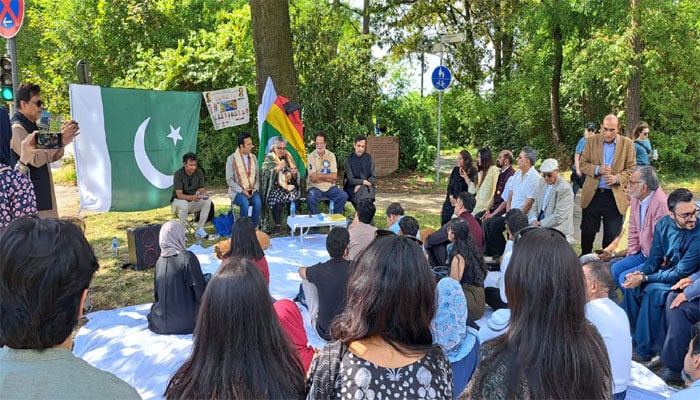
    HEIDELBERG: Pakistan’s Ambassador to Germany, Saqlain Syedah, has announced that the restoration of the Allama Iqbal Chair at Heidelberg University is in its final stages, describing it as a major step towards strengthening academic and cultural ties between Pakistan and Germany. She made the announcement while addressing a literary gathering and mushaira held at Iqbal-Ufer, located on the banks of the River Neckar in the historic German city of Heidelberg. The event brought together members of the Pakistani community, writers, poets, academics and representatives of local organisations. The ceremony was chaired by renowned poet and community leader Syed Iqbal Haider, while Pakistan’s ambassador attended as the chief guest. Among the distinguished participants were Heidelberg City Council member Waseem Butt and German professor Hans Herder, whose speech in Urdu received warm appreciation from the audience. Speaking at the event, Waseem Butt announced that Allama Iqbal’s 150th birth anniversary in 2027 would be celebrated in Heidelberg with special ceremonies and cultural events. In her address, Ambassador Saqlain Syedah highlighted the importance of literary gatherings in promoting the Urdu language and preserving Pakistan’s cultural heritage abroad. She also spoke about the deep historical and intellectual connection between Allama Muhammad Iqbal and the city of Heidelberg, where the philosopher-poet spent part of his academic life. The ambassador praised Syed Iqbal Haider for organising the literary event and thanked all participants for keeping Urdu literature and Pakistani cultural traditions alive in Germany. Syed Iqbal Haider also reflected on Allama Iqbal’s close association with Heidelberg and the River Neckar. He said Iqbal’s message of selfhood, human dignity and intellectual awakening continues to serve as a bridge between Eastern and Western thought. During the ceremony, the ambassador shared the encouraging news that practical steps to restore the Allama Iqbal Chair at Heidelberg University had reached their final phase. She expressed hope that the initiative would further enhance educational cooperation and cultural exchanges between Pakistan and Germany.

Leave a Reply

Your email address will not be published. Required fields are marked *