four chinese nationals

Four Chinese Nationals Arrested In Thailand On Fraud Charges

BANGKOK, Thailand — Four Chinese nationals accused of defrauding authorities in Wuhan of nearly 87 million baht in land expropriation compensation have been detained in separate operations in Chon Buri and Samut Prakan provinces, after investigators determined they had allegedly used Thai retirement visas to conceal their presence in the country.

Chinese Man Faces Legal Action After Damaging Automated Gates At Suvarnabhumi Airport

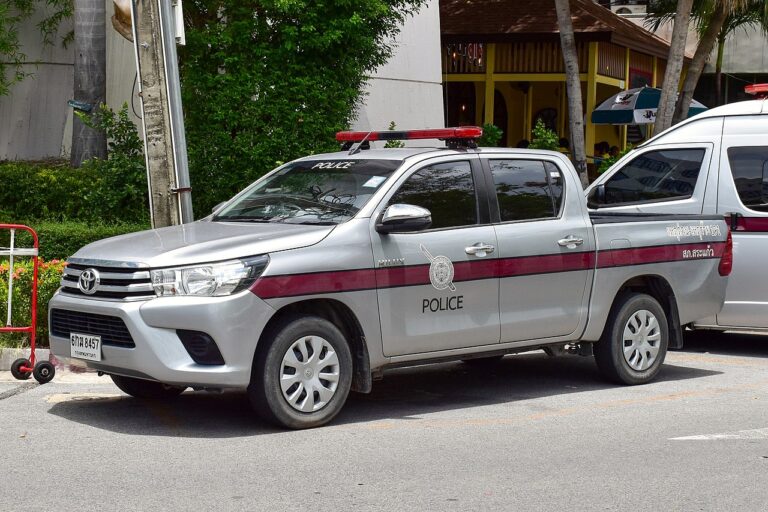
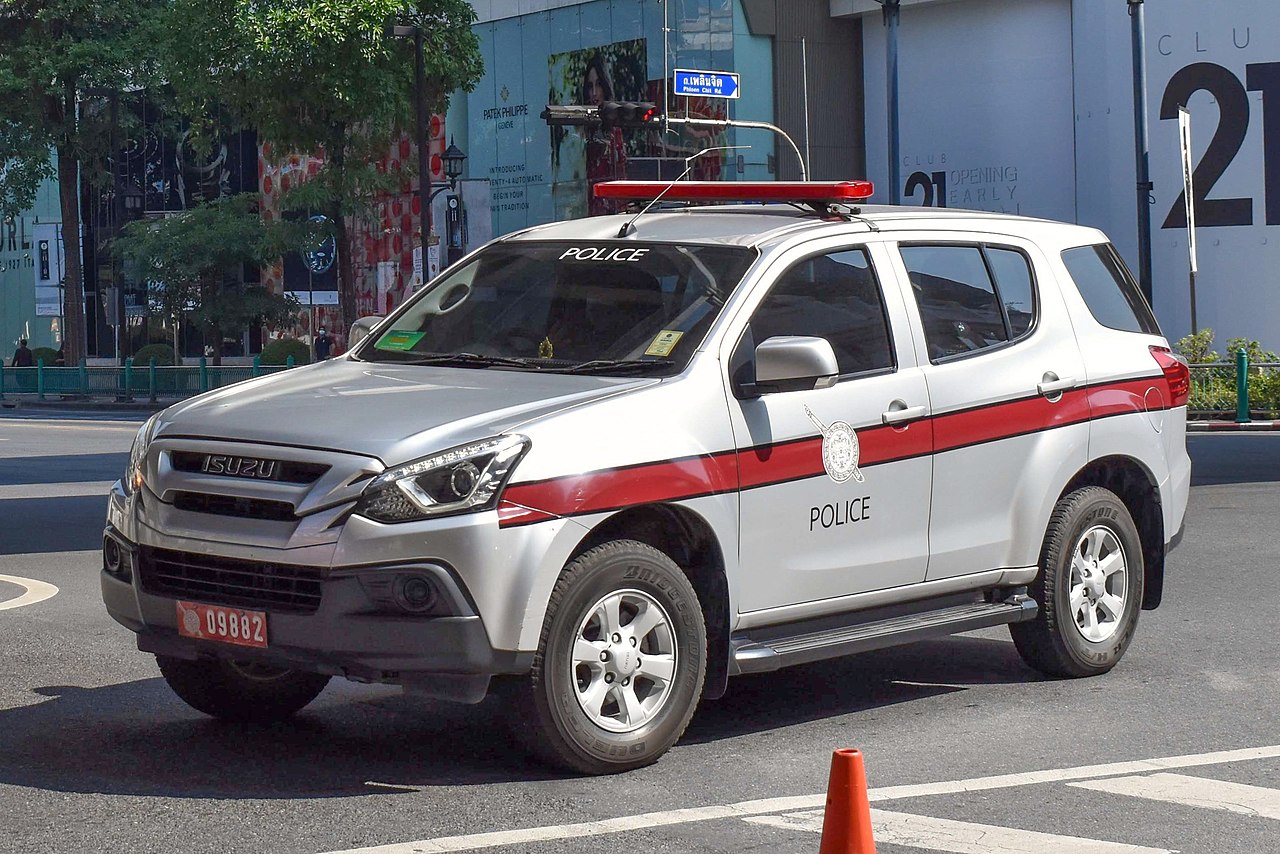
The arrests were conducted by officers from the Special Service Division (SSD) of the Royal Thai Police and the Immigration Bureau. Three Chinese men were apprehended at a luxury residence in Tambon Huai Yai, Bang Lamung district, Chon Buri province, while a Chinese woman was detained at Suvarnabhumi International Airport in Samut Prakan. The suspects were identified only as Mr. Chen, 55, Mr. Yuan, 54, Mr. Fei, 51, and Ms. Luo, 54. All four were arrested under provisions of the Immigration Act on grounds that they were considered individuals potentially posing a threat to society, public safety, or national security.

Police Lieutenant General Natthasak Chaowanasai, commissioner of the Central Investigation Bureau, and Police Major General Theerachart Theerachartdamrong, commander of the SSD, authorized the operation following a formal request from the Lancang-Mekong Law Enforcement Cooperation Centre. The four individuals were subject to arrest warrants issued by the Wuhan Public Security Bureau in China on charges of document forgery and fraud.

According to investigative findings, the suspects were allegedly linked to a contractor involved in demolition and landscape rehabilitation projects in Wuhan. Authorities stated that the group falsified documents and official records to fraudulently obtain compensation payments for demolition and land expropriation from Wuhan New City Land Management Co. Investigators indicated that the suspects used the names and bank accounts of other individuals to receive the illicit payments, causing estimated damages exceeding 18 million yuan, or approximately 87 million baht.

Thai authorities later determined that the suspects had fled to Thailand and were residing in hiding while maintaining legal status through retirement visas. After tracing their movements through intelligence coordination and surveillance, investigators identified a luxury property in a residential estate in Tambon Huai Yai as the group’s primary safe house.

The arresting team obtained a search warrant from the Pattaya Provincial Court before conducting a raid on the property, resulting in the detention of Mr. Chen, Mr. Yuan, and Mr. Fei. Ms. Luo was apprehended separately at Suvarnabhumi International Airport, reportedly while preparing to depart the country.

All four suspects have been transferred to the Immigration Bureau’s detention facility pending extradition proceedings to China. Under Thai immigration regulations and bilateral agreements with the People’s Republic of China, individuals wanted on serious criminal charges in their home countries may be subject to detention and repatriation following judicial review and administrative verification.

Thailand has increasingly strengthened cooperation with regional law enforcement partners through frameworks such as the Lancang-Mekong Cooperation mechanism to address transnational criminal activity, including financial fraud, document forgery, and fugitive evasion. The Royal Thai Police and Immigration Bureau maintain coordinated protocols for identifying, locating, and processing individuals subject to international arrest warrants.

For foreign nationals residing in or visiting Thailand, authorities emphasize the importance of maintaining valid immigration status, complying with visa conditions, and understanding that participation in fraudulent activities—whether conducted domestically or abroad—may result in criminal prosecution, deportation, and restrictions on future entry.

The use of retirement visas by individuals allegedly seeking to evade justice in their home countries has drawn increased scrutiny from immigration officials. Authorities have indicated that visa applications and renewals undergo verification processes designed to identify persons who may pose risks to public order or international legal cooperation.

Chinese Suspect With Pattaya Arsenal Planned Cambodia Scam-gang Attack

As extradition proceedings advance, Thai judicial authorities will review documentation provided by Chinese counterparts, verify the identity of the detained individuals, and ensure that all procedural requirements under Thai law and applicable international agreements are satisfied before any transfer of custody occurs.

-Thailand News (TN)

Similar Posts

  • |

    The dual catalyst of changing climate and human

    France is confronting unprecedented environmental devastation as wildfires swept across the nation’s forests and countryside. The fire burned over 300,000 acres. A level of destruction not witnessed in the country since the aftermath of the Second World War. The communities assess ruined homes, scorched ecosystems and degraded air quality. The French public and authorities are left with an urgent question: what is driving these catastrophic blazes? A Perfect Storm of Climate Conditions At the root of the crisis is a changing global climate driven by greenhouse gas emissions. Rising regional temperatures, combined with prolonged dry spells, have transformed expansive tracts of woodland into dry tinderbox environments. In these prolonged heatwaves, humidity drops sharply, rendering vegetation prone to rapid ignition. Under such extreme drought, even a minor spark can ignite an uncontrollable inferno within minutes. Environmental scientists emphasize that while climate conditions establish the background vulnerability, they do not act alone. Heat and drought create the ideal environment for fires to spread, but the vast majority require an initial ignition source. The Human Factor: Negligence, Accidents and Arson Official records in France reveal a shocking pattern. Approximately nine out of every ten wildfires originate from human activity.  Public concern often focuses on intentional acts of arson. However, investigators note that deliberate fire-setting accounts for only a fraction of total blazes. The overwhelming majority stem from everyday human negligence or accidents. Common accidental triggers include: Discarded Cigarettes: Unextinguished butts tossed from vehicles or thrown onto dry brush. Fire investigators refer to the rule of 30 conditions where ambient temperatures exceed 30°C (86°F), humidity drops below 30%, wind speeds stay below 30 km/h. A remaining cigarette segment retains at least 30% of its length. Under severe drought, these thresholds lower drastically, making ignition almost immediate. Infrastructure and Equipment: Sparks generated by heavy machinery, ongoing construction projects, or faulty electrical equipment operating near dry grass. Recreational Fires: Unattended outdoor barbecues and small campfires in or around forested boundaries. In response to the scale of destruction, the French Interior Ministry has taken aggressive legal action, detaining over 400 individuals suspected of initiating blazes either through reckless behavior or intentional acts. Among those apprehended are scores of minors, as well as individuals facing immediate judicial sentencing for setting fires in protected woodland zones. Mental health professionals and legal experts point out that intentional fire-starters typically fall into distinct categories, including careless individuals, opportunistic actors seeking financial gain (such as insurance payouts), pyromaniacs, or individuals seeking recognition during emergency responses. Looking Ahead: Reconstruction and Forest Adaptation The unprecedented severity of the blazes has sparked intense public debate over state readiness and resource allocation. Critics question whether preventive measures and response mechanisms were adequate for a summer marked by continuous heatwaves. Addressing the national crisis, French President Emmanuel Macron emphasized the necessity of adapting national forestry policy to match evolving climate realities. Rebuilding efforts will require replanting woodlands with more fire-resistant tree species rather than simply restoring vulnerable pine monocultures. As emergency crews continue to monitor remaining hotspots and brace for subsequent heatwaves, France faces a long-term strategy shift: balancing immediate enforcement against negligence with broad ecological adaptation.

  • Australian Drug Fugitive Arrested in Bangkok

    BANGKOK — An Australian national wanted on drug charges in his home country has been arrested at a condominium in Din Daeng district of Bangkok, marking another success in Thailand’s efforts to prevent the kingdom from becoming a safe haven for international fugitives. Immigration officers apprehended the suspect, identified only as Isaac, 44, on Friday […]

  • Thailand Confronts 40 Daily Road Deaths as Drunk Driving Crisis Persists

    BANGKOK – Thailand is facing a severe road safety crisis, with civil society groups highlighting a daily toll of approximately 40 fatalities and annual economic losses estimated at 600 billion baht. In a push for urgent reform, these organizations are advocating for stringent measures against drunk driving, including the confiscation of vehicles during the upcoming […]

  • | |

    Mir Raza’s exhumation set for Saturday

    The exhumation of Karachi youth Mir Raza will be conducted on Saturday to determine the cause of his death after authorities reinstated the previous medical board for his second post-mortem examination. Police and other relevant authorities have been directed to make arrangements for the exhumation. The post-mortem is scheduled to begin at 11am on Saturday. The medical board, which had earlier been reduced to five members, has now been restored to its previous eight-member composition. According to the notification, Dr Samia Syed will serve as the board’s convener. Dow University Professor Dr Naseem Ahmed will perform duties as a pathologist, while Dr Farah Wasim has been included as a forensic expert. CPLC officer Amir Hassan Khan will serve as a forensic identification expert. Dr Kamran, Dr Sri Chand and Dr Daniyal Mirza will also continue as members of the board. The decision came after Mir Raza’s father, Mir Hussain, expressed serious reservations over changes to the medical board. The exhumation had initially been scheduled for Friday but was postponed following the dispute over the board’s composition. Mir Hussain had said he would not allow the exhumation until the previous medical board was restored. His lawyer, Jibran Nasir, also rejected the newly formed board and sent notices to the police and health secretary. He alleged that political interference was affecting the case. Nasir demanded that the exhumation and post-mortem be conducted by the same eight-member board that had originally been constituted by the Karachi police surgeon on court orders. Case background Mir Raza Ali Khan went missing from the Pakistan Employees Housing Society (PECHS) area on July 28. His body was recovered from Gulistan-e-Johar two days later. According to police, Raza had left home at around 4:09am in an online taxi. His body was later found in a severely damaged condition, with a gunshot wound to his chest. Police said all of Raza’s social media accounts had been shut down a day before his body was recovered. Investigators have sought his phone records and information about people who had been in contact with him from the relevant telecommunications company. The driver of the online taxi Raza had used has also been questioned. According to his statement, he dropped Raza at his destination in Gulistan-e-Johar. Raza’s father previously said his son was due to marry on August 30 at Bait-ul-Mukarram Mosque in Gulshan-e-Iqbal. He said Raza had been extremely happy about starting a new chapter of his life.

  • | |

    Philippines school shooting livestreamed by studen…

    ZAMBOANGA, Philippines: A school in the southern Philippines was plunged into panic on Tuesday after a Grade 9 student opened fire inside classrooms, killing a fellow student before taking his own life, authorities said. The attack was reportedly livestreamed through a body-worn camera, adding a disturbing dimension to an incident that has renewed concerns over school safety in the country. The shooting occurred at a school attached to the privately run Ateneo de Zamboanga University in Zamboanga city. According to a preliminary police report, the student entered the campus carrying a pistol and a rifle before firing inside two classrooms. Zamboanga Mayor Khymer Adan Olaso said authorities confirmed that the attack had been livestreamed. Reuters said it verified footage showing the shooter entering one classroom and opening fire before switching weapons and moving to another classroom. Police identified the victim as a male Grade 10 student. The gunman, who was a Grade 9 student, later died by suicide. Two other people were wounded, while several students suffered injuries as they attempted to flee the building during the chaos. Classes were subsequently suspended. The motive behind the attack remained unclear. Officials said one of the weapons was a .40-caliber pistol issued by the Bureau of Customs to the shooter’s father, who is a customs official and has since been relieved of his post. A second firearm recovered from the scene was reportedly a licensed weapon belonging to the father. The incident prompted an immediate response from President Ferdinand Marcos Jr, who ordered law enforcement agencies to investigate the shooting and examine measures to prevent violence in schools. “Our schools are where we entrust our children to learn, to grow and to dream about the lives ahead of them,” Marcos said, stressing that schools should be among the safest places in the country. The school occupies an approximately eight-hectare site and includes facilities for grade school and junior high school students. Videos verified by Reuters showed students rushing from the campus as gunshots could be heard in the background. Tuesday’s attack comes less than two months after another school shooting in the Philippines. In June, at least three students were killed and about 20 others injured when two students opened fire at a public high school in Tacloban City. School shootings remain relatively uncommon in the Philippines, which has regulations covering firearm ownership, including background checks and psychological evaluations. However, officials continue to face challenges from the circulation of illegal firearms. The Zamboanga shooting also came less than 10 days after a student shooting rampage at a school near Bangkok, highlighting growing regional concerns over violence involving young people and the urgent need for stronger safeguards in educational institutions.

  • | | |

    Death toll in Quetta coal mine blast rises to 34

    QUETTA: The death toll from a deadly coal mine explosion near Quetta has climbed to 34 after rescue teams recovered the bodies of eight more miners from the site. The incident occurred at a coal mine in the Sorange area, where dozens of workers were underground when a powerful methane gas explosion ripped through the mine. According to the Provincial Disaster Management Authority (PDMA), a total of 42 miners were trapped following the blast. Rescue teams have managed to recover 34 bodies so far, while efforts continue to locate the remaining workers. Officials said the operation is being carried out under difficult conditions, with emergency personnel working around the clock to reach those still inside the mine. The mine owner confirmed that 42 labourers were present in the mine at the time of the explosion. Preliminary findings suggest that methane gas accumulated inside the mine, triggering the deadly blast. Balochistan Chief Minister has ordered an immediate report on the incident and directed authorities to investigate the circumstances surrounding the tragedy. He warned that strict action would be taken against anyone found responsible if negligence or safety violations are established. Coal mining accidents remain a recurring concern in Balochistan, where hazardous working conditions and poor safety standards have claimed numerous lives over the years. The latest disaster has once again raised questions about the enforcement of mine safety regulations and the protection of workers in the province’s mining sector. Rescue operations are ongoing as authorities continue their search for the miners who remain unaccounted for.

Leave a Reply

Your email address will not be published. Required fields are marked *