philippines school shooting
| |

Philippines school shooting livestreamed by studen…

ZAMBOANGA, Philippines: A school in the southern Philippines was plunged into panic on Tuesday after a Grade 9 student opened fire inside classrooms, killing a fellow student before taking his own life, authorities said. The attack was reportedly livestreamed through a body-worn camera, adding a disturbing dimension to an incident that has renewed concerns over school safety in the country.

The shooting occurred at a school attached to the privately run Ateneo de Zamboanga University in Zamboanga city. According to a preliminary police report, the student entered the campus carrying a pistol and a rifle before firing inside two classrooms.

Zamboanga Mayor Khymer Adan Olaso said authorities confirmed that the attack had been livestreamed. Reuters said it verified footage showing the shooter entering one classroom and opening fire before switching weapons and moving to another classroom.

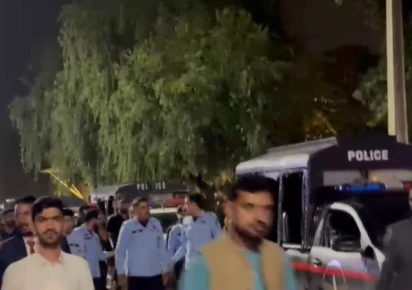
Police identified the victim as a male Grade 10 student. The gunman, who was a Grade 9 student, later died by suicide. Two other people were wounded, while several students suffered injuries as they attempted to flee the building during the chaos. Classes were subsequently suspended.

The motive behind the attack remained unclear. Officials said one of the weapons was a .40-caliber pistol issued by the Bureau of Customs to the shooter’s father, who is a customs official and has since been relieved of his post. A second firearm recovered from the scene was reportedly a licensed weapon belonging to the father.

The incident prompted an immediate response from President Ferdinand Marcos Jr, who ordered law enforcement agencies to investigate the shooting and examine measures to prevent violence in schools.

“Our schools are where we entrust our children to learn, to grow and to dream about the lives ahead of them,” Marcos said, stressing that schools should be among the safest places in the country.

The school occupies an approximately eight-hectare site and includes facilities for grade school and junior high school students. Videos verified by Reuters showed students rushing from the campus as gunshots could be heard in the background.

Tuesday’s attack comes less than two months after another school shooting in the Philippines. In June, at least three students were killed and about 20 others injured when two students opened fire at a public high school in Tacloban City.

School shootings remain relatively uncommon in the Philippines, which has regulations covering firearm ownership, including background checks and psychological evaluations. However, officials continue to face challenges from the circulation of illegal firearms.

The Zamboanga shooting also came less than 10 days after a student shooting rampage at a school near Bangkok, highlighting growing regional concerns over violence involving young people and the urgent need for stronger safeguards in educational institutions.

Similar Posts

  • |

    China rejects US sanctions on research institutions

    China has strongly opposed a US decision to place several Chinese research institutions on a sanctions list. Beijing criticised the move on Wednesday. It accused Washington of using national security concerns to restrict scientific and technological cooperation between the two countries. A spokesperson for China’s Ministry of Commerce said Beijing would take necessary steps to protect the legitimate rights and interests of its research institutions. The spokesperson also said China wanted to maintain a stable environment for normal scientific exchanges and cooperation with international partners. Beijing accused the United States of repeatedly expanding the definition of national security. It said Washington had created discriminatory barriers against Chinese institutions. China also criticised what it described as the politicisation and weaponisation of scientific research. According to Beijing, such policies could damage cooperation between researchers and universities in both countries. The Chinese government said the US measures were against the broader global trend of international cooperation in science and technological innovation. Beijing urged Washington to withdraw what it called unjustified accusations against Chinese research institutions. China also called on the United States to correct its policies as soon as possible. It demanded fair, just and non-discriminatory treatment for Chinese research organisations. The dispute comes amid wider tensions between Washington and Beijing over technology, trade and national security. The United States has increasingly tightened restrictions on Chinese access to advanced technologies. Semiconductor manufacturing has become a major area of competition between the two countries. China is also working to expand its domestic semiconductor industry. Beijing aims to reduce its dependence on advanced foreign chips affected by US export restrictions. Last week, the US Department of Defence updated a list of foreign institutions it considers involved in “problematic activities”. The updated list included Chinese defence-related academies and several universities. Shanghai-based Fudan University was also among the institutions added to the list. The latest move is likely to add another point of tension to already strained US-China relations. Beijing has repeatedly opposed US measures targeting Chinese companies, universities and research organisations. Washington, meanwhile, has maintained that its restrictions are linked to national security and technology concerns.

  • Thai Soldier Loses Leg to Landmine in Sisaket Ahead of Ceasefire

    SISAKET – A Thai soldier was severely injured after stepping on an anti-personnel landmine in Sisaket province on Saturday, just thirty minutes before a 72-hour ceasefire between Thailand and Cambodia took effect. The incident occurred during an operation in the Khao Sattasom area. Thai Marine Injured by Landmine During Border Clearance in Trat Private Narin […]

  • | |

    94 injured in Karachi aerial firing on Independenc…

    KARACHI: At least 94 people were injured in separate incidents of aerial firing in Karachi during Independence Day celebrations. According to police, 30 suspects involved in aerial firing have been arrested and weapons have been recovered from their possession. Police conducted operations in several areas of the city, including SITE Super Highway, Sachal, Gulistan-e-Johar and Gulshan-e-Iqbal. Ten suspects were arrested during these operations. Police in District West also arrested four suspects allegedly involved in aerial firing. In District Central, 16 people were arrested for allegedly firing shots into the air. The injured included 56 men, 15 women, 15 boys and eight girls. The injured were shifted to major hospitals across the city for medical treatment. A total of 27 injured people were brought to Civil Hospital, 36 to Jinnah Hospital and 32 to Abbasi Shaheed Hospital. Police said further action was being taken against those involved in aerial firing. Authorities have also increased security measures to prevent further incidents during Independence Day celebrations.

  • |

    Kuwait introduces new regulations to strengthen e commerce sector

    Kuwait has introduced a comprehensive set of regulations for e commerce platforms aimed at improving consumer protection, increasing transparency and creating a unified legal framework for the country’s rapidly expanding digital marketplace. The new rules were issued by the Ministry of Commerce and Industry under Ministerial Resolution No. 109 of 2026 and came into effect on July 8. They apply to all online platforms involved in selling, ordering and delivering goods and services across Kuwait. Officials said the regulations were introduced to address the rapid growth of online shopping while clearly defining the responsibilities of digital platforms, merchants, delivery companies and consumers. The measures are also intended to encourage investment and promote fair competition within the sector. Under the new framework, companies operating electronic platforms must obtain the required licences and comply with existing commercial laws. They are also required to strengthen cybersecurity measures to protect their digital systems and safeguard customer data from misuse or cyberattacks. The regulations require platforms to display complete pricing information before customers confirm their purchases. This includes product prices, delivery charges, commissions and any additional fees. Platforms must also provide accurate information about merchants, publish clear terms and conditions and ensure that product descriptions are truthful and up to date. Businesses are now required to establish transparent policies for returns, exchanges and refunds. They must also create complaint handling systems that resolve customer issues within specified time limits while protecting consumers’ personal information. In addition, platforms must maintain proper records of electronic transactions and payments. The new rules also place responsibilities on delivery service providers to ensure goods are transported safely and delivered efficiently. Online platforms will be expected to supervise delivery operations and coordinate closely with merchants and delivery companies throughout the process. To prevent excessive charges, the ministry has introduced limits on service commissions. Platforms may charge a maximum commission of 17 percent when they provide delivery services and 10 percent when deliveries are handled directly by merchants. Consumer delivery fees have also been capped at one Kuwaiti dinar per order, with businesses prohibited from charging more than that amount. The Ministry of Commerce and Industry has been given authority to monitor compliance with the regulations. Officials will be able to inspect businesses, request information and impose administrative penalties on companies that fail to follow the new requirements. Existing licensed platform operators must also update their registered business activity to reflect the category of managing delivery services through electronic platforms. The ministry said an implementation guide will be issued to help businesses, delivery companies and consumers understand the new compliance requirements. According to the explanatory memorandum accompanying the regulations, the reforms are designed to address problems that emerged with the rapid expansion of e commerce, including inconsistent commission rates, high delivery charges and unclear commercial practices. Officials believe the new framework will improve service quality, strengthen consumer confidence and support the continued growth of Kuwait’s digital economy.

  • | | |

    Maryam Nawaz’s electric bus gift to AJK sparks d…

    Punjab Chief Minister Maryam Nawaz’s decision to provide 10 electric buses to Azad Jammu and Kashmir (AJK) has ignited a political and constitutional debate over the use of provincial resources outside Punjab. The controversy intensified after the buses arrived in Muzaffarabad just days before the first phase of the AJK Legislative Assembly elections. Maryam Nawaz shared a video on social media announcing that the green electric buses had reached Muzaffarabad. The buses carried banners featuring her photograph alongside the message, “A gift from Punjab Chief Minister Maryam Nawaz to the people of Azad Jammu and Kashmir.” The announcement came only two days before polling in the Mirpur Division, where election campaigning was underway. At the time, Maryam Nawaz and Pakistan Muslim League-N (PML-N) President Nawaz Sharif were in the region to campaign for their party’s candidates. The timing of the announcement prompted criticism from political opponents and legal observers, who questioned whether public resources should be used during an active election campaign. The issue has also sparked a broader debate over whether a provincial government can spend taxpayer-funded resources outside its constitutional jurisdiction. Critics argue that the Punjab government’s primary responsibility is to serve the residents of Punjab, while supporters maintain that intergovernmental cooperation and public welfare projects are permissible under certain circumstances. Senior PML-N leader and Adviser to the Prime Minister Rana Sanaullah defended the party’s participation in the election campaign. Speaking to local media, he stated that because Azad Jammu and Kashmir does not have a caretaker government during elections, federal and provincial ministers are legally allowed to campaign. However, Rana Sanaullah also acknowledged concerns about the electoral process. He suggested that the newly elected AJK Legislative Assembly should consider legal reforms to prevent governments in power from influencing elections through official positions or public resources. The controversy has renewed discussions about election ethics, transparency, and the appropriate use of taxpayer funds during political campaigns. Legal experts note that while development assistance between governments is not uncommon, the timing and political context of such announcements often determine whether they are viewed as administrative decisions or campaign-related activities. As political debate continues, the electric bus initiative has become a key issue in discussions about governance, constitutional authority, and the responsible use of provincial resources ahead of elections.

  • | |

    India approves first dengue vaccine

    India has approved the use of its first dengue vaccine, marking a significant step in the country’s efforts to tackle a disease that affects millions of people each year. According to India’s Ministry of Health, authorities approved the Japanese pharmaceutical company Takeda’s dengue vaccine, Qdenga, on July 21. The Central Drugs Standard Control Organisation (CDSCO) has cleared the vaccine for people between the ages of 4 and 60. Health officials say the vaccine could help protect children, teenagers, and adults from dengue, a mosquito-borne viral infection that can sometimes develop into a severe and potentially life-threatening illness. The vaccination schedule consists of two doses administered three months apart. Takeda developed the vaccine in partnership with Indian pharmaceutical company Biological E, which is working with the Japanese firm to support its production in India. According to media reports, Qdenga offers protection against all four major dengue virus serotypes. Regulators in 42 countries have already approved the vaccine, while more than 24 million doses have reportedly been administered worldwide. So far, health authorities have not identified any major safety concerns linked to its use. The approval comes as India continues to face a substantial dengue burden. More than one million dengue cases have reportedly been recorded across the country since 2021, with around 1,500 deaths linked to the disease during the same period. Dengue spreads primarily through the bite of infected Aedes mosquitoes and remains a major public health concern in tropical and subtropical regions. India’s approval of Qdenga could provide health authorities with another tool to reduce the impact of dengue, particularly during periods when mosquito populations rise and infections increase.

Leave a Reply

Your email address will not be published. Required fields are marked *