imran hospital move
| | |

Imran hospital move: security tightened at Shifa

Security has been intensified around Shifa International Hospital in Islamabad as the deadline approaches for the government to comply with a Supreme Court directive regarding the transfer of PTI founder Imran Khan for medical treatment.

A significant number of police personnel and senior officers were deployed outside the hospital on Thursday. Officials inspected security arrangements and cleared roads around the facility of parked vehicles.

The heightened security comes ahead of the midnight deadline set under the Supreme Court’s order issued on Tuesday. The court directed authorities to shift Imran Khan to Shifa International Hospital for medical treatment and also ordered arrangements for weekly meetings between him and his family.

The federal government has challenged aspects of the order through a review petition, describing the decision as discriminatory and raising legal concerns over its wider implications.

Law Minister Azam Nazeer Tarar said the government still had time until midnight to implement the order. He said the responsibility for making arrangements rested with the Islamabad administration and that officials were working on the matter.

Speaking in the Senate, Parliamentary Affairs Minister Tariq Fazal Chaudhry said the government would follow the Supreme Court’s decision.

He said the government had no intention of preventing Imran Khan from receiving necessary medical treatment.

According to the minister, existing rules generally provide for convicted prisoners to receive medical care through government hospitals. However, he said a legal question concerning the scope of such arrangements was currently before the Supreme Court.

Fazal said that if the required treatment was not available at a government hospital, the authorities would have to arrange treatment at Shifa International Hospital or another facility with better medical capabilities.

He stressed that the government would comply with the court’s final determination regarding the matter.

The minister also addressed concerns about the health of PTI leader Dr Yasmin Rashid. He said the government was concerned about her condition and would again contact the Punjab government and prison authorities to obtain an updated assessment.

Meanwhile, Prime Minister’s Adviser on Political Affairs Rana Sanaullah said the government’s review petition was expected to be dealt with by the Supreme Court.

Sanaullah said the government had raised technical and legal objections to parts of the court’s order. He argued that the decision could create difficulties for the broader judicial system if similar applications were filed by other prisoners seeking treatment at private hospitals.

He maintained that the government would respect whatever decision the Supreme Court reached on its review petition.

According to sources, the Supreme Court’s registrar’s office had returned the review petition after raising an objection concerning the completion of required paper books. The government was expected to address the objections and resubmit the petition, with possible amendments to its contents.

The development has triggered a fresh dispute between the government and PTI over implementation of the court order.

Imran Khan’s lawyer, Khalid Yousaf Chaudhry, announced that he would approach the Supreme Court with a contempt petition if the government failed to transfer his client to the hospital.

The lawyer accused the government of delaying implementation of the court’s directive and said the legal team was preparing the contempt proceedings.

He also visited Adiala Jail to obtain Imran Khan’s signatures on the required documents, including the contempt petition and power of attorney.

Earlier, PTI Secretary General Salman Akram Raja claimed that the government had withdrawn its review petition after objections were raised by the Supreme Court’s filing branch.

Raja demanded immediate implementation of the August 18 order and argued that there was no legal justification for further delaying Imran Khan’s transfer.

The government, however, maintained that the legal process concerning the review petition was still underway and that it would act according to the law and the final position of the Supreme Court.

Imran Khan’s sister Aleema Khanum also reached Adiala Jail amid the ongoing developments.

Similar Posts

  • | |

    Women who helped shape the Pakistan movement

      When the history of Pakistan’s independence is discussed, the narrative often focuses on the male political leaders who negotiated with the British, addressed large public gatherings and worked toward the creation of a separate homeland. However, women also played an important and often overlooked role in the Pakistan Movement. They organised political activities, mobilised communities, created awareness, participated in protests, assisted refugees and challenged traditional expectations about women’s place in public life. Among the prominent women of the movement, Fatima Jinnah remains one of the most widely recognised figures. However, her contribution extended far beyond her relationship with Muhammad Ali Jinnah as his sister. She worked closely with her brother and played an active role in encouraging Muslim women to participate in political activities. At a time when women’s involvement in public politics was socially restricted, Fatima Jinnah’s visibility carried considerable significance. Her participation demonstrated that the struggle for Pakistan was not intended to be limited to men. She became an important symbol of women’s political participation and helped encourage Muslim women to take an active interest in the future of the community. Following Partition in 1947, Fatima Jinnah continued her public service. She became involved in efforts to support refugees and assist with their rehabilitation. She also continued to speak for greater participation of women in the political and social development of Pakistan. Another important figure was Abadi Bano Begum, popularly known as Bi Amma. Long before the demand for Pakistan became the central political objective of Indian Muslims, Bi Amma had already demonstrated that Muslim women could play a role in political movements. She was the mother of prominent leaders Maulana Muhammad Ali Jauhar and Maulana Shaukat Ali and became actively involved in the Khilafat Movement. Bi Amma addressed public gatherings and encouraged people to support the political struggle against British rule. Her involvement was significant because political activism was still considered unusual for many Muslim women. By entering the public sphere, she helped challenge the idea that politics was exclusively a man’s responsibility. Begum Jahan Ara Shah Nawaz was another influential woman associated with Muslim League politics. Rather than remaining a passive supporter, she actively participated in political mobilisation and worked to increase women’s involvement in the Pakistan Movement. During the politically tense period of 1946–47, Muslim League women participated in protests in Punjab, with some even facing arrest. Her political involvement had begun well before Pakistan was established. She participated in the First Round Table Conference and raised concerns about discrimination against women in political rights, government employment, business and professional opportunities. After independence, Begum Jahan Ara Shah Nawaz became one of the two women members of Pakistan’s first Constituent Assembly. Alongside Shaista Ikramullah, she worked to bring women’s rights and legal equality into discussions about the new state. The contributions of these women show that Pakistan’s independence was not achieved through the efforts of men alone. Women participated in political mobilisation, social reform and nation-building, helping establish the principle that they had a legitimate and important role in Pakistan’s public life.

  • |

    Amber heat-health alert issued across England

    An Amber Heat-Health Alert has been issued across affected parts of England as hot weather continues, with the alert remaining in place until 9am on Friday, August 14. Health authorities are urging people to take precautions during the heat, particularly those who may be more vulnerable to high temperatures. People are advised to drink plenty of water, avoid the hottest part of the day where possible and take steps to keep cool. Authorities have also urged the public to check on family members, friends and neighbours who may struggle to cope with the heat. Those considered particularly vulnerable include older people, young children and babies, as well as people living with existing health conditions. The alert is intended to raise awareness of the potential health impacts of sustained high temperatures and encourage people to take preventative measures. People are advised to keep indoor spaces as cool as possible, stay out of direct sunlight during the hottest periods and seek medical advice if they become seriously unwell because of the heat. The Amber Heat-Health Alert will remain in force until 9am on Friday, August 14, unless conditions change earlier. Authorities are continuing to monitor the weather situation and are urging the public to take the heat seriously, particularly as temperatures remain elevated across parts of the country.

  • | |

    Fawad urges Imran Khan’s immediate hospital tran…

    Former federal minister Fawad Chaudhry has called for the immediate end of Pakistan Tehreek-e-Insaf (PTI) founder Imran Khan’s solitary confinement and urged authorities to shift him to a hospital following recommendations in his latest medical report. In a statement posted on social media platform X, Chaudhry expressed concern over Imran Khan’s health and conditions at Adiala Jail. He said the medical report made it necessary for authorities to end the former prime minister’s solitary confinement and provide him with better medical facilities. Chaudhry criticised the decision to keep Imran Khan in isolation and alleged that denying adequate medical care to a major political leader was unacceptable. He urged the authorities to follow the recommendations of medical experts and ensure that all necessary treatment and facilities were provided without delay. A medical report submitted to the Supreme Court reportedly contains recommendations from a medical board that examined Imran Khan at Adiala Jail. According to the report, the medical board recommended several measures to help manage Imran Khan’s blood pressure and anxiety. The doctors recommended that the former prime minister be allowed to walk for at least one hour every day. The board said some relaxation in the prison environment was necessary in view of his current health condition. The medical team also recommended providing Imran Khan with newspapers, magazines, books and television facilities. The measures are intended to keep him mentally engaged during his imprisonment. The medical board also made recommendations regarding his meetings with family members and his wife. It suggested that meetings with his family and wife should take place more regularly and for longer than the currently prescribed duration, subject to the applicable rules. According to the recommendations, regular physical activity, access to reading material and greater interaction with family members could help reduce Imran Khan’s anxiety and assist in keeping his blood pressure under control. Fawad Chaudhry has called on the authorities to implement the medical recommendations and ensure that Imran Khan receives appropriate treatment and a suitable environment during his imprisonment.

  • | | | | |

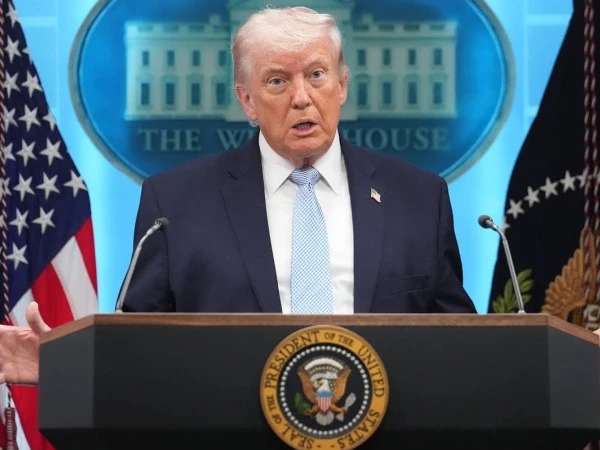
    Trump claims limited talks with Iran are underway …

    WASHINGTON: US President Donald Trump has claimed that limited negotiations with Iran are currently taking place, while indicating that Washington is not pursuing an aggressive new military escalation against Tehran at this stage. Trump’s comments come amid continued tensions between the United States and Iran and growing international attention on efforts to reduce the conflict. Recent reports have also indicated that talks involving Iran and Oman have been taking place, although no final agreement has been reached. According to Trump, the United States is currently keeping a lower profile on the issue and is engaged in what he described as limited negotiations with Iran. He also claimed that Iran is facing severe economic difficulties and suggested that the country is under significant financial pressure. Trump argued that Iran’s economic situation has deteriorated considerably, making it difficult for the government to meet some of its financial obligations. These remarks were presented as part of his argument for maintaining economic pressure rather than immediately launching another major military campaign. The US president also referred to the wider impact of the conflict on energy markets and American consumers. Oil prices have remained closely linked to developments surrounding the Strait of Hormuz, a strategically important route for global energy shipments. Recent market reports have shown that investors have been watching diplomatic developments closely as hopes for an agreement affect oil prices. Trump described the confrontation with Iran as a complicated strategic contest, comparing the situation to a game of chess. He suggested that a solution could eventually be reached through negotiations and pressure. US officials have reportedly been considering different approaches to the conflict, including diplomatic engagement and economic measures. Recent reporting indicates that progress has been discussed in Iran-Oman talks, although significant issues remain unresolved. The latest developments come as Washington continues to monitor Iran’s military and economic position while seeking leverage in negotiations. For global markets, the outcome of the diplomatic efforts could be particularly important. Any agreement that improves the security of shipping through the Strait of Hormuz could influence crude oil prices and energy supplies worldwide. However, the situation remains fluid, and claims about the extent of direct negotiations have not been uniformly confirmed by all sides. Further diplomatic contacts are expected as the United States and its partners seek a way to reduce tensions and address the broader issues at the center of the conflict.

  • | | |

    Iran, Oman move toward temporary Hormuz shipping c…

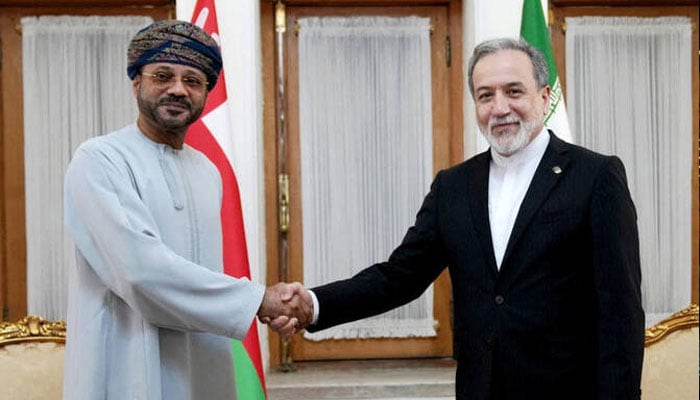
    TEHRAN: Iran and Oman have agreed on a framework for establishing a temporary maritime corridor through the strategically vital Strait of Hormuz, in a move aimed at restoring safer shipping and reducing risks in one of the world’s most important waterways. The understanding emerged during talks between Iranian Foreign Minister Abbas Araghchi and his Omani counterpart, Sayyid Badr bin Hamad Al Busaidi, in Tehran on Tuesday. The two sides discussed measures to resume safe navigation while protecting the sovereignty and maritime rights of both countries. According to a joint statement, the proposed framework includes the creation of a joint temporary navigational corridor and a coordinated project to clear possible mines from the waterway. The initiative is intended to provide a practical mechanism for ships to move through the strait while longer-term arrangements are negotiated. The Strait of Hormuz has remained heavily disrupted since the outbreak of the wider Iran war in February. Before the conflict, the waterway handled roughly one-fifth of global oil and liquefied natural gas shipments, making any prolonged disruption a major concern for energy markets and international shipping. The latest agreement, however, is being viewed as an interim measure rather than a final settlement. Iranian and Omani officials are expected to continue technical discussions on establishing a permanent navigational corridor, managing vessel traffic and sharing information about maritime movements. The two countries also intend to examine future arrangements for administering the strait and providing navigation and security services. They have stressed that any long-term mechanism should take into account the rights and interests of other Gulf states bordering the waterway. Iranian officials have also indicated that further technical negotiations could continue over the coming weeks. The proposed arrangement is particularly significant because the strait connects the energy-rich Persian Gulf with the Gulf of Oman and the wider Arabian Sea. Araghchi said discussions with regional partners had focused on diplomatic and regional solutions, while emphasizing continued technical-level contacts over navigation and the future management of the waterway. For Oman, which has traditionally played a mediating role in regional disputes, the initiative offers another opportunity to promote dialogue and maritime stability. For Iran, reopening a controlled shipping route could ease economic pressure while maintaining its position on sovereignty and security in the strait. The success of the temporary corridor will ultimately depend on security conditions, mine-clearing efforts and agreement over how commercial vessels will be guided. Still, the latest Iran-Oman talks provide a potentially important opening for restoring maritime traffic and creating a pathway toward a more permanent solution.

  • | |

    Brother shoots sister for marrying man of her choi…

    In a heartbreaking turn of events in Punjab’s Rawalpindi district, a 17-year-old girl was brutally shot and killed by her own brother near Sukho Road in Gujar Khan, just days after she was brought back home under the guise of family reconciliation. The victim had initially fled her home in January during a school vacation to marry a man of her own choice, after which the couple relocated to Karachi to build a life together. Seeking to mend broken ties, the victim’s brother recently traveled to Karachi, brokered peace with the couple, and persuaded them to return. Upon their arrival in Gujar Khan, he arranged a rented house for the newlyweds. However, the promise of harmony shattered when the father visited the rented residence to check on his daughter. A heated argument broke out at the scene, culminating in the brother pulling out a handgun and opening fire on his sister in front of family members. Rawalpindi police have registered a murder case based on the father’s statement, and an investigation into the incident is currently underway to apprehend the suspect.

Leave a Reply

Your email address will not be published. Required fields are marked *