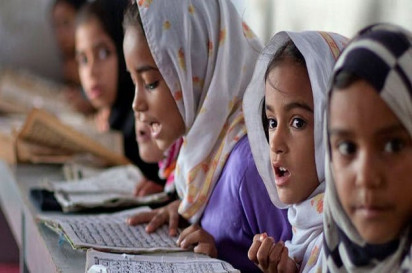
brother shoots sister
| |

Brother shoots sister for marrying man of her choi…

In a heartbreaking turn of events in Punjab’s Rawalpindi district, a 17-year-old girl was brutally shot and killed by her own brother near Sukho Road in Gujar Khan, just days after she was brought back home under the guise of family reconciliation.

The victim had initially fled her home in January during a school vacation to marry a man of her own choice, after which the couple relocated to Karachi to build a life together. Seeking to mend broken ties, the victim’s brother recently traveled to Karachi, brokered peace with the couple, and persuaded them to return. Upon their arrival in Gujar Khan, he arranged a rented house for the newlyweds.

However, the promise of harmony shattered when the father visited the rented residence to check on his daughter. A heated argument broke out at the scene, culminating in the brother pulling out a handgun and opening fire on his sister in front of family members. Rawalpindi police have registered a murder case based on the father’s statement, and an investigation into the incident is currently underway to apprehend the suspect.

Similar Posts

  • |

    Role Model shares reason for missing Taylor Swift’s wedding

    Singer-songwriter Role Model has shared why he was unable to attend Taylor Swift’s highly talked-about wedding, while also opening up about how attending his first wedding as an adult completely reshaped his views on marriage. The 29-year-old musician, whose real name is Tucker Pillsbury, explained that he had to skip the July 3 celebration because he was fully occupied with promoting his upcoming album, Chuck Timely & the Hourglass, which is scheduled for release on August 7. Although he missed the star-studded event, Role Model said he had heard wonderful things about the ceremony and wished he could have been there. He admitted that the timing of his album rollout left him unable to take a break from work, despite the significance of the occasion. Beyond discussing the wedding he missed, the singer reflected on how attending another wedding had a surprisingly emotional impact on him. For years, he had viewed marriage with skepticism and never found the traditional ceremony itself particularly appealing. According to Role Model, the idea of spending a lifetime with someone has always seemed deeply romantic, but the customs surrounding weddings—including gathering large groups of people in a church—never resonated with him. That perspective shifted dramatically after he attended his first wedding as an adult. The experience caught him completely off guard, as he found himself overcome with emotion during the ceremony. He admitted that he unexpectedly cried, something he had never anticipated before attending the event. Looking back, the artist said his emotional reaction was about more than simply witnessing two people get married. It also made him reflect on his own life, describing the feeling as watching others move forward while questioning where he stood in comparison. The experience inspired him to write his song The Wedding, which explores the emotions sparked by that life-changing moment. Role Model revealed that those feelings only grew stronger when his sister later got married. Watching another loved one reach a major milestone prompted even more self-reflection, encouraging him to think deeply about relationships, commitment, and the passage of time. The singer also offered insight into his approach to romance, admitting that he naturally prepares himself for the worst in relationships. Rather than seeing that mindset as a flaw, he believes it helps him stay grounded and avoid rushing into serious commitments based solely on attraction or the excitement of an early connection. He explained that asking difficult questions at the beginning of a relationship is important to him, saying he prefers to carefully consider compatibility instead of diving in without hesitation. Role Model also confirmed that he is dating actress Dakota Johnson. Their relationship has attracted attention since the pair were first linked late last year, and they have since been photographed together on multiple occasions. Johnson also makes a special appearance on Role Model’s upcoming album, contributing a spoken-word cameo to the track Love I You. The song features a lighthearted exchange between the couple, giving fans a glimpse of their chemistry beyond the public eye. As Role Model prepares to release his new record, he continues to balance his growing music career with a more thoughtful outlook on love and commitment—one that has evolved significantly after experiences he never expected would leave such a lasting emotional impression.

  • | |

    Poor internet access threatens girls’ education …

    PESHAWAR: Poor internet connectivity is creating serious problems for girls pursuing education in the merged districts of Khyber-Pakhtunkhwa. Students in remote areas often struggle to attend online classes. They also face difficulties downloading study material and submitting assignments. For 16-year-old Khadija Bibi from Kurram district, finding an internet signal has become part of her daily life. During the summer holidays, she often leaves her home and climbs a nearby hill. She carries her mobile phone with her. She stands on the rocky slope and searches for a stronger signal. She uses the limited connection to download lecture notes and complete academic tasks. She also tries to attend online classes from the hill. However, the weak network frequently disconnects. This causes her to miss lessons and submit assignments late. Khadija is a BS Computer Science student at Benazir Women University Peshawar. She said unreliable internet had become one of the biggest challenges in her education. She said students in remote areas were being left behind as education increasingly depended on digital technology. The problem is not limited to Kurram. Thousands of girls across the merged districts face similar difficulties. The region already has several major education challenges. Poverty remains a serious obstacle. Insecurity has also affected access to education. Many areas also lack proper schools and other educational facilities. The digital divide has added another challenge. Several schools in the merged districts either do not have computer laboratories or have laboratories without working computers. Some also lack internet connections. This prevents students from gaining basic computer skills. It also makes online education difficult. Official data highlights the wider education crisis in the region. Benazir Income Support Programme data shows that 66 per cent of children in North Waziristan are out of school. The rate stands at 63 per cent in Bajaur. It is 61 per cent in South Waziristan. Mohmand and Khyber each record an out-of-school rate of 51 per cent. Kurram and Orakzai each have a rate of 47 per cent. Girls face additional difficulties because of limited access to technology. The Khyber-Pakhtunkhwa Women Empowerment Policy 2026-2030 highlights the scale of the digital divide. According to the policy, only 11 per cent of women in the merged districts have access to the internet. The female literacy rate is also extremely low. It stands at only 17 per cent. Education and digital inclusion advocates say poor infrastructure is a major reason for the situation. Weak mobile networks make internet access unreliable. Many families also cannot afford smartphones or regular internet packages. Some girls have to borrow phones from family members. This makes it difficult for them to attend online classes regularly. Access to technology is also affected by social restrictions. In some communities, families remain concerned about girls using mobile phones and the internet. Concerns about online safety and social pressure often result in restrictions. Cultural norms can also limit girls’ access to digital technology. Experts say improving internet coverage alone will not solve the problem. Girls also need greater freedom to travel to schools, universities and training centres. Better transport facilities could help students reach educational institutions more easily. It could also improve access to vocational training and employment opportunities. Experts have urged the provincial government and telecommunications authorities to give greater attention to the merged districts. They say residents should receive reliable internet services similar to those available in settled areas. Improved digital infrastructure could transform educational opportunities for girls in remote communities. Reliable internet would allow students to attend online classes without travelling long distances. They could access digital libraries and educational resources. They could also develop computer skills and participate in online training programmes. For students like Khadija, internet access is more than a technological facility. It is directly linked to education and future opportunities. Without reliable connectivity, many talented girls may continue to struggle despite their willingness to study. Addressing the digital divide therefore requires investment in telecommunications infrastructure, schools, digital devices and affordable internet services. It also requires efforts to remove social barriers that prevent girls from using technology.

  • |

    Campaigners demand UK tour cancellation over Jared Leto claims

    Women’s safety campaigners are urging organisers to cancel Thirty Seconds to Mars’ upcoming UK concerts. The calls follow serious allegations of criminal sexual conduct against frontman Jared Leto. A BBC investigation published last week featured accounts from four women accusing the musician and actor of sexual assault and grooming. The alleged incidents reportedly took place across the 2000s and 2010s. At the time, the women were teenagers while Leto was in his 30s and 40s. He is now 54 years old and strongly denies all the allegations against him. Leto’s band is currently set to perform at two major UK arenas next April, in London and Manchester. Both the End Violence Against Women coalition and domestic abuse charity Women’s Aid have voiced concern over the shows going ahead. A Women’s Aid spokesperson told BBC Newsbeat it was troubling that concerts platforming an alleged abuser were still being planned. The charity urged organisers to prioritise safety over profit rather than continue giving such figures a stage. Janaya Walker, interim director of the End Violence Against Women Coalition, echoed that sentiment. She said the issue ultimately comes down to prioritising people, particularly women and girls, over commercial interests. Walker described the continued sale of tickets for the London and Manchester shows as deeply worrying. She warned it could cause real distress among survivors of gender-based violence, who may see coverage of the allegations followed by business proceeding as usual. Thirty Seconds to Mars, known for hits like “The Kill” and “This Is War,” was formed by Leto and his brother in the late 1990s. The band has since grown into a major international touring act. A related BBC documentary features former band associates describing discomfort around how Leto interacted with teenage girls backstage. One alleges young girls were regularly invited to meet him after concerts and at private residences. Among the accusers is a former model who says she felt compelled to lie about her age when meeting Leto at 19. She alleges a disturbing comment from Leto during a private encounter that followed. In total, ten women spoke to the BBC documentary, with nine sharing their accounts publicly for the first time. Leto did not respond to the BBC’s initial questions but later issued a firm denial, calling the accusations completely false.

  • |

    Ajinkya Rahane announces retirement from all forms of cricket

    Veteran Indian batter Ajinkya Rahane has announced his retirement from international cricket and all forms of the game, bringing an end to a distinguished career that spanned more than a decade at the highest level. The 38-year-old confirmed the decision through an emotional video message shared on social media, saying the time had come to step away from the sport that had shaped his life since childhood. Rahane represented India in all three formats between 2011 and 2023, establishing himself as one of the country’s most dependable batters. During his international career, he played 85 Test matches, 90 One-Day Internationals and 20 T20 Internationals. His final appearance for India came in a Test match against the West Indies in July 2023. The right-handed batter enjoyed considerable success in Test cricket, scoring 5,077 runs at an average of 38.46, including 12 centuries and 26 half-centuries. In the ODI format, he amassed 2,962 runs with three centuries and 24 fifties, while contributing 375 runs in T20 Internationals. Although Rahane’s batting achievements earned widespread recognition, he will be remembered most for his outstanding leadership during India’s historic Test series victory in Australia in 2020-21. The series began in disastrous fashion for India, who were dismissed for just 36 runs in Adelaide, their lowest Test total. Following the opening defeat, regular captain Virat Kohli returned home on paternity leave, leaving Rahane to take charge of a team plagued by injuries and missing several senior players. Under Rahane’s calm and composed captaincy, India staged one of the greatest comebacks in Test cricket history. He led the side to a memorable victory in Melbourne to level the series, followed by a hard-fought draw in Sydney despite several players battling injuries. The tour concluded with a remarkable win at Brisbane’s Gabba, where India successfully chased 328 on the final day to secure a famous 2-1 series triumph and end Australia’s long unbeaten run at the venue. Rahane captained India in six Test matches overall, winning four and drawing the remaining two, finishing his captaincy stint unbeaten. Speaking about his decision to retire, Rahane said timing had always been an important aspect of both his batting and his career, and he believed this was the right moment to say goodbye to professional cricket. “I’ve always relied on timing in my batting, and I’ve always understood its importance. Today, I feel the timing is right for me to move on and announce my retirement from international cricket and all formats,” he said. Reflecting on his journey, Rahane expressed gratitude for fulfilling his dream of representing India and said wearing the national cap had always been his greatest motivation. He added that he always believed in putting the team ahead of personal milestones and playing the game with honesty and commitment. The veteran batter also revealed that while his playing career has come to an end, he hopes to remain connected to cricket by mentoring and guiding young players. He said he looks forward to sharing the lessons and values the sport has taught him and giving back to the game that has given him so much. Rahane concluded his farewell by thanking the Board of Control for Cricket in India (BCCI), the Mumbai Cricket Association, his teammates, coaches, family and fans for their unwavering support throughout his career. His final competitive appearance came for Kolkata Knight Riders in the Indian Premier League, and his retirement leaves the franchise with the task of appointing a new captain ahead of the upcoming season.

  • | |

    Govt strengthens monsoon response, fresh rainfall …

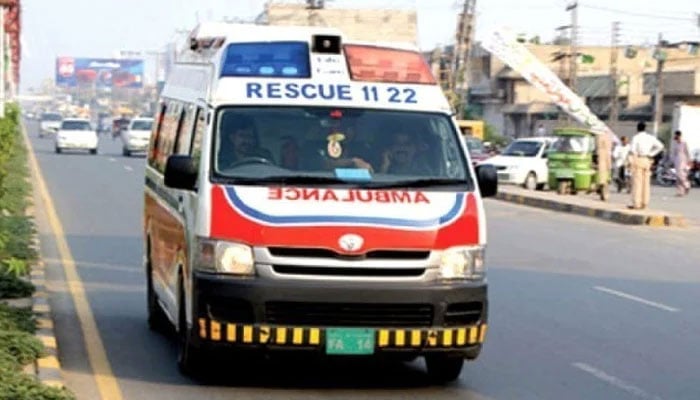
    ISLAMABAD: The federal government on Tuesday unveiled an enhanced  preparedness strategy, with senior ministers stressing that effective water regulation, stronger disaster management and coordinated planning are essential to reducing the impact of climate-related emergencies. The announcement came as authorities warned of another intense spell of monsoon rains expected to begin on July 29. According to the National Disaster Management Authority (NDMA), at least 107 people have lost their lives and 297 others have been injured since the current monsoon season started on June 26. Addressing a joint media briefing at the NDMA headquarters, Climate Change Minister Musadik Malik said Pakistan must move beyond the traditional approach of simply storing water and instead adopt a comprehensive system that regulates water supplies throughout the year. He noted that the government is implementing region-specific disaster management plans, recognising that the challenges faced by urban centres, agricultural areas and northern regions require different responses. Malik emphasised that efficient water management is vital for ensuring food security and sustaining agricultural production. He said dams should be used not only for storage but also for regulating water availability during critical farming seasons. He also called for improvements in water monitoring systems, infrastructure and building regulations, adding that close coordination with provincial governments would help minimise losses during natural disasters. National Food Security Minister Rana Tanveer Hussain highlighted the country’s growing need for additional water storage to address both floods and future shortages. He said major infrastructure projects, including the Diamer-Bhasha Dam, Mohmand Dam, Dasu project and Karachi’s K-IV water supply scheme, would significantly strengthen Pakistan’s water resources once completed. Finance Minister Muhammad Aurangzeb described climate change and rapid population growth as two of the country’s most pressing long-term challenges. He said Pakistan is now in a stronger financial position to respond to emergencies than it was during the devastating floods of 2022 and credited the NDMA’s National Emergencies Operation Centre (NEOC) for improving forecasting and disaster preparedness through advanced monitoring systems. Information Minister Attaullah Tarar said preparations for the monsoon season had begun months in advance under the directives of Prime Minister Shehbaz Sharif. He praised the NEOC’s early warning capabilities for helping reduce casualties and property damage by providing timely alerts through the media and the NDMA mobile application. Tarar also urged citizens to remain vigilant and follow official advisories as heavy rainfall continues across the country. Meanwhile, the flood situation remains concerning in several regions. Although water levels in the Chenab River have shown signs of improvement, low-level flooding continues along parts of the Indus River. Punjab and Khyber Pakhtunkhwa have recorded the highest number of casualties, with many deaths resulting from collapsing houses, electrocution and lightning strikes. Gilgit-Baltistan remains one of the hardest-hit areas, where flash floods, landslides and mudflows have caused widespread destruction. Disaster management authorities reported damage to 184 houses, the destruction of nine bridges and nearly eight kilometres of roads, while dozens of disaster incidents have been recorded across the region. The Pakistan Meteorological Department has warned that the approaching weather system could trigger widespread heavy rainfall, urban flooding, flash floods and rising river levels in Islamabad, Punjab, Khyber Pakhtunkhwa, Azad Jammu and Kashmir and Gilgit-Baltistan. Authorities say emergency response teams have been placed on alert as efforts continue to protect lives, infrastructure and communities during the ongoing monsoon season.

  • |

    NTSB chief presses Congress to approve aviation safety reforms

    The head of the US National Transportation Safety Board has urged Congress to end months of legislative delays and pass a major aviation safety package aimed at reducing the risk of deadly midair collisions. NTSB Chair Jennifer Homendy said lawmakers already have clear recommendations from investigators and should move quickly to turn them into law. Homendy said the agency has provided Congress with a detailed plan to strengthen aviation safety and prevent another disaster like the one that claimed dozens of lives near Washington last year. She stressed that the necessary reforms have been discussed for months and that it is now time for lawmakers to take action. Her appeal comes after the January 2025 collision between an American Airlines regional passenger jet and a US Army helicopter near Washington, DC. The crash killed 67 people and became the deadliest aviation accident in the United States since 2001. Following the tragedy, the House of Representatives approved a broad aviation safety bill in April with overwhelming bipartisan support in a 396 to 10 vote. The legislation includes dozens of recommendations made by investigators after the crash. The Senate had earlier passed its own proposal, known as the ROTOR Act, but the measure failed to secure enough support in the House under fast track voting procedures, leaving the reforms stalled. According to the NTSB, the collision could have been prevented if both aircraft had been equipped with Automatic Dependent Surveillance Broadcast technology, commonly known as ADS-B. The system allows aircraft to continuously share their position with air traffic controllers and nearby aircraft, improving awareness in busy airspace and reducing the risk of collisions. Earlier this year, the NTSB concluded that failures within the Federal Aviation Administration contributed to the fatal accident. Investigators found that the FAA had allowed helicopters to operate too close to commercial flight paths near Washington’s airport without maintaining adequate separation. The agency was also criticized for failing to properly review safety data and for not acting on earlier recommendations to redirect helicopter traffic away from the area. The House approved legislation would require most US military aircraft to be fitted with collision prevention technology by 2031. Fighter jets, bombers and drones would be exempt from the requirement. The bill also introduces new standards for collision mitigation systems on civilian airplanes and helicopters to improve safety across the aviation sector. Lawmakers from both chambers are continuing negotiations to resolve differences between the House and Senate versions of the legislation before a final bill can be approved. FAA Administrator Bryan Bedford recently said the agency has been providing technical guidance to Congress throughout the legislative process. He noted that the FAA has the authority to expand the use of ADS-B technology without waiting for new legislation but said clear direction from Congress would provide a stronger framework for implementing long term safety improvements. The NTSB believes the proposed reforms would significantly strengthen aviation safety and reduce the chances of another catastrophic midair collision. With negotiations continuing in Congress, transportation officials are urging lawmakers to finalize the legislation as soon as possible to better protect passengers, flight crews and military personnel.

Leave a Reply

Your email address will not be published. Required fields are marked *