poor internet access
| |

Poor internet access threatens girls’ education …

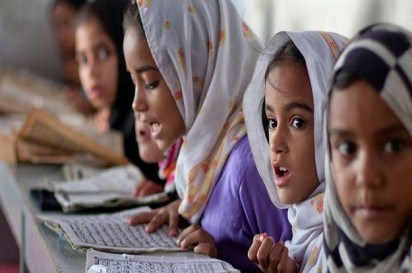
PESHAWAR: Poor internet connectivity is creating serious problems for girls pursuing education in the merged districts of Khyber-Pakhtunkhwa.

Students in remote areas often struggle to attend online classes. They also face difficulties downloading study material and submitting assignments.

For 16-year-old Khadija Bibi from Kurram district, finding an internet signal has become part of her daily life.

During the summer holidays, she often leaves her home and climbs a nearby hill. She carries her mobile phone with her.

She stands on the rocky slope and searches for a stronger signal. She uses the limited connection to download lecture notes and complete academic tasks.

She also tries to attend online classes from the hill. However, the weak network frequently disconnects. This causes her to miss lessons and submit assignments late.

Khadija is a BS Computer Science student at Benazir Women University Peshawar. She said unreliable internet had become one of the biggest challenges in her education.

She said students in remote areas were being left behind as education increasingly depended on digital technology.

The problem is not limited to Kurram. Thousands of girls across the merged districts face similar difficulties.

The region already has several major education challenges. Poverty remains a serious obstacle. Insecurity has also affected access to education.

Many areas also lack proper schools and other educational facilities.

The digital divide has added another challenge.

Several schools in the merged districts either do not have computer laboratories or have laboratories without working computers. Some also lack internet connections.

This prevents students from gaining basic computer skills. It also makes online education difficult.

Official data highlights the wider education crisis in the region. Benazir Income Support Programme data shows that 66 per cent of children in North Waziristan are out of school.

The rate stands at 63 per cent in Bajaur. It is 61 per cent in South Waziristan.

Mohmand and Khyber each record an out-of-school rate of 51 per cent. Kurram and Orakzai each have a rate of 47 per cent.

Girls face additional difficulties because of limited access to technology.

The Khyber-Pakhtunkhwa Women Empowerment Policy 2026-2030 highlights the scale of the digital divide.

According to the policy, only 11 per cent of women in the merged districts have access to the internet.

The female literacy rate is also extremely low. It stands at only 17 per cent.

Education and digital inclusion advocates say poor infrastructure is a major reason for the situation.

Weak mobile networks make internet access unreliable. Many families also cannot afford smartphones or regular internet packages.

Some girls have to borrow phones from family members. This makes it difficult for them to attend online classes regularly.

Access to technology is also affected by social restrictions.

In some communities, families remain concerned about girls using mobile phones and the internet. Concerns about online safety and social pressure often result in restrictions.

Cultural norms can also limit girls’ access to digital technology.

Experts say improving internet coverage alone will not solve the problem.

Girls also need greater freedom to travel to schools, universities and training centres.

Better transport facilities could help students reach educational institutions more easily. It could also improve access to vocational training and employment opportunities.

Experts have urged the provincial government and telecommunications authorities to give greater attention to the merged districts.

They say residents should receive reliable internet services similar to those available in settled areas.

Improved digital infrastructure could transform educational opportunities for girls in remote communities.

Reliable internet would allow students to attend online classes without travelling long distances. They could access digital libraries and educational resources.

They could also develop computer skills and participate in online training programmes.

For students like Khadija, internet access is more than a technological facility.

It is directly linked to education and future opportunities.

Without reliable connectivity, many talented girls may continue to struggle despite their willingness to study.

Addressing the digital divide therefore requires investment in telecommunications infrastructure, schools, digital devices and affordable internet services.

It also requires efforts to remove social barriers that prevent girls from using technology.

Similar Posts

  • |

    South Korea estimates North Korea’s economy grew over 3 percent for third year

    North Korea’s economy expanded by more than three percent in 2025 for the third consecutive year, according to new estimates released by South Korea’s central bank. The report suggests that stronger economic and military cooperation with Russia played a major role in boosting growth despite North Korea’s continued international isolation. The Bank of Korea, which has published annual estimates of North Korea’s economy since 1991 because Pyongyang does not release official economic data, estimated that the country’s real gross domestic product grew by 3.5 percent last year. The report valued North Korea’s economy at approximately 38.26 trillion won, or about 26.6 billion dollars. According to Bank of Korea officials, expanded cooperation with Russia was one of the main reasons for the improvement. Analysts have said North Korea has strengthened ties with Moscow by supplying troops and military equipment for Russia’s war in Ukraine. In return, Pyongyang is believed to have received financial assistance, food supplies, energy resources and military technology. A Bank of Korea official said increased weapons exports to Russia supported growth in North Korea’s manufacturing sector. The official also noted that a rise in Russian tourists and improved transport links between the two countries contributed to stronger performance in construction and service industries. The report estimated that North Korea’s exports increased by 30 percent during 2025, reaching around 470 million dollars. Among the leading export products were prepared feathers and wigs, along with toys and sporting goods. Although the report did not identify all exported items, officials said stronger overseas sales contributed significantly to economic growth. The latest figures were released as reports continued to highlight growing military cooperation between Moscow and Pyongyang. Ukraine’s military intelligence, quoted by the Kyiv Independent, claimed that more than 7,000 North Korean troops were killed or wounded while fighting alongside Russian forces during military operations in Russia’s Kursk region between 2024 and 2025. Neither Russia nor North Korea has independently confirmed those figures. Separately, the Ukrainian human rights organisation Truth Hounds said Russia and North Korea are close to completing their first road bridge connecting the two countries. The group said such a link could strengthen military and economic cooperation by allowing easier movement of personnel, equipment and supplies across the border. The Bank of Korea also reported a significant increase in North Korea’s gross national income, which measures the total income earned by a country’s residents. The estimate showed GNI rising by 9.4 percent to 48.5 trillion won, or approximately 33.8 billion dollars. Officials said the increase was supported by higher foreign currency earnings, including income linked to North Korean personnel sent to Russia. Despite the recent growth, North Korea’s economy remains extremely small compared with its southern neighbour. According to the Bank of Korea, North Korea’s gross national income is still less than two percent of South Korea’s economy, highlighting the large economic gap that continues to separate the two countries. The latest estimates suggest that while North Korea remains under international sanctions and largely isolated from global markets, its expanding partnership with Russia is providing new sources of economic activity that have helped sustain growth for a third straight year.

  • Thai Street Coconut Pancake ‘Khanom Khrok’ Earns Spot Among World’s Best Desserts

    BANGKOK — Khanom khrok, the beloved Thai coconut pancake that has graced street corners and markets for generations, has earned international recognition by ranking among the world’s 100 best desserts for 2026 in an online survey conducted by TasteAtlas, the widely recognized “World Food Atlas.” Thai mango sticky rice dessert craze grows as embassies join […]

  • |

    PSX sheds over 1,800 points as US-Iran peace deal uncertainty triggers selling

    KARACHI: Selling pressure intensified at the Pakistan Stock Exchange (PSX) on Tuesday, with the benchmark KSE-100 Index suffering a sharp decline as investors turned cautious amid growing uncertainty surrounding the prospects of a near-term peace agreement between the United States and Iran. By 1:24pm, the benchmark index had dropped 1,806.12 points, or 0.89%, to 178,896.29, compared with the previous close of 180,502.44. The decline reflected widespread profit-taking and fresh selling across several key sectors of the market. The KSE-100 started the session at 180,502.44 and initially moved higher, reaching an intraday peak of 180,602.44. However, the early gains failed to hold as investors began offloading positions, pushing the index steadily lower. During the session, the benchmark touched an intraday low of 178,488.91, highlighting the intensity of selling activity. At one stage, the index was down 1,545.52 points, or 0.86%, at 178,956.92, before losses widened further. Market sentiment was affected by renewed uncertainty over the possibility of a diplomatic breakthrough between Washington and Tehran. Investors remained concerned that prolonged tensions could create additional risks for energy supplies and regional trade, particularly if disruptions affect major oil-producing and transportation routes. The rise in international oil prices added another layer of concern for investors. Higher crude prices can increase Pakistan’s import bill and place additional pressure on external-sector balances, while also raising concerns about inflationary pressures and corporate costs. The selling was not confined to a single segment. Significant weakness was witnessed in automobile assemblers, cement manufacturers, commercial banks, oil and gas exploration companies, oil marketing companies and power generation firms. The broad-based nature of the decline suggested that investors were adopting a cautious stance rather than selectively rotating into individual sectors. Market participants appeared particularly sensitive to developments in global geopolitics and their potential implications for commodity prices and Pakistan’s macroeconomic outlook. Trading activity, meanwhile, remained robust despite the decline in the benchmark. Around 358.21 million shares had changed hands by midday, while the total traded value stood at approximately Rs22.47 billion, indicating considerable participation from investors. The latest decline came after the KSE-100 ended the previous trading session at 180,502.44, leaving the index vulnerable to profit-taking following its recent strong performance. Tuesday’s movement therefore reflected a combination of investor caution, external geopolitical concerns and selling in major market segments. Analysts and market participants are expected to closely monitor developments on the US-Iran front, movements in international crude oil prices and domestic economic indicators for direction in the coming sessions. Any improvement in geopolitical sentiment or a renewed expectation of progress toward a peace agreement could help restore confidence, while further escalation and sustained increases in global oil prices could continue to weigh on equities.

  • | |

    Another FIR against Rajab Butt: Lahore police laun…

    A new police case has been registered against social media personality Rajab Butt and several others following an alleged altercation at a private café in Lahore. The case was filed at Nawab Town Police Station after a woman accused the group of assault, intimidation, and involvement in a firing incident. According to the First Information Report (FIR), the complainant stated that she and her friends visited a private café on July 25 when an argument reportedly broke out. She alleged that two men and two women behaved aggressively with one of her friends, leading to a heated confrontation. The complainant further claimed that members of the group physically assaulted them by slapping them and allegedly displayed firearms during the incident. The FIR also alleges that one of the accused fired a weapon, creating panic at the scene. In her complaint, the woman alleged that the entire incident took place at the direction of Rajab Butt. Based on these allegations, police have registered a case and initiated an investigation to determine the facts surrounding the incident. Authorities have stated that evidence will be collected, witness statements will be recorded, and all claims mentioned in the FIR will be examined as part of the ongoing investigation. As of now, Rajab Butt and the other individuals named in the FIR have not issued any official public response regarding the allegations. Since the investigation is still underway, the accusations remain unproven, and no court has determined criminal liability. Further developments are expected as police continue their inquiry.

  • |

    Rubina Ashraf urges greater awareness of postpartum depression

    Rubina Ashraf, one of Pakistan’s most respected television veterans, recently spoke about the importance of recognizing postpartum depression and supporting women through pregnancy and motherhood. Appearing on a morning television show, the actress shared her thoughts on the emotional and psychological challenges many women experience before and after childbirth, emphasizing that these struggles deserve greater awareness and compassion. Having spent decades in the entertainment industry as an actress, director, and producer, Rubina has earned widespread recognition for her memorable performances in dramas such as Pas-e-Aaina, Tapish, Kasak, Do Bol, Khuda Aur Muhabbat 3, and Iqtidar. She also received praise for directing the acclaimed drama serial Ruswai. Beyond her successful career, Rubina is a devoted mother of two, and her daughter, Nawal Tariq, has also established herself as an actress in Pakistan’s television industry. During the conversation, Rubina highlighted how discussions around postpartum depression were almost nonexistent in previous generations. She explained that society traditionally viewed childbirth as a routine responsibility for women, often overlooking the immense physical and emotional changes they experienced. According to Rubina, people now need to understand that pregnancy is far more than a physical process. She said that a woman undergoes significant transformations in her body, skin, hormones, and emotions, making the journey both physically demanding and mentally exhausting. While pregnancy is often associated with happiness and excitement, it can also bring anxiety, stress, and emotional vulnerability. She stressed that pregnancy-related anxiety and postpartum depression are genuine medical and psychological conditions rather than signs of weakness. Rubina noted that many women silently struggle because their emotional health is ignored or misunderstood. Without proper care and emotional support, these feelings can develop into severe depression, affecting both the mother and her family. The actress urged families to become more aware of these challenges and encouraged them to provide women with understanding instead of judgment. She explained that a pregnant woman should not be expected to manage every household responsibility while dealing with the physical and emotional demands of pregnancy. Instead, she needs kindness, patience, and reassurance from those around her. Rubina particularly emphasized the crucial role of husbands during this period. She said that a husband’s support should begin during pregnancy and continue after childbirth, as these months can be among the most difficult in a woman’s life. Emotional encouragement, practical help, and compassion can make a significant difference in a mother’s mental well-being and recovery. She added that expecting mothers often feel overwhelmed because they are trying to balance multiple responsibilities while their bodies and emotions are constantly changing. Without a supportive environment, these pressures can become unbearable. Rubina’s heartfelt remarks have resonated with many viewers, drawing attention to the importance of maternal mental health. As awareness of postpartum depression continues to grow, her message serves as a reminder that emotional well-being is just as important as physical health during pregnancy and after childbirth. By encouraging empathy, open conversations, and stronger family support, she hopes more women will receive the care they need during one of the most life-changing phases of their lives.

  • |

    England take 238-run oead as Pakistan struggle at Headingley

    LEEDS: England strengthened their position in the first Test against Pakistan at Headingley on Thursday, reaching 409 runs in their first innings to secure a substantial 238-run lead after Pakistan were bowled out for 171. Pakistan’s bowlers managed to break through England’s batting line-up on the third morning, but the home side’s tailenders added valuable runs to push the total beyond the 400-run mark. England resumed the day on 366-8, with Jofra Archer and the lower order looking to extend their advantage. Archer remained unbeaten on 23, while Jamie Smith contributed 25 before being dismissed. Josh Tong was also removed after scoring eight. Earlier, England’s top and middle order had laid the foundation for the imposing total. Harry Brook missed out on a century but made a valuable 91, while Jordan Cox scored 73. Captain Joe Root continued his dependable form with 66, and Dan Lawrence added 51. The combined efforts of England’s senior batters ensured that Pakistan faced a demanding bowling assignment and left their opponents with a sizeable deficit to overcome. For Pakistan, Ali Usman emerged as the standout bowler. The spinner claimed his maiden five-wicket haul in Test cricket, providing a major highlight for the visitors despite England’s strong batting performance. Khurram Shahzad supported him with three wickets, while Mohammad Abbas and Mohammad Ali took one wicket each. Pakistan’s first innings had lasted only long enough to produce 171 runs, leaving their bowlers with the difficult task of restricting England and preventing the hosts from building an overwhelming advantage. England’s ability to extend their innings through the lower order proved particularly costly for Pakistan. Archer’s unbeaten 23 ensured that the hosts crossed the 400 mark, while the additional runs from Smith and Tong further increased the pressure on the visitors. With England now holding a 238-run lead, Pakistan face a challenging second innings. Their batters will need to produce a vastly improved performance if they are to prevent England from taking control of the Test. The Headingley contest has already produced a contrasting display from the two sides: England’s batting depth has stood out, while Pakistan’s Ali Usman has provided a significant individual breakthrough with his first five-wicket haul in Test cricket. The match remains a stern test of Pakistan’s resilience as they look to recover from their modest first-innings total and keep their hopes alive in the opening Test.

Leave a Reply

Your email address will not be published. Required fields are marked *