death toll quetta
| | |

Death toll in Quetta coal mine blast rises to 34

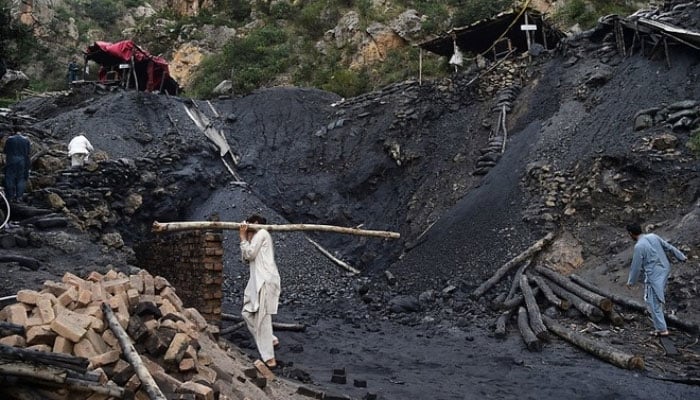
QUETTA: The death toll from a deadly coal mine explosion near Quetta has climbed to 34 after rescue teams recovered the bodies of eight more miners from the site.

The incident occurred at a coal mine in the Sorange area, where dozens of workers were underground when a powerful methane gas explosion ripped through the mine.

According to the Provincial Disaster Management Authority (PDMA), a total of 42 miners were trapped following the blast. Rescue teams have managed to recover 34 bodies so far, while efforts continue to locate the remaining workers.

Officials said the operation is being carried out under difficult conditions, with emergency personnel working around the clock to reach those still inside the mine.

The mine owner confirmed that 42 labourers were present in the mine at the time of the explosion. Preliminary findings suggest that methane gas accumulated inside the mine, triggering the deadly blast.

Balochistan Chief Minister has ordered an immediate report on the incident and directed authorities to investigate the circumstances surrounding the tragedy. He warned that strict action would be taken against anyone found responsible if negligence or safety violations are established.

Coal mining accidents remain a recurring concern in Balochistan, where hazardous working conditions and poor safety standards have claimed numerous lives over the years. The latest disaster has once again raised questions about the enforcement of mine safety regulations and the protection of workers in the province’s mining sector.

Rescue operations are ongoing as authorities continue their search for the miners who remain unaccounted for.

Similar Posts

  • | | | |

    Maryam hails Katcha’s historic security turnarou…

    Punjab Chief Minister Maryam Nawaz has said that the Katcha region has become a safer area after decades of insecurity. She made the remarks while addressing an Independence Day ceremony at the Safe City Authority. She said the government was taking steps to improve security and protect citizens across the province. Maryam said Safe City cameras have now been installed in 43 cities of Punjab. She said the expanded surveillance system would help improve monitoring and strengthen the security network. The chief minister said the government wants to provide a safer and better Pakistan to future generations. She stressed that public safety remains an important part of the government’s development agenda. Maryam rejected the impression that government attention was limited to Lahore. She said development cannot be considered meaningful if people living in other cities and regions are ignored. She said every citizen has the right to benefit from better public services and improved security. The government, she added, is working to ensure that development reaches different parts of the province. Referring specifically to the Katcha region, Maryam said the area had witnessed insecurity for decades. She claimed that the situation had now changed and the region had become a safer place for the people. She said modern security technology was playing an important role in improving law and order. The expansion of Safe City surveillance, she added, would help authorities monitor sensitive areas and respond more effectively to security concerns. The chief minister said the government would continue strengthening security infrastructure across Punjab. She also reiterated her commitment to creating safer cities and improving the quality of life for citizens.

  • |

    Israel approves entry of International Stabilizati…

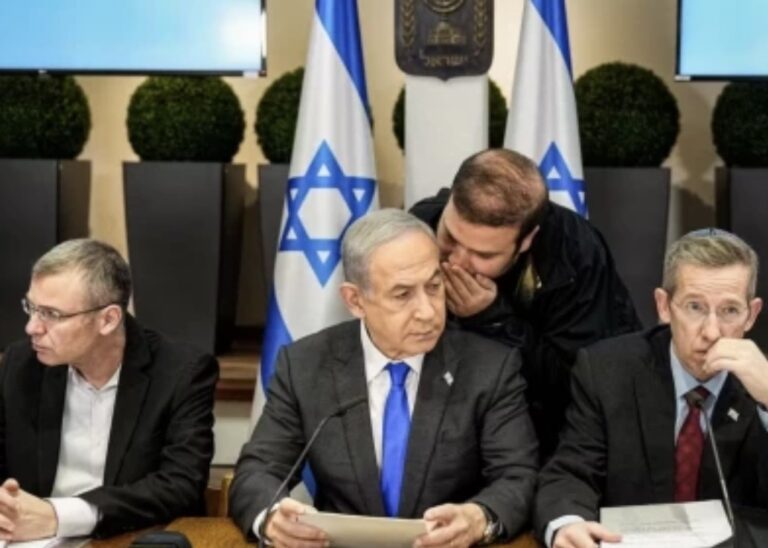
    The Israeli security cabinet has voted to approve the entry of the International Stabilization Force (ISF) into Gaza, advancing a key component of the US-backed peace plan for the enclave despite opposition from a far-right minister . The decision, announced on Sunday, paves the way for the deployment of a multinational force under the Board of Peace (BoP) plan, which was endorsed by the UN Security Council in November 2025 . The ISF is intended to oversee security and support reconstruction efforts in the war-torn territory . National Security Minister Itamar Ben-Gvir was the sole dissenting voice in the cabinet vote . According to Israeli media, Ben-Gvir argued that Hamas has failed to meet its commitments to demilitarize and disarm, meaning Israel is not obligated to proceed with the plan . He reportedly advocated for encouraging the migration of Palestinians out of Gaza as an alternative solution . Following the approval, a senior Israeli official outlined key conditions for the ISF’s operation. The force will receive legal immunity under Israeli law and will operate in “full coordination” with the Israeli military in areas outside the military’s control zones . Stringent conditions have also been placed on which nations can contribute troops. The security cabinet decided that only countries that maintain diplomatic relations with Israel and do not act against it in international forums will be eligible to participate . This clause reportedly excludes nations like Indonesia, which had previously shown interest . The initial force is expected to comprise approximately 200 personnel from “friendly” nations such as Uganda and Morocco . Israeli officials have further stressed that the military will continue to hold the “yellow line” demarcating its controlled areas in Gaza and will not withdraw further unless Hamas is fully disarmed and the Strip is demilitarized . The ISF deployment is part of a scaled-back pilot project initially focused on a humanitarian zone near Rafah in southern Gaza .

  • |

    Alexandrova shocks world No. 1 Sabalenka in Toronto

    TORONTO: Russian tennis player Ekaterina Alexandrova produced a major upset at the WTA Toronto Masters by defeating world No. 1 Aryna Sabalenka in the fourth round. The 16th-seeded Alexandrova secured a hard-fought 7-6 (7-3), 4-6, 6-4 victory over the four-time Grand Slam champion in a match lasting two hours and 29 minutes. The win booked Alexandrova’s place in the quarter-finals and improved her career record against Sabalenka to 5-5. Sabalenka made a strong start, breaking Alexandrova early in the opening set to take a 2-0 lead. However, the Russian responded by winning four consecutive games. The set remained closely contested, with both players exchanging breaks late in the set. Alexandrova eventually dominated the tie-break and took the opening set 7-6. Sabalenka fought back in the second set. She secured a crucial break to move 4-3 ahead before holding her next two service games to level the match. The deciding set again featured intense rallies and momentum shifts. Alexandrova broke Sabalenka early to establish a 3-1 advantage. Sabalenka managed to recover one break, but Alexandrova remained composed under pressure. The Russian created two match points in the 10th game after a series of errors from the top seed. Sabalenka saved the first two opportunities with a service winner and an ace. However, she then sent a backhand beyond the baseline before committing her sixth double fault of the match, handing Alexandrova victory. Alexandrova said she entered the contest without any particular expectations because she knew defeating Sabalenka would be extremely difficult. She explained that she deliberately played aggressively and took risks because she believed it was the best way to create opportunities against the powerful Belarusian. The victory sends Alexandrova into the Toronto quarter-finals, where she will face either American eighth seed Amanda Anisimova or Ukraine’s ninth seed Elina Svitolina.

  • | | |

    Acid traces found in Mir Raza Ali’s body, police…

    KARACHI: Fresh forensic findings in the death of businessman Mir Raza Ali have raised further questions over the circumstances surrounding his death, with sources saying acid traces were detected in his stomach, lungs and on parts of his body. According to sources familiar with the investigation, severe acid-related damage was found in Ali’s lungs, while traces were also detected on his hands and feet. His clothing reportedly contained acid traces as well as sweat believed to belong to another person. The investigation took another turn after police sealed a guesthouse near the location where Ali’s body was discovered. Six people working at the guesthouse were taken into custody for questioning, bringing the total number of detained individuals in the case to 21. Their statements have also been recorded as investigators attempt to establish what happened before Ali’s death. The latest developments came a day after Ali’s body was exhumed and examined by a medical board before being reburied. The second post-mortem reportedly found a gunshot wound entering from the back, along with multiple signs of physical violence. The medical examination also revealed fractured ribs and several injuries to Ali’s head and face, adding to concerns surrounding the circumstances of his death. Ali, an IBA graduate and businessman, was found dead in Karachi’s Gulistan-e-Jauhar area last month after he went missing on July 28. His father rejected suggestions that his son had died by suicide and maintained that he had been murdered. Meanwhile, Ali’s parents have opposed the proposed formation of a judicial commission, saying the police should be allowed to continue their investigation. Family lawyer Jibran Nasir said the parents had conveyed their decision in writing to the Karachi mayor, Sindh interior minister and additional inspector general. Nasir said the family currently saw no need for a judicial commission and wanted the police investigation to proceed according to law. The Sindh government had earlier announced plans to establish a judicial commission headed by high court judges. Sindh Home Minister Zia Lanjar said the decision was taken following consultations with Chief Minister Murad Ali Shah, describing the commission as necessary to investigate the case. Separately, Sindh Senior Minister Sharjeel Inam Memon has approached the National Cyber Crime Investigation Agency over social media allegations linking him and his son, Rawal Memon, to Ali’s death. Through his lawyer, Memon submitted a complaint to the NCCIA Karachi Zone, accusing certain social media accounts of spreading what he termed false, fabricated and malicious claims. The complaint alleges that social media posts linked a guesthouse near the crime scene to Memon and claimed that his son travelled to London shortly after the incident. Rawal Memon, who is currently in London, rejected the allegations and described them as an organised smear campaign. The complaint further alleged that online posts questioned the medical investigation and accused Memon and his political party of shielding individuals allegedly connected to Ali’s death. With forensic findings, multiple detentions and competing calls for a judicial inquiry now surrounding the case, investigators face mounting pressure to determine how Mir Raza Ali died and identify those responsible.

  • |

    South Korea becomes global health tourism giant

    South Korea is rapidly becoming one of the world’s leading destinations for medical tourism as international travellers increasingly combine vacations with comprehensive health check-ups. Foreign visitors are now adding blood tests, ultrasounds, cancer screenings and other preventive healthcare services to their travel plans, attracted by affordable costs, advanced technology, quick results and foreigner-friendly facilities. According to South Korea’s Ministry of Health and Welfare, more than 2 million foreign patients visited the country in 2025, marking a significant increase from the previous year. Visitors mainly came from China, Japan, Taiwan and the United States. Experts say South Korea’s growing popularity as a healthcare destination is driven by its efficient medical system, advanced equipment and competitive prices. Many international patients can complete full-body health screenings within a few hours, avoiding long waiting periods and complicated procedures common in other countries. Medical tourism officials say healthcare in South Korea remains relatively affordable because of government regulation of medical costs. In some cases, the cost of a single advanced medical test in countries like the United States can equal the price of a complete health screening package in South Korea. The country’s healthcare system also focuses heavily on preventive care, allowing doctors to detect diseases at an early stage through regular screenings. International visitors can book health packages through specialised medical concierge services that arrange appointments, interpreters and follow-up consultations. Many major hospitals and screening centres provide services in English and offer results in multiple languages. Foreign patients have shared positive experiences of completing extensive medical examinations, including blood tests, X-rays, ultrasounds and endoscopies, within a single visit. One visitor from Los Angeles said he chose South Korea after researching medical centres online and was impressed by the number of tests offered and the professionalism of healthcare workers. His complete screening, including several procedures, was completed within hours at a comparatively low cost. Another traveller from Hong Kong said a similar health package in her home country would have cost several times more than what she paid in South Korea. Healthcare providers say international patients are also attracted by smooth services, modern facilities and the availability of follow-up treatment if any health issues are discovered. However, experts advise travellers to confirm language support before booking appointments and recommend using medical assistance services to avoid communication problems.

  • |

    Delhi internet cut as student protests escalate

    The Indian government has reportedly suspended mobile internet services in several parts of central New Delhi as nationwide protests over examination paper leaks continue to gain momentum. The move came amid heightened security and growing demonstrations led by students and youth groups demanding accountability over alleged irregularities in the country’s examination system. According to informed sources, telecom companies were instructed to disable mobile data services in and around the main protest sites in central Delhi. The internet restrictions affected thousands of residents, commuters and businesses in the area. The suspension caused significant disruption to daily life. Shopkeepers, restaurants and street vendors reported difficulties accepting digital payments because many businesses in India rely heavily on internet-based payment systems. Residents also experienced problems accessing online services and communication platforms. The protests have continued for more than a month, with students camping in central Delhi and demanding the resignation of Education Minister Dharmendra Pradhan. Demonstrators accuse the government of failing to prevent examination paper leaks that reportedly affected nearly two million students across the country. Student leaders say the paper leak scandal has seriously damaged confidence in India’s examination system and has put the future of millions of young people at risk. They insist the demonstrations will continue until those responsible are held accountable and meaningful reforms are introduced. Prime Minister Narendra Modi recently addressed the controversy and promised strict action against individuals involved in examination fraud. He said the future of India’s youth remains a national priority and announced plans to establish fast-track courts to ensure speedy trials in paper leak cases. However, opposition leaders argued that the government’s response does not go far enough. Congress leader Rahul Gandhi renewed his demand for the dismissal of Education Minister Dharmendra Pradhan, accusing the government of failing to protect the country’s education system and the interests of students. The demonstrations intensified after security forces attempted to stop protesters marching toward Parliament during the monsoon session. Police used tear gas and batons to disperse crowds after protesters tried to breach security barriers. Clashes later broke out, leaving scores of protesters and security personnel injured. Following the unrest, authorities increased security across central Delhi by deploying additional police personnel, strengthening barricades and monitoring key government buildings to prevent further violence. The protest movement, which initially focused on examination paper leaks, has gradually expanded into a broader campaign highlighting concerns over unemployment, educational opportunities and governance. Protest organisers say the issue is no longer limited to examination irregularities but has become a wider movement demanding transparency, accountability and reforms.

Leave a Reply

Your email address will not be published. Required fields are marked *