imran khan marks
| | |

Imran Khan marks three years in jail

Former prime Minister Imran Khan has completed three years in prison after his arrest in the Toshakhana case. He was taken into custody on August 5, 2023, shortly after a court convicted him in the case. Following his arrest, he was shifted from his residence in Zaman Park, Lahore, to District Jail Attock under strict security arrangements.

Imran Khan remained at Attock Jail for one month and 21 days. During that period, security around the prison was tightened, while legal proceedings related to multiple cases against him continued in different courts.

On September 26, 2023, the Islamabad High Court ordered his transfer from Attock Jail to Adiala Jail in Rawalpindi. Since then, he has remained detained at the facility, where he continues to face legal proceedings in several cases.

Under the Pakistan Prison Rules, the former prime minister has been provided better-class facilities because of his status as a former head of government. He is being housed in a separate compound consisting of seven cells inside Adiala Jail. The designated area is secured and managed in accordance with prison regulations.

During his three years in custody, Imran Khan has reportedly faced a number of health-related issues, including physical complications that have required medical attention from time to time. His legal team has on several occasions raised concerns about his health and requested appropriate medical care, while prison authorities have maintained that medical facilities are being provided in line with the law.

Despite remaining behind bars, Imran Khan continues to be a central figure in Pakistan’s political landscape. Court hearings in various cases involving the former prime minister are ongoing, while his party, Pakistan Tehreek-e-Insaf (PTI), continues to pursue legal and political efforts regarding his release.

Similar Posts

  • |

    Taiwan condemns planned Chinese navy drills with Indonesia as dangerous provocation

    Taiwan’s government has strongly condemned planned Chinese naval drills with an Indonesian warship off its eastern coast, accusing Beijing of political manipulation to project fake territorial jurisdiction over international waters in the Pacific. China’s Defence Ministry announced on Tuesday that it would conduct a joint “navigation exercise” with the Indonesian navy in mid-August in waters east of Taiwan. Joint exercises between Chinese forces and foreign militaries near Taiwan remain exceptionally rare. Taiwan’s Mainland Affairs Council called the announcement a military provocation, stating Beijing was attempting to create a false impression in the international community that it holds sovereign rights off Taiwan’s eastern coast. Addressing parliament in Taipei on Wednesday, Wu Tien-jen, assistant deputy chief of the general staff for intelligence, clarified that the Indonesian vessel was currently returning from Japan rather than deploying specifically for joint drills with Beijing. “Militarily this does not have a direct impact on Taiwan,” Wu said, adding that the vessel was operating 70 to 80 nautical miles off the coast. “It has a geopolitical significance.” Taiwan’s Foreign Ministry confirmed it has requested formal clarification from Jakarta regarding its involvement. Indonesia, which maintains no formal diplomatic relations with Taiwan, has not issued an official response. The dispute coincides with Taiwan conducting its annual Han Kuang military exercises to simulate defences against a potential Chinese invasion, as well as high-level defence meetings between US and Indonesian officials in Jakarta.

  • | | |

    PM Shehbaz, Kuwaiti FM discuss regional peace, bil…

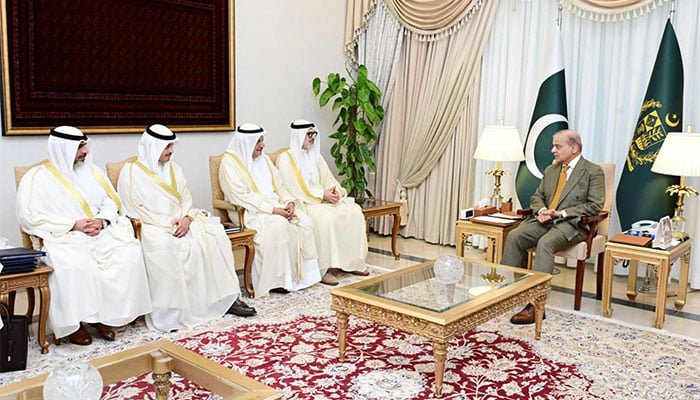
    Prime Minister Shehbaz Sharif met Kuwaiti Foreign Minister Sheikh Jarrah Jaber Al-Ahmad Al-Sabah in Islamabad on Wednesday. The meeting focused on Pakistan-Kuwait relations, regional developments and ways to expand cooperation between the two countries. Deputy Prime Minister and Foreign Minister Ishaq Dar also attended the meeting. Federal ministers for defence, commerce, national food security, communications, maritime affairs and petroleum were present. Advisers to the prime minister also joined the discussions. Prime Minister Shehbaz conveyed his best wishes to Kuwaiti Emir Sheikh Meshal Al-Ahmad Al-Jaber Al-Sabah and Crown Prince Sheikh Sabah Al-Khaled. He said Pakistan and Kuwait shared close and brotherly relations. The prime minister said the relationship was built on shared values, mutual trust and longstanding ties. He added that both countries had supported each other during difficult times. The regional situation was a major part of the discussion. Shehbaz reaffirmed Pakistan’s solidarity with Kuwait’s leadership and people. He strongly condemned attacks on Kuwait and other friendly Gulf countries during the ongoing regional conflict. He said Pakistan stood with its brotherly Gulf partners during the challenging situation. Shehbaz said Pakistan remained committed to promoting peace and stability in the region. He said Islamabad was playing the role of an honest and sincere mediator and facilitator in efforts to ease tensions. The prime minister stressed the importance of dialogue and diplomacy. He said peaceful engagement was essential for resolving regional disputes and preventing further escalation. The two sides also reviewed the progress in Pakistan-Kuwait relations. Shehbaz expressed satisfaction with the growing cooperation between the two countries. He called for further expansion of bilateral ties in key economic and strategic areas. These include trade, investment, energy, agriculture and information technology. Cooperation in maritime affairs and human resource development was also discussed. The prime minister said stronger economic links could create new opportunities for both countries. Shehbaz thanked the Kuwaiti government for its hospitality towards the Pakistani community. He also praised the contribution of Pakistani citizens to Kuwait’s social and economic development. The Kuwaiti foreign minister conveyed the best wishes of Kuwait’s leadership to Prime Minister Shehbaz. He expressed his country’s desire to strengthen cooperation with Pakistan in areas of mutual interest. The minister appreciated Pakistan’s efforts to promote dialogue and diplomacy in response to the regional crisis. He also thanked Pakistan’s leadership and people for their continued support for Kuwait during difficult circumstances. Both sides stressed the importance of regular consultations. They agreed that closer communication would help further strengthen bilateral relations. Pakistan and Kuwait also agreed to facilitate high-level exchanges in the near future. Such visits are expected to improve coordination and expand cooperation between the two countries.

  • | | |

    PSX surges 5,335 points as investor confidence str…

    Stock Exchange (PSX) recorded a strong performance during the outgoing business week, with the benchmark 100 Index gaining 5,335 points amid renewed investor confidence. The KSE-100 Index closed the week at 181,430 points, marking a significant rise from the previous level. During the week, the index traded within a range of 4,963 points, reaching a high of 182,007 points while its lowest level stood at 177,043 points. Trading activity also remained robust, with approximately 3.74 billion shares changing hands during the week at a total value of around Rs169 billion. The positive momentum was further reflected in the overall market valuation. The market capitalisation of the PSX increased by Rs482 billion over the week, reaching Rs20.237 trillion. Market sentiment remained positive as investors closely monitored developments surrounding the Iran-US conflict and signs of a possible pause in hostilities, which helped support confidence in the local equity market.

  • | |

    Mohsin Naqvi’s statement reflects personal o…

    Director General of Inter-Services Public Relations (ISPR) Lieutenant General Ahmed Sharif Chaudhry on Friday said Pakistan’s security depends on effective governance, stressing that terrorists must either surrender under the Constitution and the law or face continued military action. Speaking at a media briefing in Rawalpindi, the military spokesperson said Interior Minister Mohsin Naqvi’s recent remarks about the country’s governance system reflected his personal opinion and declined to comment further. However, he emphasized that good governance remained essential for ensuring national security and long-term stability. The DG ISPR said the National Action Plan continued to enjoy consensus among all major political parties and noted that most of its objectives, including countering extremism, disrupting terror financing and strengthening institutions, relied on strong governance. He added that Pakistan’s growing population made administrative efficiency more important than ever and said citizens had the right to effective governance. Over 40,000 Counterterrorism Operations Conducted Providing an update on security operations, Lt Gen Chaudhry said security forces had carried out 40,348 intelligence-based operations across Pakistan so far in 2026. He said 2,084 confirmed terrorists had been killed during these operations, averaging nearly 194 operations and 10 militant deaths every day. He added that the highest number of operations had been conducted in Balochistan, while 1,971 operations were carried out in Khyber Pakhtunkhwa. According to the military spokesperson, 819 people, including security personnel and civilians, embraced martyrdom during counterterrorism efforts this year, while 28 suicide attacks were recorded nationwide. He also alleged that Afghan nationals were involved in recent terrorist attacks in Tank and Karachi. No Negotiations With Armed Militants The DG ISPR made it clear that there would be no negotiations with armed militant groups. He said militants had only two options: surrender under the Constitution and the law or face continued action by security forces. Explaining the concept of a “hard state,” he said it did not refer to military rule but rather to a country where every individual is equal before the law and all matters are resolved through constitutional and legal mechanisms. Balochistan Facing Coordinated Propaganda Addressing the security situation in Balochistan, Lt Gen Chaudhry said a deliberate campaign was underway to create a false perception that the province was in crisis. He said the Constitution required every citizen to remain loyal to the state and argued that rights should always be accompanied by responsibilities. The DG ISPR alleged that certain elite groups and tribal leaders opposed social progress because they wanted to preserve the existing power structure. He said the state would continue engaging directly with the people of Balochistan instead of those seeking to obstruct development. Highlighting development initiatives, he said Gwadar now had modern healthcare facilities, educational institutions, industrial free zones and major infrastructure projects. He added that Balochistan’s per capita budget allocation exceeded Rs75,000, making it the highest among Pakistan’s provinces. He also said terrorists deliberately targeted labourers, teachers and development projects to slow the province’s progress. Missing Persons and Regional Security On the issue of missing persons, the military spokesperson said the Commission of Inquiry on Enforced Disappearances had received 10,901 cases, of which 9,372 had already been resolved. He stressed that every reported case required proper identification and verification. The DG ISPR further claimed that following what he described as Pakistan’s success during Operation Marka-e-Haq, hostile elements had shifted their focus toward destabilising Balochistan. He alleged that India and the Afghan Taliban regime shared an agenda of supporting terrorism against Pakistan.

  • |

    ECNEC approves Rs1.15tr development projects amid major cost escalations

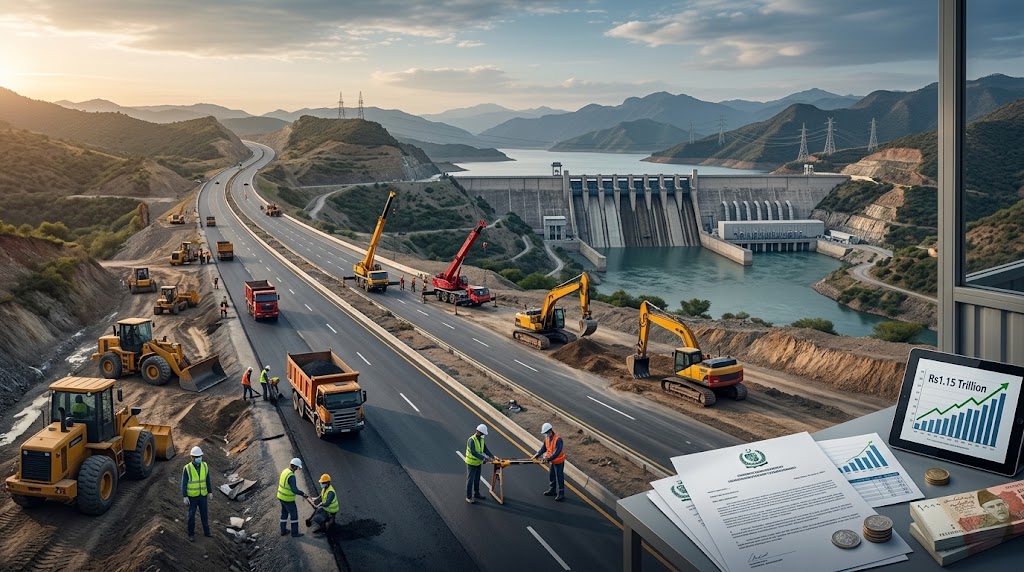
    ISLAMABAD: The government has approved 16 development projects with a combined estimated cost of around Rs1.15 trillion, including the controversial Lahore-Sahiwal-Bahawalnagar motorway and the fifth extension of the Tarbela hydropower project, whose cost has surged by nearly 282% from the original estimate. The decisions were taken by the Executive Committee of the National Economic Council (ECNEC), chaired by Deputy Prime Minister Ishaq Dar. Several of the projects had previously been considered by development forums and returned with revised costs following delays, changes in scope and rising construction expenses. Of the total approved amount, approximately Rs320 billion represents additional expenditure linked to cost increases and delays, highlighting the financial pressures facing major public-sector development schemes. The government, however, issued only a brief statement following the ECNEC meeting and did not provide a complete breakdown of all the projects and their financial details. The omission of the Lahore-Sahiwal-Bahawalnagar motorway from the official summary was particularly notable given the political controversy surrounding the scheme. Lahore-Bahawalnagar motorway approved The ECNEC approved the Rs407 billion Lahore-Sahiwal-Bahawalnagar Motorway project, retaining its original 295-kilometre alignment in accordance with a directive issued by Prime Minister Shehbaz Sharif earlier this year. The first package, covering an 18.5-kilometre stretch from the Lahore Ring Road to Raja Jang Interchange, was approved at an estimated cost of Rs49 billion through federal financing. The project has faced opposition from the Pakistan Peoples Party (PPP), which has raised objections to the scheme and its proposed alignment. Given the heavy financial burden on the Public Sector Development Programme (PSDP), the ECNEC directed the National Highway Authority (NHA) to examine public-private partnership options for sections that could attract private investment. For commercially viable portions, the NHA will arrange its contribution through its own revenues in the form of Viability Gap Funding. For sections that are considered financially unviable, alternative arrangements will be explored, including contributions from the Punjab government, loans or financing from international financial institutions and direct federal funding, subject to the availability of resources. Tarbela extension faces major cost increase One of the most significant approvals was the fifth extension of the Tarbela project, which received approval at a revised cost of Rs316 billion. The project’s original estimated cost stood at approximately Rs82 billion, meaning its revised price tag represents an increase of about 282%. The steep escalation has already attracted scrutiny from government officials. During the Central Development Working Party (CDWP) review, Planning Minister Ahsan Iqbal reportedly raised concerns over project management, transparency and oversight. Questions were also raised regarding the technical capacity of personnel associated with the project. The Ministry of Water Resources had previously highlighted shortcomings in an inquiry into problems encountered during project implementation. An inquiry into the failure of the downstream cofferdam reportedly concluded that the structural collapse was linked to design changes, inadequate supervision and delayed administrative action rather than flooding. The findings attributed the failure to the shift from roller-compacted concrete to a rock-fill structure, along with weaknesses in project oversight. The incident resulted in delays and financial losses, adding to concerns over the project’s rising cost. The Ministry of Finance also sought an explanation for the substantial increase in the project’s estimated cost. Since the scheme is being financed through international financial institutions, the ministry asked the Water and Power Development Authority (Wapda) to provide details regarding the mechanism for repayment. Despite the concerns and requests for additional information, the ECNEC ultimately approved the revised project cost. Road and infrastructure schemes The committee also approved the 48-kilometre Khwazakhela-Besham Expressway at a revised cost of Rs116.6 billion. The new estimate is around 47% higher than the original cost. Another interprovincial road scheme aimed at improving connectivity between Gilgit-Baltistan and Azad Jammu and Kashmir was approved at Rs29 billion, representing an increase of approximately Rs10 billion over its initial estimate. The Rathoa Haryam Bridge over the reservoir channel on the Mirpur-Islamgarh Road also received approval at a revised cost of Rs10.8 billion. Its original estimate had been only Rs1.4 billion, reflecting a substantial increase over the initial projection. The ECNEC further approved the Lahore Wastewater Treatment Plant at a cost of Rs56.6 billion, around Rs4.2 billion above the earlier estimate. Poverty alleviation and education initiatives The Southern Punjab Poverty Alleviation Project was approved at Rs29.7 billion and will cover 10 districts: Bahawalnagar, Bahawalpur, Bhakkar, Dera Ghazi Khan, Khushab, Layyah, Mianwali, Muzaffargarh, Rahim Yar Khan and Rajanpur. The scheme includes an additional cost escalation of around Rs6.8 billion and is aimed at improving socioeconomic conditions and livelihood opportunities in some of the region’s less-developed areas. The ECNEC also sanctioned Rs10.6 billion for the Fulbright scholarship programme, under which 816 scholarships are planned. Of these, 550 MS and 141 PhD scholarships will be administered through the United States Educational Foundation in Pakistan (USEFP), while the Higher Education Commission (HEC) will provide funding for another 125 PhD scholarships through the PSDP. Water projects in Sindh and Balochistan The Mazarani Dam project in Qambar Shahdadkot, Sindh, was approved at an estimated cost of Rs16.1 billion. The committee directed the provincial authorities to begin Command Area Development alongside construction of the main dam so that the project’s agricultural and economic benefits could be realised during its second phase. The Winder Dam project was also approved at Rs21.6 billion, with the federal government expected to contribute Rs15.6 billion. Meanwhile, the Mashkel Dam in Washuk, Balochistan, received approval at a cost of Rs41 billion. The project will be financed by the Balochistan government, while an environmental assessment report will be incorporated into the official project documentation.w Power-sector efficiency projects The ECNEC approved several schemes aimed at improving the performance of electricity distribution companies. A Rs24 billion project for the Supply, Installation, Testing and Commissioning of Asset Performance Management Systems at Lahore Electric Supply Company (LESCO) was approved. The committee also sanctioned Rs19 billion for the Electricity Distribution Efficiency Improvement Project of Hyderabad Electric Supply Company (HESCO). A similar initiative for Peshawar Electric Supply Company (PESCO) was approved at Rs30.2 billion. These projects are intended

  • |

    Iran appoints former IRGC commander Mohsen Rezaei as national security chief

    Iran has appointed former Islamic Revolutionary Guard Corps (IRGC) commander Mohsen Rezaei as secretary of the Supreme National Security Council (SNSC), placing a prominent hardliner at the center of the country’s defense and foreign policy establishment. Rezaei replaces Mohammad Baqer Zolqadr, who held the post briefly following the death of previous secretary Ali Larijani during an air strike in the ongoing conflict with the US and Israel. Supreme Leader Mojtaba Khamenei issued a decree appointing Rezaei as his direct representative on the council alongside Saeed Jalili, citing Rezaei’s extensive military experience during the Iran-Iraq War. The leadership shuffle comes as Iran negotiates conditional proposals to reopen shipping lanes through the Strait of Hormuz amid ongoing military and diplomatic friction. Rezaei, 71, commanded the IRGC from 1981 to 1997 and later served as secretary of the Expediency Discernment Council and vice president for economic affairs under President Ebrahim Raisi. Zolqadr, whom officials shifted to a political advisory role under the Supreme Leader, had previously outlined strict preconditions for diplomatic progress, including an immediate end to US military threats and an easing of economic sanctions.

Leave a Reply

Your email address will not be published. Required fields are marked *