|

Taiwan condemns planned Chinese navy drills with Indonesia as dangerous provocation

Taiwan’s government has strongly condemned planned Chinese naval drills with an Indonesian warship off its eastern coast, accusing Beijing of political manipulation to project fake territorial jurisdiction over international waters in the Pacific.

China’s Defence Ministry announced on Tuesday that it would conduct a joint “navigation exercise” with the Indonesian navy in mid-August in waters east of Taiwan. Joint exercises between Chinese forces and foreign militaries near Taiwan remain exceptionally rare.

Taiwan’s Mainland Affairs Council called the announcement a military provocation, stating Beijing was attempting to create a false impression in the international community that it holds sovereign rights off Taiwan’s eastern coast.

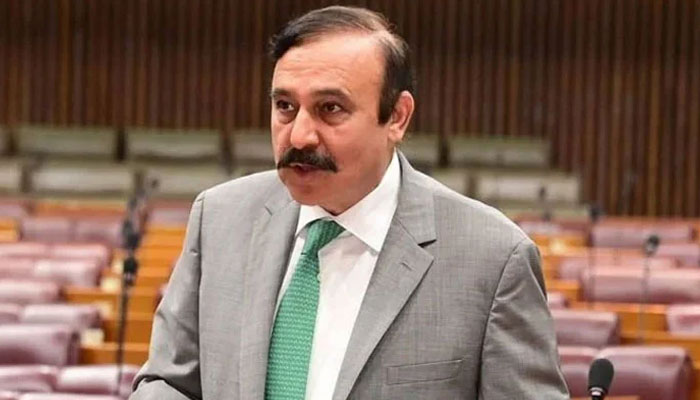
Addressing parliament in Taipei on Wednesday, Wu Tien-jen, assistant deputy chief of the general staff for intelligence, clarified that the Indonesian vessel was currently returning from Japan rather than deploying specifically for joint drills with Beijing.

“Militarily this does not have a direct impact on Taiwan,” Wu said, adding that the vessel was operating 70 to 80 nautical miles off the coast. “It has a geopolitical significance.”

Taiwan’s Foreign Ministry confirmed it has requested formal clarification from Jakarta regarding its involvement. Indonesia, which maintains no formal diplomatic relations with Taiwan, has not issued an official response.

The dispute coincides with Taiwan conducting its annual Han Kuang military exercises to simulate defences against a potential Chinese invasion, as well as high-level defence meetings between US and Indonesian officials in Jakarta.

Similar Posts

  • |

    Saba Hameed’s double role as mom and wife sparks confusion

    Saba Hameed continues to prove her versatility as an actor, appearing in more projects than most of her peers. Her latest casting choices, though, have left fans and colleagues puzzled. In ARY Digital’s Bas Tera Saath Ho, now 28 episodes deep, Saba portrays the wife of the male lead’s uncle, played by Faran Tahir. Around the same time, she plays the mother of the female lead’s father in Dar-e-Nijaat, another ARY production, again opposite Tahir. She is essentially his wife in one show and his mother in another, with both airing simultaneously. Content creator K Khan raised the issue in an Instagram reel on Monday. He questioned how the makers of Dar-e-Nijaat decided she suited the role of Tahir’s mother, given that she plays his spouse elsewhere on the same channel. Actor Zhalay Sarhadi weighed in through the comments, arguing that only women seem to age in Pakistani show business, while men remain perpetually youthful on screen. She said the industry keeps reinforcing this outdated mindset, even as attitudes shift elsewhere in the world. Sarhadi called for better, more realistic roles written for female actors, and joked she might soon end up playing Humayun Saeed’s mother if the trend continues. Atiqa Odho voiced similar frustration on her show Kya Drama Hai, posted to YouTube on Tuesday. She praised the overall cast but admitted she could not understand the casting logic behind Hameed’s role. She added that Hameed’s look in the part felt unconvincing, since she does not resemble a grandmother. Not everyone agreed. TV host Juggun Kazim defended the casting, calling it proof of Hameed’s exceptional range as a performer. She said Hameed has a rare gift for making audiences forget she is acting and fully believe each character. This is not the first time ageism has stirred debate in Pakistani television. Atiqa herself was previously targeted over remarks about her appearance. Critics often point out that male actors in their 40s still land lead roles as young men, such as Fahad Mustafa in Kabhi Main Kabhi Tum, frequently paired with much younger actresses. Women of similar age, meanwhile, are routinely pushed into roles as mothers or older relatives, underscoring a persistent double standard in casting across the industry.

  • |

    Typhoon Dolphin hits China

    Typhoon Dolphin made landfall in eastern China’s Zhejiang province on Sunday, bringing powerful winds and heavy rain after authorities issued the country’s highest-level typhoon warning. China’s National Meteorological Centre said the storm reached the coast near Yuhuan City at around 5:30pm local time, with winds exceeding 150 kilometres per hour. The typhoon disrupted air and sea travel across the region. Nearly 1,400 flights at Shanghai’s two main airports were cancelled, while Hangzhou airport reported another 270 cancellations. Authorities also suspended more than 200 ferry routes in Zhejiang and Fujian. China evacuated nearly 99,000 people from high-risk areas in Fujian ahead of the storm. Officials also suspended work and transport services in several locations along the typhoon’s expected path. The storm affected neighbouring areas as well. Taiwan cancelled more than 180 flights and suspended dozens of ferry services after heavy rain and strong winds hit the north. In Japan’s Okinawa, seven people suffered minor injuries, while more than 5,000 households lost electricity. Hong Kong also experienced unusually high temperatures. The Hong Kong Observatory recorded 36.9°C and warned that hot weather could continue through Tuesday as warm air from the storm moved over the territory. The weather centre expects Typhoon Dolphin to weaken as it moves northwest across eastern China. However, heavy rain could continue in Shanghai and parts of Zhejiang, Fujian, Anhui and Jiangsu through Monday.

  • |

    CPEC 2.0: Pakistan, China shift focus to B2B investment

    ISLAMABAD: Pakistan and China are moving toward a more business-driven model of cooperation under the second phase of the China-Pakistan Economic Corridor (CPEC), with greater emphasis on Business-to-Business (B2B) partnerships, industrial development, exports and productivity rather than large-scale Government-to-Government (G2G) financing. The development emerged during a high-level Chinese delegation’s visit to the CPEC Secretariat, where discussions focused on strengthening industrial and commercial ties between the two countries. According to an official statement issued by the Ministry of Planning on Tuesday, the Chinese delegation was headed by Sun Dongsheng, Senior Advisor, Economic Affairs Press. The delegation met Federal Minister for Planning, Development and Special Initiatives Ahsan Iqbal, along with senior policymakers and development experts. The talks centred on ways to advance B2B and industrial cooperation under CPEC 2.0, reflecting a broader shift in the corridor’s priorities from infrastructure-led development toward industrialisation, exports, technology and private-sector participation. From infrastructure to industrialisation During the meeting, Ahsan Iqbal briefed the Chinese delegation on the government’s Uraan Pakistan economic transformation programme and outlined Islamabad’s priorities for the next phase of CPEC. The minister proposed closer cooperation with Chinese institutions, including counterparts of the National Centre of New Manufacturing, to benefit from China’s experience in advanced manufacturing, innovation, automation and robotics. He said Pakistan needed to strengthen its productive capacity and adopt modern technologies to remain competitive in the era of Industrial Revolution 4.0 and prepare for the emerging Industrial Revolution 5.0. Ahsan Iqbal identified Pakistan’s limited export base as one of the country’s major economic challenges. According to the minister, repeated attempts to accelerate economic growth have struggled to generate sustainable momentum because productive sectors have not been sufficiently integrated with export markets. He stressed that the government’s priority was therefore to turn agriculture, manufacturing and other productive sectors into stronger sources of exports and foreign exchange. Pakistan seeks greater access to Chinese market The minister also called for greater facilitation of Pakistani exports to China, highlighting the considerable gap between the two countries’ trade potential. He noted that China imports goods worth around $2.6 trillion annually, whereas Pakistan’s exports to the Chinese market remain close to $3 billion. Ahsan said Pakistan needed to increase its presence in the Chinese market by improving production standards, competitiveness and the ability of domestic businesses to meet international demand. He expressed the expectation that CPEC 2.0 could help Pakistan address what he described as its “export deficit”, just as the first phase of the corridor contributed to addressing the country’s energy shortfall. CPEC enters a new phase Under CPEC’s first phase, China committed substantial financing to infrastructure, energy and other development projects in Pakistan. Nearly $30 billion was invested in infrastructure and power-sector projects, including independent power producers. However, the focus is now increasingly shifting toward private-sector-led cooperation. Islamabad continues to pursue financing for selected road and motorway projects, but China has yet to demonstrate readiness to finance the long-delayed Main Line-1 (ML-1) railway upgrade, which had previously been regarded as one of CPEC’s flagship projects. The latest consultations indicate that CPEC 2.0 is expected to rely more heavily on commercial partnerships between Pakistani and Chinese companies. The government has already been encouraging enterprises from both countries to explore joint ventures and investment opportunities in sectors including manufacturing, agriculture and mining. Ahsan Iqbal said recent agreements between Pakistani and Chinese companies showed that B2B cooperation was beginning to gain momentum. He expressed confidence that stronger business-to-business engagement would support the modernisation of Pakistan’s industrial and agricultural sectors while creating opportunities for investment, employment and exports. China stresses productive capacity Sun Dongsheng reaffirmed the importance China attaches to its longstanding relationship with Pakistan and highlighted the achievements of CPEC’s first phase. He called for further cooperation in industrial and agricultural development, particularly in strengthening Pakistan’s productive capacity. The Chinese delegation also stressed the importance of involving small and medium-sized manufacturing enterprises in bilateral economic cooperation. Greater enterprise-to-enterprise engagement, according to the delegation, could help create commercially sustainable partnerships and expand opportunities for businesses in both countries. The discussions also focused on technology transfer, innovation, skills development and the creation of stronger industrial linkages. Five Corridors aligned with Uraan Pakistan Officials also discussed the strategic relationship between the Five Corridors of CPEC 2.0 and Pakistan’s 5Es framework under Uraan Pakistan. The government’s 5Es framework focuses on exports, e-Pakistan, environment and climate change, energy and infrastructure, and equity and empowerment. The participants stressed that alignment between the two initiatives needed to translate into concrete economic outcomes, including new enterprises, technology adoption, innovation, employment opportunities, skills development, increased exports and higher investment. The delegation was also briefed on the progress achieved during CPEC Phase I and Pakistan’s priorities for the second phase. The consultations suggest that the next stage of CPEC will increasingly be measured not only by the volume of infrastructure investment but also by its ability to improve Pakistan’s industrial competitiveness, expand exports, attract private investment and create sustainable employment.

  • | | | |

    Three powers, one shield? What the pact means

    Pakistan, Saudi Arabia and Türkiye have formalised their long-standing strategic and defence ties through the newly signed Makkah Joint Defence Agreement, establishing a framework for closer military coordination and collective security. The agreement was signed during a trilateral summit in Makkah attended by Prime Minister Shehbaz Sharif, Saudi Crown Prince Mohammed bin Salman and Turkish President Recep Tayyip Erdogan. The pact has attracted comparisons with established military alliances. However, analysts say its stated purpose is not to create a new military bloc or target any particular country. Instead, it provides an institutional structure for defence cooperation that has developed between the three nations over several decades. A formal structure for longstanding ties Pakistan and Türkiye have maintained close political and military relations for decades, while Islamabad and Riyadh have developed extensive defence, diplomatic and economic cooperation. The new agreement is viewed as an attempt to bring these existing relationships under a formal trilateral framework. It is designed to provide a more structured mechanism for consultations, military coordination and strategic cooperation. Why the agreement was signed now The agreement comes amid growing security challenges across the Middle East and wider region. Analysts say conflicts, changing military technologies and emerging security threats have encouraged countries with shared strategic interests to strengthen their defence coordination. The trilateral arrangement is intended to improve collective preparedness and provide a coordinated response to potential threats while supporting regional stability. What the defence pact provides A central element of the agreement is the principle of collective security. Under the framework, aggression against one member is to be treated as a threat to all three countries. The arrangement is expected to encourage greater military coordination, intelligence cooperation, strategic consultations and defence planning. Closer institutional links could also allow the three countries to coordinate their military capabilities and improve their ability to respond to security challenges. Different strengths, shared security interests Each country brings different capabilities to the partnership. Pakistan contributes a large and experienced military, operational expertise and extensive experience in counterterrorism and conventional defence. Saudi Arabia brings significant economic resources, regional influence and political weight. Türkiye adds its growing defence industry, military technology and manufacturing capabilities. Analysts believe these complementary strengths could make the partnership more effective while allowing the three countries to develop greater strategic self-reliance. Pakistan’s diplomatic role The agreement also comes as Pakistan seeks to strengthen its role as a regional diplomatic actor. Islamabad maintains relations with Saudi Arabia, Türkiye, Iran, China and the United States, giving it channels of communication with several major regional and global powers. Analysts argue that Pakistan’s diplomatic engagement, alongside its military capabilities, could help it contribute to regional crisis management and dialogue. What the pact does not mean Despite comparisons with NATO and other military alliances, analysts stress that the agreement is not described as an offensive alliance. It is also not presented as a pact directed against a particular country, a so-called “Muslim NATO”, a nuclear deterrence arrangement or a religious military bloc. Instead, the three countries have presented it as a defensive framework focused on collective security, deterrence, military cooperation and regional stability. The long-term effectiveness of the agreement will depend on sustained political coordination and the willingness of all three governments to implement its commitments.

  • | | | | |

    Trump claims limited talks with Iran are underway …

    WASHINGTON: US President Donald Trump has claimed that limited negotiations with Iran are currently taking place, while indicating that Washington is not pursuing an aggressive new military escalation against Tehran at this stage. Trump’s comments come amid continued tensions between the United States and Iran and growing international attention on efforts to reduce the conflict. Recent reports have also indicated that talks involving Iran and Oman have been taking place, although no final agreement has been reached. According to Trump, the United States is currently keeping a lower profile on the issue and is engaged in what he described as limited negotiations with Iran. He also claimed that Iran is facing severe economic difficulties and suggested that the country is under significant financial pressure. Trump argued that Iran’s economic situation has deteriorated considerably, making it difficult for the government to meet some of its financial obligations. These remarks were presented as part of his argument for maintaining economic pressure rather than immediately launching another major military campaign. The US president also referred to the wider impact of the conflict on energy markets and American consumers. Oil prices have remained closely linked to developments surrounding the Strait of Hormuz, a strategically important route for global energy shipments. Recent market reports have shown that investors have been watching diplomatic developments closely as hopes for an agreement affect oil prices. Trump described the confrontation with Iran as a complicated strategic contest, comparing the situation to a game of chess. He suggested that a solution could eventually be reached through negotiations and pressure. US officials have reportedly been considering different approaches to the conflict, including diplomatic engagement and economic measures. Recent reporting indicates that progress has been discussed in Iran-Oman talks, although significant issues remain unresolved. The latest developments come as Washington continues to monitor Iran’s military and economic position while seeking leverage in negotiations. For global markets, the outcome of the diplomatic efforts could be particularly important. Any agreement that improves the security of shipping through the Strait of Hormuz could influence crude oil prices and energy supplies worldwide. However, the situation remains fluid, and claims about the extent of direct negotiations have not been uniformly confirmed by all sides. Further diplomatic contacts are expected as the United States and its partners seek a way to reduce tensions and address the broader issues at the center of the conflict.

  • | |

    Acting President of Azad Kashmir urges election co…

    Acting President of Azad Jammu and Kashmir (AJK) Chaudhry Latif Akbar has sent two letters to the Election Commission of Azad Jammu and Kashmir, demanding action over alleged security failures and irregularities reported during the polling process. In his letters, Chaudhry Latif Akbar raised serious concerns regarding the arrangements made for election security and claimed that effective security measures were not provided at several polling stations. He called for a thorough investigation into the incidents reported during the voting process and urged the Election Commission to take appropriate legal action against those found responsible. The Acting President stated that polling agents at various locations were allegedly prevented from entering polling stations, which he described as a serious violation of the electoral process. According to him, the presence of polling agents is essential to ensure transparency and maintain public confidence in elections. Chaudhry Latif Akbar further requested an inquiry into reports of firing incidents, alleged interference in the polling process, and claims that some voters were deprived of their right to cast their votes. He emphasized that all such allegations should be investigated impartially to determine the facts and ensure accountability. In one of his letters, the Acting President highlighted delays in the start of polling at Koomi Kot and Jhandgran areas. He stated that voting began late in these locations and requested that polling time be extended in the affected areas to compensate for the lost time and allow voters a fair opportunity to exercise their democratic right. He also referred to an alleged armed attack on Mumtaz Hussain Naqvi, calling for an immediate investigation into the incident. Chaudhry Latif Akbar demanded that those responsible for the attack be identified and legal proceedings be initiated against them. The Acting President stressed that all incidents reported during the election process must be examined through transparent investigations. He called upon the Election Commission to ensure that no individual or group involved in electoral violations escapes accountability. In his communication with the Election Commission, Chaudhry Latif Akbar reiterated the importance of maintaining a free, fair, and peaceful electoral environment. He stated that public trust in democratic institutions depends on ensuring that elections are conducted without intimidation, interference, or unlawful practices. The letters come amid political tensions surrounding the election process in Azad Jammu and Kashmir, where various political parties have raised concerns over alleged irregularities and security issues. Opposition parties have also questioned aspects of the polling arrangements, while authorities have maintained that necessary measures were taken to conduct peaceful elections. Chaudhry Latif Akbar’s demands reflect concerns about transparency and fairness in the electoral process. He emphasized that protecting voters’ rights and ensuring equal participation should remain the top priority of election authorities. He concluded by urging the Election Commission to conduct a comprehensive review of all reported incidents, publish the findings transparently, and take strict action against anyone found involved in misconduct. According to him, only a credible and impartial investigation can strengthen public confidence and ensure that the democratic process reflects the genuine will of the people.

Leave a Reply

Your email address will not be published. Required fields are marked *