another reko diqsized
| |

Another Reko Diq-Sized mining project in Pakistan,…

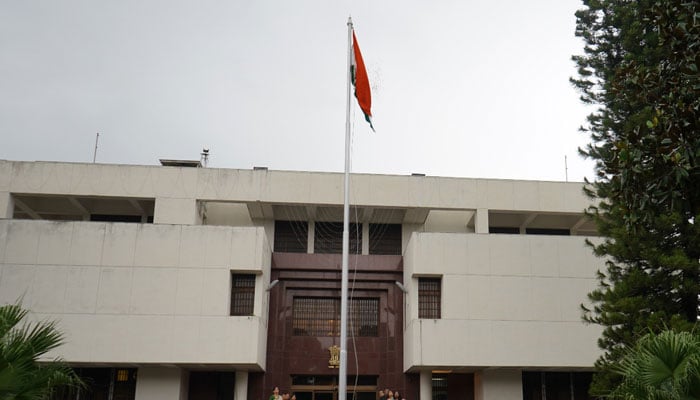
ISLAMABAD: The United States has expressed strong confidence in Pakistan’s mineral sector, with a senior US Embassy official revealing that the Trump administration is prepared to support another mega mining project on the scale of  to invest in Pakistan despite security concerns, viewing the country’s vast mineral wealth as strategically important for future global industries.

During a background briefing with journalists on Wednesday, the embassy official said Washington considers Pakistan a key partner in the global race for critical minerals that are essential for advanced technologies, clean energy, artificial intelligence, semiconductors and defence manufacturing.

According to the official, the US government is encouraging American investors to explore Pakistan’s untapped mineral resources, ranging from large-scale copper and gold projects to smaller mining ventures worth only a few million dollars.

US Prepared to Finance Another Mega Project

The official said the US administration is ready to support another project comparable to the multibillion-dollar Reko Diq development if geological surveys and feasibility studies demonstrate strong commercial potential.

He added that financing support could be extended through US institutions such as the Export-Import (Exim) Bank and the Development Finance Corporation, both of which are playing a growing role in securing global supply chains for critical minerals.

The official noted that American companies are not only interested in major mining investments but are also examining opportunities to acquire, develop and expand smaller mining operations across Pakistan.

Reko Diq Progress Continues Despite Delays

Discussing the Reko Diq copper and gold project, the official acknowledged that work is progressing, although at a slower pace than initially anticipated.

He explained that project costs are currently being reassessed, after which developers will return to financiers to finalize the remaining funding package.

The first phase of the Reko Diq project is estimated to cost around $7.7 billion, while the US Exim Bank has already offered $1.25 billion in financing. However, the overall financial structure remains under discussion.

The project has experienced delays due to rising construction costs and security concerns in Balochistan, prompting project stakeholders to revise cost estimates more than once.

Earlier this year, Barrick Gold, which owns a 50 percent stake in the project, also reviewed development timelines because of increasing costs and security-related challenges.

Major Economic Benefits Expected

The embassy official said Reko Diq has the potential to transform Pakistan’s economy once it becomes fully operational.

According to the estimates shared during the briefing, the project could generate nearly $2 billion in annual free cash flow. Of this amount, around $500 million would go directly to the Government of Balochistan, while another $500 million would benefit Pakistan’s state-owned enterprises.

The official further stated that Pakistan’s mining sector currently contributes roughly 3 percent to the country’s economy, while Reko Diq alone could increase national GDP by approximately 0.5 percentage points, highlighting its significance for long-term economic growth.

Critical Minerals Becoming Strategic Priority

The US official emphasized that critical minerals have become a top strategic priority for Washington as demand continues to rise across technology, renewable energy and defence sectors.

Pakistan possesses commercially attractive reserves of copper, antimony, tungsten and several other minerals considered essential for future industries.

He said American companies believe Pakistan has enormous untapped potential, particularly as global demand for copper is expected to rise sharply over the coming decades.

The official added that US firms are actively seeking long-term supply agreements for minerals extracted from Pakistani mines, while some investors are interested in purchasing and developing smaller mining assets.

Investment Opportunities Across Pakistan

Besides Balochistan, American investors are also exploring mineral opportunities in Khyber-Pakhtunkhwa, particularly for copper deposits, while rare earth mineral prospects in Gilgit-Baltistan have also attracted attention.

The official said the United States is searching globally for around 60 critical minerals needed for emerging technologies, many of which are found in Pakistan.

He noted that several companies have already begun exploration and extraction activities in different regions of the country.

Security Remains the Biggest Challenge

Despite strong investment interest, the official acknowledged that security remains one of the most significant obstacles facing mining projects in Pakistan.

He said US companies fully understand the risks associated with operating in regions such as Balochistan and Khyber-Pakhtunkhwa but remain willing to invest if appropriate security arrangements are provided.

The official stressed that the Pakistani government should continue strengthening security measures and facilitating investors to ensure long-term success of mining projects.

He added that American companies are encouraged to partner with local firms, which possess valuable experience in navigating operational and security challenges in remote mining areas.

US Calls for Transparent Investment Environment

The embassy official also urged Pakistan to maintain a transparent, predictable and competitive investment climate to attract greater foreign investment into the mineral sector.

He noted that Pakistan’s participation in the US Critical Minerals Initiative earlier this year reflects growing cooperation between the two countries in securing future mineral supply chains.

According to the official, if exploration and investment continue at the current pace, Pakistan’s mining industry could emerge as one of the country’s strongest economic sectors over the next 10 to 20 years, creating employment, increasing exports and significantly boosting national revenues.
Similar Posts

  • | |

    Pakistan goods transporters association declares i…

      The Pakistan Goods Transporters Association has raised serious concerns over the volatile and unpredictable daily adjustments in petroleum prices, stating that such frequent fluctuations make it impossible for the transport sector to continue operations smoothly. In a press conference held in Lahore, association officials, led by President Nabeel Mahmood Tariq, articulated a series of demands and grievances that have been mounting over recent months, warning that without immediate government intervention, the entire logistics and supply chain network could face severe disruption. Addressing the media alongside other senior office-bearers of the All Pakistan Goods Transporters Association, Nabeel Mahmood Tariq emphasized that the transportation industry is the backbone of the national economy, responsible for moving essential commodities, industrial raw materials, and consumer goods across the length and breadth of the country. However, he argued that the current pricing mechanism for petroleum products—which has seen almost daily revisions—has created an environment of extreme uncertainty for fleet operators. Unlike larger corporate entities, most truck owners and small transport companies operate on thin profit margins, and without a stable fuel pricing framework, they are unable to quote competitive rates to clients or plan their operational budgets effectively. Tariq pointed out that many transporters have already started grounding their vehicles, as each trip now carries the risk of financial loss if fuel prices rise unexpectedly mid-journey. Beyond fuel prices, the association president laid out a comprehensive list of demands aimed at reducing the financial burden on the sector. First and foremost, he called for an immediate end to unnecessary customs checking at various inter-provincial checkpoints. According to Tariq, these intrusive and repetitive inspections not only cause long delays—sometimes stretching into hours—but also open the door to harassment and bribery, which further inflate the cost of doing business. He urged the federal and provincial governments to streamline customs procedures and adopt a more efficient, technology-driven system that would expedite the movement of goods without compromising security or revenue collection. Another major point of contention raised by Tariq was the recent increase in toll taxes on highways and motorways. He demanded that this hike be rolled back completely, arguing that transporters are already struggling with rising maintenance costs, spare part prices, and tyre rates. The additional toll burden, he said, is simply unsustainable and forces many operators to take longer, less safe alternative routes, which ultimately hurts the overall efficiency of freight movement. Turning his attention to provincial policies, particularly in Punjab, Tariq called for the establishment of new, modern truck terminals across the province. He noted that existing truck stands and loading points are outdated, overcrowded, and lack basic amenities for drivers and helpers. New truck yards, equipped with proper parking, resting areas, workshops, and loading/unloading facilities, would not only improve working conditions but also reduce traffic congestion in urban centers. He also strongly condemned the 300 percent increase in token tax imposed on commercial vehicles in Punjab, labeling it as punitive and counterproductive. He demanded that this excessive tax hike be withdrawn immediately, asserting that it disproportionately affects small owner-operators who form the majority of the association’s membership. In a significant announcement, Nabeel Mahmood Tariq declared that the association fully supports the wheel-jam strike (hunger strike) called for August 8, which has been organized by various transport unions across the country to pressure the government into addressing these long-standing issues. He clarified that this is not a political move but a last-resort measure to draw attention to the existential crisis facing the transport industry. He warned that if the government fails to respond positively before that date, thousands of trucks, trailers, and tankers will park on the roads, effectively paralyzing the movement of food, medicine, fuel, and industrial goods. Such a strike, he cautioned, would have catastrophic consequences for an already fragile economy, leading to shortages, price hikes, and factory closures. Concluding his address, Tariq appealed to Prime Minister Shehbaz Sharif and the chief ministers of all provinces to personally intervene and hold urgent consultations with transport representatives. He reiterated that the industry is not asking for subsidies or charity, but merely for a predictable policy environment, fair taxation, and the elimination of corrupt practices at checkpoints. He expressed hope that the government would act wisely and avert a crisis that benefits no one except speculators and hoarders. The press conference ended with a unanimous resolution passed by the association leaders, vowing to continue their struggle peacefully but firmly until all their legitimate demands are met. The coming days, they warned, will be decisive for the future of Pakistan’s transport sector and, by extension, its entire supply chain.

  • | |

    Pakistan, Iran reaffirm goal to boost bilateral tr…

    ISLAMABAD: Pakistan and Iran have reaffirmed their commitment to expanding bilateral trade to $10 billion, underscoring their determination to strengthen economic cooperation and deepen commercial ties. The pledge was made during the 10th session of the Pakistan-Iran Joint Trade Committee, where representatives from both countries reviewed trade relations and explored measures to enhance economic collaboration. Addressing the meeting, Pakistan’s Federal Minister for Commerce, Jam Kamal Khan, said the longstanding brotherly relationship between Pakistan and Iran should now be transformed into a robust economic partnership. He emphasized the importance of finalizing the proposed Pakistan-Iran Free Trade Agreement, saying it would open new opportunities for businesses and significantly increase trade between the two neighboring countries. The minister stressed the need to remove barriers affecting cross-border logistics, customs procedures, and cargo transportation to ensure smoother and more efficient trade flows. He also highlighted the potential of establishing joint border markets and implementing an electronic data interchange system to facilitate commerce and improve connectivity. Jam Kamal Khan noted that the private sectors of both countries are ready to expand trade and investment, adding that it is the responsibility of governments to provide a stable, business-friendly, and predictable environment that encourages commercial activity. He expressed confidence that the outcomes of the Joint Trade Committee meeting would produce a practical roadmap for strengthening Pakistan-Iran economic relations and accelerating progress toward the shared trade target of $10 billion.

  • Thai Woman Molested by Pakistani Man on Dubai-Bangkok Flight

    BANGKOK, Thailand – A Pakistani tourist has been denied entry into Thailand and taken into police custody following allegations that he sexually assaulted a sleeping Thai mother on a flight from Dubai to Bangkok. The 30-year-old suspect, identified as Raza Ali, was removed from the aircraft by tourist police and immigration officers upon landing at […]

  • | |

    Baby Shark star Park Geon-roung takes K-pop leap with WAVE

    The child performer who became globally recognised through the viral “Baby Shark” phenomenon is now preparing for a new chapter as a K-pop artist. Park Geon-roung, now 17, is set to enter the Korean music scene under the stage name Baby Shark Boy (BSB). His debut digital single album, WAVE, is scheduled for release on August 20, 2026. The upcoming track will feature Joohoney, a member of the popular K-pop group Monsta X. Park has also contributed to the song’s lyrics, giving him an opportunity to establish an identity beyond his childhood fame. Park first attracted international attention when he appeared in the “Baby Shark” video as a young child. The song went on to become one of the biggest digital entertainment phenomena in history, reaching audiences far beyond its original target of young children. The Pinkfong Company, the South Korean entertainment company behind the franchise, is supporting Park’s transition into music. According to the company, WAVE will include musical elements inspired by “Baby Shark” as a nostalgic connection to the performer’s early career. However, the new release is intended to present Park as a young musician in his own right rather than simply revive his childhood role. The original “Baby Shark Dance” became the most-viewed video on YouTube in November 2020 after overtaking Luis Fonsi and Daddy Yankee’s “Despacito.” It later became the first video on the platform to cross the 10-billion-view mark. The video has since accumulated more than 16 billion views, demonstrating the extraordinary global reach of the children’s song. Its popularity was largely driven by repeated viewing among children, with young audiences often replaying the short video multiple times. That high level of repetition helped transform the song into a global digital phenomenon. The track also moved beyond children’s entertainment and became a major social media trend. The #BabySharkChallenge encouraged users around the world to recreate its distinctive choreography. International celebrities and major K-pop acts also participated in the trend, helping the song reach audiences that extended well beyond its original demographic. Now, nearly a decade after his appearance in the viral video, Park is attempting to build a career in a very different part of the entertainment industry.

  • |

    Fawad Blames PML-N, PPP for political deadlock

    Former federal minister Fawad Chaudhry said Pakistan cannot move forward politically or economically as long as the country’s two major ruling parties, the Pakistan Muslim League-Nawaz (PML-N) and the Pakistan Peoples Party (PPP), continue to dominate national politics. Speaking to reporters in Islamabad, Fawad criticized former president Asif Ali Zardari and former prime minister Nawaz Sharif, arguing that their continued influence has prevented the country from making meaningful progress. He said Pakistan would struggle to achieve stability and development unless it moved beyond what he described as the traditional political leadership. Fawad also took aim at Prime Minister Shehbaz Sharif’s economic record. He noted that Shehbaz has presented a total of 17 budgets during his political career, including 12 as chief minister of Punjab and five at the federal level. He questioned what new solutions the prime minister could still offer after overseeing so many budgets. Commenting on constitutional reforms, Fawad said he supports the transfer of administrative powers, adding that decentralization could strengthen governance if implemented effectively. Addressing the broader political situation, he stressed that any genuine national dialogue must include the founder of Pakistan Tehreek-e-Insaf (PTI), who remains in prison. Fawad said the PTI founder is the country’s most influential political leader and should be engaged in talks as a Pakistani citizen. He added that he shares a long political association with the PTI founder and believes meaningful negotiations cannot succeed without his participation. Former Sindh governor Imran Ismail, who was also present during the media interaction, said he has submitted a request to meet the PTI founder. According to Ismail, he intends to discuss proposals related to the creation of new provinces and seek his opinion on the issue before moving forward with any political discussions.

  • |

    Major US financial firms targeted in extensive phone-phishing campaign

    Ransom-seeking cybercriminals have launched a coordinated campaign targeting high-profile US financial institutions, including Blackstone, Apollo Global Management, KKR, Bain Capital, and CME Group. A technical report from Google’s Threat Intelligence Group revealed that hackers created 72 malicious websites designed to steal corporate login credentials. Operatives used social engineering tactics, reaching employees directly on personal mobile phones while spoofing corporate IT helpdesk numbers. Under the guise of urgent system updates, callers guided staff to fraudulent domains such as “passkeyhelpdesk” or “secure-passkey” to capture login credentials and multi-factor authentication passcodes in real time. According to threat intelligence analysis, the campaign represents a strategic pivot toward private equity firms, law practices, and financial rating agencies, driven by the assessment that these targets hold sensitive commercial data worth paying substantial ransoms to protect. While digital intelligence data identified fake portals created for over 200 organisations, including Uber, Levi Strauss, and several major law firms, it remains unconfirmed which specific financial targets experienced compromised systems. The threat actors operating under names such as Redact, Falcon, Helix, and Pink share common digital infrastructure. Analysts noted that despite advanced enterprise perimeter security, direct voice-phishing techniques exploiting human trust continue to rank among the most effective cyber-intrusion vectors.

Leave a Reply

Your email address will not be published. Required fields are marked *