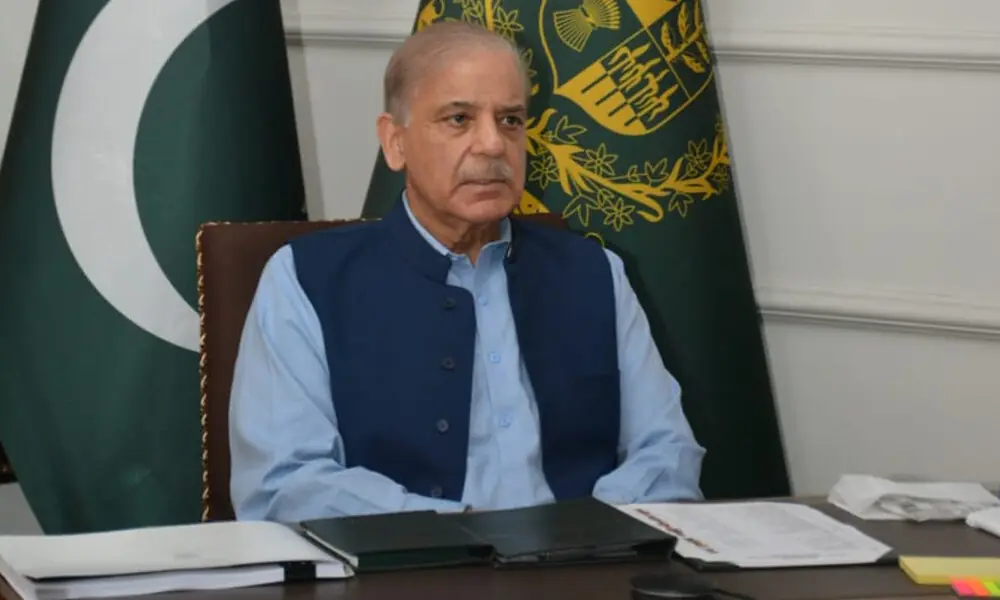
iftikhar ali sahoo

Iftikhar Ali Sahoo gets additional charge of Punjab Chief Secretary

Lahore: The Punjab government has assigned Additional Chief Secretary Flight Lieutenant (Retd.) Iftikhar Ali Sahoo the additional charge of Chief Secretary Punjab during the official visit of Chief Secretary Zahid Akhtar Zaman to China.

According to an official notification issued by the Services & General Administration Department (S&GAD), Section-I on August 24, 2026, Iftikhar Ali Sahoo will perform the duties of Chief Secretary Punjab in addition to his existing responsibilities.

The notification states that the arrangement will remain effective from August 25 to August 29, 2026. During this period, Chief Secretary Zahid Akhtar Zaman will be on an official visit to the People’s Republic of China.

The notification was issued by Muhammad Fayyaz, Section Officer (Services-I) and copies were sent to the Governor’s Secretariat, Chief Minister’s Office, Accountant General Punjab, State Bank of Pakistan and other relevant departments and officers for information and necessary action.

Decision to ensure continuity of administrative affairs

Iftikhar Ali Sahoo has been given the additional responsibility to ensure the smooth and uninterrupted functioning of the province’s administrative affairs during Zahid Akhtar Zaman’s official visit to China.

Iftikhar Ali Sahoo is a PAS/BS-21 officer and is currently serving as Additional Chief Secretary Punjab. In the absence of the Chief Secretary, he will oversee the province’s senior-level administrative affairs.

According to officials, assigning additional charge to a senior officer during the Chief Secretary’s official foreign engagements is a routine administrative arrangement aimed at ensuring the effective and uninterrupted functioning of the provincial government.

Similar Posts

  • | |

    Monsoon fury raises flood risks across Pakistan, N…

    ISLAMABAD: Pakistan’s disaster management authorities have issued a fresh flood alert as intensified monsoon rains continue to push water levels higher in major rivers, raising concerns over flooding in several parts of the country. The National Disaster Management Authority (NDMA) said river flows are expected to increase significantly between August 2 and 4, urging citizens to avoid unnecessary travel to vulnerable areas and remain alert to changing weather conditions. According to the National Emergencies Operation Centre (NEOC), high flooding has been observed in the Lehri River at Head Gogi, while Nullah Palkhu near Wazirabad is experiencing medium-level flooding. The Indus River is currently witnessing low-level flooding at Kalabagh, Chashma, Guddu and Sukkur, while similar conditions have been reported at Head Nari on the Nari River. The NDMA warned that the Chenab River is likely to experience high water flows at Marala, with low to medium flooding anticipated at Khanki and Qadirabad. Water levels are also expected to rise in the Jhelum, Ravi and Kabul rivers and their tributaries as monsoon activity intensifies. Officials cautioned that streams connected to the Jhelum, Chenab and Ravi rivers could swell to medium or high levels. Meanwhile, water flows in the Ravi and Sutlej rivers will largely depend on releases from reservoirs across the border. The authority also expressed concern over the possibility of flash floods in the hill torrents of Dera Ghazi Khan and Rajanpur, as well as seasonal streams in central and southern Khyber Pakhtunkhwa and northern Balochistan. In addition, urban flooding and waterlogging remain a serious threat in several cities, including Rawalpindi, Jhelum, Gujranwala, Lahore, Faisalabad, Peshawar, Mardan, Nowshera, Hyderabad, Badin, Thatta and other parts of Sindh due to continued heavy rainfall. The NDMA advised residents to avoid crossing flooded roads and waterways, monitor weather updates before travelling, and follow safety instructions issued by local authorities. It also encouraged the public to use the official Pak NDMA Disaster Alert mobile application for real-time weather warnings and emergency information. Separately, the Prime Minister’s Emergency Response Committee (ERC) held its 10th consecutive daily review meeting to assess the country’s monsoon situation. The meeting, chaired virtually by Planning Minister Prof Ahsan Iqbal, brought together federal ministries, provincial governments, disaster management authorities and senior administrative officials. During the briefing, the NDMA presented the latest updates on weather conditions, casualties, infrastructure damage, rescue operations and rehabilitation efforts. Officials informed the committee that deputy commissioners in all high-risk districts had already been directed to remain fully prepared for any emergency. The committee was told that recent heavy rains had caused flooding in multiple regions, with coordinated rescue and relief operations continuing through federal, provincial and district authorities. Weather experts also forecast more rainfall across northern and central Pakistan in the coming days, while isolated showers are expected in southeastern Sindh. The NDMA highlighted that relief activities are being carried out with the support of both national and international humanitarian organisations. Officials further noted that most monsoon-related fatalities this season resulted from the collapse of unsafe and poorly constructed buildings, underscoring the need for stricter enforcement of building safety regulations and greater public awareness. The ERC commended the efforts of government institutions, provincial administrations, district authorities, the armed forces and rescue teams for their ongoing response. It directed all relevant departments to strengthen coordination, maintain maximum preparedness, accelerate relief and rehabilitation work, and take preventive measures to minimise the impact of future weather emergencies.

  • | |

    PM orders aid for rain and flood victims

    LAHORE: Prime Minister Shehbaz Sharif has ordered the immediate provision of financial assistance to families affected by recent monsoon rains and floods across Pakistan, while directing authorities to speed up relief and rehabilitation efforts. Chairing a meeting in Lahore on Saturday to review the ongoing response, the prime minister instructed that compensation be provided to families who lost loved ones and to owners of houses that were completely or partially damaged by the severe weather. Shehbaz also called for the swift restoration of electricity transmission networks and roads in affected areas. Federal ministers and senior officials were directed to personally visit impacted regions, assess the damage and oversee rehabilitation work. The prime minister further ordered authorities to accelerate the delivery of food and other essential relief supplies to areas that remain difficult to access. The National Disaster Management Authority (NDMA) and provincial disaster management authorities were told to maintain full preparedness as more rain and flooding are forecast. Officials briefed the meeting that around 615 tonnes of relief supplies had already been dispatched to monsoon-hit areas, with additional consignments being arranged. Authorities also reported that flood-affected residents had been moved to safer locations across all affected areas. Restoration efforts are underway in Punjab, Sindh, Balochistan, Khyber Pakhtunkhwa, Gilgit-Baltistan and Azad Jammu and Kashmir, while disaster management teams remain on standby for any further emergencies. The meeting was also informed that early warning systems in the northern areas are operational and have helped authorities evacuate residents to safer locations ahead of potential flooding.

  • | | |

    Rising fuel taxes add to motorists’ burden

    Consumers are facing a growing burden of taxes and other charges on petrol and high-speed diesel. Official documents show that the difference between the basic cost and retail price of petrol is Rs139.93 per litre. For high-speed diesel, the difference stands at Rs116.10 per litre. The documents show that the basic cost of one litre of petrol is Rs197.69. However, consumers are currently paying Rs327.62 per litre. Several taxes, levies and margins are included in the retail price. These charges significantly increase the amount paid by consumers at fuel stations. Petrol carries a petroleum levy of Rs80 per litre. A climate support levy of Rs5 is also imposed. The price also includes Rs21.24 in customs duty. An Inland Freight Equalisation Margin of Rs7.48 is charged per litre. Oil marketing companies receive a margin of Rs7.87 per litre. Dealers are paid a margin of Rs8.64 per litre. As a result, consumers pay Rs130.23 per litre in combined levies, taxes and margins on petrol. The situation is similar for high-speed diesel. Its basic cost is Rs264.76 per litre. However, its retail price has been fixed at Rs380.86 per litre. According to the documents, consumers pay around Rs116 per litre in levies, taxes and different margins on high-speed diesel. The petroleum levy on high-speed diesel is Rs74.28 per litre. The fuel also carries a climate support levy of Rs5 per litre. Customs duty accounts for another Rs15.68 per litre. The Inland Freight Equalisation Margin stands at Rs4.63. Oil marketing companies receive a margin of Rs7.87 per litre. Dealers receive Rs8.64 per litre as their margin. The figures show that taxes, levies and various margins form a significant portion of the final prices of both fuels. The additional charges directly affect motorists and consumers. They also increase transportation and operating costs for businesses that depend heavily on fuel. The rising cost of petrol and diesel can also put pressure on the prices of goods and services. Transport operators, traders and other businesses often pass higher fuel costs on to consumers.

  • | | |

    Pakistan approves 1m tonnes wheat imports

    Pakistan’s strategic wheat reserves have fallen to critically low levels, with the stocks held by the Pakistan Agricultural Storage and Services Corporation (PASSCO) reportedly almost exhausted. The shortage has emerged despite the International Monetary Fund (IMF) allowing the government to procure wheat. Federal and provincial authorities, however, were unable to secure sufficient quantities, resulting in a sharp decline in PASSCO’s strategic reserves. The situation has raised concerns about maintaining adequate wheat supplies and meeting future requirements. PASSCO plays an important role in maintaining strategic stocks that can be used to support food security during periods of shortage. In response to the declining reserves, the Economic Coordination Committee (ECC) has approved the import of one million tonnes of wheat. The government has also formed a steering committee to oversee the process and ensure that all necessary requirements are completed before the imported wheat is brought into the country. Officials said the import process will be subject to several conditions. These include pre-shipment inspection to verify the quality and quantity of wheat before it leaves the exporting country. Another major condition requires provincial governments to arrange and provide the funds needed to meet their respective wheat requirements. The latest decision comes as authorities seek to strengthen wheat availability and prevent a potential supply gap. The import plan is expected to help rebuild stocks after the depletion of PASSCO’s strategic reserves. The steering committee will monitor the required procedures and coordinate with the relevant federal and provincial authorities. Its role will include ensuring that the conditions attached to the wheat import decision are fulfilled. The development highlights the importance of timely wheat procurement and strategic stock management. Any delay in rebuilding reserves could create additional pressure on the country’s food supply system, particularly if domestic availability remains insufficient.

  • | | |

    Karachi weather update: Surjani Town records highe…

    Surjani Town recorded the highest rainfall in Karachi on Saturday as monsoon activity brought light to moderate showers to several parts of the city. According to the Pakistan Meteorological Department (PMD), similar weather conditions are expected to continue today and tomorrow, with cloudy skies and intermittent rainfall forecast across Karachi. The city experienced highly humid weather during the morning before low-level clouds covered most areas later in the day. Light drizzle and scattered showers were reported in several neighborhoods, while suburban areas including Surjani Town, Gulshan-e-Maymar, and Scheme 33 received light to moderate rainfall. Official rainfall data released by the PMD showed that Surjani Town recorded the highest rainfall at 4 millimeters. Gulshan-e-Maymar received 3.4 millimeters, while PAF Base Masroor recorded 2.3 millimeters. Gulshan-e-Hadeed registered the lowest rainfall among the monitored locations with 1.5 millimeters. PMD spokesperson and Deputy Director Anjum Nazir Zaigham said Karachi is expected to remain mostly cloudy through Sunday and Monday, with chances of thunderstorms accompanied by light to moderate rain. However, he clarified that the current weather system is not expected to produce heavy rainfall in the city. According to the department’s early warning update, the low-pressure weather system has weakened after previously developing into a depression. It is currently located over southeastern Rajasthan, India. Although the system has weakened, monsoon currents from the Arabian Sea and the Bay of Bengal continue to influence weather conditions across Pakistan’s central and northern regions. Meteorologists also noted that a separate western weather system is affecting the country’s northern areas and could strengthen further, bringing additional rainfall to upper and central parts of Pakistan in the coming days. Meanwhile, several districts of rural Sindh are expected to experience thunderstorms, gusty winds, and moderate to heavy rainfall due to ongoing monsoon activity. Authorities have warned that heavy downpours in some districts could trigger urban flooding in low-lying areas. The PMD reported that Karachi’s maximum temperature reached 35.8 degrees Celsius on Saturday, while humidity remained high at 72 percent, contributing to muggy conditions despite the rainfall. Residents have been advised to stay updated with official weather forecasts as monsoon conditions continue to evolve across the region.

  • |

    Turkish firm to begin offshore drilling in Pakista…

    Petroleum Minister Ali Pervaiz Malik has said Turkish Petroleum will soon begin offshore drilling in Pakistan’s territorial waters, a move he described as a potential boost for foreign investment in the country’s energy sector. Speaking at a press conference in Lahore on Sunday, Malik said Pakistan currently imports nearly 90% of its energy needs. Domestic oil production stands at around 70,000 barrels per day, while the country’s daily demand is close to 500,000 barrels. The minister stressed the need to speed up oil and gas exploration within the country to reduce dependence on costly energy imports. Malik said Prime Minister Shehbaz Sharif and Chief of Defence Forces and Chief of Army Staff Field Marshal Syed Asim Munir had tasked an international company with developing a comprehensive roadmap for Pakistan’s energy sector. The plan is expected to reach the national leadership in the coming months. He also said the government had stopped the flow of circular debt and was working to settle outstanding liabilities accumulated under previous governments. The minister announced that LPG tenders would open on Monday and said the government had also made arrangements to issue new gas connections to consumers. Malik said Pakistan’s next priority after recent strategic and diplomatic achievements was sustainable economic growth. He described the Makkah defence agreement as a source of national pride and said Pakistan had strengthened its position as a regional security provider. He added that cooperation among Saudi Arabia’s economic strength, Turkiye’s technological expertise and Pakistan’s defence capabilities could help promote regional stability. Discussing global energy pressures, Malik said the Iran-US conflict had created major challenges for international energy markets and pushed crude oil and petroleum product prices to unprecedented levels. Despite the pressure, he said the government maintained uninterrupted fuel supplies across the country and took steps to shield consumers from the full impact of higher international prices. Malik reiterated that the government would continue efforts to provide maximum relief to the public while working with limited financial resources.

Leave a Reply

Your email address will not be published. Required fields are marked *