orders aid rain
| |

PM orders aid for rain and flood victims

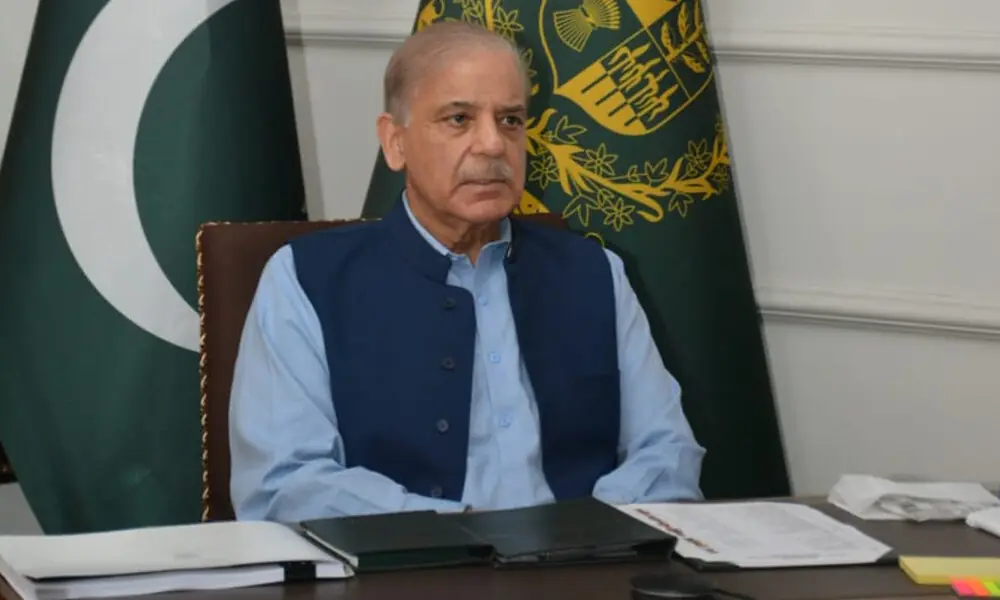
LAHORE: Prime Minister Shehbaz Sharif has ordered the immediate provision of financial assistance to families affected by recent monsoon rains and floods across Pakistan, while directing authorities to speed up relief and rehabilitation efforts.

Chairing a meeting in Lahore on Saturday to review the ongoing response, the prime minister instructed that compensation be provided to families who lost loved ones and to owners of houses that were completely or partially damaged by the severe weather.

Shehbaz also called for the swift restoration of electricity transmission networks and roads in affected areas. Federal ministers and senior officials were directed to personally visit impacted regions, assess the damage and oversee rehabilitation work.

The prime minister further ordered authorities to accelerate the delivery of food and other essential relief supplies to areas that remain difficult to access. The National Disaster Management Authority (NDMA) and provincial disaster management authorities were told to maintain full preparedness as more rain and flooding are forecast.

Officials briefed the meeting that around 615 tonnes of relief supplies had already been dispatched to monsoon-hit areas, with additional consignments being arranged. Authorities also reported that flood-affected residents had been moved to safer locations across all affected areas.

Restoration efforts are underway in Punjab, Sindh, Balochistan, Khyber Pakhtunkhwa, Gilgit-Baltistan and Azad Jammu and Kashmir, while disaster management teams remain on standby for any further emergencies.

The meeting was also informed that early warning systems in the northern areas are operational and have helped authorities evacuate residents to safer locations ahead of potential flooding.

Similar Posts

  • 28 mine workers killed, Parliament raises safety concerns

    Islamabad: A serious safety crisis in Pakistan’s mining sector came under the spotlight after the National Assembly Standing Committee on Overseas Pakistanis and Human Resource Development questioned why many mine workers remain unregistered even after losing their lives in dangerous mining accidents. The committee expressed concern that families of deceased workers may struggle to receive compensation and welfare support because authorities lack complete records of people working inside mines. Members demanded immediate steps to register all mine workers and ordered a review of mining safety arrangements across the country. The issue was discussed during the meeting of the Standing Committee on Overseas Pakistanis and Human Resource Development, chaired by Syed Rafiullah, following a deadly coal mine accident in Balochistan. Members offered prayers for the workers who lost their lives and said repeated mining accidents show serious weaknesses in monitoring and enforcement systems. During the discussion, committee members questioned officials about whether the workers who died in the accident were officially registered. Officials informed the committee that complete registration details were unavailable, raising concern among members about the protection available to mining workers and their families. The committee questioned how workers could spend their lives working in dangerous conditions while government departments lacked basic information about their employment status. Members rejected the argument that many mine workers are seasonal employees and therefore difficult to register. They said anyone working in a mine, whether permanent, temporary or seasonal, should be counted as a worker and provided protection. The committee stressed that registration should not depend on the type of employment. It said workers who risk their lives underground deserve safety measures, legal protection and welfare benefits. Officials informed the committee that worker registration involves different institutions, including provincial departments and labour related organisations. However, members questioned why coordination gaps continue despite years of discussions. The committee also raised concerns over mine inspections and safety checks. Members asked when mines were last inspected, whether safety rules were followed and how many workers were present at different mining sites. Officials stated that mining safety falls under provincial responsibility, but the federal government cannot ignore the issue and must collaborate with provinces to improve worker protection. The committee directed authorities to conduct a complete survey to identify how many mines are operating, how many workers are employed and how many workers are officially registered. The Federal Minister assured the committee that action would be taken and a long term strategy would be developed to ensure every mine worker is registered. Another major concern raised during the meeting was the lack of emergency facilities near mining areas. Members questioned whether proper trauma centres, ambulances and emergency services were available near mines to save workers after accidents. They pointed out that discussions about emergency facilities had taken place in previous years, but clear improvements were still needed. The committee said safety rules cannot remain only on official documents; they must be visible at mining sites through practical action. Members also suggested reviewing mining leases and ensuring that mine operators follow safety standards before continuing operations. The committee recommended that all provinces and Gilgit Baltistan review mining conditions, worker registration systems and compliance with safety procedures. Officials informed the committee that a survey would be carried out to assess the situation on the ground and identify gaps in the current system. The committee also discussed the Workers Welfare Fund and recommended taking up the issue of its management and distribution at the Council of Common Interests level. Members stressed that workers across Pakistan must receive their legal rights and no labourer should remain invisible in government records.

  • | |

    Eight bodies recovered sfter avalanche on broad pe…

      Skardu: Rescue teams have recovered the bodies of eight climbers who went missing after a massive avalanche struck Broad Peak, one of the world’s highest mountains, in northern Pakistan. The tragic incident has shocked the international mountaineering community and prompted an extensive search-and-rescue operation in the Karakoram mountain range. According to officials, four additional bodies were located during the latest phase of the rescue mission, bringing the total number of recovered victims to eight. Earlier in the day, rescue teams had already found four bodies in the avalanche-hit area. Of the four bodies recovered most recently, three have been airlifted by helicopter to Skardu for identification and further legal formalities. Rescue authorities are continuing efforts to locate the remaining two missing climbers, despite extremely challenging weather conditions, difficult terrain, and the constant risk of further avalanches. The search operation remains active on Broad Peak, with rescue personnel working around the clock to find the missing mountaineers. Helicopters, local rescue teams, and experienced high-altitude climbers are taking part in the mission, while authorities continue to monitor weather conditions that could affect ongoing operations. Provincial Minister for Tourism Nek Nam Karim said the government is making every possible effort to locate the remaining climbers. He stated that the Tourism Department is providing full logistical support to rescue teams, including transportation, coordination, and essential equipment required for high-altitude search operations. The group of missing climbers represents several countries, highlighting the international nature of mountaineering expeditions in Pakistan. The team includes climbers from the United States, China, Nepal, Oman, and Pakistani mountaineer Sohail Sakhi, who remains among those unaccounted for. Authorities are maintaining close contact with the embassies of the affected countries and are keeping the families of the climbers informed about developments in the rescue operation. Broad Peak, located in Pakistan’s Gilgit-Baltistan region, is the 12th-highest mountain in the world, standing at ,8047 metres (26,401 feet)above sea level. It lies within the Karakoram mountain range, close to K2, and is regarded as one of the world’s most demanding climbing destinations. Every year, experienced mountaineers from across the globe travel to Pakistan in an attempt to summit the towering peak. However, climbing Broad Peak is extremely hazardous. Mountaineers face unpredictable weather, heavy snowfall, strong winds, crevasses, and the constant threat of avalanches. Even highly skilled climbers can find themselves in life-threatening situations due to rapidly changing mountain conditions. The latest tragedy serves as a painful reminder of the dangers associated with high-altitude mountaineering. Rescue officials have acknowledged that operations at such elevations are exceptionally difficult because of thin air, freezing temperatures, and limited access to the affected areas. As the search for the remaining missing climbers continues, hopes remain that rescue teams may still locate them. At the same time, condolences continue to pour in for the victims and their families. The incident has once again highlighted both the breathtaking beauty and the unforgiving dangers of Pakistan’s towering Karakoram mountains, where adventure and risk often go hand in hand.

  • | |

    Olivia Munn reveals the style shift that helped he…

    Olivia Munn is opening up about how she found her personal style again after navigating motherhood, postpartum anxiety and a difficult breast cancer journey. The 46-year-old actress recently spoke with USA Today about how her experiences changed the way she viewed her body, clothing and identity. For Munn, fashion became more than choosing an outfit. It became a way to reconnect with herself after years of major changes. (People.com⁠) Munn first struggled with her changing body after welcoming her son, Malcolm, in 2021. She said she had expected her body to return to how it looked before pregnancy, but that did not happen. Breastfeeding, weight changes and a larger bust also meant many of her clothes no longer fit. At the same time, Munn was dealing with postpartum anxiety, which she described as an isolating experience. Instead of immediately replacing her entire wardrobe, she began making more intentional choices. Comfort, simplicity and clothing that made her feel confident became more important than following every new trend. Her style journey took another turn after she was diagnosed with breast cancer in 2023. Munn underwent multiple surgeries, including a double mastectomy and later reconstruction, as she focused on her health and recovery. (People.com⁠) After going through what she described as years of “back-to-back battles,” Munn reached a turning point. She realized she was tired of feeling disconnected from the way she dressed and decided she wanted to reclaim that part of herself. Rather than allowing her experiences to dictate what she could wear, Munn began figuring out what made her feel comfortable and authentic again. Her approach became less about dressing according to expectations and more about dressing for herself. That mindset also influenced her recent partnership with fashion brand Anne Klein. Munn has embraced clothing that feels polished while still fitting her lifestyle and changing body. Her story highlights how personal style can become part of rebuilding confidence after major life changes. For Munn, finding the right clothes was not simply about looking good. It was about recognizing herself again. After years of physical and emotional challenges, she is choosing to make room for joy, confidence and self-expression. Munn’s style shift is ultimately a story about reclaiming identity. She is no longer waiting to feel like her old self. Instead, she is discovering who she is now—and dressing for that woman.

  • |

    West Indies stun Pakistan by 90 runs

    West Indies defeated Pakistan by 90 runs in the first Test of the two-match series on Tuesday. Pakistan failed to chase down a target of 211 runs. The national team was bowled out for just 120 runs in its second innings. The match was played at the Brian Lara Academy in Tarouba. Pakistan’s batters struggled badly on a difficult pitch. The West Indies fast bowlers maintained constant pressure throughout the innings. Pakistan began their chase with hopes of securing a win. However, the batting line-up collapsed quickly. Eight Pakistani batters failed to score in double figures. Captain Babar Azam was the only batter who offered strong resistance. He remained unbeaten on 58 runs. However, he received little support from the other end. Azan Awais, Imam-ul-Haq and Shan Masood were dismissed for three runs each. Ali Usman scored two runs. Khurram Shahzad made four runs. Salman Ali Agha, Aamer Jamal and Mohammad Ali were dismissed without scoring. The repeated fall of wickets left Pakistan in serious trouble. Earlier, West Indies resumed their second innings on the fourth day at 126 for seven. Their batters added 55 more runs before being bowled out for 181. West Indies entered the second innings with a 29-run lead from the first innings. That advantage proved crucial. It allowed the hosts to set Pakistan a target of 211 runs for victory. Pakistan’s batters found the target extremely difficult to chase. The pitch offered assistance to the bowlers. West Indies used the conditions effectively and kept taking wickets at regular intervals. The visitors had earlier scored 282 runs in their first innings. Shan Masood was Pakistan’s leading batter. He scored an impressive 109 runs. Imam-ul-Haq also made an important contribution. He scored 63 runs. However, the rest of the batting line-up failed to build enough partnerships. Justin Greaves was the standout bowler for West Indies in Pakistan’s first innings. He claimed five wickets and played a key role in restricting Pakistan to 282. West Indies had scored 311 runs in their first innings. Shai Hope was among their top performers. He scored 92 runs and narrowly missed a century. Kavem Hodge also played an important innings. He scored 84 runs and helped West Indies post a competitive total. Pakistan’s Mohammad Ali was the leading bowler in the first innings. He took four wickets. Mohammad Abbas also impressed with the ball and claimed three wickets. The match remained competitive because of the difficult batting conditions. However, West Indies handled the pressure better in the crucial moments. Pakistan’s second-innings collapse eventually handed West Indies a convincing victory. The hosts bowled the visitors out for 120 runs.

  • |

    Lahore High Court rules abused women retain dower rights following divorce

    The Lahore High Court has ruled that a woman who seeks a divorce on the grounds of her husband’s cruelty, abuse, or marital misconduct is not automatically deprived of her right to receive her unpaid dower, known as haq mehr. Delivering the judgment, Justice Mohsin Akhtar Kayani dismissed a petition filed by a man challenging lower court decisions in Toba Tek Singh that awarded 50 percent of a deferred dower to his former wife, Nisha Shahid. The petitioner argued that under family law provisions, the court lacked a legal basis to grant dower following a khula dissolution. However, the High Court drew a clear distinction between a standard khula, where a woman seeks separation solely due to personal incompatibility, and a judicial dissolution triggered by a husband’s mistreatment. The court clarified that abuse encompasses physical violence as well as psychological, emotional, verbal, and economic misconduct, noting that a wife is not required to present formal medical reports or police filings to establish her claim. The ruling directed Family Courts to assess the underlying causes of a marital breakdown rather than stripping a woman of her dower rights purely because the separation is categorized as a khula. Additionally, the Lahore High Court recommended that the Punjab government and the Law and Justice Commission of Pakistan update relevant family laws to ensure clear determinations of fault in dower disputes.

  • |

    Pakistan’s Fatima Zahra reaches Commonwealth boxing quarter-finals

    Pakistan’s boxing campaign at the 2026 Commonwealth Games received a major boost after Fatima Zahra delivered an impressive knockout victory to book her place in the women’s 60kg quarter-finals in Scotland. The Pakistani boxer produced a commanding performance against Lesotho’s Real Ebuoha, overwhelming her opponent from the opening exchanges. Fatima displayed sharp technique, powerful punches and complete control throughout the contest, leaving little room for a comeback. Her dominance was so decisive that the referee stopped the bout before the scheduled finish, awarding the contest to the Pakistani boxer by technical knockout. The victory secured Fatima’s place in the quarter-finals and kept Pakistan’s hopes alive for a medal in women’s boxing. The convincing win has been welcomed by Pakistan’s sporting community, with many praising the young boxer’s confidence and composure on one of the biggest stages in Commonwealth sport. Fatima now faces a far tougher challenge in the quarter-finals, where she is scheduled to take on Jordan Wilson of New Zealand. The upcoming bout is expected to be one of the key contests in the 60kg division, with both athletes aiming to move closer to a place on the podium. The Commonwealth Games have brought together top athletes from across the Commonwealth, making every victory increasingly significant as the competition progresses. For Pakistan, Fatima’s success represents another encouraging moment for women’s boxing, a sport that has steadily gained momentum in recent years. Sports analysts believe her aggressive style, quick movement and ability to control the pace of a fight could make her a serious contender if she maintains her current form. However, they also note that the knockout stages will present stronger and more experienced opponents. Pakistan will now look to Fatima Zahra to continue her impressive run as she prepares for the crucial quarter-final clash against New Zealand’s Jordan Wilson. A victory would guarantee her a place in the semi-finals and move her one step closer to securing a historic Commonwealth Games medal for Pakistan in women’s boxing. Her commanding performance has already become one of Pakistan’s standout moments at the Games, raising hopes that the country’s boxing contingent can make a lasting impact in Scotland.

Leave a Reply

Your email address will not be published. Required fields are marked *