iran warns any
|

Iran warns US: Any aggression will be met with a strong and decisive response

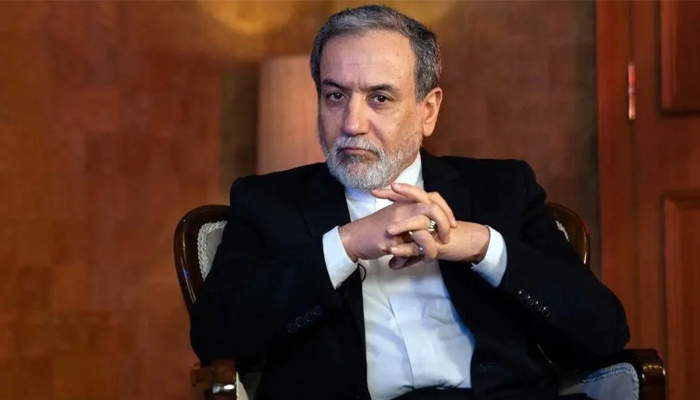
Iranian Foreign Minister Abbas Araghchi has warned that any aggression against Iran or its vital infrastructure will trigger a “strong and decisive response”, emphasising that Tehran’s defense doctrine remains grounded in an “eye for an eye” policy.

Writing on social media platform X, Araghchi made it clear that Iran will hit back against any strikes on its territory and cautioned that any third parties providing support to such actions will also be viewed as legitimate targets.

The warning follows aggressive directives from US President Donald Trump, who ordered US Central Command (CENTCOM) to intensify strikes on Iranian positions and threatened that Iran would pay a steep price as military actions continue.

An official from Iran’s Tasnim News Agency reinforced Araghchi’s statement, warning that if US forces target Iranian power plants or bridges, Iran will respond by targeting infrastructure, bridges, and energy assets associated with American interests throughout the region.

Similar Posts

  • | |

    Sindh orders immediate reduction in public transpo…

    The Sindh government has ordered an immediate reduction in public transport fares following a significant decrease in the price of high-speed diesel. According to local media reports, the Sindh Transport Department has directed transporters to pass the full benefit of the Rs32.63 per litre reduction in diesel prices on to passengers. The directive covers buses, minibuses, coaches, vans and other public service vehicles operating across the province. Transport authorities have also instructed operators to clearly display updated fare lists at vehicles and bus terminals. The move is aimed at ensuring that passengers receive the benefit of lower fuel prices and that transporters do not continue charging fares based on previous diesel rates. Officials have further been directed to conduct daily road inspections and check public transport vehicles to monitor compliance with the new instructions. Transporters found charging passengers excessive fares could face strict action. According to the Transport Department, penalties for violations may include fines, suspension of route permits and cancellation of vehicle fitness certificates. Authorities have also been instructed to submit daily implementation reports to the Sindh Transport Department. The directive comes after the price of high-speed diesel was reduced by Rs32.63 per litre, bringing its new price to Rs363.06 per litre. The reduction is expected to lower operating costs for public transport operators and has prompted authorities to seek a corresponding reduction in passenger fares. Public transport fares are an important issue for millions of commuters, particularly low-income workers, students and daily wage earners who rely heavily on buses, minibuses and other shared transport services. The Sindh government’s decision is therefore likely to attract considerable attention from passengers who have been waiting for transport fares to reflect changes in fuel prices. The enforcement mechanism will be crucial in determining whether commuters actually receive the benefit of the diesel price reduction. Daily inspections and penalties could help prevent transport operators from charging fares above the officially approved rates. Authorities have emphasized that transporters must comply with the new instructions and ensure that revised fares are clearly communicated to passengers. The latest move represents an effort by the provincial government to link public transport fares in Sindh with changes in fuel prices and provide immediate relief to commuters following the reduction in diesel costs.

  • | |

    Mastung attack foiled, Ziaullah Langau praises pol…

    Balochistan Home Minister Ziaullah Langau has praised security personnel for successfully foiling an attack on his security squad in Mastung. Speaking at a press conference in Quetta, Langau said Mastung police confronted the attackers and forced the terrorists to flee, preventing the attack from succeeding. He said five police personnel were injured during the incident. The minister praised the police officers for their courage and said their response prevented a potentially serious attack. Langau said the people of Balochistan had endured violence and conflict for a long time. He urged those involved in armed activities in the mountains to realise that the conflict was futile and would not achieve its objectives. He appealed to both Baloch and Pashtun communities not to fall victim to what he described as terrorist propaganda. “Protect your children’s future from terrorists,” he said, urging families and communities to reject violence and militant activities. The provincial minister also alleged that terrorists were receiving support from India and Afghanistan. He said the government and security forces would continue efforts to counter terrorism and protect citizens. The attack took place in Mastung as security personnel accompanying the provincial home minister came under fire. Security forces responded to the attack, while several personnel were wounded.

  • | |

    Rubio and Bessent stayed aboard decoy jet as Trump…

    Two members of President Donald Trump’s cabinet remained aboard a decoy aircraft after Trump quietly departed the plane and boarded a different flight while in Turkey last month, according to a US television network report. Secretary of State Marco Rubio and Treasury Secretary Scott Bessent stayed on what was widely believed to be Air Force One and did not join the alternate flight arranged for Trump due to security concerns tied to Iran. Trump boarded Air Force One on July 8 alongside both officials as well as members of the traveling press before slipping away via a catering truck, which transported him discreetly to a separate military aircraft. Because the designation “Air Force One” applies to whichever plane the president occupies, the original aircraft retained the call sign even after Trump had already left it, effectively turning it into the decoy. According to the report, Rubio and Bessent remained on the first aircraft in order to preserve the presidential line of succession in case anything happened to Trump during the flight. Under that line of succession, Vice President JD Vance would assume power if the president died or became incapacitated, followed by the Speaker of the House and the President Pro Tempore of the Senate. The Secretary of State ranks next in the order, followed by the Treasury Secretary. Others who stayed aboard the original aircraft designated as Air Force One included White House Deputy Chief of Staff Stephen Miller and White House communications director Steven Cheung. The second aircraft that carried Trump out of Ankara also included Defense Secretary Pete Hegseth, according to separate US media reports. Speaking to reporters Monday night, Trump said the decision to carry out the plane switch came from the US military and the Secret Service, who he said wanted him to travel on a different aircraft. He did not provide specifics about the nature of the security threat, saying only that he regularly receives numerous threats and that any consequential president faces the same. A request for comment sent to the White House had not been answered as of publication.

  • | |

    State Department report calls for greater civilian…

    The US State Department said Wednesday that Pakistan needs to strengthen civilian oversight of public finances to improve fiscal transparency, releasing findings that highlighted persistent gaps in how the country discloses key financial information. The department’s assessment described fiscal transparency as a core component of effective public financial management, noting that it allows citizens to understand how government revenues and tax dollars are spent. That visibility into budgets, the report said, gives citizens the tools they need to hold their governments accountable. The findings arrive weeks after Pakistan’s National Assembly passed an 18.8 trillion rupee Finance Bill for 2026 to 2027 in June, which included a defence budget of 3 trillion rupees, with at least 335 billion rupees coming from provincial contributions. In its 2026 Fiscal Transparency Report on Pakistan, the State Department said the country continues to fall short in disclosing important financial data, particularly around debt obligations and the budgets of military and intelligence agencies. The report found that Pakistan’s government did not publish its executive budget proposal within a reasonable timeframe and made only limited information available on debt obligations, including debt held by major state owned enterprises. It further noted that military and intelligence budgets remain outside the scope of adequate parliamentary or civilian oversight. The assessment also pointed to areas of progress. During the review period, the report said, Pakistan’s government made its enacted budget and end of year financial reports widely and easily accessible to the public, including through online platforms. It found that publicly available budget documents offered a substantially complete picture of most planned government expenditures and revenues, including revenue generated from natural resources. The report described the information contained in the budget as generally reliable and subject to audit by the country’s supreme audit institution, which it said meets international standards of independence. Audit reports, the department noted, are published within a reasonable period and contain substantive findings. It also found that the government has specified, and largely followed in practice, clear legal criteria and procedures for awarding natural resource extraction contracts and licenses, while making basic information about such awards publicly available. The report added that Pakistan’s sovereign wealth fund operates under a sound legal framework and that the government publishes accessible information on public procurement contracts. Among its recommendations, the State Department urged Pakistan to make its executive budget proposal available to the public within a reasonable timeframe, disclose more detailed information on government debt, including debt tied to state owned enterprises, and bring military and intelligence agency budgets under parliamentary or civilian oversight. Responding to questions about the report during a weekly press briefing, Foreign Office spokesperson Tahir Andrabi acknowledged that the report had been released the previous day. He said Pakistan adheres to internationally recognized best practices around fiscal transparency, budgeting and financial disclosure, while also operating within its own constitutional, legislative and regulatory frameworks. Andrabi noted that Pakistan remains engaged in an ongoing International Monetary Fund program centered on structural reform and improved fiscal management. He said the country has completed three IMF reviews so far, adding that the reform measures taken under the program have drawn broad recognition, including credit rating upgrades from three international rating agencies as well as positive assessments from the IMF itself.

  • |

    Fakhar Zaman says one good PSL game is not enough for a call-up

    Pakistan opener Fakhar Zaman has weighed in on national team selections. He believes players should not be picked based on just one or two standout PSL performances. According to him, there is a significant gap between franchise cricket and the international game. The 35-year-old pointed out a growing trend. Several young players have made it into the national side after impressing in only a few PSL matches. He said that if a youngster is truly good enough to take his spot in the white-ball team, they should get that chance without hesitation. However, he added an important condition. Such players still need to prove their quality and consistency over time, not just deliver one strong performance. Fakhar also spoke about the gap between league and international cricket. He explained that many domestic performers only understand this difference once they step onto the international stage themselves. He suggested that regular development camps could help close this gap. At the same time, he cautioned against calling any player extraordinary after just one or two good PSL games. League cricket, he stressed, is simply not the same as international cricket. Turning to team matters, Fakhar revealed that batting order discussions have already taken place with the management. He was careful to note that not every detail from those conversations can be shared publicly. His personal approach, he said, has always been to prioritize what the team needs. He acknowledged that individual players naturally have their own preferences. Still, he pointed out that not everything can be aired through the media. What matters most, according to him, is that the entire squad stays united and aligned moving forward. Looking ahead, Fakhar also shared some thoughts on his history in South Africa. He said he has fond memories of playing there in the past. He credited the pace and bounce of South African pitches for suiting his natural batting style. He added that his current preparation is already focused on the 2027 World Cup. As selection debates continue to swirl around PSL performances, Fakhar’s comments offer a timely reminder. Consistency, not a single flash of brilliance, remains the real benchmark for making it at the international level, a point he seems keen on reinforcing as competition for spots heats up.

  • | | |

    Rs22 Billion allocated to PIMS, 14 newborns dead

    ISLAMABAD: A deadly fire at the Pakistan Institute of Medical Sciences (PIMS) on August 26 resulted in the deaths of at least 14 newborns, raising serious questions about safety standards, hospital management and the use of public funds. The tragedy has brought renewed attention to the financial resources provided to the country’s major public hospitals. Federal government records show that approximately Rs22 billion was allocated to PIMS over the past three years. Despite these substantial allocations, the hospital continues to face staff shortages, maintenance concerns and problems with essential equipment Official budget figures show that PIMS received an allocation of Rs6.84 billion during the previous financial year. However, the hospital spent approximately Rs7.51 billion, exceeding its approved budget by around Rs670 million.The institution also received an additional Rs660 million in supplementary funds during the year.For the current financial year, the government’s allocation for PIMS has been increased to approximately Rs7.63 billion. Questions have also been raised over funds allocated for repair and maintenance. The federal government had previously provided Rs500 million under this category, while only Rs230 million has been earmarked for the current year. These figures have prompted concerns over whether available resources are being effectively utilised and whether sufficient priority is being given to basic safety, maintenance and patient care. Despite receiving billions of rupees in government funding, PIMS is reportedly operating with a significant shortage of staff. Hospital data indicates that 949 sanctioned positions remain vacant. These include 385 doctors, 363 nurses and 201 paramedical staff. Such shortages can place additional pressure on existing employees and affect the hospital’s ability to provide timely care. Understaffed wards can also make emergency response more difficult, particularly in critical departments where patients require continuous monitoring. The PIMS fire has therefore intensified questions about whether staffing gaps and inadequate resources played any role in the tragedy. Determining the exact causes, however, will require a transparent and independent investigation. The concerns surrounding PIMS are part of a broader debate over safety and accountability in Pakistan’s public hospitals. A review of reported incidents between 2016 and 2026 has highlighted several cases involving alleged negligence and failures in healthcare facilities across the country. In June 2025, 20 children, including 15 newborns, reportedly died at DHQ Hospital Pakpattan, with oxygen shortage cited as a possible factor. In October 2020, seven patients died at Khyber Teaching Hospital Peshawar following an oxygen supply failure. In November 2024, a three-year-old child reportedly fell into an open manhole inside Children’s Hospital Lahore. Other reported incidents across different cities have involved alleged treatment delays, incorrect injections, oxygen-related problems and unsafe hospital infrastructure. The PIMS tragedy has once again raised questions about whether increasing government allocations are producing meaningful improvements in public healthcare. The government has ordered an inquiry into the fire, which is expected to determine the circumstances surrounding the deaths and identify any negligence or safety failures. For the families who lost their newborns, however, no investigation can undo the loss. The central question now is whether the billions allocated to PIMS have been used effectively and whether hospital authorities maintained adequate staffing, equipment, fire-safety systems and infrastructure. If a major public hospital receiving billions in government funding cannot guarantee basic safety for vulnerable patients, accountability must extend beyond temporary suspensions or administrative changes. The tragedy has highlighted the urgent need for stronger oversight, transparent financial management, adequate staffing and enforceable safety standards across Pakistan’s public healthcare system.

Leave a Reply

Your email address will not be published. Required fields are marked *