turkish firm begin
|

Turkish firm to begin offshore drilling in Pakista…

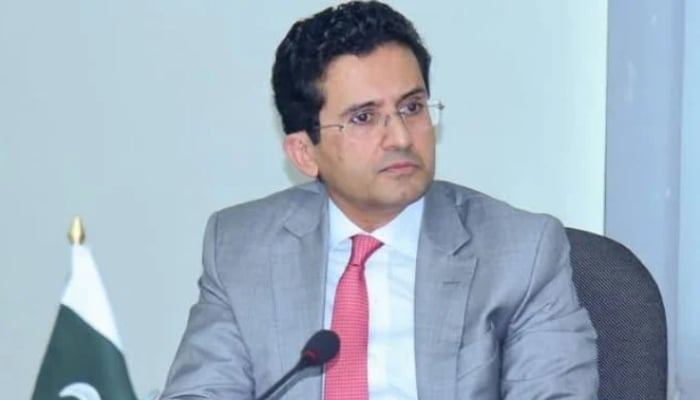
Petroleum Minister Ali Pervaiz Malik has said Turkish Petroleum will soon begin offshore drilling in Pakistan’s territorial waters, a move he described as a potential boost for foreign investment in the country’s energy sector.

Speaking at a press conference in Lahore on Sunday, Malik said Pakistan currently imports nearly 90% of its energy needs. Domestic oil production stands at around 70,000 barrels per day, while the country’s daily demand is close to 500,000 barrels.

The minister stressed the need to speed up oil and gas exploration within the country to reduce dependence on costly energy imports.

Malik said Prime Minister Shehbaz Sharif and Chief of Defence Forces and Chief of Army Staff Field Marshal Syed Asim Munir had tasked an international company with developing a comprehensive roadmap for Pakistan’s energy sector. The plan is expected to reach the national leadership in the coming months.

He also said the government had stopped the flow of circular debt and was working to settle outstanding liabilities accumulated under previous governments.

The minister announced that LPG tenders would open on Monday and said the government had also made arrangements to issue new gas connections to consumers.

Malik said Pakistan’s next priority after recent strategic and diplomatic achievements was sustainable economic growth. He described the Makkah defence agreement as a source of national pride and said Pakistan had strengthened its position as a regional security provider.

He added that cooperation among Saudi Arabia’s economic strength, Turkiye’s technological expertise and Pakistan’s defence capabilities could help promote regional stability.

Discussing global energy pressures, Malik said the Iran-US conflict had created major challenges for international energy markets and pushed crude oil and petroleum product prices to unprecedented levels.

Despite the pressure, he said the government maintained uninterrupted fuel supplies across the country and took steps to shield consumers from the full impact of higher international prices.

Malik reiterated that the government would continue efforts to provide maximum relief to the public while working with limited financial resources.


Similar Posts

  • | |

    Kelly Clarkson reveals why she regrets her post-Am…

    Kelly Clarkson has never been shy about sharing her true feelings about From Justin to Kelly, the 2003 musical comedy she made shortly after winning the first season of American Idol. Now, the singer has once again made it clear that the movie is not a chapter of her career she wants her children to revisit. During her final Las Vegas concert, Clarkson joked about the movie while speaking to the audience. She sarcastically called it an “Oscar-worthy” production before revealing the real reason she agreed to star in it: she was contractually obligated. Clarkson also joked that she wished she had read the fine print more carefully before signing her American Idol contract. (Page Six⁠) The movie paired Clarkson with Justin Guarini, the runner-up from the first season of American Idol. Their characters meet during spring break and become romantically involved in the musical comedy. Released in 2003, the film arrived when American Idol was becoming a huge television phenomenon. However, Clarkson has previously explained that she did not want to make the movie in the first place. In a 2019 interview, she recalled being extremely unhappy about the project and said she had even spoken to lawyers in an attempt to escape her contractual obligation. She described the experience as one of the most miserable periods of her life. (Vanity Fair⁠) Her concerns were not completely unfounded. From Justin to Kelly received harsh reviews and performed poorly at the box office. The movie reportedly earned around $4.9 million domestically against a budget of about $12 million. Its reputation has remained largely negative over the years. (Wikipedia⁠) Despite her criticism, Clarkson does not believe the entire experience was a waste. During her recent concert, she pointed out that the music was actually fun to make. Her ability to laugh about the experience now shows how much distance she has gained from that early chapter of her career. Clarkson was only beginning her professional journey when she made the movie. Winning American Idol had suddenly placed her in the spotlight, and she was quickly expected to take on opportunities that came with her new fame. More than 20 years later, Clarkson can look back with a much stronger voice and greater control over her career. While From Justin to Kelly may remain a movie she would rather her children skip, she has managed to turn an uncomfortable experience into one of her most amusing career stories.

  • | |

    Security forces eliminate 32 terrorists in counter…

    ISLAMABAD: Pakistan’s security forces killed 32 terrorists during two intelligence-based operations in Khyber Pakhtunkhwa and Balochistan over the past 24 hours, the military’s media wing said on Wednesday, describing the raids as part of an intensified campaign against militant groups operating in the country. According to the Inter-Services Public Relations (ISPR), 24 militants were killed during a series of targeted operations in Khyber district, while another eight were eliminated in separate operations in Nushki district of Balochistan. The operations were launched following recent terrorist attacks in both provinces and were carried out to dismantle militant networks and their support infrastructure. The military said security forces conducted multiple intelligence-driven raids in Khyber during the night of July 28–29, successfully engaging terrorist hideouts and neutralising militants identified as members of the banned Tehreek-e-Taliban Pakistan (TTP), referred to by the state as Fitna al-Khawarij. In Balochistan’s Nushki district, security personnel launched coordinated operations against militants linked to the banned Balochistan Liberation Army (BLA), referred to officially as Fitna al-Hindustan. After an intense exchange of fire, eight militants were killed, while weapons, ammunition and improvised explosive devices were recovered and destroyed. The ISPR said clearance operations were continuing in both regions to ensure that any remaining militants or facilitators were eliminated. It reaffirmed that Pakistan’s nationwide counterterrorism campaign under the Azm-e-Istehkam strategy would continue with full force to eradicate terrorism and restore lasting peace. Prime Minister Shehbaz Sharif praised the security forces for the successful operations, commending their professionalism and determination. He reiterated the government’s resolve to continue the fight against terrorism until the threat is completely eliminated, adding that the nation stands united with the armed forces in defending the country’s security. The operations come amid a renewed surge in terrorist violence, particularly in Khyber Pakhtunkhwa and Balochistan. Just a day earlier, separate attacks in Balochistan claimed the lives of a deputy superintendent of police and two others, while labourers were abducted and several vehicles were set ablaze. International reports have also highlighted the growing security challenge. Recent United Nations assessments noted an increase in attacks by the TTP and BLA, with concerns over improved coordination among militant groups and access to advanced weapons through cross-border networks. Pakistan has continued to intensify intelligence-based operations to curb the escalating threat and dismantle terrorist infrastructure across the country.

  • |

    Balochistan flood resilience project faces delays despite housing support progress

    QUETTA: Implementation of a major World Bank-backed flood resilience programme in Balochistan is facing significant delays, with slow progress on infrastructure, climate services and housing reconstruction raising concerns about the project’s ability to meet its targets before the scheduled completion date. The Integrated Flood Resilience and Adaptation Project (P180323), launched in the aftermath of the devastating 2022 floods, has seen mixed results. While more than 74,000 affected households have received the first tranche of financial assistance for housing reconstruction, several key components of the project remain substantially behind schedule. According to the World Bank’s latest Implementation Status and Results Report, overall implementation progress has been downgraded to “Moderately Unsatisfactory”, while the project’s development objective continues to carry a “Moderately Satisfactory” rating. The overall risk associated with the project remains high. The programme was approved in May 2023 with the broader objective of helping flood-affected communities restore livelihoods, regain access to essential services and strengthen their ability to withstand future climate-related disasters. Infrastructure work gains momentum The project includes several major components covering community infrastructure, resilient housing, hydro-meteorological and climate services, as well as institutional strengthening and project management. The World Bank reported some improvement in the community infrastructure component following the appointment of a dedicated project director and the strengthening of the Project Implementation Unit. Detailed engineering designs and bidding documents are now close to completion, while procurement activities have begun. Despite these developments, the project has yet to achieve any of the three development-objective-linked output indicators associated with the component. The gap reflects the difference between preparatory work and actual delivery of infrastructure on the ground, with authorities still required to translate procurement and planning progress into completed projects for flood-affected communities. Climate services remain behind schedule Progress has also been reported in the climate-services component following the appointment of a new deputy project director and the award of a contract for Automatic Weather Stations (AWS). However, several critical steps remain outstanding. The onboarding of the system integrator has yet to be completed, while a number of important procurement activities are still pending. The project aims to strengthen Balochistan’s ability to monitor weather conditions and provide timely warnings to communities exposed to floods and other climate-related hazards. Under the programme, the authorities are targeting the installation of 110 Automatic Weather Stations and the operationalisation of four weather radars. As of July 2026, none of the targeted weather radars had become operational. One positive development has been the establishment of a hydrological modelling-based early warning system for hill torrents in Balochistan, which could improve preparedness in areas vulnerable to sudden flooding. Housing component performs better The strongest performance has been recorded under the resilient housing component. More than 74,000 households have received the first tranche of housing assistance, providing financial support to families whose homes were damaged or destroyed by the 2022 floods. However, the World Bank has identified several risks that could affect further progress. These include a decision by the Project Steering Committee to limit beneficiary coverage, a funding shortfall affecting other eligible households, unresolved complaints and grievances, and communication difficulties with beneficiaries. The World Bank warned that these issues could undermine confidence in the programme and affect its ability to reach the intended beneficiaries. The physical reconstruction figures also show that considerable work remains. By July 2026, only 30,226 housing units had been restored or reconstructed against the project’s target of 97,000 homes by December 2028. This means authorities will need to significantly accelerate reconstruction during the remaining implementation period if the target is to be achieved. Essential services target remains distant The project also aims to restore access to essential services for flood-affected communities. By July 2026, around 214,217 people had regained access to at least one essential service. However, the eventual target is 1.5 million people, indicating a substantial gap between current achievements and the programme’s planned outcome. Similarly, the project has yet to register progress against its target of improving climate resilience for 1.8 million people. The figures suggest that while financial assistance and preparatory activities have moved forward, the broader resilience-building objectives are yet to translate into measurable results on the required scale. Irrigation and flood protection work yet to deliver The restoration of flood-damaged irrigation systems is another major area where implementation remains slow. The project has a target of restoring irrigation infrastructure covering approximately 50,000 hectares. A similar target has been set for improving flood-protection infrastructure over an area of 50,000 hectares. However, as of July 2026, no achievement had been recorded against either target. The lack of progress is particularly significant given the importance of irrigation to livelihoods in Balochistan, where agriculture and livestock remain major sources of income for many communities. Restoring damaged irrigation networks is also critical to rebuilding economic activity in areas affected by the 2022 floods. Financing constraints add pressure Financial challenges are adding another layer of difficulty to implementation. The project has a revised allocation of approximately $214.03 million under the IDA-73330 facility. Of this amount, around $113.97 million, equivalent to 62.61%, has been disbursed, while approximately $68.05 million remains undisbursed. In addition, a separate $32 million IDA-78980 facility remains completely undisbursed. The financing position means authorities have both resources and time constraints to manage as they seek to accelerate implementation. Bridging funding gaps for eligible beneficiaries and ensuring timely utilisation of available financing will be crucial to maintaining momentum during the remaining project period. Grievances and communication concerns The World Bank has also highlighted unresolved grievances and communication shortcomings as risks to the housing component. For a project involving thousands of flood-affected households, effective communication is essential to ensure beneficiaries understand eligibility criteria, payment arrangements, construction requirements and complaint-resolution procedures. Unresolved grievances could not only delay implementation but also create dissatisfaction among communities that expected assistance following the 2022 floods. Authorities will therefore need to strengthen communication channels and grievance mechanisms alongside accelerating physical reconstruction. Limited time remains The Integrated Flood Resilience and Adaptation Project is scheduled to close on December 31, 2028.

  • | |

    Mohsin Naqvi says Shehbaz government will complete…

    Federal Interior Minister Mohsin Naqvi has reiterated his confidence that the government led by Prime Minister Shehbaz Sharif will complete its full five-year constitutional term, while maintaining his earlier criticism that Pakistan’s decades-old governance system requires significant reform. Speaking to the media, Naqvi said his previous remarks about the country’s system had been misunderstood. He clarified that his criticism was directed at what he described as an 80-year-old governance structure rather than the current administration. According to the interior minister, the existing system has failed to deliver the level of progress Pakistan is capable of achieving. Naqvi argued that if the country’s institutional framework had functioned effectively over the years, Pakistan would have been in a much stronger economic and administrative position today. He stressed that his comments should not be interpreted as criticism of the federal government, of which he is a member. Responding to questions about his own performance as interior minister, Naqvi said he is accountable to the prime minister and welcomes an objective assessment of every federal ministry. He suggested that the government publicly release the performance results of all ministries so citizens can evaluate how each department has performed. The interior minister also noted that he regularly attends official duties and said his attendance record stands at approximately 70 percent. He emphasized that transparency and accountability should apply across the federal cabinet. Praising Prime Minister Shehbaz Sharif, Naqvi said the premier works between 14 and 16 hours a day and has continued to pursue reforms despite challenging circumstances. He credited the government with improving tax collection, strengthening Pakistan’s diplomatic engagement, and introducing reforms in several sectors. According to Naqvi, the prime minister could achieve even greater results if Pakistan’s governance system functioned more efficiently. He argued that administrative reforms remain essential for accelerating economic growth and improving public services. Addressing political speculation, Naqvi dismissed suggestions of differences between himself and the prime minister. He said there would always be attempts to create misunderstandings but insisted that their working relationship remains strong. The interior minister concluded by expressing confidence in the stability of the coalition government. He stated that the current administration would complete its constitutional term and that Shehbaz Sharif would continue to serve as prime minister for the full five years, despite criticism from political opponents. Naqvi’s remarks come amid ongoing political debate over governance reforms, economic challenges, and the future direction of Pakistan’s political landscape.

  • | |

    Murad rejects new province claims, rules out viole…

    Sindh Chief Minister Murad Ali Shah has dismissed claims that Pakistan’s governance system has collapsed, while firmly opposing the creation of new provinces in Sindh and warning that no violence or bloodshed will be allowed over the issue. Speaking to reporters after attending the Mining Technical Conference 2026 in Karachi, the chief minister said the Constitution provides a clear legal mechanism for altering provincial boundaries. He stressed that any such move can only take place if the concerned provincial assembly approves it with a two-thirds majority. Murad Ali Shah said the Sindh Assembly has repeatedly passed unanimous resolutions opposing the creation of any new province in the province. He maintained that there has been no change in the assembly’s position and that the issue should be addressed only through constitutional and democratic procedures. The chief minister said public debate on administrative reforms is acceptable, but warned against creating unnecessary tensions or presenting the issue in a way that could provoke conflict. He said no one would be allowed to exploit the matter to create unrest in Sindh. His remarks came after Interior Minister Mohsin Naqvi recently suggested that Pakistan’s existing governance system was no longer capable of addressing national challenges and called for administrative reforms, including the creation of new administrative units. Responding to questions about public demonstrations, Murad Ali Shah said peaceful protest is a constitutional right but should be held in accordance with the law. He urged organisers to obtain permission from the relevant authorities before staging protests. The chief minister also highlighted the provincial government’s agricultural policy, saying arrangements have been made to procure one million tonnes of wheat to protect local farmers and stabilise the market. Speaking about economic development, he said Sindh continues to expand its mining and energy sectors. He announced that electricity generation from Thar coal is expected to increase from 2,640 megawatts to 3,000 megawatts in the near future. Murad Ali Shah said Thar’s coal fields are producing more than 15 million tonnes of coal annually, helping Pakistan reduce its dependence on imported fuel and saving more than $1.5 billion in foreign exchange each year.

  • | |

    Daanish schools enrol only 40,000 in 15 years: Edu…

    Punjab Education Minister Rana Sikandar Hayat has raised questions about the performance and accessibility of the Daanish School System. He said education at Daanish schools was expensive. As a result, the system had enrolled only around 40,000 students in 15 years. The minister questioned the effectiveness of earlier education initiatives in the province. He specifically referred to comprehensive and pilot schools established in Punjab. He asked where those schools had gone and why they had failed to deliver the expected results. Rana Sikandar Hayat said the Punjab government was working to reduce the gap between public and private education. For this purpose, the government had moved towards a public-private partnership model. He said the approach could help improve the quality of education and increase access for children. The provincial minister also highlighted the enrolment performance of the Nawaz Sharif School of Eminence programme. He said these schools had recorded an average enrolment of around 112 per cent so far. Rana Sikandar Hayat also spoke about the issue of inaccurate student records in government schools. He claimed that authorities had removed around 1.5 million ghost students from government school records across Punjab. The minister said the province still faced a major education challenge. Around 25 per cent of children in Punjab remain out of school, according to him. He said the dropout problem becomes particularly serious when students reach the high-school level. A significant number of children leave education after reaching secondary-level schools, he said. This affects the overall literacy and education indicators of the province. The minister said the government was now focusing on bringing children who are outside the education system back into schools. He said schools operating under outsourcing arrangements had been given a specific target. They would be required to enrol 5 per cent of children currently deprived of education. The initiative is aimed at increasing school enrolment and reducing the number of children who remain outside the formal education system. Rana Sikandar Hayat said improving access to education required both enrolment and retention. Bringing children into schools would not be enough if they later dropped out. He stressed the need to strengthen the education system and ensure that children continue their studies through higher grades. The minister’s remarks highlight the challenges facing Punjab’s education sector. Despite having a large network of schools, the province continues to deal with out-of-school children, inaccurate enrolment records and high dropout rates. The government is now looking towards partnerships with the private sector and reforms in public schools to address these problems. The minister said the ultimate objective was to provide more children with access to quality education and reduce the divide between public and private schooling.

Leave a Reply

Your email address will not be published. Required fields are marked *