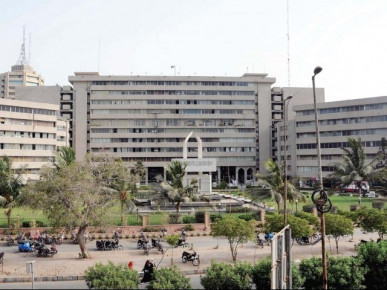
ccpo orders foolproof

CCPO orders foolproof security for Eid Milad-un-Nabi ﷺ

LAHORE: Capital City Police Officer Bilal Siddique Kamyana chaired a high-level performance review meeting of the Model Town and Cantt divisions, issuing directives for a comprehensive crackdown on social crimes, display of arms and the culture of hooliganism.
The meeting evaluated crime prevention strategies, the quality of police investigations, the overall law and order situation and public service delivery across both divisions.

Ordering the formulation of a foolproof security plan for the upcoming Eid Milad-un-Nabi(SAWW) processions and religious gatherings, the CCPO directed officers to deploy robust security measures along sensitive locations, gathering spots, and traditional procession routes.

Assigning the task of eradicating social crimes directly to SSP (Operations) Abdullah Ahmed, CCPO Lahore emphasized a stern, across-the-board crackdown against lawbreakers. He issued strict instructions to target aerial firing, brandishing of weapons and the so-called “Dalla culture” , reiterating a zero-tolerance policy against anyone disrupting public peace.

“Protecting the lives and property of citizens remains the foremost duty of the police force. Field officers must personally oversee field operations to eradicate crime,” he said, directing officials to accelerate action against proclaimed offenders and habitual criminals using all available resources.

Underscoring procedural compliance, the CCPO stated that the timely registration of First Information Reports (FIRs) is a fundamental right of every citizen and must be ensured without exception. He warned that negligence or delay in addressing public grievances would not be tolerated, directing supervisory officers to rigorously monitor cases to raise investigation standards.

DIG (Admin) Imran Kishwar, DIG (Investigation) Zeeshan Raza, DIG (Operations) Faisal Kamran, SSP (Investigation) Muhammad Naveed, SSP (Operations) Abdullah Ahmad, alongside divisional SPs, ASPs, circle officers, SHOs and Incharges investigation from the Model Town and Cantt divisions, attended the meeting.
Similar Posts

  • |

    Waris Shah Heritage Gallery opens in Jandiala Sher Khan

    LAHORE – Secretary/Chief Administrator Auqaf Punjab Dr. Ehsan Bhutta has said that the great Sufi poet, scholar, thinker and luminous icon of Punjabi language and literature, Hazrat Syed Waris Shah (RA), through his timeless masterpiece Heer Waris Shah, gifted Punjabi literature not merely with an immortal work of art but with a universal message of love, humanity, tolerance, morality, spirituality, peace, compassion and the highest human values—a message that continues to resonate with extraordinary relevance and power even today. He expressed these views while inaugurating the newly established Waris Shah Heritage and Cultural Gallery at historic Jandiala Sher Khan, describing it as a landmark initiative to preserve, celebrate and transmit the magnificent literary, cultural and intellectual legacy of Hazrat Waris Shah (RA) to future generations. Deputy Commissioner Rana Adil Tasawwur, Director Projects Rafiq Noor Wattoo, Zonal Administrator Rana Ehsan and other officers of the Auqaf Department were also present on the occasion. Dr. Bhutta said that the establishment of the gallery has given the sacred place associated with Hazrat Waris Shah (RA) and Jandiala Sher Khan a distinctive new literary and cultural identity, while creating an important platform for showcasing the rich history, culture and heritage of Sheikhupura to visitors from Pakistan and abroad. He said the gallery presents, in a modern and engaging manner, the life, personality, intellectual vision, literary contributions and enduring masterpiece Heer of Hazrat Waris Shah (RA), while important characters from Heer Waris Shah, historical and cultural scenes, rare artefacts and traditional objects have also been thoughtfully incorporated to bring the era and social fabric of Punjab vividly to life. Special documentaries on Hazrat Waris Shah (RA) and the history and culture of Sheikhupura will be screened through LCD displays, while traditional objects including the tawa, ghara, weighing scale, bow and other artefacts offer visitors an authentic glimpse into Punjab’s centuries-old social life, traditions and cultural heritage. He added that two specially produced documentaries are part of the gallery experience: the first explores the history, culture and historic heritage of Sheikhupura, while the second focuses on the life, personality, intellectual and literary services of Hazrat Waris Shah (RA) and the diverse dimensions of his masterpiece Heer. Dr. Bhutta said concerted efforts would be made to carry the thought, poetry and message of Hazrat Waris Shah (RA) to younger generations through research, education, literary activities, cultural programmes, documentaries, heritage galleries and modern communication platforms, stressing that preserving history, keeping culture alive and highlighting the legacy of Hazrat Waris Shah (RA) is, in essence, a powerful means of reconnecting young people with their language, literature, history and civilisational identity. He further said that the Tourism Development Corporation of Punjab (TDCP) would bring 50 tourists from Qaddafi Stadium Lahore to Jandiala Sher Khan through its recreational bus service, particularly enabling young people to develop a deeper connection with their great Sufi poet, Punjabi language, history and cultural identity. The Waris Shah Heritage and Cultural Gallery, he added, would emerge as a distinctive intellectual, literary and tourism destination for tourists, students, researchers and all those with an interest in literature and culture. Dr. Bhutta said highlighting historic Jandiala Sher Khan and its associated heritage as a centre of Hazrat Waris Shah’s literary and cultural legacy remains among the priorities of the Auqaf Department, and the establishment of the gallery represents a practical expression of this vision. He said Hazrat Waris Shah (RA), who was associated with Jandiala Sher Khan, District Sheikhupura, devoted his life to knowledge, literature, spiritual thought and the promotion of human values; born in 1722 and passing away in 1798, he portrayed Punjab’s civilisation, culture, rural society, human emotions, social attitudes and spiritual consciousness with such depth and comprehensiveness that Heer Waris Shah transcended the boundaries of a romantic narrative and became an invaluable literary, social, cultural and intellectual document of Punjab. Through the profound symbolism of human love leading towards divine love, and through his penetrating observations on human weaknesses, social inequalities, moral values, peace, tolerance and the significance of human relationships, Hazrat Waris Shah (RA) occupies an unparalleled position among the great classical poets of Punjabi literature, while Heer also powerfully reflects themes of respect for women, human dignity and social justice. The Secretary Auqaf said that the poetry of Hazrat Waris Shah (RA) presents love as a fundamental force of human existence and humanity as the foundation of social relationships, making his message of peace, affection, tolerance, pluralism, brotherhood and respect for human dignity exceptionally relevant in the contemporary world. He said Hazrat Waris Shah (RA) stands among the great custodians of Punjab’s Sufi, literary and intellectual tradition who used the power of thought and art to promote love, peace, tolerance, fraternity and the sanctity of human relationships, adding that preserving his historic and literary legacy is not merely a religious obligation but also a profound literary, historical, cultural and national responsibility. Dr. Bhutta said the shrine of Hazrat Waris Shah (RA) and its associated historic heritage constitute a precious part of Punjab’s identity; therefore, the Auqaf Department is paying special attention to the preservation of its sanctity, historic character and spiritual ambience, alongside improvements in beautification, repair, cleanliness, illumination, security and basic facilities for visitors. During his recent visit to the shrine, he also offered Fateha and prayers and reviewed the ongoing development and improvement works. He said historic manuscripts, records, artefacts and other cultural material associated with Hazrat Waris Shah (RA) represent priceless national, historical and literary assets, making initiatives such as heritage galleries and libraries vital for their preservation, documentation and transmission to future generations. The Government of Punjab and the Auqaf Department, he added, are taking effective measures to preserve and develop the shrines of the province’s Sufi saints and spiritual luminaries not only as places of religious devotion but also as significant centres of Punjab’s history, literature and cultural heritage. Dr. Ehsan Bhutta concluded that the timeless message of Hazrat Waris Shah (RA) continues to remind humanity that love, compassion, tolerance, harmony, peace and respect for human dignity

  • | | |

    New committee to review Mir Raza case today

    A new investigation committee will hold an important meeting today to review the Mir Raza Ali murder case. The meeting will be chaired by DIG Aamir Farooqi. The committee will conduct a fresh and impartial investigation into the case. It will examine all aspects of the incident. Investigators will identify and collect any new evidence linked to the case. The evidence will be properly preserved and examined. Physical, technical, circumstantial and forensic evidence will also be reviewed. The committee will closely examine the victim’s injuries and clothes. It will also compare the two conflicting post-mortem reports. Investigators have been directed to take all possible steps to reach a conclusion. The team will submit its findings to the relevant court within the given timeframe. Daily progress reports will also be prepared. Additional officers may be included in the investigation if required. The committee will also record statements from members of the medical board involved in the first post-mortem. Doctors and experts who conducted the first post-mortem are expected to be questioned. They may also be given a detailed questionnaire. Investigators will try to determine the evidence behind the first post-mortem findings. The report had stated that the bullet entered through the chest and exited through the back. The team will also examine how forensic evidence was documented and preserved during the initial investigation. The second post-mortem report gave a different assessment of the bullet’s direction. Investigators will therefore compare both reports in detail. They will also examine the injuries, clothing and other forensic material. Meanwhile, investigators have obtained details about Mir Raza Ali’s movements on the night of July 28. Details of his final phone calls and messages have also been collected. According to the investigation, Mir Raza spoke to two people through three phone calls that night. He reportedly spoke to a person named Ali at 2:13am and again at 2:16am. His final call was answered by his friend Abdullah. The two spoke for more than three minutes.

  • | | | |

    Tanweer Ahmed champions human-centred AI at UN you…

    Tanweer Ahmed, a technology and artificial intelligence professional, has called for a human-centred approach to AI adoption, stressing that emerging technologies should support people rather than replace them. Speaking at the Youth and AI Summit at United Nations Headquarters in New York on International Youth Day, Ahmed delivered a presentation titled “Keeping Humanity in AI Adoption.” He focused particularly on how nonprofit organisations can use artificial intelligence responsibly while protecting human judgment and accountability. Ahmed said his professional background in technology consulting, data analytics and AI had given him experience in understanding the opportunities created by emerging technologies. However, he said his passion for the nonprofit sector was rooted in his earlier experiences working with communities and young people. He recalled working on a community farm and participating in cultural education activities in Cuba during 2007 and 2008. In 2010, he travelled to South Africa, where he taught mathematics to fifth-grade students. Ahmed said these experiences shaped his long-term desire to contribute to communities and help children around the world. He described his appearance at the UN event on International Youth Day as an honour and an opportunity to reconnect with those early aspirations. During his presentation, Ahmed discussed the rapid growth of artificial intelligence and its increasing use by individuals, businesses and nonprofit organisations. He explained that AI adoption should not simply mean occasionally using chatbots or other AI applications. Instead, organisations should strategically integrate AI into their daily workflows, operations and decision-making processes. Ahmed highlighted several areas where nonprofits can use AI, including internal productivity, communication, fundraising, grant writing and administrative tasks. He presented the Ugandan Water Project as an example of how AI can support a nonprofit organisation. The project works to improve access to clean water in Uganda and reduce the impact of waterborne diseases. According to Ahmed, the organisation uses AI to assist with grant applications and donor outreach. Previous grant applications and organisational information can be analysed to help prepare targeted applications for new funding opportunities. Ahmed stressed that AI-generated material is not simply submitted without human involvement. Staff review, edit and verify the content before applications are sent to funders. He said AI had also helped the organisation identify new grant opportunities and improve internal processes, including contract drafting and project-management workflows. Ahmed emphasised that the purpose of such technology should be to make employees more efficient rather than eliminate their jobs. He also discussed AI-powered voice-to-text technology used in social work and community services. Such systems can allow workers to record information while they are in the field and transfer it into required software, reducing the amount of time spent on administrative duties. Ahmed said reducing paperwork could give nonprofit workers more time to interact directly with the people and communities they serve. However, he warned that AI adoption also presents challenges. These include financial costs, limited access to technology, concerns over job losses, inaccurate information, privacy issues, bias and difficulties in understanding cultural and linguistic nuances. He also highlighted concerns about the environmental impact of the infrastructure required to operate increasingly powerful AI systems. Ahmed urged organisations to develop responsible AI policies covering privacy, security, fairness, transparency, human oversight and accountability. He encouraged nonprofit organisations to learn from one another and share successful experiences with AI, saying organisations working for social causes can benefit from cooperation rather than competing over technological approaches. A key message of his presentation was that humans must remain responsible for AI-assisted decisions. Ahmed warned organisations against blindly accepting AI-generated content and urged them to review outputs carefully, correct errors and ensure that technology does not replace human judgment. Who is Tanweer Ahmed, the Pakistani-American philanthropist? Pakistani-American businessman and philanthropist Tanweer Ahmed has attracted renewed attention in Pakistan following his reported $9 million contribution to the National University of Sciences and Technology (NUST) and his recent appearance alongside senior Pakistani officials in the United States. Ahmed, who is based in Houston, has built a diverse business portfolio in the United States while also becoming involved in philanthropy, education, healthcare and cricket. His recent contribution to NUST is aimed at supporting talented students from financially disadvantaged backgrounds. The endowment is expected to provide scholarships to deserving students each year, with a particular focus on fields such as artificial intelligence, information technology, science and other emerging technologies. Ahmed has said his objective is to ensure that talented Pakistani students are not deprived of quality education because of financial difficulties. He has also expressed plans to expand similar scholarship initiatives to other educational institutions. The businessman has also supported infrastructure and technology-related initiatives at NUST, including the development of facilities intended to strengthen research and innovation. His philanthropic activities extend beyond education. Ahmed has been associated with healthcare initiatives in Pakistan and has supported efforts aimed at providing assistance to communities affected by natural disasters. He also drew attention for his role in relief efforts following the devastating floods that struck Pakistan in 2022. He has been credited with helping mobilise substantial humanitarian assistance for flood-affected communities. Ahmed’s business journey began after he moved to the United States as a student. According to accounts of his career, he initially worked in restaurants and at gas stations while trying to establish himself. He later moved through several positions in the American fast-food industry. His career accelerated after he joined Jack in the Box as a shift manager. His performance and business approach helped him move into senior management positions, eventually leading to opportunities in the Taco Bell franchise system. Ahmed later expanded into franchising and developed a large portfolio of food outlets across several US states. His business interests have also extended into insurance, energy, transportation and other sectors. Over the years, he has developed a reputation as an entrepreneur who combines commercial ventures with philanthropic activities. Ahmed is also closely associated with the development of cricket in the United States. A passionate cricket enthusiast, he established the Prairie View Cricket Complex near Houston after acquiring a large tract of

  • Senate seeks PM intervention over Khairpur Dates Research Centre

    Islamabad: A major agriculture research project aimed at improving Pakistan’s date production has faced a setback after the proposed Dates Research Centre in Khairpur was excluded from the Public Sector Development Programme 2026 and 2027, prompting the National Assembly Standing Committee on National Food Security and Research to demand immediate reconsideration of the decision. The committee expressed concern that a project designed to improve date farming, develop disease-resistant varieties, increase exports and support farmers was left out due to financial limitations. The matter was discussed during the 29th meeting of the National Assembly Standing Committee on National Food Security and Research, chaired by Syed Hussain Tariq, MNA, at Parliament House Islamabad. Officials informed the committee that the joint project of the Pakistan Agricultural Research Council and Shah Abdul Latif University Khairpur for establishing the Dates Research Centre could not be included in the PSDP 2026 and 2027 because of limited financial resources. The Ministry of Planning, Development and Special Initiatives informed the committee that the Ministry of National Food Security and Research had prioritized only three new development schemes for inclusion in the national development programme, leaving several important projects outside the plan. The committee strongly disagreed with the decision and highlighted the importance of the dates sector for Pakistan’s agriculture and economy. Members noted that Pakistan is among the leading date producers, and a dedicated research centre could help farmers increase production, fight crop diseases, improve quality, develop new varieties and boost the country’s share in international markets. The committee directed the Ministry of National Food Security and Research to formally approach the Ministry of Planning and request a review of the decision. The committee also decided to seek a meeting with the Prime Minister to discuss establishing the Dates Research Centre through cooperation between the Pakistan Agricultural Research Council and Shah Abdul Latif University Khairpur. During the proposed meeting with the Prime Minister, the committee also plans to discuss other major agriculture challenges including wheat imports, setting a fair minimum support price for wheat, providing DAP fertilizer subsidies similar to regional countries and investigating reasons behind wheat shortages despite earlier reports of surplus stocks. The committee said agricultural development requires long term planning and research facilities to support farmers and improve food security. The meeting also reviewed concerns regarding artificial sweeteners and flavored drinks, especially their possible health effects on children, pregnant women and breastfeeding mothers. Officials informed the committee that earlier recommendations were made after findings from the National Institutes of Health highlighted possible health risks linked with excessive consumption of such products. The committee was informed that frequent consumption of artificial sweeteners and flavoured drinks may contribute to health problems, including an increased risk of diabetes and other serious diseases. The committee expressed dissatisfaction over delays in implementing earlier recommendations and directed the Pakistan Standards and Quality Control Authority to urgently review existing regulations. PSQCA was directed to hold a meeting in Islamabad involving committee members, health officials, NIH representatives, mango growers and other stakeholders. The committee instructed that revised standards should include clear product labels, prevention of misleading claims, visible health warnings, proper expiry date information, suitable fruit pulp requirements and regulations for plastic bottle usage. The National Institutes of Health was also directed to provide scientific evidence regarding health impacts and international guidelines to help improve the regulatory framework.

  • | |

    Khawaja Asif says Mir Raza case exposes compromise…

    Defence Minister Khawaja Asif has criticised the Sindh government over the investigation into the Mir Raza case. He said the developments emerging from the case suggest that the entire system had been compromised. In a social media post, Asif said continued attention was needed to ensure that the matter was investigated properly. He warned that any previous attempts to settle or cover up the issue should not be repeated. The defence minister also called for those who allegedly tried to conceal facts in the case to be exposed. His remarks came as questions continued to be raised over the handling of the Mir Raza case. The case has attracted attention because of conflicting information and concerns about the progress of the investigation. Meanwhile, the Sindh government has decided to establish a judicial commission to investigate the Mir Raza murder case. Sindh Home Minister Zia Lanjar said the provincial government wanted justice for Mir Raza’s family. He said a new committee had also been formed to examine the matter. Lanjar said the authorities would allow the judicial commission or the court to determine how conflicting reports should be dealt with. The government’s decision to form a judicial commission is expected to provide another forum for examining the circumstances surrounding the case. It may also help clarify conflicting accounts and determine responsibility based on the available evidence.

  • |

    High taxes and energy costs push businesses out of Pakistan

    Islamabad: A Senate subcommittee has raised serious concerns over Pakistan’s tax system after being told that companies are reducing operations or leaving the country because of high electricity costs, heavy taxes and difficult business rules. The committee also warned the Finance Secretary that continued absence from its meetings could lead to the matter being sent to the Senate Privileges Committee. The Sub-Committee of the Senate Standing Committee on Finance and Revenue, chaired by Senator Muhammad Talha Mahmood, reviewed Federal Board of Revenue taxation policies and their impact on businesses, investment and economic activity. Senator Talha Mahmood said the main aim was to find ways to increase economic activity and create a better environment for businesses. He said many companies were either reducing their operations or leaving Pakistan because energy costs were too high and the tax system was pressuring businesses too much. The committee also expressed serious concern over the absence of the Finance Secretary. Senator Talha Mahmood directed the Finance Secretary to attend the next meeting and warned that another absence could result in the matter being referred to the Senate Privileges Committee. Business representatives also strongly criticised the current taxation system. Mian Zahid Hussain of the Federation of Pakistan Chambers of Commerce and Industry said national policy appeared to focus more on collecting revenue than on increasing economic growth. He called for a reduction in advance taxes and withholding taxes. He also asked the government to review customs duties, simplify tax audits and reconsider factory surveillance systems. According to him, complicated tax procedures and compliance requirements were increasing the cost of doing business and discouraging industrial growth. Another business representative, Mr Jadoon, Vice President of a Chamber of Commerce, said Pakistan had competitive labour costs but businesses were still struggling because of high electricity tariffs and regulatory pressure. He said the government should bring more businesses and sectors into the tax system instead of repeatedly increasing pressure on people and companies that were already paying taxes. FBR officials defended recent government measures, telling the committee that taxation policies were influenced by Pakistan’s import requirements and financial limitations. Officials said the government had introduced tax relief for salaried people, reduced super tax and removed super tax for exporters. The committee was informed that the government accepted a revenue impact of around Rs 359 billion while trying to provide relief to businesses and increase economic activity. FBR officials also said exporters facilitation committees had been established in Karachi, Lahore, Sialkot, Faisalabad, Islamabad and Multan to deal with tax related complaints and problems. Senator Talha Mahmood questioned whether current government policies were actually successful in attracting foreign investment. He sought details about investor protection and the rules for transferring shares. The committee directed the relevant authorities to provide a complete briefing on the existing system. The committee also discussed reforms FBR is introducing to simplify tax procedures. FBR officials said work was underway on a mobile application for tax reimbursements. They also said special facilitation days were being arranged in major commercial centres to help taxpayers deal with their problems. The ongoing goods transport strike also came under serious discussion. Senator Talha Mahmood said the strike was damaging trade and business activity and criticised delays in resolving the issue. He warned that perishable goods could be destroyed while businesses were also facing heavy financial losses because containers were being held for longer periods. The committee said the government should immediately open talks with transporters and other affected groups. Members warned that continued disruption could damage Pakistan’s trade and also hurt the country’s international business reputation. The sub committee strongly recommended immediate talks with transporters to restore normal business operations. Senator Talha Mahmood also called for faster action when taxpayers make genuine mistakes in their tax returns. He recommended that if a taxpayer corrects an honest mistake, the blocked account should be restored within 24 to 48 hours. He also called for a better biometric verification system so that taxpayers could complete required procedures more easily. The committee further discussed market closure timings. Senator Talha Mahmood said closing markets early was hurting business activity and reducing traders opportunities to earn income. The convener said Pakistan could achieve sustainable economic growth only through business friendly policies and transparent governance. He stressed that competent and honest officials should be appointed to important positions so they could create policies that support investment, industry and entrepreneurship.

Leave a Reply

Your email address will not be published. Required fields are marked *