thailand confronts daily

Thailand Confronts 40 Daily Road Deaths as Drunk Driving Crisis Persists

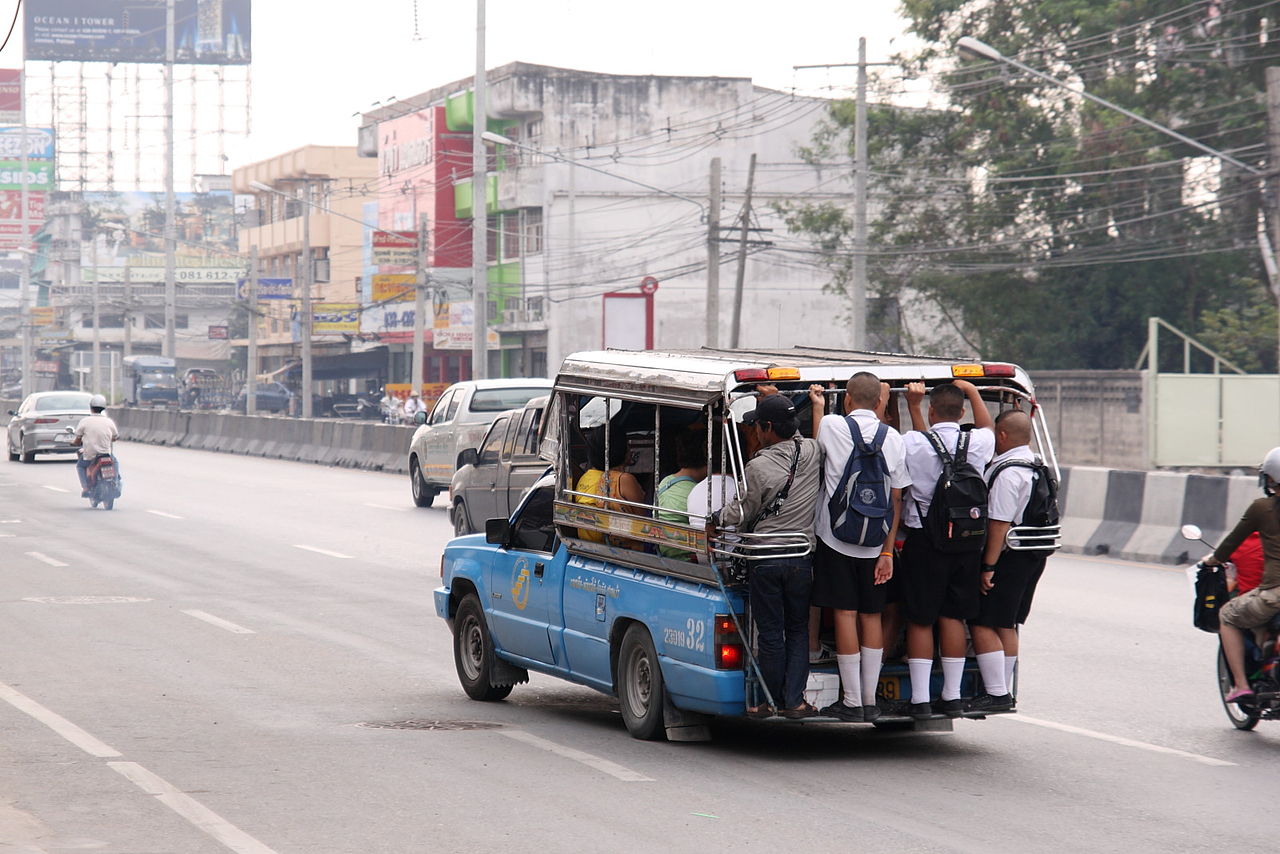
BANGKOK – Thailand is facing a severe road safety crisis, with civil society groups highlighting a daily toll of approximately 40 fatalities and annual economic losses estimated at 600 billion baht. In a push for urgent reform, these organizations are advocating for stringent measures against drunk driving, including the confiscation of vehicles during the upcoming New Year 2026 holiday period.

Young Turkish Man Arrested for Drunk Driving in Phuket

As the country approaches the traditionally high-risk “seven dangerous days” of New Year celebrations, networks including the Foundation Against Drunk Driving have raised alarms over the anticipated surge in road deaths. On December 22, 2025, representatives presented a formal proposal to Attorney General Ittiporn Kaewthip, calling for the immediate confiscation of vehicles from intoxicated drivers, harsher penalties for alcohol-related offenses, stricter enforcement against selling alcohol to minors, and legislative amendments to increase consequences for dangerous driving.

Experts point to drunk driving as the leading cause of the nation’s road trauma. Mr. Surasit Silapngam, manager of the Foundation Against Drunk Driving, emphasized the staggering economic impact, citing annual losses between 500 and 600 billion baht due to accidents. He also expressed concern that relaxed regulations permitting late-night alcohol sales are exacerbating road risks, creating a challenge for safety initiatives.

Indian Motorbike Rider Arrested for Drunk Driving in Phuket

Looking ahead, civil society groups are prepared to support legal actions that treat drunk driving as a serious threat to public safety. They are calling for extensive public awareness campaigns on the consequences of impaired driving and for amendments to the Traffic Act to impose more severe penalties, including mandatory imprisonment without probation for offenders who cause fatalities. The groups aim to foster collaboration between government and private sectors to radically reduce alcohol-related traffic incidents.

-Thailand News (TN)

Similar Posts

  • | |

    Kamal: Karachi deserves Rs800bn NFC share

    Federal Health Minister Mustafa Kamal has said that he entered politics as an IT minister 23 years ago and became Karachi’s mayor 21 years ago, claiming that he played a role in ending the politics of violence in the city. Speaking in Karachi, Kamal said he had spoken out against a system in which people could be killed simply for expressing disagreement. He said Karachi’s political and administrative problems could not be resolved without addressing the structural issues facing the city. Kamal claimed that Karachi had not been properly counted in the population census. He said the city’s share under the National Finance Commission (NFC) award would amount to around Rs800 billion this year. He argued that the existing system was damaging not only Karachi but the entire country. According to him, the city continues to face serious problems despite massive spending and a lack of effective administrative arrangements. The federal minister said drinking water was not reaching many parts of Karachi, while the city’s sewage system was also unable to properly dispose of wastewater. He said there was no effective mechanism to transfer sufficient powers and resources to the grassroots level. Kamal further claimed that despite around Rs22,000 billion being spent in the city, Karachi had reached the third position on a global list of cities with poor living conditions. He stressed that the city needed stronger local governance, adequate resources and greater administrative powers at the grassroots level to address its longstanding problems. Commenting on the political debate over administrative units, Kamal said that if the old Muttahida Qaumi Movement (MQM) were still in its previous form, the responsibility for incidents such as the Gul Plaza tragedy would have been placed on the party. He said he had advocated the creation of an administrative unit for better governance and claimed that the proposal was now receiving support from different quarters. Kamal added that under the old political environment, such a proposal would have been dismissed as a foreign conspiracy. He maintained that Karachi’s governance problems required practical administrative reforms rather than political accusations.

  • | |

    Saudi Arabia names new envoy to Pakistan

    Saudi Arabia has appointed Dr Rajeh bin Tami Al-Baqami as its new ambassador to Pakistan, replacing Nawaf bin Said Al-Malki. The appointment comes as Pakistan and Saudi Arabia continue to strengthen their longstanding partnership in defence, investment, trade and regional security. The Saudi Ministry of Foreign Affairs said Al-Baqami was among eight newly appointed ambassadors who recently took the oath of office. The ministry shared photographs of the newly appointed envoys and said they had been sworn in on behalf of the Saudi leadership. Al-Baqami brings both military and diplomatic experience to his new position. He previously served as a major general in the Saudi armed forces before joining the Foreign Ministry at ambassadorial rank. He holds a doctorate in Human Resource Management from Brunel University London. His appointment comes at a time when Islamabad and Riyadh are expanding their strategic cooperation. The two countries recently formalised their defence partnership through a Strategic Mutual Defence Agreement. Under the agreement, aggression against either country is considered an attack on both, further strengthening their long-standing military relationship. Economic cooperation has also become an important part of bilateral ties. Saudi Arabia has pledged major investments in Pakistan under Crown Prince Mohammed bin Salman’s Vision 2030 programme. Riyadh has also provided financial assistance to Pakistan during periods of economic and balance-of-payments pressure. Saudi Arabia remains an important source of oil supplies for Pakistan, including arrangements involving deferred payments. The kingdom has also supported Pakistan’s foreign exchange position through deposits with the State Bank of Pakistan. Relations between the two countries have gained further momentum amid changing regional security dynamics. Islamabad and Riyadh have maintained close consultations on regional developments, including tensions involving Iran. Pakistan has also provided military support to Saudi Arabia during periods of heightened security concerns in the region. Al-Baqami succeeds Al-Malki, who served as Saudi ambassador during a period of expanding political, defence and economic cooperation between the two countries. His arrival is expected to provide further momentum to bilateral engagement and strengthen coordination between Islamabad and Riyadh.

  • Murder Not Ruled Out in British Tourist Joshua Kershaw’s Death in Bangkok

    BANGKOK — Police have not ruled out murder in the death of British tourist Joshua Kershaw, a 21-year-old landscaper from Grimsby who was found dead at a hotel in Bangkok’s Sukhumvit 7/1 alley on January 13, just hours after arriving in Thailand for what was meant to be a week-long holiday. Body of Missing British […]

  • | |

    AJK gears up for second phase of elections

    Preparations are in full swing for the second phase of the Azad Jammu and Kashmir (AJK) Legislative Assembly elections, with polling scheduled for August 2 across Muzaffarabad Division and 12 refugee seats. The second phase will cover the three districts of Muzaffarabad Division—Muzaffarabad, Neelum and Jhelum Valley—as well as 12 constituencies reserved for Kashmiri refugees residing in Pakistan. According to election authorities, a total of 890,621 registered voters are eligible to cast their ballots in the nine constituencies of Muzaffarabad Division. Of these, 427,955 are male voters, while 381,666 are female voters. To facilitate polling, 1,483 polling stations have been established across the division. District Muzaffarabad, which has five constituencies, will have 1,205 polling stations. District Neelum, comprising two constituencies, will have 278 polling stations, while 328 polling stations have been set up in the two constituencies of Jhelum Valley. A total of 208 candidates are contesting the nine seats in Muzaffarabad Division, making the second phase a closely watched electoral contest. Meanwhile, Kashmiri refugees living in Pakistan will also cast their votes for 12 refugee constituencies, evenly divided between six Jammu seats and six Valley seats. The Jammu refugee constituencies include LA-34 Jammu-I through LA-39 Jammu-VI, while the Valley refugee constituencies comprise LA-40 Valley-I through LA-45 Valley-VI. The Azad Jammu and Kashmir Election Commission will announce the results of all 12 refugee constituencies after the completion of polling. Authorities have said all necessary arrangements have been finalised to ensure a peaceful, transparent and orderly voting process during the second phase of the elections.

  • | | |

    Karachi Court orders Mir Ali Raza’s exhumation

    KARACHI: A judicial magistrate’s court in Karachi has approved a plea seeking the exhumation of businessman Mir Ali Raza’s body, directing the Sindh Health Secretary to immediately constitute a medical board to oversee the process. The Judicial Magistrate (East) announced the decision on Thursday after reserving its verdict following arguments from both sides. The court instructed the relevant authorities to complete the exhumation as soon as possible to facilitate a fresh medical examination. During the hearing, counsel for the petitioner argued that the police had no legal grounds to object to the exhumation, maintaining that the procedure would be carried out under the supervision of the Police Surgeon and the Medical Legal Officer (MLO), as required under the law. The lawyer further informed the court that the Police Surgeon had identified several deficiencies in the initial post-mortem report. According to the submissions, no X-rays were conducted, the exact cause of death was not conclusively established, and the report was allegedly prepared on assumptions rather than comprehensive medical findings. The court questioned how such an order could be passed without first issuing notice to the investigating officer. In response, the government prosecutor stated that the prosecution had no objection to the exhumation, describing the matter as one involving the search for the truth in a human life. The petitioner’s counsel argued that notifying the investigating officer at this stage could unnecessarily delay the proceedings and affect the timely collection of forensic evidence. After noting the prosecution’s no-objection stance, the court accepted the family’s application and directed the Health Secretary to form a medical board without delay. The board will supervise the exhumation and carry out the necessary medical examination to help determine the cause of death more accurately. The case has drawn public attention following questions raised by the deceased’s family over the circumstances surrounding Mir Ali Raza’s death and the quality of the initial forensic investigation. The court’s decision is expected to pave the way for an independent medical review, with the findings likely to play a significant role in the ongoing investigation. Authorities are now expected to begin the legal and administrative process required to carry out the exhumation under official supervision.

  • | |

    Sindh faces prolonged nursing shortage, says healt…

    Sindh Health Minister Dr Azra Fazal Pechuho has said the province has been facing a shortage of nurses for a long time, while many other countries are also struggling to meet the growing demand for nursing professionals. Speaking at a press briefing on the overall health situation in Sindh, Pechuho said the provincial government was taking steps to increase the number of nurses and improve nursing education and training. She said work on health policies and legislation was carried out last year, while several initiatives were continuing this year to strengthen different areas of the healthcare system. According to the minister, discussions are also under way with the Asian Development Bank to support efforts aimed at increasing the nursing workforce. Pechuho said a unified admission policy was being introduced for nursing colleges across Sindh. The policy is intended to improve the standard of nursing education and training and ensure greater consistency among institutions. She said around 5,000 nurses currently complete their education and enter the profession every year. The government aims to increase the number of nursing graduates to around 46,000 in the coming years. The health minister said many nurses come from financially disadvantaged families, which is one of the reasons a significant number seek employment opportunities abroad. She said two nursing centres were also being established under a pilot project to expand training and educational opportunities for aspiring nurses. Pechuho further announced that recruitment had been approved for staff at Jinnah Hospital and the National Institute of Cardiovascular Diseases (NICVD). She also highlighted several developments in Sindh’s healthcare infrastructure. According to the minister, the Sindh Institute of Urology and Transplantation (SIUT) has been expanded to provide additional healthcare services. A new block has also been established at NICVD, while vascular surgery services have started at the Trauma Centre. The minister said the government was continuing efforts to improve healthcare facilities and expand specialised medical services across the province. Pechuho also said that the rate of maternal deaths had increased in connection with surgical deliveries, highlighting the need for greater attention to maternal healthcare and safer childbirth practices.

Leave a Reply

Your email address will not be published. Required fields are marked *