
| | | |

Trump furious over US weapons shortages as Iran te…

WASHINGTON: US President Donald Trump has grown increasingly angry over reports that the country’s stockpile of key munitions has been significantly depleted during the conflict with Iran, fearing the disclosures could undermine Washington’s leverage as he pushes Tehran toward a deal.

Senior US officials told CNN that the issue became a major point of discussion during a Cabinet meeting at Camp David last week. Trump was reportedly frustrated not only by the shortages but by the publication of details about US weapons inventories at a sensitive moment in the conflict.

Several officials said Trump had known for months that certain munitions were in limited supply and was not surprised by the underlying situation. His concern, they said, was that public reporting could weaken the image of US military strength while he threatens further action against Iran.

Trump sought to push back publicly, saying the United States has “massive amounts” of munitions and that weapons production is expanding. He also threatened severe punishment for officials responsible for leaking classified or sensitive information.

However, Trump acknowledged in remarks at the White House that some advanced weapons are in tighter supply, while insisting there is a virtually unlimited supply of less sophisticated weaponry.

White House officials said Trump has not blamed Defence Secretary Pete Hegseth for the situation and continues to express confidence in his leadership. Instead, the president has directed the Justice Department to investigate what he described as “treasonous” leaks from within his administration.

The concerns have intensified after reports indicated that US forces have used a large share of their air-defence interceptors since the conflict began. CNN reported that the military had consumed nearly four-fifths of its pre-war THAAD missile inventory and about half of its Patriot interceptors.

The reported shortages have also alarmed US partners in the Gulf, many of whom rely heavily on American air-defence systems. Regional officials have warned that reduced US stocks could make it harder to defend against potential Iranian missile and drone attacks if Washington launches further strikes.

Iran has reportedly warned Gulf countries that renewed US attacks could trigger retaliation against energy infrastructure and desalination facilities across the region.

Trump has spoken with leaders in Qatar and Saudi Arabia as his administration weighs its next steps. Senior military advisers have repeatedly raised concerns about dwindling stocks during discussions over potential escalation.

The issue predates the current crisis. US military leaders had warned before the war that a prolonged campaign could strain American weapons supplies, particularly after years of support for Israel and Ukraine.

Trump has blamed the previous administration for contributing to depleted stockpiles through weapons deliveries to Ukraine, while also acknowledging that the United States needs greater reserves.

The administration has moved to expand production, including invoking the Defense Production Act and meeting with major defence contractors such as Lockheed Martin. However, officials acknowledge that expanding weapons manufacturing capacity could take years, meaning increased production may not immediately solve the shortage.
Similar Posts

  • | |

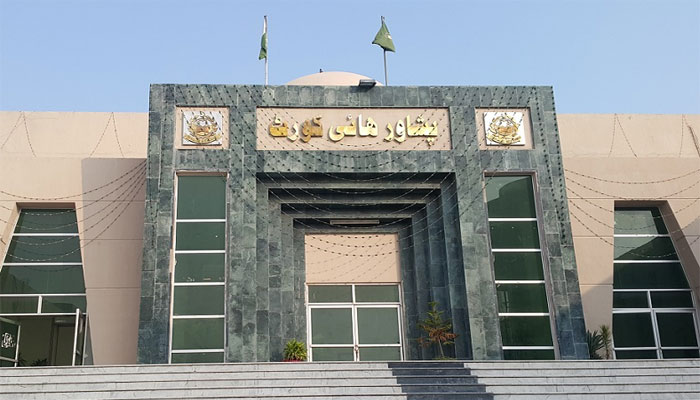
    Peshawar High Court orders decision on Afghan busi…

      The Peshawar High Court has issued a written judgment regarding a petition filed against the non-extension of visas for an Afghan businessman and his family members. The court has directed the relevant authorities to decide the applicant’s visa extension case within 15 days in accordance with the law. According to the written decision issued by the High Court, the petitioner is a registered taxpayer with the Federal Board of Revenue (FBR). The applicant possesses a National Tax Number (NTN) and is also a member of the Sarhad Chamber of Commerce and Industry. The court observed that the applicant has established business ties and fulfills the necessary legal requirements as a registered member of the business community. The judgment stated that the Directorate General of Immigration and Passports, Islamabad, failed to make a timely decision on the visa extension applications submitted by the petitioner. Due to the delay in processing the applications, the applicant and his family have faced difficulties and uncertainty regarding their legal status in Pakistan. The court emphasized that government authorities are required to make decisions within a reasonable period and in accordance with the provisions of the law. The judgment noted that the applicants had submitted proper applications for visa extensions after the expiry of their previous visa periods. Therefore, their pending applications should have been considered and decided promptly by the relevant department. The Peshawar High Court further directed the concerned authorities to review the pending visa extension requests and issue a detailed decision within 15 days. The court made it clear that the decision must be based on legal principles and should address all relevant aspects of the applicants’ cases. The court’s order highlights the importance of timely administrative decisions, particularly in matters involving foreign nationals who are legally residing and conducting business activities in Pakistan. Delays in such cases can create serious challenges for individuals, including difficulties related to travel, business operations, documentation, and compliance with immigration requirements. The judgment also reflects the court’s view that individuals who meet legal obligations, such as tax registration and business registration, deserve a fair and timely review of their applications. The authorities have been instructed to avoid unnecessary delays and ensure that administrative procedures are completed within the timeframe prescribed by law. The case was brought before the High Court after the applicant’s visa extension requests remained unresolved despite the submission of formal applications. The petitioner argued that the delay by immigration authorities had caused hardship for him and his family. After examining the facts of the case, the court issued directions to ensure that the pending matters are resolved without further delay. The written decision of the Peshawar High Court serves as a reminder that government departments must act efficiently and transparently when dealing with legal applications. The court’s order does not grant an automatic visa extension but requires the authorities to make a proper and lawful decision on the pending applications within the specified 15-day period.

  • | |

    Liberty Chowk celebrations descend into chaos

    Independence Day celebrations at Liberty Chowk in Lahore took an unexpected turn after a large crowd became involved in disorderly behaviour following an organised event on Thursday night. The Punjab government had arranged a special programme at Liberty Chowk to mark Pakistan’s Independence Day. The venue was decorated with lights and other patriotic arrangements, while professional artists were invited to entertain the public. The official celebrations were held as planned, with people gathering at the iconic Lahore location to mark August 14. However, scenes changed after the formal programme ended. Videos circulating on social media appeared to show a large crowd behaving aggressively at the venue. The footage showed people climbing and swinging on structures at the site. Some individuals were also seen throwing bottles and getting involved in physical confrontations. The gathering appeared to consist largely of young men, while women and families were not prominent in the crowd shown in the videos. The scenes quickly attracted criticism online. Many social media users expressed disappointment over the behaviour and questioned whether such actions were appropriate during a national celebration. One user criticised the crowd for behaving like a mob rather than a united nation. Another argued that the country needed a stronger sense of civic responsibility. Others said the incident was unfortunate and pointed to the need for citizens to take responsibility instead of blaming authorities and institutions for every problem. The videos sparked a wider discussion about how public celebrations should be conducted. Independence Day events are traditionally associated with patriotism, national unity and respect for public spaces. The incident at Liberty Chowk highlighted the contrast between the carefully organised official celebrations and the disorder that reportedly followed among sections of the crowd.

  • | |

    Iran says Oman deal nears completion but insists U…

    Iran said on Sunday that a deal with Oman establishing new shipping lanes through the Strait of Hormuz has entered its final stages, though Tehran maintained the critical waterway will remain closed until Washington satisfies a broader set of conditions tied to the ongoing standoff between the two countries. A US official told Reuters on Friday that an agreement between Iran and Oman appeared close and could soon lead to the reopening of the strait, a passage that carried roughly a fifth of global oil and liquefied natural gas shipments before Iran shut it down in response to American and Israeli military strikes earlier this year. Iranian Foreign Minister Abbas Araqchi confirmed on Sunday that negotiations over the strait, which sits between Iran and Oman, had reached their final stages. However, he repeated comments made a day earlier stressing that the waterway would not reopen unless additional conditions set by Tehran were met first. Iran’s Mehr news agency quoted Araqchi as saying the emerging agreement would establish the new shipping lanes to be used once the United States fulfils those conditions and the strait formally reopens. Araqchi said Iran and the United States are not currently engaged in direct talks and that Tehran has no plans to begin them as long as Washington continues to breach an interim agreement the two countries signed in June. He added that messages between the two sides are being exchanged through intermediaries rather than direct contact. Iran demands compensation and sanctions relief The United States launched air strikes against Iran in late February, saying the campaign aimed to prevent the Islamic Republic from acquiring nuclear weapons or using missiles and regional proxy forces to threaten the wider Middle East. Washington and Tehran agreed to a ceasefire in June, but the United States reimposed a blockade on Iranian shipping in the Gulf in July, a move Iran characterised as a violation of a truce that had already shown signs of collapse. A US official, speaking to Reuters on condition of anonymity, said the blockade on Iranian ports would lift once a deal restoring unimpeded commercial shipping is formally announced. The official added that any American actions would remain directly tied to Iran fulfilling its own commitments under the emerging agreement, pointing to a carefully sequenced approach that both sides appear to be navigating cautiously. The arrangement under discussion appeared, according to sources who previously spoke to Reuters, to grant Tehran a degree of control over vessels entering the Gulf through the strait, an arrangement that shipping industry sources have said would be difficult to implement in practice. The precise current status of the agreement remained unclear on Sunday, and Iran’s latest statements suggested several additional factors could still complicate its finalisation. Araqchi said the strait’s reopening would depend in part on the United States providing compensation to Iran for what Tehran describes as widespread attacks on its territory and interests. Mohammad Baqer Zolqadr, secretary of Iran’s top national security body, outlined a broader list of demands, including an end to US threats against Iran, a halt to what Tehran calls aggression against its allies in Lebanon, the Palestinian territories, Yemen and Iraq, the lifting of the shipping blockade and broader sanctions, and the release of frozen Iranian financial assets. Supreme Leader’s condition remains unclear Ultimate decision making authority in Iran rests with Supreme Leader Mojtaba Khamenei, who has not appeared in public since an air strike killed his father and predecessor on February 28, the first day of the joint US and Israeli air campaign against Iran. State media reported on Sunday that Iranian President Masoud Pezeshkian met with Khamenei in late July, and a paramilitary leader promised that footage of the supreme leader would soon be released publicly. Khamenei was reportedly injured in the same strike that killed his father, according to earlier reporting. Separately, the United Arab Emirates said on Saturday that Iran had attacked a vessel affiliated with its state oil company. Iran did not immediately respond to the allegation. The country’s powerful Revolutionary Guards have attacked commercial vessels in the past, arguing that ships transiting the strait without coordinating their passage with Iranian authorities are not protected from such action. Houthi attacks widen regional shipping crisis Iran’s strikes on shipping in the Strait of Hormuz have coincided with intensified attacks from its Yemen based allies, the Houthis, who have targeted vessels at a separate chokepoint located between the Red Sea and the Gulf of Aden on the opposite side of the Arabian Peninsula. The Houthis declared a naval blockade against Saudi Arabia in the Red Sea last month, framing the move as retaliation for what they described as a Saudi imposed siege in Yemen, an accusation the Saudi government has firmly denied. Riyadh continues to back Yemen’s internationally recognised government in the country’s ongoing conflict. The group claimed responsibility for an attack on Saudi Aramco’s Jazan refinery on Sunday, coming just two days after the kingdom signed a defence pact with fellow Sunni Muslim majority nations Turkey and Pakistan amid growing concern over regional instability stemming from the US and Israeli military campaign against Shiite led Iran. Saudi Arabia’s energy ministry confirmed that a fire broke out at the refinery following the attack but was later extinguished without causing any injuries, and that authorities were continuing to manage the aftermath of the incident. The ministry did not specify a cause for the blaze. Houthi military spokesperson Yahya Saree said on social media platform X that the group used a drone to strike the facility. The Houthis have targeted Aramco sites in Jazan before, a refinery that processes approximately 400,000 barrels of crude oil daily in southwestern Saudi Arabia. It remains unclear whether or to what extent Pakistan or Turkey would participate in any Saudi response to the latest attack. Turkish Foreign Minister Hakan Fidan said the newly formed alliance between the three countries was not directed against Iran or any other nation, describing it instead as a general commitment to

  • 145 Killed in First Three Days of New Year Holidays in Thailand

    BANGKOK, Jan 2 – The death toll from road accidents during the so-called “seven dangerous days” of the New Year holiday period has climbed sharply, with 145 fatalities and 769 injuries reported in the first three days alone. Authorities announced the grim statistics on Friday, revealing Bangkok as the deadliest province and Phuket as the […]

  • |

    William ‘will never forgive’ Harry, say friends of the prince

    Prince William remains entirely focused on his wife Kate Middleton and their children, according to friends of the Prince of Wales. They claim Harry has effectively become a closed chapter for him. Royal expert Phil Dampier told the Daily Mail that William and Harry managed to set aside their differences five years ago for the unveiling of their mother Princess Diana’s statue. However, he said the relationship between the brothers has since deteriorated significantly further. Dampier suggested that even honouring Diana’s memory might not be enough to bring the two together again. He pointed out that next year marks the 30th anniversary of Diana’s death, which would seem like a natural moment for the brothers to attempt reconciliation. Despite that symbolic opportunity, Dampier said he does not believe William is genuinely interested in pursuing it. According to him, William’s heart simply isn’t in making that effort right now. Citing people close to the Prince of Wales, Dampier said Harry has essentially become part of William’s past. He explained that William’s attention is now firmly focused on his wife Catherine and their three children, George, Charlotte and Louis. The royal expert went further, suggesting William may never fully forgive his brother. According to Dampier, this isn’t only about Harry stepping away from royal duties, but also about the personal details he later shared publicly. He specifically referenced Harry’s memoir “Spare,” his Netflix docuseries, and his joint interview with Oprah Winfrey. Dampier said these projects left a lasting impact on how William views his brother. He added that comments made during that period led to Catherine being unfairly labelled a racist by some critics. According to Dampier, that particular fallout is something William is unlikely to ever forget. The remarks add to a growing body of commentary suggesting the rift between the two brothers has hardened rather than eased over time. With next year’s anniversary approaching, royal watchers will likely continue speculating over whether any reconciliation attempt materialises, even as insiders suggest William currently has little appetite for one.

  • | |

    Senate, NA leaders vow closer coordination for Par…

    ISLAMABAD: The leadership of Pakistan’s Senate and National Assembly has agreed to strengthen cooperation between the two houses of Parliament, with the aim of promoting democratic stability, improving legislation and ensuring a more effective parliamentary system. Senate Chairman Syed Yousaf Raza Gilani met National Assembly Speaker Sardar Ayaz Sadiq and Deputy Speaker Syed Ghulam Mustafa Shah at his residence in Islamabad on Saturday. The meeting focused on parliamentary affairs, matters of national importance and coordination between the two legislative houses. According to a statement issued by the Senate Secretariat, the participants stressed that closer institutional coordination was essential for strengthening parliamentary democracy and ensuring the smooth functioning of the system. Gilani said effective communication and cooperation between the Senate and National Assembly were necessary to uphold strong democratic traditions and reinforce an effective parliamentary structure. He also emphasised the importance of maintaining close liaison between the two houses, saying institutional coordination would contribute to the stability and effectiveness of Parliament. Sadiq, meanwhile, said collaboration between parliamentary institutions needed to be further strengthened to ensure effective legislation and better respond to public expectations. The leaders also discussed the overall situation in the country and exchanged views on issues of national importance. During the meeting, they agreed on the need to keep national interests at the forefront, uphold the supremacy of the Constitution and work towards greater democratic stability. They further reaffirmed their commitment to promoting mutual respect and effective communication between parliamentary institutions. The agreement comes as Parliament continues to play a central role in legislative and constitutional affairs, making coordination between its two houses important for ensuring that legislation and parliamentary business proceed smoothly. The Senate and National Assembly form the two chambers of Pakistan’s bicameral Parliament, with the National Assembly representing the population and the Senate providing equal representation to the federating units. The Senate chairman’s emphasis on cooperation also reflects a broader focus on strengthening parliamentary institutions and improving their capacity to perform constitutional responsibilities. A day earlier, Gilani inaugurated a newly modernised office complex of the Senate Secretariat at Parliament House. Addressing the ceremony, he described the upgrade as part of efforts to improve institutional capacity and modernise parliamentary operations. He said strong democratic institutions required modern systems, efficient infrastructure and a professional working environment. The upgraded facilities, according to the Senate, are intended to improve service delivery and enable the Secretariat to better support Parliament in carrying out its constitutional duties. With the latest meeting, the parliamentary leadership has signalled that stronger coordination between the Senate and National Assembly will remain a key priority in efforts to consolidate democratic institutions and ensure a stable parliamentary system.

Leave a Reply

Your email address will not be published. Required fields are marked *