buleha faces suspension
|

Buleha” faces suspension as Senate demands name change and removal of Bulleh Shah dialogue

Islamabad: A controversy over the Pakistani film “Buleha” after a Senate committee questioned whether the movie damaged the image of legendary Sufi poet Baba Bulleh Shah by showing a character connected with violence, weapons and personal justice.

During a heated discussion, Senator Pervaiz Rashid questioned how a film carrying the name of a famous symbol of peace and love was approved despite scenes and dialogues that critics said were opposite to Bulleh Shah’s teachings.

The controversy intensified when members of the Censor Board admitted that some important points were overlooked during the approval process. Dr. Sultan Azam Taimuri, a senior member of the board, accepted responsibility and said the concerns raised about the connection between the fictional character and Baba Bulleh Shah should have been discussed more carefully.

The committee argued that Baba Bulleh Shah was known for promoting peace, humanity and love, while the film appeared to show a character using force and weapons to fight criminals.

Members questioned whether such a portrayal could create confusion among young viewers about the real message and personality of one of Punjab’s most respected Sufi poets.

The debate became intense when a Senator Pervaiz Rashid asked if a film about another respected poet, such as Khushal Khan Khattak or Ghalib, showed that personality in a completely opposite way, would the Censor Board approve it.

A censor board member admitted that such a film would not be acceptable and said it would be wrong to show a historical personality against their actual beliefs. The committee then questioned why the same standard was not applied to “Buleha.”

The Censor Board defended its decision by saying the movie was not a biography of Baba Bulleh Shah. Officials explained that the character in the film was fictional and had no direct connection with the real life of the Sufi poet.

They said the board considered the movie a fictional story and believed the name alone was not enough reason to stop its release because Bulleh Shah himself used the word “Bullah” in his poetry.

However, the committee pointed out that the board’s explanation created confusion. Members questioned how the film could have no connection with Bulleh Shah but still use a name and dialogue strongly linked with him.

The discussion became more serious when Dr. Sultan admitted that the committee’s concerns had a point. He said the board did not discuss this angle properly at the time of approval and accepted responsibility. He also admitted that a dialogue in the film where the character compares himself with Bulleh Shah could be controversial.

Another Censor Board member, Syed Farooq Hassan, also accepted that the board overlooked this perspective.

He said the board knew Baba Bulleh Shah’s teachings were completely different from the violence shown in the film, but members believed the character was fictional and not based on the actual life of Bulleh Shah.

The board members also explained that Pakistan’s film industry was already struggling, and they wanted to support local movies within acceptable limits. They said promoting cinema was also one reason behind their decision.

The committee, however, questioned whether supporting the film industry should come before protecting the image of respected cultural and historical figures.

During the meeting, criticism was also directed at the writer of the film. Members questioned whether being a successful film writer was enough qualification to handle the story of a major historical and spiritual personality.

They argued that the writer’s fame came mainly from action based films and said success in commercial cinema does not automatically mean expertise in history, culture or the lives of national figures.

One committee member strongly criticised the idea of approving a film simply because it was written by a famous writer. He said the writer was known for introducing violent action elements in films but was not known as an expert on Sufi personalities or Pakistan’s cultural traditions.

The committee also rejected the argument that other provincial censor boards had already approved the film. Officials said Punjab and Sindh censor boards had approved the movie without cuts, and it had also been aired on Local TV.

However, committee members said approval by other boards did not remove the responsibility of reviewing the film’s impact. The discussion also raised questions about the knowledge and background of Censor Board members.

Members suggested that people approving films about major personalities should have knowledge of history, literature, culture and society. They said the selection criteria for board members should ensure they understand how films can influence children and families.

The committee argued that showing respected personalities incorrectly could affect how younger generations understand their history. At the end of the meeting, the committee made a strong recommendation regarding the film.

The committee suggested that the film name should be changed and the dialogue in which the character calls himself Bulleh Shah should be removed. It further recommended that the film’s exhibition licence should remain suspended until these changes are made and that online versions should also be removed if available.

The Senate Standing Committee on Information and Broadcasting has also included the film “Buleha” issue in its upcoming agenda, calling Censor Board members and producers to explain the certification process and the discussions behind the film’s approval.

Similar Posts

  • Librarians’ Day observed at UoG’s Quaid-e-Azam Central Library

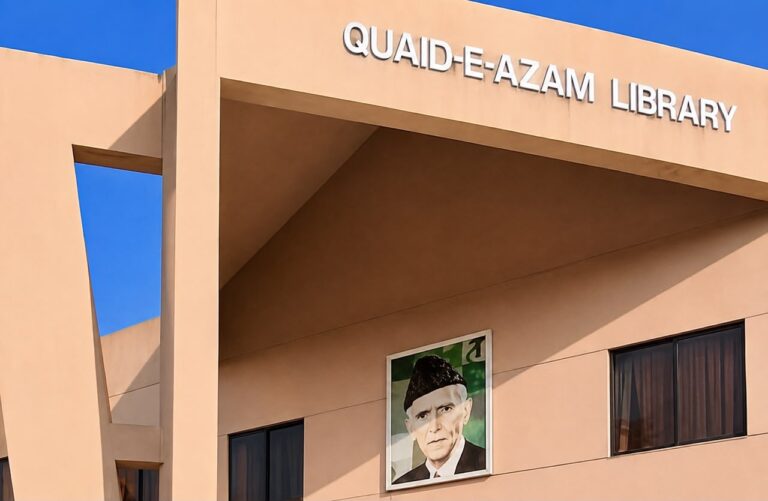
    GUJRAT: Librarians’ Day was observed at the Quaid-e-Azam Central Library of the University of Gujrat (UoG) with a seminar and panel discussion focusing on the evolving role of libraries, academic research and information professionals in the digital age. The event was organised to commemorate the birth anniversary of Dr S.R. Ranganathan, regarded as the father of library science in South Asia. August 12 is observed as Librarians’ Day in recognition of his contribution to the development of library science and his five laws of library science. Speaking during the panel discussion, Senior Librarian Rameeza Mushtaq said that a central library was the intellectual hub of any university and that the role of librarians had changed significantly with the expansion of digital resources. She said modern librarians were no longer limited to maintaining books and records but were increasingly helping students and researchers identify, access and use reliable academic material. Senior Librarian Liaquat Ali said the growing use of digital media had not reduced the importance of printed books and physical archives. He said libraries continued to provide researchers with access to authentic and preserved sources of knowledge. Librarian Khadija Munawar highlighted the impact of technology on library services and said librarians had increasingly become information navigators, helping students and researchers locate relevant digital resources in an increasingly complex information environment. In his presidential address, Chief Librarian A.R. Sheikh said academic libraries played a central role in strengthening research and intellectual development. “A library is neither a mere structure of bricks and mortar nor a repository of silent shelves; it is the fundamental engine of a nation’s intellectual sovereignty,” he said. Mr Sheikh said the rapid spread of unverified information through digital platforms had created new challenges for librarians and researchers. He said ensuring access to authentic and credible academic information was now among the key responsibilities of library professionals. He said the Quaid-e-Azam Central Library was providing students and researchers access to HEC digital resources, international peer-reviewed journals and the Online Public Access Catalogue (OPAC). The library also has dedicated research facilities for MPhil and PhD scholars and provides services related to academic research and similarity checking, he added. The speakers stressed the need for universities to further strengthen library infrastructure and equip libraries with modern digital resources to support research and higher education. The event concluded with a cake-cutting ceremony attended by Chief Librarian A.R. Sheikh and senior members of the library staff.

  • | |

    FCC issues written verdict in 50-year-old land dis…

    Pakistan’s Federal Constitutional Court has issued a detailed written judgment in a land dispute that has remained unresolved for nearly five decades. The ruling addresses a long-standing legal conflict over land ownership and tenancy rights, overturning previous decisions and restoring the legal status of the land as it existed before 1996. The court declared the 2008 judgment of the Lahore High Court null and void. It also set aside the orders issued by the Federal Land Commissioner in 1996, ruling that those decisions were not legally sustainable. The verdict marks a significant development in one of the country’s oldest land-related legal disputes. Chief Justice Aminuddin Khan authored the 25-page judgment, outlining the legal reasoning behind the court’s decision. The ruling carefully reviewed the history of the case, the relevant land laws, and the constitutional principles governing property rights and administrative authority. According to the judgment, the legal status of the disputed land has been restored to what it was before the Federal Land Commissioner’s 1996 orders. The court held that the rights of tenant farmers, commonly referred to as muzareen, must remain protected in accordance with the Land Regulations of 1972. These regulations were introduced to safeguard the lawful rights of tenants and regulate land that had been taken into government custody. The court emphasized that once land disputes have been finally decided through due legal process, they cannot be reopened or reconsidered without a valid legal basis. The judgment stated that the principle of finality in judicial decisions is essential for maintaining certainty and stability in the legal system. The ruling explained that under the 1972 Land Regulations, various pieces of land had been taken into government possession. Decisions regarding those acquisitions had already attained final legal status after being decided by the competent authorities and courts. However, in 1996, approximately twenty years after those decisions had become final, the Federal Land Commissioner declared the earlier government acquisition orders invalid. The Constitutional Court held that the commissioner lacked the legal authority to reopen and overturn matters that had already reached finality under the law. The judgment also noted that the Lahore High Court, in its 2008 decision, had upheld the Federal Land Commissioner’s orders. After reviewing the legal record, the Constitutional Court concluded that the High Court’s decision was based on an incorrect interpretation of the law and therefore could not be allowed to stand. By restoring the pre-1996 legal position, the court reaffirmed the protection of tenant farmers’ rights under the 1972 regulations while reinforcing the importance of respecting final judicial and administrative decisions. Legal experts believe the ruling could influence the resolution of similar land disputes involving historical claims and government-acquired property. The case was heard by the Federal Constitutional Court following the enactment of the 27th Constitutional Amendment, under which the matter came within the jurisdiction of the newly established court. The judgment is expected to serve as an important legal precedent for future constitutional and land-related cases, particularly those involving administrative powers, property rights, and the principle that finalized legal disputes should not be reopened without lawful justification.

  • |

    Pakistan refineries ready to sign long-delayed upgrade agreements 

    Pakistan’s oil refineries have agreed to move ahead with long-delayed agreements for upgrading their ageing plants, even as they continue to raise objections over a new financial penalty linked to the petroleum policy. Under the revised arrangement, refineries will be required to surrender 2.5 percent of the deemed duty retained on diesel for the period of delay. Industry representatives have termed the condition unfair, arguing that the delays were largely beyond their control and should not result in a financial burden on the refineries. Despite the disagreement over the penalty, refinery companies have indicated that they do not intend to hold up the signing of the agreements and are prepared to proceed with the modernization programme. The government’s Brownfield Refinery Policy, originally approved in August 2023, was introduced to encourage investment in the modernization and expansion of Pakistan’s existing refining capacity. The policy has subsequently been amended twice in an effort to address implementation issues and facilitate investment in the sector. Petroleum Minister Ali Pervaiz Malik has indicated that the long-pending agreements will be finalized shortly, while officials in the Petroleum Division are expecting the documents to be signed by the end of August. Agreements to Be Signed With ISGS A key change under the revised mechanism is that the upgrade agreements will now be executed with Interstate Gas Systems (ISGS), which operates under the Petroleum Division. Previously, the agreements were expected to be concluded through the Oil and Gas Regulatory Authority (Ogra). The change in the implementing entity is part of the government’s efforts to move the refinery-upgrade programme forward after delays in finalizing the contractual framework. Industry representatives, however, have maintained that refinery companies had already taken substantial steps to comply with the earlier arrangements and should not be penalized for delays that occurred afterward. Refineries Object to 2.5% Penalty Adil Khattak, Chief Executive Officer of Attock Refinery Limited and Chairperson of the Energy Committee of the Overseas Investors Chamber of Commerce and Industry, said Attock Refinery and National Refinery had completed several important formalities ahead of the previous deadline of October 22, 2024. According to Khattak, the companies had initialed agreements with Ogra, secured approval from their respective boards and arranged Rs1 billion bank guarantees each as part of the requirements. He said the companies were nevertheless being asked under the revised arrangement to surrender 2.5 percent of the deemed duty retained on diesel for the period between the previous deadline and the signing of the new agreements. The financial implications could be substantial. Khattak said Attock Refinery alone could face a penalty of around Rs7.5 million for every day of delay, increasing the industry’s concerns over the cost of the prolonged implementation process. Refineries argue that imposing the financial charge is inappropriate because they had already completed the required formalities within the earlier timeframe and were not responsible for subsequent delays in finalizing the agreements. Draft Agreements Circulated The Petroleum Division has now circulated draft upgrade agreements among the refineries, marking another step towards implementation of the long-delayed modernization programme. Officials are expected to hold further consultations with the Ministry of Finance, Controller of Accounts and ISGS before the agreements are finalized. Although refinery companies have reservations about the penalty clause, industry representatives have indicated that the disagreement will not prevent them from signing the agreements. The refineries are instead seeking a resolution of the financial issue separately while allowing the broader modernization programme to proceed. Upgrade Seen as Critical for Energy Security The modernization of Pakistan’s refining sector has gained greater importance as the country remains heavily dependent on imported petroleum products to meet domestic demand. Khattak estimated that delays in upgrading local refineries are costing Pakistan approximately $1.5 billion annually through additional fuel imports and the resulting foreign exchange outflows. Industry officials argue that upgrading domestic plants would allow refineries to produce a greater proportion of higher-value petroleum products while reducing dependence on imports. The issue has also acquired greater significance amid repeated disruptions and uncertainty in international energy markets. Greater domestic refining capacity and improved processing technology could provide Pakistan with an additional buffer against external supply shocks and volatile global fuel prices. Attock Refinery Moves Toward Financing Attock Refinery has already made considerable progress on the technical side of its proposed modernization project. The company has largely completed its front-end engineering and design work and has begun discussions with banks to arrange financing for the planned investment. The next stage will depend on the finalization of the government agreement and the completion of financing arrangements. For Pakistan, the successful implementation of the brownfield refinery upgrade programme could help improve domestic fuel production, reduce import dependence and ease pressure on foreign exchange reserves. However, industry stakeholders say timely decisions on the remaining contractual and financial issues will be essential if the government wants to avoid further delays in a programme that was originally launched several years ago.

  • |

    Sonu Nigam admits he uses auto-tune, explains why it matters now

    Sonu Nigam has admitted to using auto-tune on some of his songs. The confession comes as a surprise, given how often the technology gets associated with less skilled singers. Speaking on the “Game Changers” podcast, the 53-year-old explained why the tool has become genuinely necessary in today’s music landscape. He didn’t shy away from addressing the topic directly. Nigam acknowledged that the rise of auto-tune has brought major changes to the industry. He said people often criticise it, but he personally believes whatever has happened has ultimately been for the good. He recalled that singers of his generation had to perform without auto-tune in earlier years. According to Nigam, that experience gave them the advantage of training their voices the traditional way, without relying on digital correction. Despite that background, he was clear about his own practices today. Nigam admitted he does use auto-tune on certain songs, depending on the requirements of the track. He explained that most modern music now follows a rigid digital pitch, unlike the live instrumentation of earlier decades. Nigam said musicians once played live sarangi and strings, which allowed some natural flexibility in vocal pitch. Now, he explained, everything is digitised and follows an exact tonal line, making raw vocals more likely to sound off. He said singers previously adjusted their voice around live musicians, but today’s productions demand more precision. Nigam did add an important caveat to his comments. He stressed that auto-tune shouldn’t be used as a way to fix the voices of people who genuinely can’t sing. He explained that the responsible use of the tool means enhancing an already strong performance, not creating one artificially. According to him, giving 99% effort and refining it to 100% with auto-tune is very different from relying on it entirely. Nigam added that many actors use auto-tune while pursuing music, which he said is completely fine for personal enjoyment. However, he made clear that trained singers still can’t be replaced by the technology. On the work front, Nigam recently lent his voice to the track “Tabassum” for Rajkumar Santoshi’s “Batwara 1947,” composed by AR Rahman and written by Javed Akhtar. The film stars Sunny Deol, Preity Zinta and Shabana Azmi in lead roles.

  • | |

    Influencer Shay Martin remarries a year after husband’s death

    LOS ANGELES: Social media influencer Shay Martin has announced that she has remarried, nearly a year after the death of her husband, Tanner Martin, marking the beginning of a new chapter in her life. Shay shared the news with her followers through a heartfelt post on Instagram, where she reflected on her journey over the past year and thanked supporters who had stood by her family during one of the most difficult periods of their lives. In a statement, she said she understood that many people had questions about how her life had changed since Tanner’s passing. She explained that she chose to share her story personally so that her followers could hear directly from her rather than through speculation. Shay revealed that she and her late husband had spoken openly about the future before his death. According to her, Tanner had hoped that one day she would find someone who would love both her and their daughter, AmyLou, while respecting the family they had built together. She said those conversations gave her strength to move forward and embrace a new beginning without forgetting the memories she shared with her late husband. The influencer encouraged followers to watch the full video she posted online, saying it explains her emotions, Tanner’s wishes, and the reasons behind her decision to remarry. Shay stressed that starting a new relationship does not diminish the love she continues to hold for Tanner. She said he will always remain an important part of her life and will forever be remembered as AmyLou’s father. She also recalled one of Tanner’s lasting messages, urging people to treat others with kindness and to assume good intentions in difficult situations. Her announcement received widespread attention on social media, with many followers offering messages of support and wishing her happiness as she begins the next phase of her life while continuing to honour the memory of her late husband.

  • |

    Gulf nations back Omani plan for voluntary transit payments to resolve Hormuz maritime crisis

    Gulf Cooperation Council member states have formally endorsed a diplomatic initiative proposed by Oman to introduce voluntary service fees for commercial vessels transiting the Strait of Hormuz, seeking to restore global energy shipments disrupted by the broader conflict involving the United States, Israel, and Iran. The framework, modeled after the cooperative navigation safety mechanism used in Asia’s Malacca Strait, allows shipowners to make optional financial contributions toward environmental protection, search-and-rescue services, and navigational maintenance rather than paying mandatory tolls. Designed as a compromise between Tehran’s demand for administrative authority over shipping lanes and Washington’s insistence on unimpeded international transit, the Omani proposal explicitly prevents Iran from exercising exclusive operational control over the waterway while offering a structured path toward reopening commercial transit routes. The diplomatic breakthrough coincides with a temporary lull in direct aerial bombardments after US President Donald Trump called off a two-week bombing campaign following advice from military commanders. Despite the pause in direct strikes between Washington and Tehran, regional tensions remain elevated due to ongoing proxy drone activity across Jordan, Saudi Arabia, and Iraq, alongside continued US naval enforcement actions against non-compliant commercial vessels. While market reactions to the suspension of airstrikes sent global crude prices down sharply, formal resolution remains subject to upcoming diplomatic negotiations in Washington and the broader implementation of the bilateral framework agreement.

Leave a Reply

Your email address will not be published. Required fields are marked *