drone attack damages
| | |

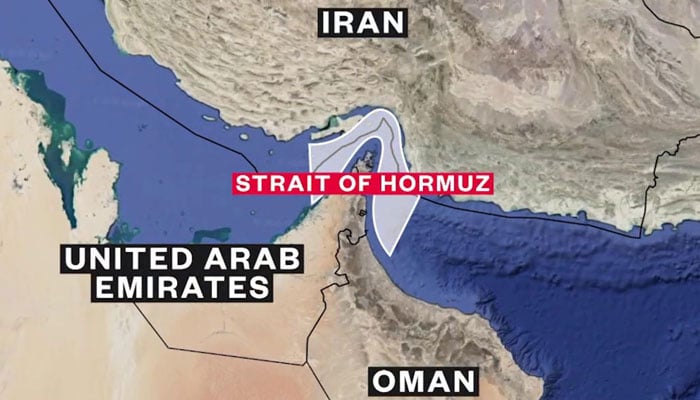
Drone attack damages oil tanker in Strait of Hormuz

A drone attack targeted an oil tanker in the Strait of Hormuz, causing minor damage to the vessel but leaving all members of the crew safe, according to the United Kingdom Maritime Trade Operations (UKMTO).

The maritime security agency said the incident took place as the tanker was navigating the strategically important waterway. The drone strike caused limited damage to the vessel, but authorities reported no casualties or injuries among the crew.

UKMTO also said the incident did not result in any environmental damage. There were no reports of an oil spill, leakage or other pollution following the attack, easing concerns about a possible impact on the marine environment.

The Strait of Hormuz remains one of the world’s most important shipping routes, particularly for global energy supplies. Large volumes of crude oil and petroleum products pass through the narrow waterway every day, linking major oil-producing countries in the Gulf with international markets.

The latest attack has once again highlighted security concerns surrounding commercial shipping in the region. Any disruption or attack involving an oil tanker in the Strait of Hormuz can raise concerns about the safety of maritime traffic, insurance costs and the uninterrupted movement of energy supplies.

Authorities continue to monitor the situation and advise commercial vessels operating in the area to remain alert to potential security threats.

Similar Posts

  • |

    Heatwave pushes UK death toll towards 2022’s grim record

    Britain is edging dangerously close to matching one of its deadliest summers on record, and the peak heat month of August hasn’t even fully arrived yet. The UK Health Security Agency reported that an estimated 2,877 people have already died from heat-related causes this year. That number is nearly twice the total seen throughout all of 2025, and it’s steadily approaching the historic high recorded back in 2022. This latest update comes as the country deals with its fourth heatwave of the year. A string of unusually intense hot spells has already driven temperatures to record-breaking levels in parts of Britain during May and June. The extended dry spell has also worsened conditions on the ground, contributing to a rise in wildfires across several regions. Breaking the numbers down further, most deaths occurred across two distinct periods. Late May accounted for 753 fatalities, while a particularly severe June heatwave saw that number jump sharply to 2,124, prompting authorities to issue a rare red heat-health alert. Even though these figures only cover a two-month window, they already surpass the total number of heat-related deaths recorded across the entire previous year. Experts studying the data believe that roughly 42 percent of these deaths can be traced back to the effects of human-driven climate change. That estimate has reignited concern among scientists and public health officials, who warn that healthcare systems and at-risk populations are facing mounting pressure as extreme heat becomes more frequent. The crisis is not confined to the UK alone. Neighboring countries have also been hit hard, with wildfires sweeping through parts of France, Spain, and Greece. These fires have claimed the lives of several firefighters, forced thousands of residents to evacuate, and caused major disruptions to businesses and travel throughout the affected areas. France’s national health agency confirmed on Wednesday that the country recorded 5,764 excess deaths between June 17 and July 2 alone. Germany has faced a similarly troubling situation, with its national health body, the RKI, reporting on Thursday that around 9,800 people have died from heat-related causes so far this year. As temperatures remain stubbornly high across Europe, health officials continue urging caution, particularly for elderly individuals and those with existing health conditions who face the greatest risk during prolonged heat events.

  • |

    Kremlin claims capture of two key eastern Ukrainian villages

    Russian military forces have claimed control over two settlements in Ukraine’s eastern Donetsk region, according to statements released by the Russian Defence Ministry via state media. The ministry reported that its troops captured Vasyutinske, located near Kramatorsk, alongside Toretsk, situated southwest of Druzhkivka. Ukrainian authorities have not confirmed the loss of either location, and battlefield reports remain unverified independently. While frontlines across the 1,200-kilometre border have experienced minimal overall shifts in recent months, Russian forces continue an incremental westward push through the region. Ukrainian war-monitoring group DeepState reported additional Russian advances near Illinivka outside Kostiantynivka, as well as movements near Chasiv Yar, west of Bakhmut. The General Staff of the Ukrainian Armed Forces stated that its troops successfully repelled 24 individual assaults around Kostiantynivka and Illinivka. Russian commanders previously claimed control of Kostiantynivka, a statement contested by Ukrainian officials. Ukrainian President Volodymyr Zelenskiy did not address frontline shifts directly in his nightly address, but commended Ukrainian units engaged in heavy combat around Dobropillia, Kostiantynivka, and Kramatorsk.

  • | |

    US unable to verify Israeli claims of Iranian plot…

    The United States has been unable to independently confirm several warnings from Israel alleging that Iran was planning to assassinate President Donald Trump, according to current and former US officials familiar with the intelligence. The warnings were reportedly shared with US intelligence agencies over the past year and, in some cases, communicated directly by Israeli officials to senior members of the White House. The alleged plots included plans to target Trump with a sniper or recruit an attacker to use a knife during a major public gathering. According to the officials, the warnings began emerging before the 12-day Israel-Iran war in June 2025 and became more frequent ahead of the US military campaign against Iran in February. One of the most detailed warnings reportedly came before the NATO summit in Ankara in July. Israeli officials informed the White House that Iran might attempt to target Trump while he was travelling aboard Air Force One, potentially using a shoulder-launched missile. However, US intelligence agencies were unable to independently corroborate several of the specific threats. A Turkish official also said that Turkey’s intelligence services found no evidence supporting the Israeli warning concerning a possible attack on Trump during his visit. Despite the lack of confirmation, US authorities took additional security precautions. Among the measures was an unusual deception operation during Trump’s Turkey trip, in which he was reportedly transferred from Air Force One to another aircraft for his return journey. The episode highlights the growing importance of Israeli intelligence in the Trump administration’s assessment of threats from Iran, while also revealing differences between American, Israeli and Turkish intelligence assessments. US intelligence agencies have long assessed that Iran has an interest in retaliating against Trump over the 2020 killing of Iranian military commander Qassem Soleimani. However, officials said the CIA has not been able to verify some of the specific assassination claims attributed to Iranian operatives. During the recent US military operations against Iran, some American intelligence assessments reportedly assigned low confidence to Israeli intelligence concerning Iranian threats, including alleged plans to assassinate Trump. The Israeli Embassy rejected the suggestion that Israel was using intelligence sharing to influence US policy toward Iran, arguing that intelligence exchanges were part of the countries’ security relationship. The White House and CIA declined to comment on the reports, while the US Secret Service said it continuously evaluates intelligence and other information to protect the president. The revelations come amid broader concerns over coordination within the US intelligence community. Former officials said cooperation between the CIA and the National Intelligence Council had declined, while staff reductions at the Office of the Director of National Intelligence had also contributed to fewer recent assessments concerning Iran. The conflicting intelligence assessments underline the challenges facing Washington as it balances threats from Tehran with intelligence supplied by its closest regional ally, Israel.

  • |

    Environmental groups warn Trump-linked Albania resort is harming protected coastline

    Environmental groups and scientists have warned that early work on a luxury resort linked to the Trump family has already caused lasting damage to one of Albania’s most environmentally sensitive coastal areas. They say construction activity has affected wildlife habitats and fragile ecosystems even before the main development has begun. According to satellite images reviewed by AFP, major changes took place over a period of 25 days in May. Workers cleared a new road, removed large areas of forest and built a bridge across the channel connecting the Narta Lagoon to the Adriatic Sea. Conservationists argue that these early activities have already disrupted a protected landscape known for its rich biodiversity. Marine biologist Olsi Nika, who heads the environmental organization EcoAlbania, said heavy machinery operating on the beaches has damaged nesting areas used by endangered loggerhead sea turtles. He also said the construction of access roads through sand dunes and the removal of trees have disturbed important breeding grounds for many bird species. Environmental experts further warned that work on the water channel linking the lagoon to the sea has interfered with the natural flow of water that is essential for maintaining the surrounding wetlands. Scientists describe the impact as severe, warning that the destruction of habitats could have long term consequences for local wildlife. Ferdinand Bego, a professor at the University of Tirana, said much of the damage to the protected area cannot easily be reversed, even though some construction work has been paused following public protests. The project, valued at approximately 4.5 billion euros, was first announced in 2024 by Jared Kushner, the son in law of US President Donald Trump. Plans include the construction of luxury hotels near flamingo habitats and on a nearby uninhabited island. Trump’s daughter Ivanka has previously spoken publicly about the site’s attractive coastline, lagoon and white sand beaches, describing it as an exceptional location for tourism development. Opposition to the project has grown steadily over recent months. Local residents and environmental activists have staged daily demonstrations, with protests becoming more intense after barbed wire fencing was installed to mark the boundaries of the planned resort. Tensions increased further when private security guards confronted demonstrators during one of the protests, leading to continued public rallies against the development. Albanian Prime Minister Edi Rama has defended the investment, describing it as one of the country’s most important tourism projects. His government argues that the development will attract international investment, create jobs and help Albania compete with neighboring coastal destinations such as Montenegro, Greece and Croatia. Officials believe the project could significantly strengthen the country’s tourism industry and economic growth. In June, a team of scientists visited the site to assess the environmental impact of the preparatory work. Their report concluded that turtle nesting sites, bird habitats and coastal sand dunes had already been affected. Researchers warned that continued development without stronger environmental protections could place additional pressure on the area’s unique ecosystem. The campaign against the project has also received international attention. British singer Dua Lipa, whose family has roots in Kosovo, has publicly expressed support for those opposing the development. Environmental campaigners hope that growing international concern will encourage Albanian authorities to strengthen protections for the coastline. The European Union has also raised concerns as Albania continues its efforts to join the bloc by 2030. European Commissioner for Enlargement Marta Kos recently said Albania had agreed to reverse changes made to laws governing protected areas and strategic investments. Environmental experts say such reforms will be important if the country wants to meet European environmental standards during its accession process. Professor Friedrich Schiemer of the University of Vienna, who inspected the site in June, stressed that immediate action is needed to limit further damage. He warned that large tourism developments in ecologically sensitive areas could permanently alter the region’s natural environment if stronger safeguards are not introduced before construction continues.

  • | |

    South Indian actress Shakeela undergoes neck surgery after excessive phone use

      South Indian actress Shakeela has revealed that her excessive use of mobile phones left her with a serious neck problem that eventually required surgery costing around Rs300,000 Indian rupees. The 53-year-old actress shared her experience in a video posted on her YouTube channel and urged people, especially parents, to limit unnecessary mobile phone use. Shakeela, who has worked in Malayalam, Tamil, Kannada and Telugu films, said her habit of playing games and watching videos on her phone for several hours caused significant damage to her neck. She explained that she would often lie on her side in bed for long periods while using her phone. “I used to play games on my phone continuously for four hours while lying on my side in bed,” Shakeela said. She added that she would only get up occasionally to have tea or coffee before returning to her phone. After playing games, she would spend hours watching reels on YouTube and Instagram. According to the actress, maintaining an incorrect posture while using her phone, combined with prolonged screen time, affected important blood vessels in her neck and eventually led to serious health complications. She underwent surgery in Chennai and said that a titanium screw was also used during the procedure. After returning home, doctors advised Shakeela to wear a neck collar until she recovered. She said that following the surgery, she has needed assistance even with basic activities such as getting out of bed and eating. Shakeela stressed that mobile phones are useful devices when used responsibly, but excessive use can have serious consequences. She advised people not to spend unnecessary hours watching videos or playing games, even if the content is entertaining. She also issued a warning to parents, urging them to avoid giving mobile phones to children unnecessarily. According to her, children should use phones only for essential activities and educational or useful content rather than spending long periods watching short videos and playing games. The actress said that people could end up paying a heavy financial and physical price for excessive phone use, adding that her own experience had cost her around Rs300,000 and caused considerable pain and difficulty. Shakeela Begum was born in Chennai. Her mother, Chand Bee, was from Andhra Pradesh, while her father, Chand Basha, was from Tamil Nadu. She began her acting career with a Tamil film in 1995. However, she gained widespread recognition after appearing in the Malayalam film Kinnarathumbikal, released in 2000. Over the years, Shakeela became a well-known name in South Indian cinema, particularly for her work in Malayalam films. Her latest health experience has now prompted her to use her public platform to raise awareness about responsible mobile phone use and the potential health risks associated with prolonged screen time and poor posture.

  • |

    Iran vows to resist new US sanctions as China rejects pressure

    TEHRAN: Iran has vowed to strengthen its economy and find ways to withstand what it calls unjustified US sanctions, as Washington prepares to announce a new package of economic measures against Tehran. Iranian Parliament Speaker Mohammad Bagher Ghalibaf made the remarks during a meeting with Iranian and Iraqi business representatives in Baghdad on Friday. Ghalibaf said economic strength and national security were closely connected. He accused the United States and Israel of using economic and political pressure after failing to achieve their objectives through direct military confrontation. He called for stronger economic cooperation between Iran and Iraq. He also suggested that the two neighbours increase trade using their national currencies to reduce dependence on the US dollar. Ghalibaf said Iran and Iraq should focus on economic development and shared prosperity despite pressure from Western countries. The comments came a day after US Treasury Secretary Scott Bessent announced plans for what he described as the toughest sanctions ever imposed on Iran. Bessent said further details of the measures would be released on Monday. He suggested that maximum economic pressure could reduce the need for another major military operation against Iran. US President Donald Trump has also warned countries and businesses against providing financial or economic support to Tehran. Trump described the planned campaign as an unprecedented effort of economic warfare and isolation. He warned that countries allowing financial institutions, companies, airports or government bodies to provide assistance to Iran could face severe economic consequences. Iran has strongly rejected the US pressure. Its Foreign Ministry described the latest sanctions as economic terrorism and said they would not weaken Iran’s determination to protect its independence and sovereignty. Iranian Foreign Minister Abbas Araghchi also accused Washington of trying to divert attention from economic problems inside the United States. China rejects sanctions strategy China has opposed Washington’s approach and said sanctions and economic pressure would not solve the conflict. Chinese Foreign Ministry spokesman Lin Jian called on all sides to adopt responsible measures and seek a political and diplomatic solution. China has significant economic ties with Iran and remains a major buyer of Iranian oil. Data from energy analytics firm Kpler indicated that China accounted for more than 80% of Iran’s shipped oil purchases in 2025. The issue could further complicate US-China relations. Washington has warned against economic cooperation with Tehran, while China has repeatedly criticised unilateral sanctions. Bessent said the United States was seeking cooperation from its allies and other countries. He argued that China had a strong interest in maintaining stability in the Gulf because a significant portion of its energy supplies comes from the region. The latest sanctions threat comes as the wider Middle East conflict continues to disrupt energy markets and regional trade. Oil prices rose after Trump announced plans for stronger economic measures against Iran. The conflict has affected oil supplies and raised concerns about shipping through the Strait of Hormuz. The strategic waterway handles a significant share of global oil trade and has become a major point of tension during the conflict. The United States and Iran have announced ceasefire agreements on two occasions in recent months, but both arrangements have broken down. Iran now faces growing economic pressure from Washington while attempting to maintain trade and regional partnerships.

Leave a Reply

Your email address will not be published. Required fields are marked *