
faisal rao debuts
|

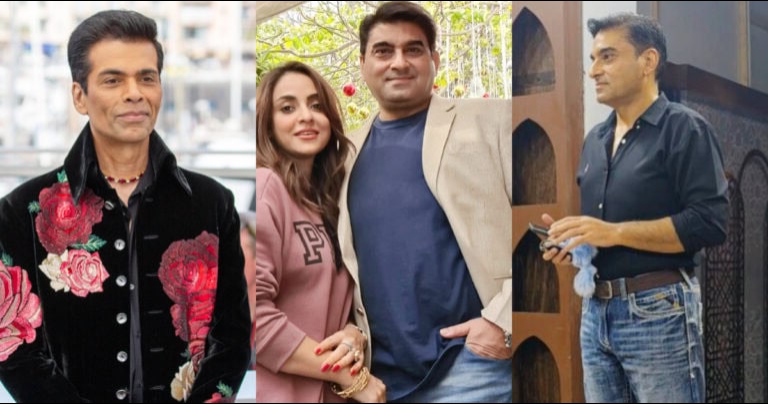
Faisal Rao debuts a dramatic new look after major weight loss

Nadia Khan, the well-known Pakistani host, actress and influencer, has once again found herself at the centre of online discussion, this time after showcasing the dramatic transformation of her husband, Faisal Rao. The couple frequently appears together on social media and in entertainment-related content, while Nadia has also gained attention for her candid reviews and opinions about Pakistani dramas.

Faisal Rao, a former Air Force officer, recently appeared on the sets of Kya Drama Hai alongside Nadia Khan, where he opened up about his weight-loss journey and revealed the diet routine he has been following. According to Faisal, he has made significant changes to his eating habits and has shifted to a One Meal A Day (OMAD) routine.

His transformation has been quite noticeable, with Faisal appearing significantly slimmer than before. After losing a considerable amount of weight, he is now focusing on maintaining his new physique and making sure that he continues to follow a disciplined lifestyle.

Nadia appeared impressed by her husband’s transformation and proudly shared his new look with viewers. The couple’s appearance quickly attracted attention online, with many social media users commenting on the striking difference in Faisal’s appearance.

His dramatic weight loss has also led some viewers to draw comparisons between Faisal and Bollywood filmmaker Karan Johar, who has also undergone a highly visible transformation over the years. Johar’s weight loss has frequently sparked online speculation, including allegations about the use of weight-loss medication such as Ozempic, although such speculation should not be treated as fact without confirmation.

Similarly, Faisal’s new appearance became the subject of various comments, jokes and comparisons across social media. Some users focused on his slimmer face and overall transformation, while others compared his latest look with his previous appearance.

One social media user jokingly asked why Faisal had suddenly started looking like Karan Johar. Another made a reference to Ozempic while commenting on his changed facial appearance. A third user, however, felt that Faisal looked better before losing the weight and expressed disappointment over his new look.

The mixed reactions highlight how quickly celebrity transformations can become a topic of public discussion, particularly when a significant change in appearance is shared online. While some people praised Faisal for achieving his weight-loss goals, others appeared more interested in comparing his new appearance with well-known celebrities.

Nadia’s decision to share details of Faisal’s diet has also given followers an insight into the routine behind his transformation. His shift toward One Meal A Day appears to have played an important role in his recent lifestyle changes, although individual diets can affect people differently and should ideally be followed with appropriate professional guidance.

For now, Faisal Rao’s transformation continues to generate conversation, with fans and social media users debating his new appearance. Whether people prefer his previous look or his slimmer physique, there is little doubt that his weight-loss journey has resulted in a noticeable change.

As Nadia continues to share glimpses of their personal and professional lives, Faisal’s latest transformation has become another talking point for their online audience.

Similar Posts

  • |

    Millie Bobby Brown slams unfair scrutiny faced by ‘Stranger Things’ girls

    Millie Bobby Brown is speaking candidly about the intense pressure she faced growing up on “Stranger Things.” Despite the show’s massive success, she says the experience was not equal for everyone in the cast. The actress shared her thoughts during an appearance on the “On Purpose” podcast with Jay Shetty. She opened up about a clear gender divide she noticed throughout her years on the series. Brown explained that she grew up on a show alongside four boys, and she is not dismissing their experiences either. She acknowledged they faced their own share of challenges throughout the years. However, she said the scrutiny placed on her and her female co-stars was on another level entirely. According to Brown, the pressure and judgment aimed at the girls felt genuinely intense compared to what the boys dealt with. She pointed out a stark contrast in how media coverage treated each gender differently. Brown said she never once saw headlines scrutinising her male co-stars’ outfits, hairstyles or makeup choices on the red carpet. Instead, she said those same headlines focused entirely on the boys’ talent and success. Brown made clear she is not against that kind of praise, noting the boys absolutely deserve recognition for their work. Her frustration, she explained, comes from not receiving that same treatment herself. Brown said she deserves to be written about for her accomplishments too, not torn down over her appearance. She admitted the double standard genuinely frustrates her, even now. Brown said she feels a strong sense of protectiveness toward younger girls entering the entertainment industry today. She stressed that intense scrutiny over appearance should not automatically become part of a young actress’s story. According to Brown, that narrative is something the industry chooses to create, not something that has to exist. Her comments add to a broader, ongoing conversation about the different expectations placed on young actresses compared to their male peers. Brown’s remarks reflect a growing awareness among former child stars about the lasting effects of early fame and public scrutiny.

  • |

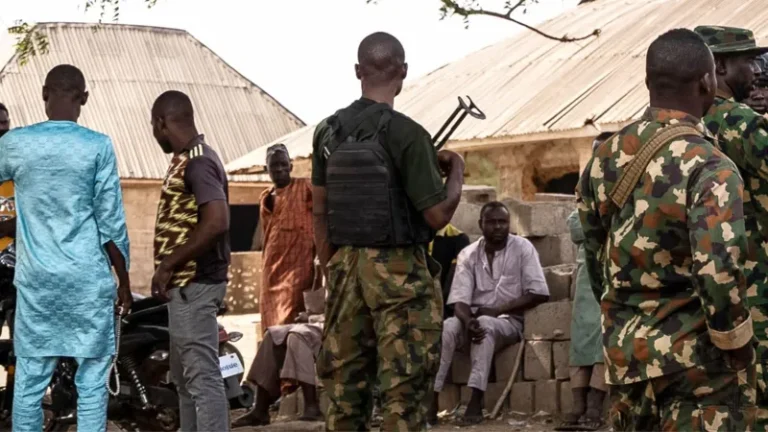
    Nigerian security forces rescue over 300 hostages in record single-day operation

    Nigerian joint security forces have rescued 308 abducted citizens from the Kainji Lake National Park in Niger state, marking the largest single-day hostage recovery operation in the country’s history. The intelligence-led operation involved the Nigerian military, police, Department of State Services, and the National Counter-Terrorism Centre. Those freed include 163 residents abducted during a February attack on the Woro and Nuku communities in Kwara state, alongside 145 individuals seized from neighbouring Niger state. During the February assault on Woro, the suspected killed more than 150 people and burned large parts of the village after residents refused to renounce the Nigerian government. Human rights monitoring groups reported that many victims of the raid were found bound and executed. President Bola Ahmed Tinubu commended the security services for their coordination, stating that the successful rescue demonstrates enhanced operational alignment among Nigeria’s defense and intelligence branches. The freed hostages are currently undergoing medical evaluation and receiving psychosocial support at a federal military facility before being reunited with their families.

  • |

    PERA’s proposed training academy puts 200 acres of fertile farmland, homes and wildlife breeding facilities at risk

    CHAKWAL: A proposed training academy of the Punjab Enforcement and Regulatory Authority (PERA) near Kallar Kahar has sparked concern among local residents, farmers and wildlife conservationists, as the site selected for the project comprises around 200 acres of fertile agricultural land, several homes, livestock farms and wildlife breeding facilities. The Punjab government has allocated Rs6.786 billion for the construction of the PERA training academy near Kallar Kahar, while Rs10 million has reportedly been released for the current financial year.     The proposed site, located along the Kallar Kahar-Talagang Road, was selected despite the availability of alternative locations, raising questions about the decision to choose an area that is not only inhabited but also serves as an important habitat for wildlife. The move has also left local PML-N MNA Sardar Ghulam Abbas and officials of the Punjab Wildlife Department apparently unable to prevent the proposed construction at the selected site. For 91-year-old Dost Muhammad, who has spent his life overcoming hardships, the latest development has become a source of deep anxiety. His family of around 40 members, along with their livestock, now faces the prospect of eviction from their ancestral land following a recent demarcation carried out for the proposed academy.   A few days ago, Dost Muhammad and his sons were constructing a cattle shed on their land. However, they have now abandoned the work after officials from the Punjab Revenue Department marked the boundaries of the proposed site. According to a letter available with Minute Mirror, PERA had requested the deputy commissioner of Chakwal on June 9 to initiate the process of acquiring land at a “suitable location in the pleasant hilly area of Kallar Kahar” for the construction of its training academy.   Following the request of the PERA director general, the district administration identified 1,568 kanals, or approximately 200 acres, along the Kallar Kahar-Talagang Road. Residents say the demarcation was carried out without adequately considering that the land is fertile agricultural property and is home to around 20 families. The area also serves as an important habitat for wildlife and contains two wildlife breeding farms and a private game reserve. Dost Muhammad is not the only resident facing uncertainty. At least 19 other families living in the area are also reportedly at risk of losing their homes. The demarcation has also raised concerns among wildlife conservationists, as two breeding farms for urial, chinkara and partridge have reportedly fallen within the proposed project area. “We are six brothers. We purchased 24 kanals of land in 2018 and constructed our houses after obtaining a loan of Rs3 million under a scheme launched by Chief Minister Maryam Nawaz Sharif. Now our houses are facing demolition,” said Raja Mohammad Farooq, who recently completed construction of his house. The issue is particularly serious for farmers in the hilly Kallar Kahar tehsil, where cultivable land is already limited. “I own only four acres of land, from which I produce wheat for my family and fodder for my livestock throughout the year. My entire four acres have been included in the demarcated area. If the proposed academy is built on my land, where will I get wheat for my family and fodder for my livestock?” asked 62-year-old Ghulam Shabbir, a resident of Ratta village. Imtiaz Ahmed, who operates a cement-block plant and also keeps a flock of sheep, is similarly worried about his livelihood. “I sold four rams this year, but now my farm and plant are at risk of demolition,” he said anxiously. Malik Mukhtar Haider, who has been running a community-based conservation (CBC) initiative and two wildlife breeding farms for several years, said he had devoted his life to protecting wildlife and the natural environment. “I have spent my entire life working for the protection of wildlife and the natural environment, but the proposed construction of the PERA training academy has put my decades-long efforts at risk,” he said. Officials of the Punjab Wildlife Department have also expressed surprise over the selection of the site, questioning how an area serving as a wildlife refuge could have been chosen for the construction of a training academy. “The demarcated area is not only an important habitat for various wildlife species, including the rare Punjab urial, but also contains two breeding farms and flora and fauna that have been nurtured through more than two decades of sustained efforts,” Assistant Chief Wildlife Ranger Abid Hussain told Dawn. He questioned the rationale behind selecting the area and said the development appeared to undermine the conservation efforts being carried out by Malik Mukhtar Haider through his CBC initiative and breeding farms. “If government institutions themselves are bent on destroying wildlife habitats, then who will protect them?” he asked. Meanwhile, the district administration and local parliamentarians appear to have been unable to halt the proposed construction at the selected site. When contacted, Deputy Commissioner Chakwal Sara Hayat said the district administration had proposed three possible locations, but PERA had selected the present site. “We have to comply with the directions issued by the higher authorities,” she said. The proposed project has thus triggered a debate over the selection of public land for government infrastructure, with residents questioning why fertile agricultural land, inhabited settlements and an established wildlife habitat were chosen despite the reported availability of alternative sites.

  • | |

    Wedding joy turns to mourning, Rickshaw falls into…

    Muzaffargarh: A wedding celebration turned into a tragedy after an overloaded rickshaw carrying members of a wedding party plunged into a canal on Monday evening, leaving at least seven people dead and several others missing. According to rescue officials, the incident occurred when the rickshaw, which was carrying a large number of passengers including women and children, reportedly lost control while travelling along the canal-side road. The vehicle skidded off the road and fell into the water. Local residents and rescue divers immediately launched an operation to search for the passengers. Nine people were rescued alive and shifted to a nearby hospital for medical treatment. Some of those rescued were reported to be in critical condition. Rescue teams have so far recovered the bodies of seven people. The deceased have been identified as 14-year-old Dilawar, son of Abdul Rasheed; seven-year-old Muneeb, son of Rashid; 58-year-old Sakina Bibi, wife of Allah Ditta; 15-year-old Sameera Bibi, daughter of M Shafiq; M Saim, son of M Iqbal; seven-year-old M Sabtain, son of Musharraf; and nine-year-old Raju, son of M Iqbal. Several passengers are still believed to be missing. Those reported missing include M Bilal, son of M Iqbal; M Yasir, son of Fida Hussain; M Ali, son of M Shafiq; Usman, son of Ghulam Fareed; Shakir, son of Ashiq Hussain; Hassnain, son of Musharraf Ali; Iqbal Bibi, daughter of Fida Hussain; Kaleem Ullah, son of Basheer Ahmad; and Zareef, son of Wazeer Ahmad. The rickshaw was reportedly carrying far more passengers than its permitted capacity, raising concerns about dangerous overloading. Rescue teams continued their search operation on Tuesday as authorities feared the death toll could increase. The incident has cast a pall of grief over the families of the wedding party, with relatives anxiously awaiting information about their loved ones as the recovery operation continues.

  • |

    Goods transporters’ strike enters sixth day as talks With government fail

    The nationwide strike by goods transporters has entered its sixth consecutive day after negotiations with the federal and provincial governments failed to produce a breakthrough. President of the Goods Transporters Association Nabil Mahmood Tariq said the talks had reached a deadlock, with no agreement reached on the key demands of the transport sector. He warned that the strike would continue indefinitely unless the government addressed the concerns raised by transporters. Speaking to Geo News by telephone, Nabil Mahmood Tariq said the negotiations failed because of what he described as the government’s rigid stance. According to him, transporters are particularly concerned about frequent changes in diesel prices, which they say make it difficult to manage transportation costs and business operations. He said the government had also refused to reduce toll taxes or guarantee that existing toll rates would remain unchanged for at least one year. Transporters have maintained that rising operating expenses, including fuel and toll charges, are putting increasing pressure on the sector. The association president said the government had offered limited concessions on customs-related matters and axle-load restrictions, but the proposals were not sufficient to end the strike. He further alleged that authorities had not yet fully assessed the economic consequences of the ongoing shutdown. According to him, the impact would become more visible in the coming days if the dispute remained unresolved. The strike has already begun affecting the movement and supply of essential commodities in several parts of the country. Disruptions in the transportation of fruits and vegetables have raised concerns about shortages and further increases in prices. In Balochistan, the strike has reportedly contributed to higher prices of several food items. In Quetta, for instance, the price of chicken meat has increased from around Rs500 to Rs550 per kilogram amid supply disruptions. Meanwhile, efforts are continuing in Karachi to maintain the supply of vegetables through smaller vehicles. However, transport-sector representatives warn that such arrangements may not be sufficient to meet normal market demand if the strike continues for an extended period. The prolonged protest has raised concerns among traders, consumers and businesses that rely heavily on road transportation. Any further delay in resolving the dispute could increase pressure on supply chains and potentially push up the prices of essential goods.

  • | | |

    SBP to study daily fuel price impact on inflation

    ISLAMABAD: The federal government has directed the State Bank of Pakistan (SBP) to conduct a comprehensive study on how the daily revision of petroleum prices affects inflation, as authorities seek new measures to protect consumers from rising living costs and volatile global energy markets. The decision was taken during a meeting of the National Price Monitoring Committee (NPMC), which reviewed the country’s inflation outlook and discussed ways to minimise the impact of fluctuating fuel prices on households and businesses. According to officials, the SBP has been asked to prepare a detailed action plan within 15 days to evaluate the inflationary effects of daily adjustments in petrol and high-speed diesel (HSD) prices, following international best practices. The central bank is expected to recommend policy options that could help maintain price stability while supporting economic growth. The committee was informed that the SBP’s primary responsibility is to ensure price stability through effective monetary policy, including the use of interest rates to manage inflation expectations and regulate money supply. Alongside the SBP study, the NPMC instructed provincial governments, Azad Jammu and Kashmir, Gilgit-Baltistan and the Islamabad Capital Territory to strengthen market monitoring and prevent unjustified increases in the prices of essential commodities whenever fuel prices are revised. The committee also expressed concern over excessive pricing of liquefied petroleum gas (LPG), noting that consumers in many areas were paying significantly more than the official rates notified by the Oil and Gas Regulatory Authority (OGRA). Authorities have been directed to intensify monitoring and narrow the gap between notified and market prices. Officials said the recent regional conflict involving Iran had disrupted energy markets, contributing to higher LPG prices despite regulatory efforts. The meeting also focused on the prices of key food items, including tomatoes, chicken, wheat flour and edible oil. Representatives from the Ministry of National Food Security attributed the surge in tomato prices to seasonal shortages, explaining that Pakistan was importing tomatoes from Iran and Afghanistan to meet domestic demand. However, following the closure of the Afghanistan border, officials said additional tomato imports would now be sourced from Romania to prevent supply shortages and stabilise prices. To improve food quality and consumer protection, the Ministry of Science and Technology will work with the Pakistan Bureau of Statistics (PBS) and provincial authorities to develop testing standards for loose milk, dairy products, edible oil and ghee. Accredited laboratories will conduct regular testing, with quarterly reports submitted to the NPMC. The committee also urged authorities to reduce wholesale and retail price disparities across different cities, improve the supply chain for essential goods and work more closely with the private sector to arrange timely imports before seasonal shortages trigger sharp price increases. Officials expressed hope that stronger coordination, tighter market oversight and evidence-based policymaking would help ease inflationary pressures and provide greater stability for consumers in the coming months.

Leave a Reply

Your email address will not be published. Required fields are marked *