tom holland aims
| |

Tom Holland aims to do all his own dancing in Fred…

Tom Holland is preparing for one of the most demanding roles of his career as he gets ready to portray legendary dancer and actor Fred Astaire in an upcoming biographical film. The Spider-Man star recently revealed that he has already returned to the dance studio and is undergoing intensive training to ensure he can perform every dance sequence himself. His goal is not only to honor Astaire’s extraordinary legacy but also to recreate the magic of his performances with complete authenticity. 

Speaking during recent television interviews, Holland admitted that stepping into Astaire’s shoes is both thrilling and intimidating. He described his early rehearsals as filling him with “excitement and absolute dread,” acknowledging the immense challenge that comes with portraying one of Hollywood’s greatest dancers. Rather than relying on stunt doubles, Holland said he hopes to perform all of the dance routines himself and even film many of them in uninterrupted long takes—the same style that made Fred Astaire’s performances so iconic. 

For Holland, the project is especially meaningful because it reconnects him with his roots. Before becoming an international film star, he trained extensively in dance and rose to fame as the lead in London’s West End production of Billy Elliot the Musical. However, after leaving the stage to focus on acting, he stepped away from professional dance training. The actor has now admitted that quitting dance was one of his biggest career regrets, making this film the perfect opportunity to rediscover a skill that first launched his career. 

The untitled Fred Astaire biopic will be directed by acclaimed filmmaker Paul King, known for the Paddington films, with a screenplay by Steven Levenson. Although the project was first announced several years ago, production is now expected to begin in January 2027 after Holland completes promotional commitments for Spider-Man: Brand New Day and other upcoming releases. 

Holland has described the role as the beginning of a new chapter in his acting career. At 30, he believes it is time to move beyond youthful characters and embrace more challenging performances that test his abilities. Playing Fred Astaire, whose elegance, precision, and effortless style influenced generations of performers, represents exactly the kind of challenge he has been searching for. 

Fans have praised Holland’s commitment to authenticity, noting that his background in dance gives him a unique advantage in bringing Astaire to life. If he succeeds in performing every routine without doubles, the film could become one of the most technically impressive dance biopics in recent years.

As rehearsals continue, anticipation for the film is steadily growing. With months of intensive preparation ahead, Tom Holland appears determined to deliver a performance worthy of Fred Astaire’s remarkable legacy. His dedication, discipline, and passion for dance suggest audiences may soon witness one of the most ambitious performances of his career. 

Similar Posts

  • Thai Tourism Operators Urge Government To Revise Indian Visa Policy

    PHUKET, Thailand — The private sector across Thailand’s premier Andaman coast provinces has formally petitioned the government to urgently revise the visa policy for Indian nationals, warning that current regulations could cost the country up to 8 billion baht in lost revenue during the upcoming high season. The coalition, comprising 13 major organizations including the […]

  • | |

    US military depletes long-range missile stockpile …

    The United States has burned through nearly all of its long-range precision missiles during five months of fighting in Iran, according to three people familiar with internal defense data, fueling concern inside Washington about military readiness for future crises. The weapons in question are primarily the Army’s ground launched systems, the Army Tactical Missile System and the newer Precision Strike Missile. Two of the sources said the military has expended virtually its entire supply of both. These munitions let forces strike targets accurately from a safe distance and have already proven vital in Ukraine, where American supplied versions allowed Ukrainian troops to hit targets deep inside Russian territory. The Precision Strike Missile represents a more advanced generation designed to eventually replace the shorter range ATACMS. Defense analysts note that such long-range munitions, each costing more than a million dollars, would also play a central role in any future confrontation with China. The sources declined to specify exact remaining quantities of either weapon. President Donald Trump launched the joint offensive against Iran alongside Israel in February, initially predicting a brief campaign. Instead, the conflict has stretched on for months, and the three sources said they worry that shrinking missile reserves could weaken the country’s ability to deter rivals such as Russia and China going forward. A fourth person familiar with the matter said Central Command, which oversees American forces across the Middle East, has nearly exhausted the land based missiles it held before the war started, though it has managed to replenish supplies by drawing from military stockpiles based elsewhere around the world. All four sources spoke on condition of anonymity. Asked to respond to the stockpile figures, the White House shared a statement from Trump asserting the country holds “far more munitions than anyone in the world” and more than it currently requires. He added that American defense manufacturers are producing at record volumes while also expanding factory capacity. Analysts largely agree that certain categories of weapons, including artillery shells and select missile types, are rolling off production lines at historic rates. Still, they caution that overall output may fall well short of what a prolonged conflict would demand. Lockheed Martin, which manufactures both the ATACMS and the Precision Strike Missile along with the THAAD missile defense system, did not respond to questions about the stockpile figures or the president’s remarks. Raytheon, maker of the Tomahawk cruise missile and the Patriot interceptor, also did not respond to inquiries. Chief Pentagon spokesperson Sean Parnell defended the state of American readiness, saying the military maintains a deep arsenal capable of protecting national interests and has carried out multiple successful operations across combatant commands. Internal debate over munitions The stockpile figures have circulated through federal government channels over the past week amid tense internal discussions about how much longer American forces can keep striking Iranian targets without depleting reserves needed to respond to crises elsewhere in the world. One source said the drawdown in ATACMS and Precision Strike Missile inventories reflects a deliberate choice by the administration to avoid riskier tactics, such as sending piloted aircraft to drop bombs directly over Iranian territory. Because these missiles allow strikes from a distance, analysts consider them especially valuable against an adversary with sophisticated air defenses, a category that includes China. A March assessment from the Center for Strategic and International Studies noted that these weapons have already been used against targets inside Iran. That same assessment found that Precision Strike Missile stocks started the conflict relatively low, since the weapon is still new to the arsenal, though the Army has placed large orders set for delivery in 2027. Military officials have said ATACMS production is winding down as manufacturing shifts toward the newer missile system. Military leaders have spent weeks warning the president that stocks of defensive weapons, including the Patriot interceptor system effective against ballistic missiles, are running low, according to two of the sources. Several news outlets reported last week that Trump opted against launching another large scale offensive inside Iran partly because military advisers raised concerns about dwindling supplies. A separate US official disputed that account, saying the president held off due to pressure from Gulf states rather than munitions concerns. The extended campaign has also reignited debate over the scope of presidential war powers, since no formal declaration of war or authorization for the use of military force has gone before Congress. Defensive systems also strained A separate assessment published last week by the Center for Strategic and International Studies estimated that the military used roughly 65 percent of its Patriot interceptor stock between February and July, while THAAD interceptor supplies fell by at least 38 percent compared with pre war levels. Two of the sources said those figures align with internal government data, though the underlying numbers could not be independently verified. The military has also used up close to half of its worldwide Tomahawk cruise missile inventory since fighting began, according to one source, a figure that likewise could not be independently confirmed. The Tomahawk, typically launched from Navy destroyers, cruisers and submarines, has long served as the primary tool for striking heavily defended targets without exposing pilots to risk. Raytheon, now part of RTX, has reached a preliminary multi year deal with the Pentagon to expand Tomahawk output alongside other munitions as officials work to rebuild depleted stockpiles amid the ongoing conflict.

  • | |

    Julie Andrews confirms exit from Princess Diaries 3

    Julie Andrews has confirmed that she will not return as Queen Clarisse Renaldi in The Princess Diaries 3, ending hopes that the beloved royal figure would share the screen with Anne Hathaway’s Mia Thermopolis. Andrews, 90, explained in a recent interview that she considers herself largely retired from on-screen acting. Instead, the Oscar-winning star now focuses on writing books, podcasts and voice work. She said the creative team had approached her repeatedly during the past year about appearing in the sequel, but she ultimately decided against it. The decision marks a change for a franchise built around Andrews’ portrayal of Clarisse, Mia’s grandmother and Genovia’s former queen. Andrews appeared alongside Hathaway in both The Princess Diaries, released in 2001, and The Princess Diaries 2: Royal Engagement in 2004. Andrews indicated that the third film can continue without her. Her comments reflect the passage of more than two decades since the original movies and her decision to focus on other creative work. The news comes as anticipation for the long-awaited return to Genovia continues to build among audiences who grew up with the films. Hathaway remains attached to the third installment, which is being directed by Adele Lim. The project remains in development, with filmmakers shaping a story that moves Mia into a new stage of life. Lim has said the team wants to honor the affection audiences have for the original films while giving the sequel its own direction. Andrews’ absence has already prompted an emotional response from fans. For many viewers, her performance as Clarisse was central to the charm of the series, making the prospect of returning to Genovia without her bittersweet. Others have supported Andrews’ decision to step away from on-screen acting. Although Clarisse will not return in Andrews’ performance, her legacy remains deeply woven into The Princess Diaries. As the third film moves forward, Hathaway and the creative team face the challenge of bringing audiences back to Genovia while honoring the actress who helped make the kingdom unforgettable. https://www.hollywoodreporter.com/movies/movie-news/why-julie-andrews-wont-return-princess-diaries-3-1236670387/

  • | |

    Punjab launches ‘Naya Aaghaz’ programme for pr…

    LAHORE: In a major step towards prison reform and prisoner rehabilitation, the Punjab government has launched the “Naya Aaghaz” (New Beginning) Programme, an initiative designed to provide interest-free loans to eligible inmates after their release, enabling them to start small businesses and successfully reintegrate into society. The programme, introduced under Chief Minister Maryam Nawaz’s prison reform agenda, is being implemented through a partnership between the Punjab Home Department and Akhuwat Islamic Microfinance. The agreement aims to support former prisoners by helping them achieve financial independence using vocational skills acquired during their imprisonment. Under the initiative, eligible released prisoners will be able to obtain interest-free loans of up to Rs200,000 to either establish a new business or expand an existing one. The loans will be repaid in equal monthly instalments over 36 months, while recovered funds will be recycled to support future beneficiaries. An initial revolving fund of Rs5 million has been allocated by Akhuwat Islamic Microfinance to launch the programme. All administrative and operational costs will be borne by Akhuwat, ensuring that neither the Punjab Home Department nor the Punjab Prisons Department faces any financial burden. The Punjab Prisons Department will identify inmates expected to be released within the next three months and assess their eligibility based on their conduct in prison and the vocational training they have successfully completed. Final verification of loan applications will be carried out independently by Akhuwat in accordance with its lending policies. Officials said Punjab’s prisons currently offer certified vocational training programmes across all correctional facilities, with inmates receiving technical education in 23 different trades. More than 28,000 prisoners have already earned vocational certificates through TEVTA and PVTC training centres, while approximately 6,500 inmates are presently undergoing skills training. Additionally, 74 psychologists are working in Punjab prisons to encourage rehabilitation through counselling and positive engagement. The agreement was signed by DIG Prisons Ahmed Naveed Gondal and Akhuwat CEO Dr Kamran Shams in the presence of Chairman of the Chief Minister’s Task Force on Prisons Rana Manan Khan, Punjab Home Secretary Dr Ahmed Javed Qazi, Akhuwat Foundation Chairman Dr Amjad Saqib, Inspector General Prisons Mian Salik Jalal, senior Home Department officials and other representatives. Speaking at the ceremony, Rana Manan Khan said the programme would enable released prisoners to become financially self-reliant and lead respectable lives after completing their sentences. He described prison reforms as one of the Punjab government’s highest priorities and said the administration was committed to transforming prisons into genuine rehabilitation centres. Punjab Home Secretary Dr Ahmed Javed Qazi said the initiative reflects the government’s commitment to reducing poverty, promoting social reintegration and ensuring that former prisoners return to society as productive and self-sufficient citizens. He added that education, vocational training and discipline were central to the government’s vision of modern prison reforms. Akhuwat Foundation Chairman Dr Amjad Saqib said the programme is entirely based on the principle of Qarz-e-Hasna (benevolent, interest-free loans) and will provide released inmates with a dignified opportunity to rebuild their lives. He noted that Akhuwat has so far disbursed over Rs500 billion in interest-free loans to around 4.5 million families across Pakistan. Officials also clarified that individuals listed under the National Counter Terrorism Authority (NACTA) or designated under United Nations Security Council sanctions will not qualify for the scheme. They further stated that the Punjab government and the Prisons Department will not be responsible for loan defaults, business losses or repayment issues, as all lending decisions and monitoring will remain the responsibility of Akhuwat Islamic Microfinance.

  • | |

    Khawaja Asif urges Mohsin Naqvi to start system re…

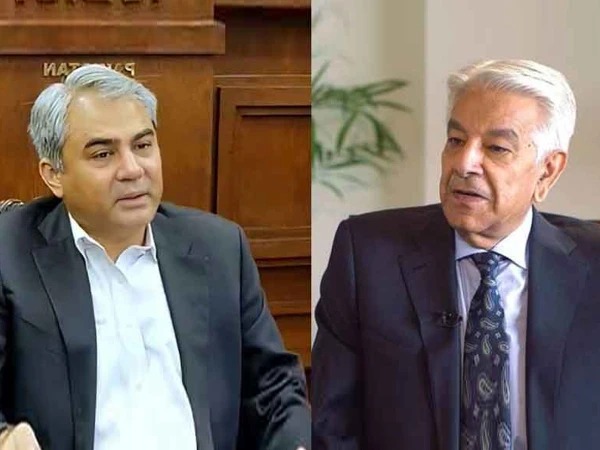
    Defence Minister Khawaja Asif has advised Interior Minister Mohsin Naqvi to begin efforts for changing the system by ensuring the implementation of the National Action Plan and improving performance within his own ministry. Reacting to Mohsin Naqvi’s recent remarks about weaknesses in the existing system, Khawaja Asif said he personally agrees to a large extent with the concerns raised by the interior minister. However, he emphasized that meaningful reforms should be pursued through constitutional and legal platforms, particularly Parliament and the cabinet. In a statement shared on social media, Khawaja Asif said that discussions about major reforms would produce better results if they were presented on parliamentary forums. He added that Parliament provides the appropriate platform for strengthening institutions and bringing sustainable changes through a constitutional process. The defence minister described Mohsin Naqvi as a powerful figure within the government and said that he should use his position to initiate practical reforms. He suggested that the process of system improvement should begin from the Interior Ministry and through the implementation of the National Action Plan. Khawaja Asif said that the evolution of the current system has been influenced by group and personal interests over several decades, and there is now a need to make institutions stronger and more independent. He stressed that reforms should not remain limited to statements but should be translated into practical measures. He further stated that important national issues should be discussed in constitutional forums such as Parliament and cabinet meetings. According to him, involving these institutions would strengthen the system, while discussions outside constitutional platforms may not have the same impact or acceptance. The defence minister also referred to the National Action Plan and said that out of the 13 points highlighted by the military leadership, the points related to the armed forces are being implemented through significant sacrifices. However, he claimed that several points under the responsibility of the Interior Ministry still require progress. Khawaja Asif urged Mohsin Naqvi to take the first step toward system reform by focusing on responsibilities already assigned to his ministry. He said that not only the business community but the entire nation would support genuine efforts aimed at improving governance and strengthening national institutions. He concluded that while discussions on reform are important, real change requires consistent action, institutional cooperation, and progress through established constitutional mechanisms.

  • |

    India’s young protesters turn memes into a tool of resistance

    NEW DELHI: A massive youth-led protest in India’s capital has taken an unusual turn after thousands of demonstrators responded to a police crackdown not only with slogans but also with memes, short videos and social media posts. The online campaign has become a powerful extension of the street movement, with young protesters using humour to document their experiences and keep public attention focused on their demands. The demonstrations were organised by supporters of the Cockroach Janta Party (CJP), a youth movement that first emerged over allegations of examination paper leaks and irregularities in government recruitment. Over time, the campaign expanded into a broader call for transparency, accountability and reforms in India’s education and recruitment systems. Tens of thousands of protesters marched towards Parliament in New Delhi, demanding the resignation of Education Minister Dharmendra Pradhan. Demonstrators accused the government of failing to stop repeated examination leaks that they say have damaged the future of millions of students. The minister has rejected the allegations and insisted that opposition parties are using students for political purposes. Police blocked the march before protesters could reach Parliament. Security personnel used tear gas and baton charges to disperse the crowd after demonstrators attempted to cross security barriers. Authorities also suspended mobile internet services around the protest area, saying the measure was necessary to maintain law and order. Both protesters and police reported injuries during the clashes. Demonstrators claimed that many participants were beaten during the operation, while police said several officers were also injured. Once internet services were restored, social media platforms were flooded with videos recorded during the protest. Instead of sharing only images of violence, many young protesters posted humorous clips showing themselves preparing for the march, running from tear gas and joking about the day’s events. Several participants uploaded “fit check” videos before joining the protest. The popular social media trend, usually used to show clothing and fashion, was transformed into political content. Some joked that they were dressed for a protest where they expected to face police action. Hours later, many of those same individuals were posting videos from the streets after the clashes. Other protesters shared short clips reviewing the effects of tear gas in a humorous style or laughing about the long distances they ran while escaping baton charges. The humour quickly attracted millions of views and became one of the defining features of the protest movement online. Participants said the jokes were never meant to make light of the violence. Instead, they described humour as a way to deal with fear and emotional stress. Many said laughing together helped them remain calm during an extremely tense situation. Young demonstrators also explained that recording videos had become a natural part of participating in modern protests. Smartphones allowed them to document events from their own perspective and preserve evidence of what happened on the streets. Researchers who study digital culture say the protests highlight how political activism is changing among younger generations. Unlike traditional demonstrations that relied mainly on speeches, banners and newspapers, today’s movements increasingly use short videos, memes and online storytelling to spread their message. Experts believe internet humour has become an effective political tool because it reaches audiences who may not normally follow current affairs. A single viral video or meme can introduce complex political issues to millions of young people in a simple and engaging way. Observers also note that humour has always played an important role in protest movements around the world. Songs, cartoons, street theatre and satire have historically helped protesters build unity, reduce fear and maintain morale during difficult campaigns. Social media has simply given those traditions a new digital form.

Leave a Reply

Your email address will not be published. Required fields are marked *