indias young protesters
|

India’s young protesters turn memes into a tool of resistance

NEW DELHI: A massive youth-led protest in India’s capital has taken an unusual turn after thousands of demonstrators responded to a police crackdown not only with slogans but also with memes, short videos and social media posts. The online campaign has become a powerful extension of the street movement, with young protesters using humour to document their experiences and keep public attention focused on their demands.

The demonstrations were organised by supporters of the Cockroach Janta Party (CJP), a youth movement that first emerged over allegations of examination paper leaks and irregularities in government recruitment. Over time, the campaign expanded into a broader call for transparency, accountability and reforms in India’s education and recruitment systems.

Tens of thousands of protesters marched towards Parliament in New Delhi, demanding the resignation of Education Minister Dharmendra Pradhan. Demonstrators accused the government of failing to stop repeated examination leaks that they say have damaged the future of millions of students. The minister has rejected the allegations and insisted that opposition parties are using students for political purposes.

Police blocked the march before protesters could reach Parliament. Security personnel used tear gas and baton charges to disperse the crowd after demonstrators attempted to cross security barriers. Authorities also suspended mobile internet services around the protest area, saying the measure was necessary to maintain law and order.

Both protesters and police reported injuries during the clashes. Demonstrators claimed that many participants were beaten during the operation, while police said several officers were also injured.

Once internet services were restored, social media platforms were flooded with videos recorded during the protest. Instead of sharing only images of violence, many young protesters posted humorous clips showing themselves preparing for the march, running from tear gas and joking about the day’s events.

Several participants uploaded “fit check” videos before joining the protest. The popular social media trend, usually used to show clothing and fashion, was transformed into political content. Some joked that they were dressed for a protest where they expected to face police action. Hours later, many of those same individuals were posting videos from the streets after the clashes.

Other protesters shared short clips reviewing the effects of tear gas in a humorous style or laughing about the long distances they ran while escaping baton charges. The humour quickly attracted millions of views and became one of the defining features of the protest movement online.

Participants said the jokes were never meant to make light of the violence. Instead, they described humour as a way to deal with fear and emotional stress. Many said laughing together helped them remain calm during an extremely tense situation.

Young demonstrators also explained that recording videos had become a natural part of participating in modern protests. Smartphones allowed them to document events from their own perspective and preserve evidence of what happened on the streets.

Researchers who study digital culture say the protests highlight how political activism is changing among younger generations. Unlike traditional demonstrations that relied mainly on speeches, banners and newspapers, today’s movements increasingly use short videos, memes and online storytelling to spread their message.

Experts believe internet humour has become an effective political tool because it reaches audiences who may not normally follow current affairs. A single viral video or meme can introduce complex political issues to millions of young people in a simple and engaging way.

Observers also note that humour has always played an important role in protest movements around the world. Songs, cartoons, street theatre and satire have historically helped protesters build unity, reduce fear and maintain morale during difficult campaigns. Social media has simply given those traditions a new digital form.

Similar Posts

  • |

    Indian student protest to continue after clashes in Delhi leave nearly 180 injured

    A youth led protest movement in India has vowed to continue demonstrations demanding the resignation of Education Minister Dharmendra Pradhan after violent clashes with police in New Delhi left nearly 180 people injured. The movement, known as the Cockroach Janta Party, cancelled plans for another march to parliament but said protests would continue at the Jantar Mantar demonstration site. Organisers said they wanted to avoid further injuries after Monday’s confrontation with security forces. The campaign began as an online satirical movement but has rapidly grown into one of the biggest public challenges facing Prime Minister Narendra Modi during his third term in office. It has attracted widespread support from young people angered by repeated examination paper leaks and allegations of corruption in India’s education system. Thousands of protesters from Delhi and nearby regions gathered outside parliament on Monday to demand accountability over a national medical entrance examination leak that affected more than two million students earlier this year. The exam had to be conducted again after question papers were leaked, while reports of several student suicides linked to the controversy intensified public outrage. Police used batons and tear gas to disperse demonstrators after violence broke out during the march. According to Delhi Police, more than 118 police and security personnel, along with around 60 protesters, were injured during the clashes. Most of those hurt received medical treatment and were later discharged from hospital. Authorities also detained around 70 protesters and said legal action would be taken against them. Police accused demonstrators of ignoring restrictions on public gatherings and behaving aggressively despite repeated warnings. On Tuesday, around 500 protesters gathered peacefully at Jantar Mantar despite light rain and heavy security across central Delhi. Paramilitary forces remained deployed while barricades were placed on several roads to prevent further unrest. CJP founder Abhijeet Dipke apologised to supporters for the violence they faced during Monday’s protest. He expressed particular concern over female demonstrators who he claimed were assaulted by male police officers during the clashes. Dipke announced that while the movement would continue its campaign, organisers would not attempt another march towards parliament because they feared more young people could be injured. The protest movement gained significant momentum after social activist Sonam Wangchuk joined the campaign with a hunger strike in late June. Wangchuk was later moved to hospital by authorities, a move that further fuelled criticism of the government among supporters. The group’s demands include the resignation of the education minister, the release of Wangchuk and financial compensation for the families of students who reportedly died by suicide following the examination leak. Government officials have indicated they are open to discussions. Health Minister JP Nadda recently met representatives of the movement and requested time to consider their demands. Parliamentary Affairs Minister Kiren Rijiju also called for calm and said ongoing talks should not be disrupted. Opposition parties criticised the government’s handling of the protests and accused authorities of using excessive force against peaceful demonstrators. Leaders of the ruling Bharatiya Janata Party rejected those claims and argued that the violence appeared to have been deliberately provoked. Political analysts believe that even if negotiations reduce immediate tensions, the wider frustration among India’s younger generation is unlikely to disappear. Concerns over unemployment, repeated examination scandals and growing distrust in public institutions continue to drive dissatisfaction, making youth unrest an increasingly important political issue for the government.

  • | |

    Paris Jackson shares rare insights into first meet…

    Paris Jackson is opening up about one of the most personal moments of her life: meeting her mother, Debbie Rowe, for the first time when she was 15. The singer and actress discussed the experience during a recent appearance on the Call Her Daddy podcast. Looking back, Paris revealed that the meeting was much more relaxed than people might expect. Rather than being an emotional or dramatic reunion, their first encounter unfolded in a surprisingly natural way. (People.com⁠) Paris explained that she had started asking questions about her mother when she was around 10 or 11. At the time, she was given enough information to satisfy her curiosity, including Rowe’s name, and she simply moved on. Several years later, however, Paris and Rowe finally connected when Paris was about 15. The reunion happened after years of limited contact. Rowe is the biological mother of Paris and her older brother, Prince Jackson. She was married to Michael Jackson from 1996 until their divorce in 2000, after which Michael retained full custody of their children. (EW.com⁠) Paris recalled that when she first encountered Rowe, she was with her grandmother. Instead of making the moment overly serious, Paris greeted her mother casually, reportedly saying, “Hey, Mom.” The two then spent time together talking and getting to know each other. (Page Six⁠) Interestingly, Paris said she did not approach the reunion with many expectations. She believes that keeping expectations low helped their relationship develop naturally instead of placing pressure on either of them. Over time, the mother-daughter relationship became stronger. Paris has previously spoken about discovering similarities between herself and Rowe, including their personalities and shared interest in music. She has also noted that they look alike and enjoy similar genres, particularly country and folk music. (Yahoo⁠) Their bond became especially meaningful as the years passed. Paris supported Rowe during her battle with breast cancer in 2016, further strengthening their connection. More recently, Paris has continued to share glimpses of their relationship, including rare photos of the two together. The actress has also reflected on how different her relationship with Rowe is from a traditional mother-daughter bond. Because they were separated during much of Paris’ childhood, their connection developed more gradually as she grew older. Now, Paris appears grateful for the relationship they have built. Her latest comments offer a rare glimpse into a deeply personal chapter of her life and show how a simple first meeting at 15 eventually grew into a meaningful bond between mother and daughter.

  • |

    Kuwait keeps bottled water purchase limit to prevent panic buying

    Kuwait’s Ministry of Social Affairs has confirmed that restrictions on bottled water purchases will remain in place as part of efforts to discourage panic buying and ensure supplies remain available for everyone. Under the current rules, shoppers can buy no more than five cartons of bottled water per invoice at central markets and cooperative society branches across the country. The ministry said all cooperative societies are required to enforce the purchase limit without exception. Officials have instructed the Union of Consumer Cooperative Societies to make sure every branch follows the directive and prevents customers from making unusually large purchases. Authorities believe the measure will help stop unnecessary stockpiling that could leave other shoppers without access to essential supplies. According to officials, the restriction is purely a precaution and should not be seen as a sign of a shortage. The ministry stressed that bottled water production remains stable and factories continue to operate at full capacity. Regular deliveries are being made to markets and cooperative stores, ensuring that supplies remain sufficient to meet consumer demand. Officials explained that the temporary limit is designed to promote fair distribution and prevent panic buying during the current situation. They said excessive purchasing by a small number of customers can quickly create empty shelves, increase crowding at stores and trigger unnecessary public concern even when supplies remain adequate. The ministry also confirmed that it is closely monitoring the implementation of the policy. Cooperative societies that fail to follow the instructions or violate the regulations could face action from the authorities. Officials urged retailers to strictly apply the purchase limit so that bottled water remains available to all consumers. Residents have been encouraged to buy only the amount they genuinely need and avoid hoarding. The ministry also warned against spreading unverified information or rumors that could create unnecessary fear and encourage panic buying among the public. Officials emphasized that responsible purchasing will help maintain steady supplies and prevent disruption in the market. In a separate development, Kuwait’s Ministry of Commerce and Industry has introduced a new legal framework for e-commerce platforms to improve consumer protection and regulate the country’s rapidly growing online marketplace. The regulations were introduced under Ministerial Resolution No. 109 of 2026 and officially came into force on July 8. They apply to all digital platforms involved in selling, ordering and delivering products within Kuwait. The new rules clearly define the responsibilities of online platforms, merchants, delivery companies and consumers. Officials said the regulations are intended to create a more transparent business environment while encouraging fair competition and supporting future investment in the digital economy. Under the updated framework, companies operating electronic platforms must obtain the required licences and comply with existing laws. They are also required to strengthen cybersecurity measures and protect their digital systems and customer information from cyberattacks, data breaches and misuse. Authorities believe the updated regulations will help build greater public confidence in online shopping while ensuring higher standards of safety and accountability across Kuwait’s expanding e-commerce sector.

  • | | |

    Gulf conflict pushes oil above $100

    Global oil prices continued their sharp upward trend on Friday as escalating conflict in the Gulf region raised fresh concerns about energy supplies and the outlook for the world economy. The sustained rise in crude prices has increased fears of renewed inflation, unsettled financial markets and strengthened expectations that central banks may keep interest rates higher for a longer period. Brent crude was trading at around $100 per barrel after briefly crossing $102, its highest level in nearly two months. Oil prices have climbed by almost 40% during the month, driven by growing concerns that the conflict could disrupt major shipping routes used for transporting crude oil. The latest increase comes as military tensions involving the United States, Iran and the Iran-backed Houthi movement continue to intensify. Attacks on commercial vessels in the Red Sea have heightened concerns about the safety of one of the world’s busiest maritime trade routes. At the same time, uncertainty surrounding shipping through the Strait of Hormuz has added to worries over global oil supplies. Analysts say the combination of risks to both the Red Sea and the Strait of Hormuz has significantly increased market uncertainty. Any prolonged disruption in these waterways could reduce oil exports from the Middle East and place additional pressure on global energy markets. The rise in crude prices has also revived concerns about inflation. Higher oil prices generally increase transportation, manufacturing and production costs, which can eventually lead to higher prices for goods and services. Economists warn that this could slow progress in reducing inflation across many countries. Global financial markets reacted cautiously to the latest developments. Major Asian stock markets recorded notable losses as investors worried about the combined impact of geopolitical tensions, rising energy costs and uncertainty over future economic growth. Investors increasingly shifted towards safer assets amid concerns that market volatility could continue. The outlook for monetary policy has also changed. Financial markets now expect that major central banks, including the US Federal Reserve, could delay planned interest rate cuts or even consider further rate increases if higher energy prices continue to fuel inflation.

  • |

    Heavy snow halts Spantik mission to recover Dr Asma

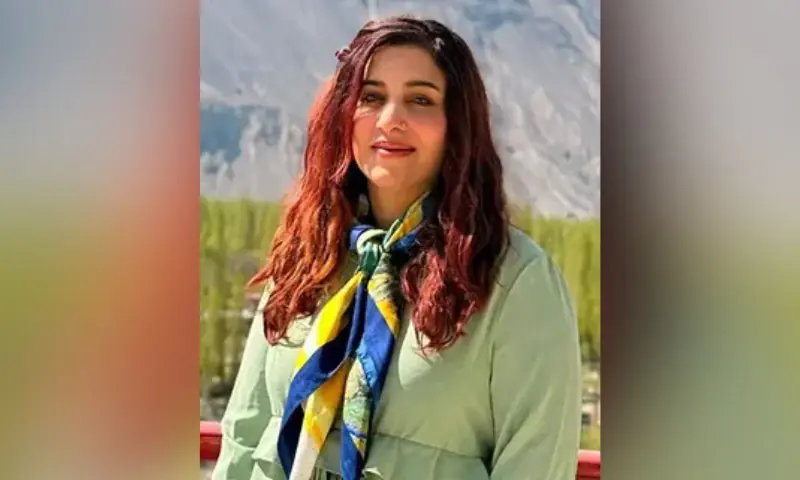
    GILGIT: A rescue mission to recover the body of Pakistani climber Dr Asma Mushtaq from Spantik Peak was halted on Sunday as heavy snowfall made the treacherous mountain too dangerous for the recovery team. Dr Asma Mushtaq, 34, died on Thursday while descending from the 7,027-metre Spantik, also known as Golden Peak, in Gilgit-Baltistan’s Shigar district. She reportedly suffered from high-altitude sickness after reaching the summit. Her body remains at an altitude of around 6,400 metres near Camp 3. According to the Alpine Club of Pakistan (ACP), a recovery team that left on Saturday reached Camp 2 but was forced to suspend the operation because of worsening weather. The team was advised to return to base camp and wait for a safer weather window. Efforts are also under way to obtain approval for a humanitarian helicopter mission with the support of the Pakistan Army. However, officials said helicopters cannot operate at altitudes above 6,000 metres to retrieve the body. The body must therefore first be brought down by a ground rescue team. ACP General Secretary Ayaz Shigri said a six-member local team was working to transport Dr Asma Mushtaq’s body to base camp, from where an army helicopter could potentially airlift it to Skardu. The recovery operation has also raised questions about the responsibilities of the expedition operator. Baltistan Division Commissioner Kamal Khan said the tour operator had violated mountaineering regulations by failing to arrange the required recovery team and helicopter arrangements. He said operators are responsible for arranging ground rescue and helicopter insurance when required. The official also alleged that mandatory briefing and debriefing procedures under the Mountaineering Rules 1999 had not been followed. However, Mr Khan rejected suggestions that negligence had caused the delay, saying local authorities arranged a recovery team soon after the incident on humanitarian grounds. The ACP stressed that it is Pakistan’s national federation for mountaineering and sport climbing, rather than a dedicated rescue organisation. It said Pakistan still lacks a properly established high-altitude rescue system and called for stronger mountaineering infrastructure. Dr Asma Mushtaq, originally from Lahore, was a UK-based obstetrics and gynaecology doctor and an avid traveller, vlogger and mountaineer. She had documented several expeditions online and had completed the winter ascent of Musa ka Musallah. Meanwhile, bad weather has also halted the recovery of US climber Sarah Mallory Geis from Broad Peak. Her body was recovered by three local porters after she went missing in a deadly avalanche on July 30. It remains at Broad Peak base camp awaiting an army helicopter flight to Skardu. The incidents have once again highlighted the extreme dangers of high-altitude mountaineering — and the urgent need for a reliable rescue system in Pakistan’s towering Karakoram.

  • |

    Diljit Dosanjh surprised after failing to find a trash bin in Japan

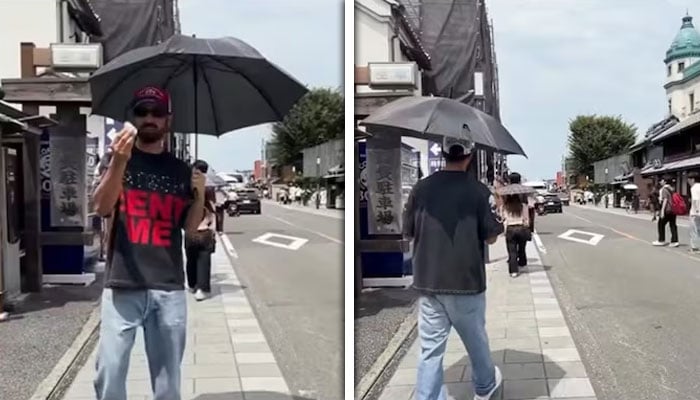
    Indian singer and actor Diljit Dosanjh has impressed fans after sharing a glimpse of Japan’s remarkable cleanliness, expressing surprise at the country’s unique approach to waste management. Taking to Instagram, the popular star posted a video documenting moments from his visit to Japan, where he highlighted the country’s exceptionally clean streets and the discipline of its residents. In the video, Diljit is seen buying an ice cream during his outing. After finishing it, he begins looking around for a public trash bin to dispose of the wrapper. However, despite walking through neat and well-maintained streets, he is unable to find a single bin nearby. Amused by the experience, the singer jokingly remarks that Japan is so clean that it feels as though people have even “cleaned away the trash bins.” He points out that although there are hardly any public waste bins in sight, the streets remain spotless, with no litter visible anywhere. The video also captures several scenic views of Japan’s tidy roads and public spaces, giving fans a closer look at the country’s well-known culture of cleanliness and civic responsibility. Apart from exploring the streets, Diljit shares other memorable moments from his trip. He is seen shopping for a ring before heading to a local restaurant, where he enjoys traditional Japanese cuisine. The clips offer a mix of sightseeing, shopping and food experiences, giving followers a glimpse into his travel adventures. His lighthearted commentary and genuine curiosity quickly caught the attention of fans, many of whom praised Japan’s cleanliness while appreciating the singer’s humorous observations. Japan is widely recognised for maintaining exceptionally clean public spaces despite having relatively few public trash bins. The country’s approach is rooted in a long-standing culture of personal responsibility and respect for shared environments. Residents and visitors are generally expected to keep their waste with them after eating or drinking outdoors and dispose of it later at home or in designated recycling and waste collection areas. This practice helps reduce litter while encouraging individuals to take responsibility for the waste they generate. As a result, it is common for people visiting Japan for the first time to be surprised by the lack of public bins, especially when they notice how clean the streets remain despite their absence. Diljit’s latest travel update has once again showcased his ability to connect with audiences through simple, relatable experiences. His humorous search for a trash bin and appreciation for Japan’s unique cleanliness culture resonated with viewers, offering an entertaining yet insightful look at everyday life in the country. The Instagram video has sparked conversations among fans about Japan’s disciplined civic habits and the importance of maintaining clean public spaces, with many praising the country’s culture of responsibility and environmental awareness.

Leave a Reply

Your email address will not be published. Required fields are marked *