petrol rs639 diesel
| | |

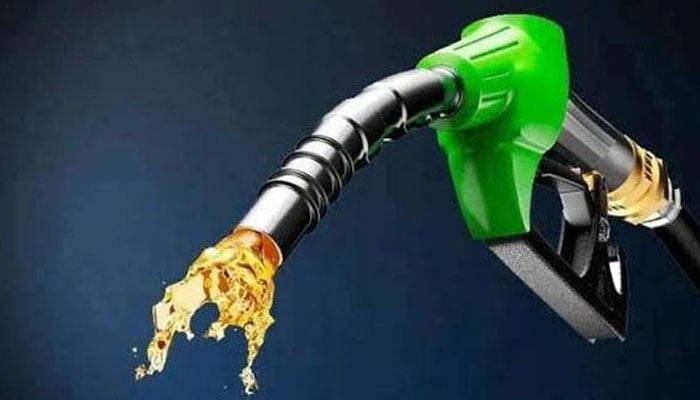
Petrol up Rs6.39, diesel Rs7.83

The federal government has announced an increase in the prices of major petroleum products, including petrol, high-speed diesel and kerosene oil. The revised prices came into effect from today and will remain applicable for one day, according to official notifications.

The Oil and Gas Regulatory Authority (OGRA) issued a notification confirming the increase in fuel prices. The revised rates were also endorsed through a separate notification issued by the Petroleum Division.

Under the new pricing structure, the price of petrol has been increased by Rs6.39 per litre. Following the increase, the new retail price of petrol has been fixed at Rs327.12 per litre.

The price of high-speed diesel (HSD) has also been revised upward. It has been increased by Rs7.83 per litre, taking the new price to Rs375.04 per litre.

The government has also raised the price of kerosene oil by Rs7.80 per litre. The new price has been set at Rs297.17 per litre.

The revised fuel prices became effective immediately after the issuance of the official notifications. According to the government, these rates will remain in force for one day only.

The increase is expected to affect transportation costs and fuel expenses for consumers during the period in which the revised prices remain applicable. Petrol is widely used by private vehicles and motorcycles, while high-speed diesel is consumed by heavy transport vehicles, public transport, agriculture and industrial sectors. Kerosene oil is commonly used in remote areas for cooking and heating purposes.


Similar Posts

  • | | |

    New CCTV footage surfaces in Mir Raza murder

    New CCTV footage has emerged in the investigation into the murder of Mir Raza Ali Khan, whose body was found in Karachi’s Gulistan-e-Jauhar area two days after he went missing. The footage shows Mir Raza taking a firearm out of a drawer inside his home and placing it in his vehicle before leaving. He is then seen returning to the kitchen shortly afterward. Another CCTV clip recorded at 4:38am shows Mir Raza walking alone near the area where his body was later discovered. According to police, Mir Raza went missing on July 28 after leaving his home in PECHS. Investigators said he departed at 4:09am in an online taxi and was later found dead in Gulistan-e-Jauhar. Police said the victim was shot in the chest and his body was recovered in a severely mutilated condition. Investigators also revealed that all of his social media accounts had been deactivated a day before his body was found. Authorities have sought Mir Raza’s mobile phone records and data of people who were in contact with him before his disappearance. Police are also examining information obtained from the telecom company as part of the ongoing investigation. The driver of the ride-hailing taxi used by Mir Raza has also been questioned. In his statement, the driver told investigators that he dropped the victim near his destination in Gulistan-e-Jauhar before leaving. Earlier, police recovered Mir Raza’s mobile phone and a pistol holster from the crime scene, which are now being examined as evidence. Mir Raza’s father said his son was due to marry on August 30 at Bait-ul-Mukarram Mosque in Gulshan-e-Iqbal. He said Mir Raza was excited about starting a new chapter of his life, making the tragedy even more heartbreaking for the family. Police said the investigation is continuing from multiple angles and that all available evidence, including CCTV footage, digital records and witness statements, is being analysed to identify those responsible for the killing.

  • |

    Unbeaten Pakistan seal CAVA volleyball title over Bangladesh

    Pakistan wrapped up a truly dominant campaign by winning the Central Asian Volleyball Association Championship on Wednesday. The home side defeated Bangladesh in straight sets during the final, played at the Liaquat Gymnasium within the Pakistan Sports Complex. This victory extended Pakistan’s unbeaten record across the entire six-nation tournament, which also included Kazakhstan, Nepal, Sri Lanka, and Uzbekistan. Throughout the match, Pakistan looked in complete control. Their serving was powerful, their blocking well organized, and their attacking play sharp and consistent. Bangladesh struggled to find any rhythm against such a well-rounded performance. Pakistan took the opening set 25-20 before stepping things up even further in the second, winning it comfortably 25-16 through disciplined, coordinated play. Bangladesh showed some fight in the third set and briefly threatened a comeback. Pakistan, however, refused to let the momentum slip and closed out the match 25-20, sealing the championship in front of a jubilant home crowd. The win marked a perfect end to the tournament for Pakistan, who finished all seven matches unbeaten and did not drop a single set throughout the competition. Following this achievement, Pakistan climbed eight spots in the FIVB world rankings, moving up to 38th place globally. This also makes them the sixth-ranked team in Asia, sitting just behind Japan, Iran, Qatar, South Korea, and China. In the other major result of the day, Sri Lanka secured the bronze medal after a hard-fought five-set win over Uzbekistan in the third-place playoff. Kazakhstan finished the tournament in fifth position, while Nepal ended up at the bottom of the standings. Following the win, Pakistan Volleyball Federation chairman Chaudhry Mohammad Yaqoob offered his congratulations to the team. He praised the players, coaches, and support staff for their contribution to the victory, describing it as the result of consistent hard work and discipline. He also thanked everyone involved in organizing the event, including sponsors, volunteers, and supporters who helped make it a success. Federation president Sohail Khawar Mir echoed similar sentiments, calling the achievement a strong reflection of Pakistan’s talent and preparation. He pointed out how difficult it is to win an entire tournament without dropping a single set, calling it a rare and impressive feat. Sohail also praised Bangladesh’s performance throughout the event and thanked the other competing nations for making it a strong, competitive championship. He added that the tournament had helped grow the sport’s presence in the region while boosting Pakistan’s reputation as a reliable host for international sporting events.

  • | | | | |

    Trump drops major statement on Iran: what China an…

    Washington: U.S. President Donald Trump has said he does not believe that China or Russia are supplying weapons to Iran, citing assurances he received from the leaders of both countries. Speaking to reporters, Trump said Chinese President Xi Jinping had assured him that Beijing would not provide weapons to Iran under any circumstances. According to Trump, the Chinese leader also stated that the policy applies to Chinese companies, preventing them from supplying arms to Tehran. Trump said he trusts President Xi’s commitment in the context of U.S.-China relations and believes China is adhering to that position. The U.S. president also said Russian President Vladimir Putin had informed him that Moscow would not sell weapons to Iran. Trump’s remarks come amid continued international attention on Iran’s military capabilities and regional security. However, he did not provide additional details or evidence to support the statements, nor did he elaborate on whether the assurances were part of recent diplomatic discussions. The comments reflect Washington’s ongoing focus on limiting the transfer of advanced military equipment to Iran as regional tensions and global security concerns continue to evolve.

  • | |

    Lower Kohistan marks Youm-e-Istehsal Kashmir with …

    LOWER KOHISTAN: The District Youth Office Lower Kohistan, in collaboration with the district administration and the education department, organised a ceremony at Government Model Girls High School (GMGHS), Pattan, on Wednesday to observe Youm-e-Istehsal Kashmir and reaffirm solidarity with the people of Indian Illegally Occupied Jammu and Kashmir (IIOJK). The event was attended by district administration officials, education department representatives, teachers, students, youth, and members of the local community. Participants paid tribute to the courage and resilience of the Kashmiri people and reiterated Pakistan’s continued support for their internationally recognised right to self-determination. Students presented speeches highlighting the historical significance of Youm-e-Istehsal Kashmir and staged thought-provoking tableau performances portraying the sacrifices, determination, and ongoing struggle of the people of Kashmir. The performances received appreciation from the audience for effectively conveying the message of peace, resilience, and national solidarity. Director Youth Affairs Khyber Pakhtunkhwa Abbas Khan Afridi said that the youth of the province had an important role in promoting awareness about the Kashmir issue and strengthening the values of unity, peace, and justice. He said the observance of Youm-e-Istehsal Kashmir reflected the nation’s unwavering commitment to standing with the people of Kashmir and supporting their legitimate right to self-determination. He urged young people to remain informed, responsible, and actively engaged in promoting truth, human rights, and national cohesion. The organisers said the event formed part of the Directorate of Youth Affairs Khyber Pakhtunkhwa’s continued efforts to engage young people in constructive civic activities while fostering patriotism, national unity, and awareness of issues of national importance.

  • AWC Announced Two Landmark Projects to Transform Bangkok’s Riverside

    BANGKOK– Asset World Corporation (AWC), Thailand’s leading integrated lifestyle real estate group, is pleased to announce a landmark collaboration to develop a signature project at Asiatique The Riverfront Destination. This initiative is designed to drive Thailand toward becoming a premier global sustainable tourism destination through “The World’s First Sustainable Cross-river Themed Cable Car Bangkok” and […]

  • |

    Petrol prices may bring relief in two days if global oil rates stay stable

    LAHORE: Federal Petroleum Minister Ali Pervaiz Malik has indicated that consumers could receive some relief in petroleum prices within the next two days if international crude oil rates remain stable, while acknowledging that elevated fuel costs continue to place pressure on households and the wider economy. Speaking in Lahore, the petroleum minister said the government was closely monitoring developments in the international oil market and would take the prevailing global prices into account during the next petroleum price review. Malik explained that petroleum prices in Pakistan are linked to international market trends and are calculated on the basis of a seven-day average. He said the Oil and Gas Regulatory Authority (OGRA) is responsible for determining the prices under the existing mechanism. He added that the movement of global oil prices during the next couple of days would be particularly important in determining whether consumers could receive positive news in the upcoming review. Government averts fuel supply crisis The minister said Pakistan had managed to maintain uninterrupted supplies of petroleum products despite severe pressure created by regional tensions and volatility in international energy markets. According to Malik, Prime Minister Shehbaz Sharif and his team took measures on both the economic and diplomatic fronts to ensure that the country did not experience a fuel shortage. He said the government had continued supplying petroleum products across the country even during a period when uncertainty in the region was creating serious risks for energy-importing nations. “There was no shortage of petroleum products in Pakistan during the tension,” Malik said, stressing that maintaining fuel supplies remained one of the government’s key priorities. He acknowledged, however, that preventing a shortage did not eliminate the financial burden caused by high international oil prices. International oil market remains a major concern Malik said the recent regional conflict created extraordinary volatility in global energy markets. He pointed to sharp increases in crude oil, petrol and diesel prices during the period of heightened tensions. He said crude oil prices had at one stage climbed as high as $170 per barrel, while diesel prices reached around $280 and petrol prices also touched $170. The minister further referred to periods when market expectations pointed towards even more dramatic increases, with petrol and diesel prices moving towards levels of around $500. Such volatility, he said, demonstrated the difficulties faced by countries that rely heavily on imported energy to meet domestic requirements. Pakistan, being an energy-importing country, remains particularly vulnerable to sudden increases in international oil prices because changes in global rates can quickly affect domestic fuel prices, transportation expenses and industrial costs. Expensive fuel putting pressure on people The petroleum minister conceded that high fuel prices are creating difficulties for ordinary citizens and businesses. He said an increase in petroleum prices does not remain confined to fuel stations, as higher transportation and energy costs eventually affect the prices of goods and services throughout the economy. According to Malik, expensive petroleum products increase the cost of moving agricultural produce, industrial raw materials and finished goods, thereby adding to inflationary pressure. “The people are suffering” because petroleum products are expensive, he said, while maintaining that the government was making efforts to provide relief within its available financial capacity. Petroleum levy collection exceeds target Malik also disclosed that the government collected around Rs1,900 billion through the petroleum levy during the previous year, exceeding the official target of Rs1,700 billion. The collection represents an important source of government revenue, but the minister acknowledged the broader economic implications of relying on petroleum-related revenues while consumers are already facing high fuel costs. He said the government had to balance revenue requirements with the need to protect consumers from excessive increases in petroleum prices. Prices cut when conditions allowed The minister said the government reduced petroleum prices whenever international market conditions and other relevant factors created room for downward revisions. He said Prime Minister Shehbaz Sharif had ordered reductions when an agreement was reached and circumstances permitted the government to pass on the benefit to consumers. Malik said the administration was attempting to manage fuel prices within the limits imposed by international markets and domestic economic conditions. He also recalled the prime minister’s commitment to introducing greater transparency in the petroleum pricing mechanism. The minister said the government had been required to make difficult decisions as part of broader efforts to stabilise the economy and place Pakistan on a sustainable development path. Heavy reliance on imported energy questioned Malik also raised concerns over Pakistan’s longstanding dependence on imported energy. He questioned why the country had continued relying on overseas energy supplies for decades despite having significant potential for developing domestic oil and gas resources. The minister said Pakistan obtains around 90% of its energy requirements from foreign sources, leaving the economy exposed to fluctuations in global energy prices and geopolitical developments. He argued that reducing this dependence should be treated as a long-term national priority. According to Malik, Pakistan has promising gas resources in areas such as Waziristan and Balochistan, and greater efforts are required to explore, develop and utilise domestic reserves. He said increasing local production could eventually reduce pressure on the country’s import bill and provide greater protection against international price shocks. Focus shifts towards domestic energy development The minister said Pakistan could not continue responding to every international energy crisis after it had already occurred. Instead, he stressed the need for long-term investment in exploration, infrastructure and domestic energy production. He said the government wants to move the country away from a cycle in which international price increases immediately translate into domestic economic difficulties. Malik described development of local energy resources as an important component of Pakistan’s broader economic strategy. He said the government was working towards an environment in which energy availability could support industrial expansion, investment and economic growth. Major energy infrastructure initiative planned Malik also referred to a new infrastructure initiative, saying the prime minister and the field marshal had assigned a major internationally recognised company to undertake energy infrastructure work within a

Leave a Reply

Your email address will not be published. Required fields are marked *