petrol prices may
|

Petrol prices may bring relief in two days if global oil rates stay stable

LAHORE: Federal Petroleum Minister Ali Pervaiz Malik has indicated that consumers could receive some relief in petroleum prices within the next two days if international crude oil rates remain stable, while acknowledging that elevated fuel costs continue to place pressure on households and the wider economy.

Speaking in Lahore, the petroleum minister said the government was closely monitoring developments in the international oil market and would take the prevailing global prices into account during the next petroleum price review.

Malik explained that petroleum prices in Pakistan are linked to international market trends and are calculated on the basis of a seven-day average. He said the Oil and Gas Regulatory Authority (OGRA) is responsible for determining the prices under the existing mechanism.

He added that the movement of global oil prices during the next couple of days would be particularly important in determining whether consumers could receive positive news in the upcoming review.

Government averts fuel supply crisis

The minister said Pakistan had managed to maintain uninterrupted supplies of petroleum products despite severe pressure created by regional tensions and volatility in international energy markets.

According to Malik, Prime Minister Shehbaz Sharif and his team took measures on both the economic and diplomatic fronts to ensure that the country did not experience a fuel shortage.

He said the government had continued supplying petroleum products across the country even during a period when uncertainty in the region was creating serious risks for energy-importing nations.

“There was no shortage of petroleum products in Pakistan during the tension,” Malik said, stressing that maintaining fuel supplies remained one of the government’s key priorities.

He acknowledged, however, that preventing a shortage did not eliminate the financial burden caused by high international oil prices.

International oil market remains a major concern

Malik said the recent regional conflict created extraordinary volatility in global energy markets. He pointed to sharp increases in crude oil, petrol and diesel prices during the period of heightened tensions.

He said crude oil prices had at one stage climbed as high as $170 per barrel, while diesel prices reached around $280 and petrol prices also touched $170.

The minister further referred to periods when market expectations pointed towards even more dramatic increases, with petrol and diesel prices moving towards levels of around $500.

Such volatility, he said, demonstrated the difficulties faced by countries that rely heavily on imported energy to meet domestic requirements.

Pakistan, being an energy-importing country, remains particularly vulnerable to sudden increases in international oil prices because changes in global rates can quickly affect domestic fuel prices, transportation expenses and industrial costs.

Expensive fuel putting pressure on people

The petroleum minister conceded that high fuel prices are creating difficulties for ordinary citizens and businesses.

He said an increase in petroleum prices does not remain confined to fuel stations, as higher transportation and energy costs eventually affect the prices of goods and services throughout the economy.

According to Malik, expensive petroleum products increase the cost of moving agricultural produce, industrial raw materials and finished goods, thereby adding to inflationary pressure.

“The people are suffering” because petroleum products are expensive, he said, while maintaining that the government was making efforts to provide relief within its available financial capacity.

Petroleum levy collection exceeds target

Malik also disclosed that the government collected around Rs1,900 billion through the petroleum levy during the previous year, exceeding the official target of Rs1,700 billion.

The collection represents an important source of government revenue, but the minister acknowledged the broader economic implications of relying on petroleum-related revenues while consumers are already facing high fuel costs.

He said the government had to balance revenue requirements with the need to protect consumers from excessive increases in petroleum prices.

Prices cut when conditions allowed

The minister said the government reduced petroleum prices whenever international market conditions and other relevant factors created room for downward revisions.

He said Prime Minister Shehbaz Sharif had ordered reductions when an agreement was reached and circumstances permitted the government to pass on the benefit to consumers.

Malik said the administration was attempting to manage fuel prices within the limits imposed by international markets and domestic economic conditions.

He also recalled the prime minister’s commitment to introducing greater transparency in the petroleum pricing mechanism.

The minister said the government had been required to make difficult decisions as part of broader efforts to stabilise the economy and place Pakistan on a sustainable development path.

Heavy reliance on imported energy questioned

Malik also raised concerns over Pakistan’s longstanding dependence on imported energy.

He questioned why the country had continued relying on overseas energy supplies for decades despite having significant potential for developing domestic oil and gas resources.

The minister said Pakistan obtains around 90% of its energy requirements from foreign sources, leaving the economy exposed to fluctuations in global energy prices and geopolitical developments.

He argued that reducing this dependence should be treated as a long-term national priority.

According to Malik, Pakistan has promising gas resources in areas such as Waziristan and Balochistan, and greater efforts are required to explore, develop and utilise domestic reserves.

He said increasing local production could eventually reduce pressure on the country’s import bill and provide greater protection against international price shocks.

Focus shifts towards domestic energy development

The minister said Pakistan could not continue responding to every international energy crisis after it had already occurred. Instead, he stressed the need for long-term investment in exploration, infrastructure and domestic energy production.

He said the government wants to move the country away from a cycle in which international price increases immediately translate into domestic economic difficulties.

Malik described development of local energy resources as an important component of Pakistan’s broader economic strategy.

He said the government was working towards an environment in which energy availability could support industrial expansion, investment and economic growth.

Major energy infrastructure initiative planned

Malik also referred to a new infrastructure initiative, saying the prime minister and the field marshal had assigned a major internationally recognised company to undertake energy infrastructure work within a period of three months.

He presented the initiative as part of the government’s broader plan to strengthen Pakistan’s energy infrastructure and address weaknesses that have persisted in the sector for years.

According to the minister, improving energy infrastructure and expanding domestic capacity could help Pakistan reduce its exposure to imported energy and strengthen its economic resilience.

Pakistan’s regional position highlighted

During his remarks, Malik also spoke about Pakistan’s changing role in the region, saying the country had emerged as a net security provider.

He said the government’s attention was increasingly focused on the next stage: achieving sustainable economic development after navigating a difficult period of regional and economic uncertainty.

The minister maintained that Pakistan had successfully managed the challenges arising from tensions involving Iran and the United States without allowing the situation to develop into a nationwide petroleum shortage.

He said the government had taken difficult decisions to protect economic stability while continuing efforts to move the country towards development.

OGRA to determine next petroleum prices

Clarifying the price-setting mechanism, Malik reiterated that OGRA is responsible for determining petroleum prices.

He said the regulator calculates domestic rates using a seven-day average of international petroleum prices, along with other applicable factors under the pricing formula.

As a result, movements in global oil markets over the next two days could play an important role in determining the direction of domestic fuel prices during the upcoming review.

For consumers, the key question remains whether international oil rates will remain stable enough for the government to pass on any reduction.

Malik’s comments have therefore raised expectations of possible relief, although the final decision will depend on international market conditions and the calculations made during the next price review.

Similar Posts

  • |

    Syria condemns Israeli airstrikes as ‘flagrant violation’

    Syria has strongly condemned Israeli airstrikes on the Abu al-Duhur Military Airbase in Idlib province, calling the attack a serious violation of its sovereignty. The Syrian Foreign Ministry said the strikes were an unjustified act of aggression. It warned that continued Israeli attacks could further destabilise the region. According to Syrian state media, Israeli aircraft carried out several strikes on the abandoned military airbase early Tuesday. The attacks targeted the runway and caused damage to the facility’s infrastructure. No casualties were reported in the strikes. The Syrian Foreign Ministry said the attacks were particularly concerning as Damascus was seeking to maintain stability and avoid further escalation in the region. It accused Israel of undermining those efforts and increasing tensions through repeated military operations inside Syrian territory. The ministry said Israeli attacks had continued since December 2024. It argued that the repeated strikes threatened Syria’s territorial integrity and regional security. The Abu al-Duhur airbase is located in the eastern countryside of Idlib in northern Syria. The facility has been largely inactive, but its strategic military infrastructure has remained a target during Israel’s operations in Syria. Israel has carried out numerous strikes in Syria in recent years. Its operations have previously targeted weapons depots, missile facilities and military positions linked to Iranian forces and Hezbollah. The latest strikes also drew concern from Washington. US envoy to Syria Tom Barrack said the United States was “deeply concerned” about the Israeli operation. He described the strikes as an unnecessary escalation that would not contribute to regional stability. Barrack said Syria’s current government had not adopted what he called a predatory approach or maintained proxy forces. He added that Damascus had repeatedly indicated a preference for reducing tensions with Israel. The US envoy said Washington remained willing to support diplomatic efforts between the two sides. He stressed that dialogue should be prioritised over military escalation. The latest developments come amid continued instability in Syria following the fall of the Bashar al-Assad government. Israel has expanded its military activity in Syria since then, citing security concerns. Damascus has repeatedly condemned Israeli military operations and called for respect for Syrian sovereignty.

  • | | |

    Salman Khan house security guard dies suddenly dur…

    A Mumbai police constable posted outside Bollywood superstar Salman Khan’s residence has died after reportedly falling ill while on security duty. The officer, identified as Constable Ganesh Raite, was part of the Mumbai Police team deployed outside Salman Khan’s Galaxy Apartments in Mumbai. According to Indian media reports, the constable complained of feeling unwell at around 6pm on Friday while carrying out his duty. His colleagues reportedly arranged for him to be taken to a hospital shortly afterward. However, doctors declared him dead after he was brought to the medical facility. Police officials have indicated that the constable may have suffered a heart attack while on duty. However, the exact cause of death has not yet been officially established. His body has been sent for a post-mortem examination, and the medical report is expected to provide further details. The incident occurred as Salman Khan continues to remain under heightened security because of threats against him. The actor’s security was upgraded to the Y-Plus category in 2024 following the killing of his close friend and former Maharashtra minister Baba Siddique. Salman has faced repeated threats reportedly linked to the Lawrence Bishnoi gang, with tensions surrounding a long-running blackbuck poaching case involving the actor. Security around Salman Khan’s residence has also been tightened following previous incidents. In April 2024, two motorcycle-borne individuals reportedly fired several rounds outside Galaxy Apartments. Investigators later linked the shooting incident to people associated with the Lawrence Bishnoi network. The latest death occurred while police personnel were continuing their security duties outside the actor’s Mumbai residence. The sudden death of Constable Ganesh Raite has raised attention because of the demanding security arrangements surrounding Salman Khan, who remains one of Bollywood’s most prominent and closely protected celebrities. Authorities are expected to establish the precise medical cause of death after the post-mortem examination. Until the medical findings are released, reports of a heart attack remain an initial assessment rather than a confirmed cause. The incident is also a reminder of the risks faced by police personnel assigned to high-profile security duties, where officers are required to maintain prolonged vigilance around protected individuals and their residences. Further details about the constable’s medical history and the circumstances surrounding his final moments are expected to emerge as the investigation and medical examination continue.

  • |

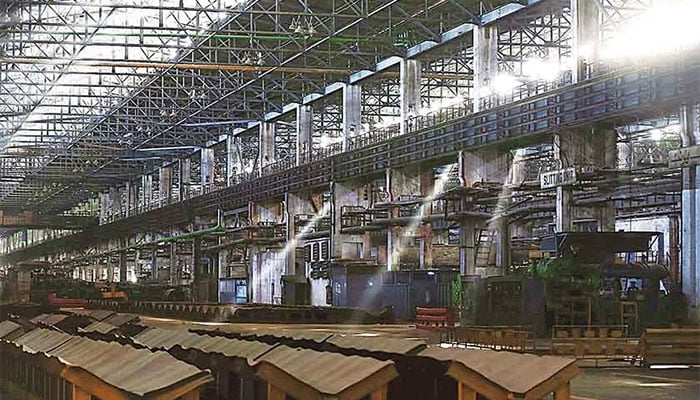
    Pakistan moves to revive Steel Mills after earlier liquidation decision

    The federal government has revived plans to restore Pakistan Steel Mills (PSM), signaling a major policy shift after previously deciding to wind up the loss-making state-owned enterprise. The development follows renewed interest from international parties in bringing the dormant steel producer back into operation, with Russian company Industrial Engineering LLC emerging as a key potential partner for the revival, modernisation and restructuring of the mill. Well-informed sources said the government has initiated consultations with the Russian firm to assess the technical, financial and operational requirements for restoring PSM’s production capacity. Two protocols have already been signed between Industrial Engineering LLC and Pakistan Steel Mills under the Ministry of Industries and Production. The first agreement was signed in Moscow on July 10, 2025, and provides a framework for cooperation on the revival, modernisation and restructuring of PSM. The second protocol was signed on November 26, 2025, during the 10th session of the Pakistan-Russia Intergovernmental Commission. The second agreement focuses on assessing the operational and capital expenditure required to restart manufacturing activities at the steel mill. Feasibility assessment under way According to sources, the authorities have also carried out an exercise to calculate production costs and evaluate the commercial viability of restarting PSM. The assessment is expected to help determine whether the mill can operate sustainably and compete in the domestic and international steel markets after years of inactivity. The findings will form the basis for recommendations to the government before a final decision is taken on the future structure and operations of the enterprise. Sources said the relevant authority would submit recommendations to the Cabinet Committee on State-Owned Enterprises (CCoSOEs), seeking an end to the liquidation process and approval to pursue the revival option with the participation of international investors. The move represents a reversal of the government’s earlier policy. Government had approved liquidation In May 2024, the Special Investment Facilitation Council (SIFC) had decided to scrap Pakistan Steel Mills after efforts to find a buyer failed to produce a viable offer. The Cabinet Committee on Rightsizing subsequently approved the liquidation of the existing mill in August 2024. However, the government has now shifted its focus towards rehabilitation, apparently encouraged by renewed international interest and the possibility of securing foreign technical and financial support. A formal summary regarding the proposed policy shift has been submitted to the Ministry of Industries and Production for consideration, sources said. A parliamentary secretary also indicated that the government’s policy direction had changed and that efforts were now being made to restore PSM to operational status. He said the timeline agreed upon with the Russian company would be followed, with the relevant departments expected to take further steps after completion of the ongoing assessments. Power minister signals renewed revival efforts Separately, Minister for Power Sardar Awais Leghari said recommendations for reviving Pakistan’s dormant steel giant would soon be presented to policymakers, reinforcing indications that the government is seriously reconsidering the future of PSM. Speaking at a webinar titled “Pakistan-Russia: Strengthening Trade, Education and Energy Collaboration,” jointly organised by the University of World Civilizations Moscow (UWCM) and the Institute of Regional Studies (IRS), Leghari highlighted the growing momentum in Pakistan-Russia relations. He said bilateral ties had strengthened over the past two decades on the basis of mutual trust, respect and a shared interest in regional stability. The minister’s remarks come as Pakistan explores greater Russian involvement in key economic and industrial sectors, including the possible rehabilitation of PSM. Financial burden remains a challenge Pakistan Steel Mills has remained largely dormant for years, creating a continuing financial burden for the government. Following the earlier decision to wind up the enterprise, the government has continued to bear the salaries and other expenses of its remaining employees. Meanwhile, some of the mill’s liabilities and operating costs have been met through proceeds generated from the sale of scrap. The proposed revival could therefore provide an opportunity to turn the idle industrial asset into a productive enterprise while reducing the recurring financial burden on the national exchequer. However, the government is expected to carefully evaluate the mill’s outstanding liabilities, infrastructure requirements, production costs, technology needs and long-term market prospects before committing substantial public resources. If the revival plan moves forward with foreign participation, the project could also open the door to new investment, technology transfer and employment opportunities in Pakistan’s steel and related industrial sectors.

  • | |

    Water level rises in the Chenab river, flooding se…

      The Irrigation Department has reported a significant increase in the water flow of the Chenab River, raising concerns about flooding in nearby riverine areas. According to officials, the rising water level has already affected several low-lying settlements, forcing floodwater into residential and agricultural areas and creating difficulties for local communities. The department stated that the increase in the river’s discharge has caused water to spread into nearby villages located along the banks of the Chenab River. As a result, a protective embankment known as the Zamindara Bund in Jalalpur Pirwala Tehsil has been breached. The collapse of the embankment has allowed floodwater to move more rapidly into surrounding areas, increasing the risk to people, homes, livestock, and crops. According to the Irrigation Department, at least five villages have been submerged due to the rising floodwaters. Among the affected settlements are Basti Khuda Bakhsh, Basti Allah Rakha, and Basti Bakhsha, along with two other nearby villages. Residents in these areas are facing severe challenges as water continues to enter homes, farmland, and local roads. Many families are concerned about the safety of their property and the possibility of further flooding if water levels continue to rise. Officials have also reported that water levels have increased in the surroundings of Head Muhammad Wala Road and near Qasim Bela. These areas are being closely monitored as authorities assess the situation and evaluate the potential for additional flooding. The rise in water has affected transportation routes, making travel difficult for residents and increasing the need for precautionary measures. The Irrigation Department is keeping a close watch on the river’s flow and is expected to continue monitoring the situation in coordination with local administration and disaster management authorities. Residents living in vulnerable riverine areas have been advised to remain alert and follow official instructions. If water levels continue to increase, further evacuations and emergency measures may become necessary to ensure public safety. Flooding in the Chenab River region is a recurring challenge during the monsoon season, particularly when heavy rainfall upstream leads to a sudden increase in river discharge. Breaches in protective embankments can significantly worsen the situation by allowing water to spread rapidly into populated areas. Such incidents often result in damage to homes, agricultural land, and infrastructure, while also disrupting daily life and economic activities. Local authorities are expected to assess the extent of the damage once water levels stabilize. Relief efforts may include providing temporary shelter, food, clean drinking water, and medical assistance to affected families. The government and emergency response agencies are likely to continue monitoring weather conditions and river flows to reduce further risks. The situation remains under observation, and officials have urged residents in flood-prone areas to stay informed through official updates and cooperate with emergency responders. Authorities are working to minimize the impact of the flooding and ensure the safety of communities living along the Chenab River.

  • | | |

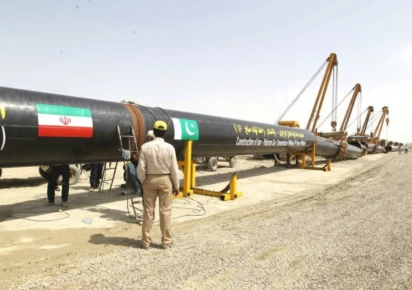
    PM forms top panel to revive Iran gas pipeline

    Prime Minister Shehbaz Sharif has formed a high-level committee to find a mutually acceptable solution to the long-delayed Pakistan-Iran gas pipeline project, which has remained stuck for more than a decade. Petroleum Minister Ali Pervaiz Malik informed the Senate that the committee is examining the legal, financial and energy implications of the project. It will assess Pakistan’s potential financial exposure in the ongoing arbitration process while also considering the country’s future energy requirements. The minister was responding to a calling-attention notice raised by Senator Talha Mahmood. He said the government was seeking a negotiated solution rather than allowing the dispute to become more complicated through prolonged litigation. Describing Iran as a “brotherly country”, Malik said the leadership of Pakistan and Iran remained in contact and was working towards an amicable settlement. He noted that Iran had already completed substantial infrastructure on its side of the project. Iranian authorities have brought gas from the South Pars field towards a major city close to the Pakistani border. The dispute over the pipeline has reached international arbitration in Paris. Pakistan is therefore assessing the possible financial consequences of the project delays and the legal proceedings before deciding its next course of action. The government is also reviewing whether the pipeline can be made commercially viable. Pakistan has previously asked Iran to cut its gas price by around 50 per cent and reduce the proposed supply volume because several domestic sectors have shown limited interest in purchasing Iranian gas at existing prices. Officials have said that domestic consumers and fertiliser plants are currently receiving gas at significantly lower prices than the cost at which imported gas could be supplied through the project. Power producers have also indicated that purchasing imported gas at prices above Rs2,000 per million British thermal units would not be commercially feasible. The government has therefore been considering a lower price as a potential benchmark for making the pipeline economically sustainable. Pakistan has also indicated that it could move ahead with the project if the United States provides a waiver allowing energy cooperation with Iran despite Washington’s sanctions regime. The Iran-Pakistan pipeline, commonly known as the Peace Pipeline, was originally designed to transport Iranian natural gas to Pakistan and help address the country’s long-term energy needs. Iran completed a substantial portion of the pipeline within its territory. Pakistan, however, did not complete its section by the agreed deadline, leaving the project largely dormant. US sanctions against Iran, difficulties in securing financing and wider geopolitical tensions have complicated Pakistan’s efforts to complete the project. The issue has also resulted in legal disputes between the two countries. Iran initiated international arbitration proceedings in Paris over delays in the implementation of the project. Meanwhile, the petroleum minister told the Senate that the government was separately addressing gas-related problems in Balochistan. He said Prime Minister Shehbaz Sharif had instructed him to engage with provincial stakeholders. Another high-level committee, headed by Deputy Prime Minister and Foreign Minister Ishaq Dar, is examining gas-related issues in the province, including technical and payment-related matters. The latest move indicates that Islamabad is attempting to balance its obligations under the Iran gas project with its financial constraints, international commitments and changing energy requirements.

Leave a Reply

Your email address will not be published. Required fields are marked *