lower kohistan marks
| |

Lower Kohistan marks Youm-e-Istehsal Kashmir with …

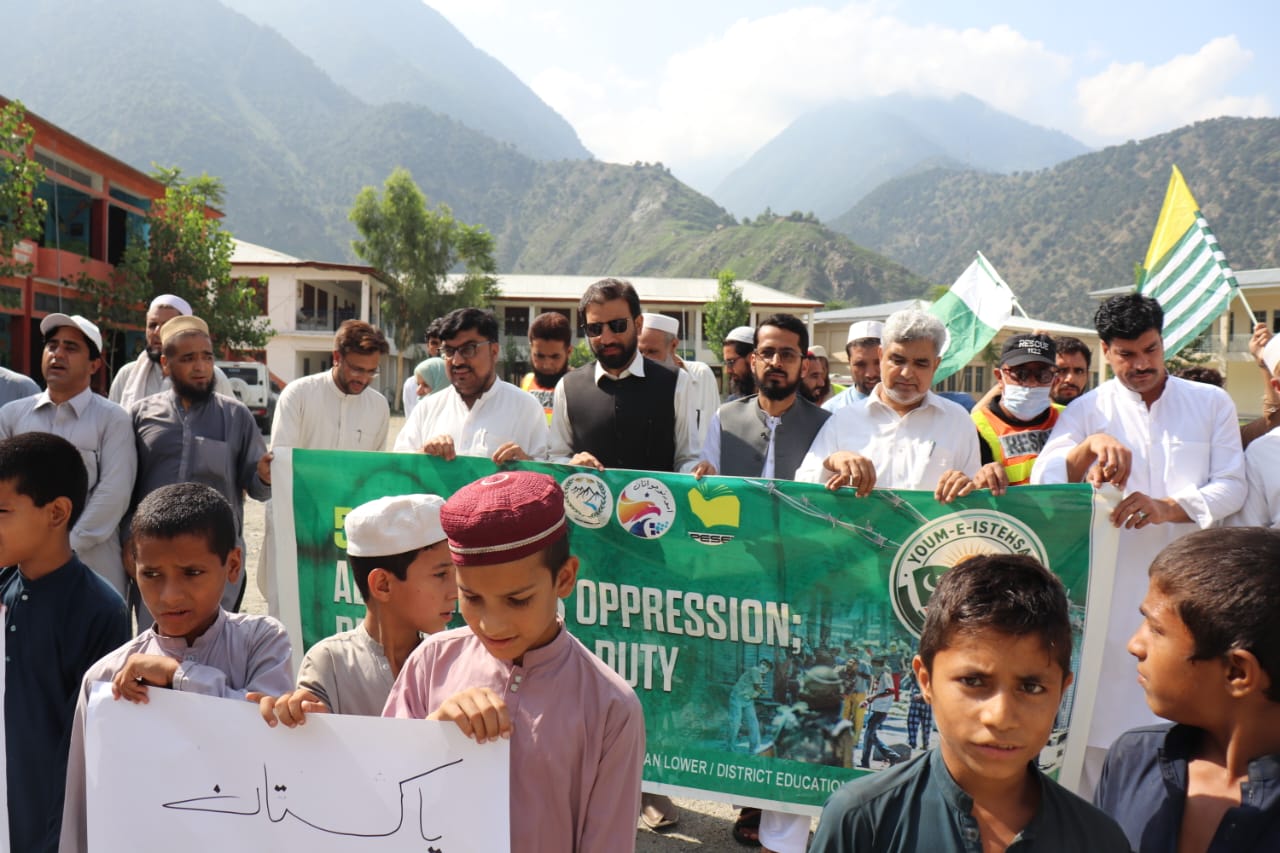
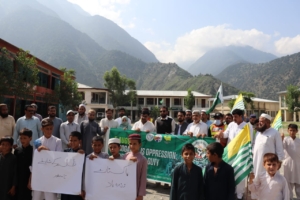
LOWER KOHISTAN: The District Youth Office Lower Kohistan, in collaboration with the district administration and the education department, organised a ceremony at Government Model Girls High School (GMGHS), Pattan, on Wednesday to observe Youm-e-Istehsal Kashmir and reaffirm solidarity with the people of Indian Illegally Occupied Jammu and Kashmir (IIOJK).

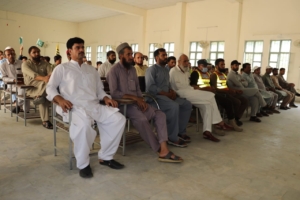
The event was attended by district administration officials, education department representatives, teachers, students, youth, and members of the local community. Participants paid tribute to the courage and resilience of the Kashmiri people and reiterated Pakistan’s continued support for their internationally recognised right to self-determination.
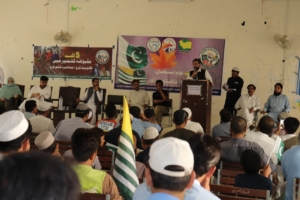
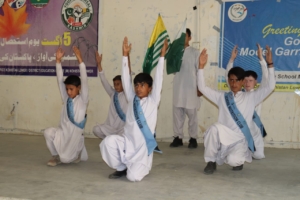
Students presented speeches highlighting the historical significance of Youm-e-Istehsal Kashmir and staged thought-provoking tableau performances portraying the sacrifices, determination, and ongoing struggle of the people of Kashmir. The performances received appreciation from the audience for effectively conveying the message of peace, resilience, and national solidarity.
Director Youth Affairs Khyber Pakhtunkhwa Abbas Khan Afridi said that the youth of the province had an important role in promoting awareness about the Kashmir issue and strengthening the values of unity, peace, and justice. He said the observance of Youm-e-Istehsal Kashmir reflected the nation’s unwavering commitment to standing with the people of Kashmir and supporting their legitimate right to self-determination. He urged young people to remain informed, responsible, and actively engaged in promoting truth, human rights, and national cohesion.

The organisers said the event formed part of the Directorate of Youth Affairs Khyber Pakhtunkhwa’s continued efforts to engage young people in constructive civic activities while fostering patriotism, national unity, and awareness of issues of national importance.

Similar Posts

  • | | |

    PSX rallies over 5,000 points as regional tensions…

    The Pakistan Stock Exchange started the week with a strong rally on Monday. The benchmark KSE-100 Index gained more than 5,000 points during intraday trading. The sharp rise came as investors welcomed the pause in fighting between the United States and Iran. The index opened with strong buying activity. By 9:50am, it had risen 4,501 points to reach 175,522.53 points. The previous close was 171,021.20 points. The upward movement continued during the morning session. By 10:30am, the index had gained 5,069 points and reached 176,090.08 points. The improved geopolitical situation boosted investor confidence. The United States and Iran have paused their military strikes. The development has raised hopes for renewed diplomatic efforts. Investors also expect the easing of tensions to support shipping activity through the Strait of Hormuz. The waterway is important for global energy supplies. Any prolonged disruption can push oil prices higher and increase pressure on economies that depend on imported fuel. The latest development also affected global oil markets. Crude prices fell sharply as investors reacted to the temporary halt in hostilities. Brent crude briefly dropped below $90 per barrel. It fell more than 7% at one stage during early trading. US West Texas Intermediate crude also declined. The fall in international oil prices could provide some relief to Pakistan’s economy. Pakistan spends a significant amount on energy imports. Lower oil prices can therefore help reduce pressure on the country’s import bill and external account. Market analysts said the improvement in geopolitical conditions could also influence the State Bank of Pakistan’s monetary policy decision. Awais Ashraf, director of research at AKD Securities, said investors were expecting the central bank to maintain the policy rate. The State Bank is also expected to assess developments in the Middle East. The impact of recent floods on Pakistan’s economy will also remain under consideration. Analysts said the continuing decline in inflation and a relatively comfortable external account could support monetary easing in the coming months. However, economic activity and money supply trends remain important factors for policymakers. The strong rally follows a difficult week for the PSX. The KSE-100 Index had fallen by around 2.7% last week. The index lost 4,782 points and closed at 171,021.20 points. Rising tensions between the United States and Iran had increased uncertainty in financial markets. Higher international oil prices also added pressure. Investors had remained cautious because of concerns that the conflict could expand across the region. Monday’s sharp recovery shows how quickly market sentiment can change when geopolitical risks decline. Despite the strong gains, analysts remain cautious about the outlook. Further developments between Washington and Tehran will remain important. Global oil prices will also influence investor sentiment. The State Bank’s monetary policy decision is another key factor for the market.

  • | |

    Climate authority summoned again as questions grow…

    Islamabad: The Pakistan Climate Change Authority has been called back before a Senate committee only days after Chairperson Sherry Rehman strongly questioned why a new authority was operating alongside the Climate Change Ministry, asked what new work it was actually doing and raised concerns over staff costs, duplication and the use of public money. The fresh meeting will again focus almost entirely on the authority, its work, projects, programmes and progress. The quick return of the issue to the committee has increased pressure on the authority to clearly explain why it exists and what results it has produced that the Ministry of Climate Change and Environmental Coordination could not already deliver. At the previous meeting, Sherry Rehman repeatedly asked officials what work the authority was doing that the ministry was not already responsible for. She questioned whether the government had effectively created a parallel structure carrying out the same work on climate mitigation, adaptation, coordination and policy implementation. Rehman said the presentation before the committee did not show a clear new role for the authority. She also questioned why another institution was being created at a time when the ministry itself was facing shrinking development budgets. One of the strongest moments came when the committee discussed the authority’s staffing and expenditure. Rehman referred to a sanctioned strength of 24 positions and said employee related expenditure had already reached around Rs 80 million according to the presentation placed before the committee. She questioned why these costs were being incurred when she could not see a clear difference between the work of the authority and the ministry. She warned officials not to treat the meeting as a routine presentation exercise and demanded direct answers about public spending and actual results. Rehman also questioned whether creating the authority had brought new climate experts into government. Members asked whether the purpose was to recruit technocrats who could not otherwise be brought into the ministry. However, Rehman said the presentation appeared to show many of the same officials who had already worked inside government departments. She described the situation as a reshuffling of bureaucracy rather than the creation of a new technical institution. She said fragmentation was already a major government problem, with different organisations working separately on connected climate and disaster issues. According to her argument, creating another body without a clearly different mandate could increase costs while making responsibility more confusing. Rehman also questioned why the authority had been activated years after the law creating it first appeared. She said the law allowed the authority to exist but argued that this did not necessarily mean the government was forced to operationalise it. She said earlier governments had discussed removing such overlapping structures instead. During the exchange, she said she had opposed operationalising the authority while serving as minister because she feared it would create duplication. She told the committee that the result now appeared close to what she had warned about: officials were moving between the ministry and the authority instead of creating a completely new technical team. The authority defended its role. Dr Muhammad Rafiq told the committee that the authority was originally designed to provide technical support to the ministry. He acknowledged that more explanation was needed regarding what the authority was delivering against its original responsibilities. He suggested that the ministry and authority should be given an opportunity to return with a clearer presentation explaining what results they expected to achieve and what the authority could do that the ministry could not. The committee was told that the authority was still incomplete. Officials said a permanent chairperson was still being appointed and that only three members were working at the authority with a limited number of staff against the total positions planned. The authority also presented one of its strongest arguments in defence of its performance. An authority member told the committee that it had become Pakistan’s first public sector organisation to qualify as a delivery partner with the Green Climate Fund through the relevant mechanism. The official said this had been achieved by only three members and without technical assistance. He argued that this status could help the authority develop technical proposals and bring more climate finance into Pakistan. Rehman was not convinced that this achievement alone justified a separate authority. She argued that Green Climate Fund financing had already been coming to Pakistan through government structures and questioned why a completely new authority was needed when a climate finance office could operate within the ministry. She again asked why project development and technical hiring could not be handled directly by the ministry. Her central question remained the same throughout the discussion: what exactly could the new authority do that the ministry could not already do? The ministry told the committee that it had a supervisory and controlling role over the authority and that the authority’s budget passed through the ministry. However, Rehman continued to question how effective that control was if the authority could hire staff and exercise statutory powers separately. She asked officials to explain how rotating officials into a separate authority would make climate work more efficient when the ministry itself was losing development resources. Professor Dr Zahoor Ahmed Bazai, who identified himself as an unpaid member nominated to the authority and as a climate change academic, defended the institution. He told the committee that the authority was included in the climate law and that members had been nominated through the formal process. He argued that the authority was intended to provide expertise and serve an advisory role. Rehman said her criticism was not directed personally at individual members. She said the bigger problem was duplication between institutions and the growing number of attached bodies dealing with similar climate matters. The committee chairperson was also critical of the presentation the authority gave. Rehman said the presentation was not strong enough to be used by Pakistan at an international climate forum and described it as outdated in style. She said that if the authority wanted to demonstrate its value and

  • | | |

    PCB warns former cricketers over participation 

      The Pakistan Cricket Board (PCB) has taken serious notice of the participation of former Pakistani cricketers in the unauthorized Asian Legends League currently being held in Zambia. The board has announced strict disciplinary measures against any current or former player who participates in the event without obtaining prior approval through a No Objection Certificate (NOC). According to the PCB, the Asian Legends League is not recognized or approved by either the International Cricket Council (ICC) or the Zambia Cricket Union. As a result, the tournament is considered an unauthorized event, and players participating without official permission are deemed to be in violation of the board’s regulations. In an official statement, the PCB emphasized that all current and former Pakistani cricketers must obtain an NOC before taking part in any cricket event or league outside Pakistan. The board stressed that this requirement is in place to protect the integrity of the game, ensure player accountability, and maintain proper coordination with international cricket authorities. The PCB warned that any former cricketer found participating in the unauthorized league without receiving an NOC will face strict consequences. One of the key penalties announced by the board is a two-year ban on the issuance of any future NOCs. This means that players who violate the regulations will not be granted permission to participate in overseas cricket tournaments or exhibition events organized outside Pakistan during that period. In addition to restrictions on international participation, the PCB has also declared that individuals involved in the unauthorized league will be ineligible for coaching, mentoring, commentary, talent development, or any other official responsibilities associated with the Pakistan Cricket Board and the Pakistan Super League (PSL) for two years. The decision reflects the board’s intention to ensure that those associated with unauthorized competitions do not continue to benefit from official roles within Pakistan’s cricket structure. The board’s statement serves as a strong reminder that compliance with PCB regulations is mandatory for all Pakistani cricketers, regardless of whether they are active professionals or retired players. The NOC system is designed to regulate players’ participation in foreign leagues, safeguard contractual obligations, and ensure that events meet international standards and receive recognition from the relevant governing bodies. The PCB further advised all current and former players to verify the status of overseas tournaments before accepting invitations to participate. Players have been instructed to seek formal approval from the board in advance to avoid disciplinary action and ensure that the competitions they join are officially sanctioned. Cricket boards around the world often require players to obtain NOCs before participating in overseas leagues. These approvals help confirm that tournaments are legitimate, properly organized, and conducted under recognized cricketing authorities. The PCB’s latest decision reinforces its commitment to maintaining professionalism, protecting the reputation of Pakistani cricket, and ensuring that its players compete only in approved events. By announcing these strict measures, the Pakistan Cricket Board has sent a clear message that unauthorized participation in unrecognized tournaments will not be tolerated. The board hopes the policy will encourage greater discipline among players while preserving the credibility of Pakistan’s cricketing system. Going forward, all Pakistani cricketers are expected to strictly follow PCB regulations and obtain the necessary approvals before participating in any cricket event outside the country.

  • | | |

    SC orders Imran’s transfer to Shifa Hospital

    The Supreme Court has directed authorities to transfer Pakistan Tehreek-e-Insaf founder Imran Khan from Adiala Jail to Shifa International Hospital for medical assessment and treatment. The order was issued by a three-member bench headed by Justice Shahid Waheed. Justice Naeem Akhtar Afghan and Justice Ishtiaq Ibrahim were also part of the bench. The court was hearing petitions related to Imran’s medical treatment, access to his personal doctors and meetings with family members. The bench also ordered authorities to submit Imran’s complete medical record before the next hearing. Justice Waheed questioned why the court had been provided with only a summary instead of the full medical file. The judge said the court wanted the complete record to properly assess Imran’s health condition. The matter came under discussion after a medical report submitted by Adiala Jail authorities highlighted concerns about Imran’s health. Justice Waheed noted that the reports indicated abnormalities in his pulse and heart condition and suggested that his vital organs could be affected. The bench also discussed a recommendation for angiography. Justice Afghan asked whether the procedure could be performed inside the jail. The Islamabad advocate general told the court that angiography could be carried out at a hospital outside the prison. PTI lawyer Uzair Bhandari raised concerns about the cause of an alleged blood clot and requested access for Imran’s personal physicians. He sought permission for Dr Asim Yusuf and Dr Faisal Sultan to meet Imran. The court discussed the qualifications of the doctors proposed for the visit and noted that no formal challenge had been made to the doctors who had already examined the former premier. The court also addressed the issue of media statements following meetings with Imran. Bhandari assured the bench that family members and doctors would not speak to the media after meeting the PTI founder. The Islamabad advocate general said an earlier undertaking regarding media interactions had allegedly been breached. The matter is also pending before the Islamabad High Court. Senior PTI lawyer Salman Akram Raja argued that responsibility should not automatically be placed on others if an undertaking had been violated. Justice Waheed warned that if contempt proceedings were initiated against officials for violating court directions, similar action could also be considered against lawyers or other individuals who breached court orders. The bench said the PTI and Imran’s family would have to provide an undertaking that no media briefing would take place after meetings. Justice Afghan also urged the PTI to avoid turning Imran’s medical condition into a political dispute. The court separately examined restrictions on meetings between Imran and his sisters. Justice Waheed said meeting family members was a fundamental right and should not be treated as a special favour. Authorities told the court that Imran had met his sisters 48 times during the past three years. The court ordered officials to submit complete details of all those meetings. It also sought records concerning Imran’s communication with his sons, including call detail records. The bench further directed authorities to provide comprehensive information about the cases against Imran. The court wants details of cases in which he is an under-trial prisoner, cases resulting in convictions and matters where sentences have been suspended. Adiala Jail officials were summoned to appear before the court at the next hearing. The court also questioned the implementation of Islamabad High Court directions concerning meetings with Imran. The Islamabad advocate general said the matter was pending before the high court in an intra-court appeal. The hearing was adjourned until after the summer vacation. Medical report submitted to court A two-page medical report submitted by the Adiala Jail superintendent provided details of Imran’s treatment and health monitoring during his imprisonment. The report said Imran had received treatment from ophthalmologists in Islamabad and Rawalpindi for central retinal vein occlusion, an eye condition diagnosed previously. According to the report, his affected eye had shown significant improvement and had almost returned to normal vision. The report also contained a summary of 39 medical examinations conducted by various specialists between November 4, 2023 and August 10, 2026. Several government doctors examined Imran during this period. Jail authorities said records of the consultations had been maintained. Medical officers at the jail also monitored his food and fluid intake three times a day and conducted regular health checks. The report stated that Imran and his wife had been meeting every Tuesday under jail rules. A total of 84 such meetings had reportedly taken place.

  • | |

    Prosecution raises objections over Anmol Pinky cas…

    Three drug-related cases involving accused Anmol Pinky came under discussion before the Judicial Magistrate South court, where the prosecution raised objections over deficiencies in the police challans. Police had submitted interim charge sheets in all three cases to the prosecution for review. However, the Deputy District Public Prosecutor found several important details missing from the documents and returned them to the police with instructions to make the required corrections. The prosecution pointed out that the interim challans did not contain any mention of proceedings to declare Anmol Pinky a proclaimed offender. The prosecutor directed police to provide complete details of the legal proceedings related to her status and incorporate them into the revised challans. Another objection concerned accused persons who had already been acquitted in the cases. According to the prosecution, the police challans failed to provide details about those acquittals. The police were therefore instructed to attach copies of the relevant acquittal orders to the case records so that the challans contain complete information about all accused persons and the outcome of proceedings against them. The prosecutor directed the investigating authorities to address all the objections before resubmitting the documents. The revised interim challans will be presented to the prosecution after the required amendments and additional records have been included. The development comes as legal proceedings continue in the three drug cases against Anmol Pinky. The prosecution’s objections mean that the interim challans have not yet been accepted in their submitted form and must first be corrected according to the instructions issued by the prosecutor.

  • | |

    The Art of Being Alone 

    By  Shokiat Baloch of Kulanch  “Sometimes, being alone is not a sign of loneliness; it is an opportunity to discover yourself.” The book is written by Renuka Gavrani. This book contains many topics because these topics are more important to everyone’s life. This powerful idea lies at the heart of The Art of Being Alone, a thoughtful book that teaches readers how to enjoy their own company and find peace within themselves. The book shows that spending time alone can help us understand our thoughts, emotions, goals, and true personality. Another is saying, “Solitude is my home, Loneliness was my cage. (1)The pain of hiding your true self. This is the first topic in the book. How to hide secrets in your life while everyone has secrets.”Saying, “The most painful and scariest thing in the world is to look in the mirror and not recognise the person staring right at you”A person without hiding cannot live because the false hope that someday someone will magically show up and the fear of looking like a weirdo makes us do things that we never intended to do . Self-love starts with self-acceptance. It means first love yourself; after you should love another, and self-love has become more like self -pity. As clear-cut as possible, Self – love is about two things: (1) Knowing yourself. First, know yourself: you are doing what or for what purpose you live in life, then you have confident to able do something in life. (2) Accepting yourself are those which we do mistake in yourself; then accept yourself because everyone do mistake but the people accept yourself not an other Self. There are many thoughts in the present in a dark structure in the heart, and we should accept ourselves. The book is saying that the “greatest thing in the world is to know to belong to oneself “The love for Solitude.” You cannot be lonely if you like the person you are alone with. This book’s main purpose is solitude, loneliness and love. The book gives more information about love and being alone, how to love and self-love, and yourself.I found the book inspiring because it presents solitude as a chance for personal growth rather than something to fear. Its ideas are especially useful in today’s busy world, where people are constantly connected through phones and social media. “The main purpose of the book “The Art of Being Alone is a meaningful and inspiring book about understanding yourself and finding happiness within. I would recommend it to anyone who wants to become more independent, peaceful, and confident. The book suggest the people read this book because it is one of the most important book everyone life.

Leave a Reply

Your email address will not be published. Required fields are marked *