trinasolar eyes pakistan8217s
|

Trinasolar eyes Pakistan’s battery storage boom

Pakistan has built one of the world’s fastest-growing distributed solar markets. According to recent research by Ember and Renewables First, it is estimated that Pakistan has approximately 38GW of distributed solar capacity across residential, commercial, industrial and agricultural sectors. As this installed solar base grows, the next challenge is making that energy more flexible and available when businesses need it most.

Trina Storage, Trinasolar’s global battery energy storage business, says Pakistan’s expanding solar base is increasing interest in solar-plus-storage, particularly for utility-scale and microgrids for commercial & industrial (C&I). A Renewables First report estimates that Pakistan imported 4.6 GWh of BESS in 2025, representing 220% year-on-year growth.

Rather than replacing existing solar assets, well-designed solar-plus-storage systems can help businesses optimize renewable energy use, improve operational flexibility and support more resilient energy management strategies, depending on each site’s design and operating requirements.

However, adding BESS to an existing solar installation is not a simple plug-and-play exercise. Projects require careful assessment of the site’s electrical architecture, inverter configuration, demand profile, equipment compatibility, energy management system, safety requirements and commercial objectives.

For many retrofit projects, an AC-coupled approach provides a practical solution by allowing battery storage to operate alongside an existing PV system through its own Power Conversion System (PCS), helping retain much of the original solar infrastructure. Compatibility must still be assessed at system level, including electrical interfaces, communications, controls and compliance with the applicable IEC and UL standards.

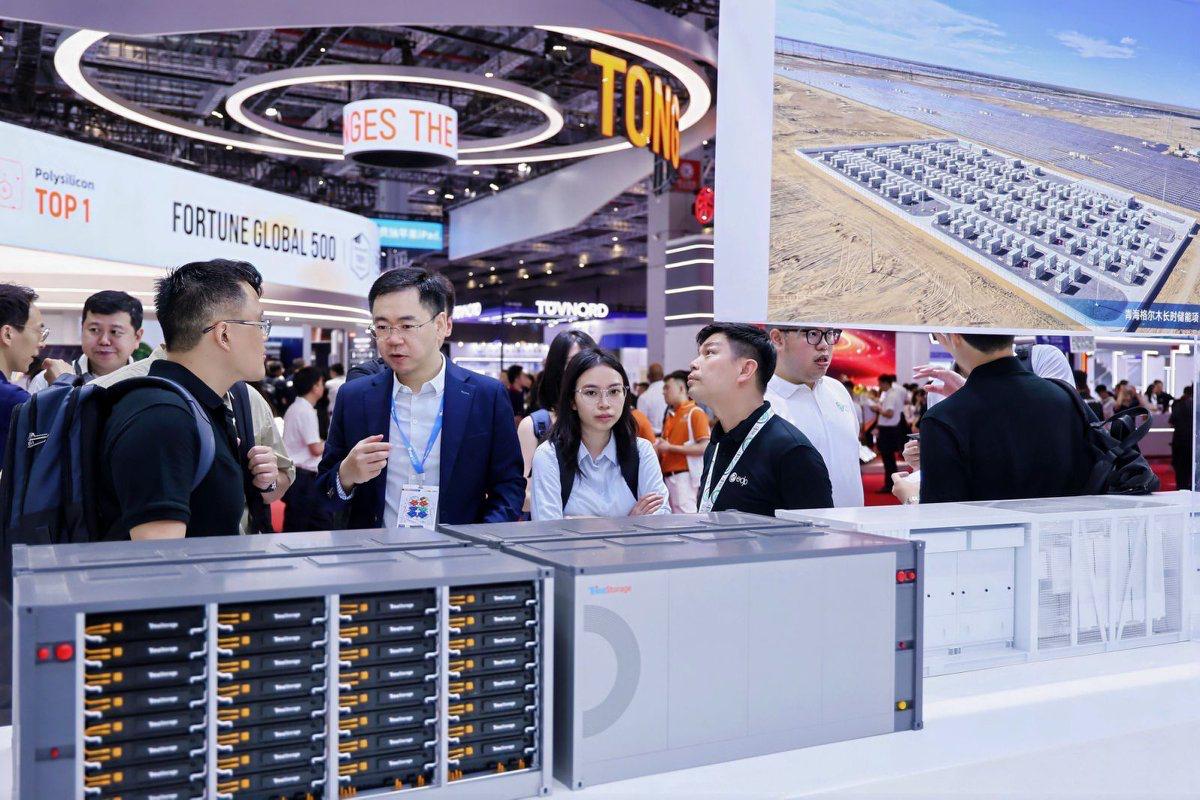
Designed for utility-scale and C&I applications, Trina Storage’s Elementa Series is compatible and is designed for integration within solar-plus-storage systems using Trina or third-party equipment, with compatibility assessed according to the project architecture. Beyond supplying technology, Trinasolar can work with customers and EPC partners to assess system compatibility, determine the most suitable BESS configuration and develop an operating strategy aligned with each site’s technical and commercial requirements.

Trinasolar’s energy storage expertise builds on its long-established presence in Pakistan’s solar market, where the company has supplied more than 500MW of 700W+ modules across commercial, industrial and residential applications and recently introduced the Vertex N G3 760W series.

Globally, Trina Storage, established in 2015, has achieved BloombergNEF Tier 1 Energy Storage Manufacturer status for 10 consecutive quarters and is expected to surpass 30 GWh of cumulative shipments by the first half of 2026. Its latest 6.25MWh Elementa 3 platform combines advanced battery technology, intelligent thermal management and integrated safety features for large-scale energy storage applications.

“Pakistan has already built a strong solar foundation. The next phase is to consider how battery storage can be integrated with those assets to make renewable electricity available across a wider range of operating conditions. That requires careful assessment of the existing equipment, the site’s load profile and the role the battery is expected to perform. Trinasolar’s PV experience and Trina Storage’s global BESS capabilities give us a useful perspective across both sides of that system,” said Edison Zhou, Head of Pakistan, Trinasolar.

Similar Posts

  • |

    Fatima Zahra makes history with Commonwealth medal

    Islamabad: Pakistan’s rising boxing star Fatima Zahra has created history by guaranteeing the country’s first medal at the 2026 Commonwealth Games after a commanding 5-0 victory over Jordan Wilson of New Zealand in the women’s 60kg quarter-final. Fatima delivered another dominant performance to book her place in the semi-finals, ensuring at least a bronze medal for Pakistan. She began her campaign with an impressive opening-round victory over Real Ebuoha of Lesotho, where the referee stopped the contest early after Fatima completely outclassed her opponent. With back-to-back dominant wins, Fatima has emerged as one of Pakistan’s standout athletes at the Games. Her remarkable achievement also makes her the first Pakistani woman in history to win a boxing medal at the Commonwealth Games. The historic feat marks a major milestone for women’s boxing in Pakistan and is expected to inspire a new generation of female athletes across the country.

  • |

    Buleha” faces suspension as Senate demands name change and removal of Bulleh Shah dialogue

    Islamabad: A controversy over the Pakistani film “Buleha” after a Senate committee questioned whether the movie damaged the image of legendary Sufi poet Baba Bulleh Shah by showing a character connected with violence, weapons and personal justice. During a heated discussion, Senator Pervaiz Rashid questioned how a film carrying the name of a famous symbol of peace and love was approved despite scenes and dialogues that critics said were opposite to Bulleh Shah’s teachings. The controversy intensified when members of the Censor Board admitted that some important points were overlooked during the approval process. Dr. Sultan Azam Taimuri, a senior member of the board, accepted responsibility and said the concerns raised about the connection between the fictional character and Baba Bulleh Shah should have been discussed more carefully. The committee argued that Baba Bulleh Shah was known for promoting peace, humanity and love, while the film appeared to show a character using force and weapons to fight criminals. Members questioned whether such a portrayal could create confusion among young viewers about the real message and personality of one of Punjab’s most respected Sufi poets. The debate became intense when a Senator Pervaiz Rashid asked if a film about another respected poet, such as Khushal Khan Khattak or Ghalib, showed that personality in a completely opposite way, would the Censor Board approve it. A censor board member admitted that such a film would not be acceptable and said it would be wrong to show a historical personality against their actual beliefs. The committee then questioned why the same standard was not applied to “Buleha.” The Censor Board defended its decision by saying the movie was not a biography of Baba Bulleh Shah. Officials explained that the character in the film was fictional and had no direct connection with the real life of the Sufi poet. They said the board considered the movie a fictional story and believed the name alone was not enough reason to stop its release because Bulleh Shah himself used the word “Bullah” in his poetry. However, the committee pointed out that the board’s explanation created confusion. Members questioned how the film could have no connection with Bulleh Shah but still use a name and dialogue strongly linked with him. The discussion became more serious when Dr. Sultan admitted that the committee’s concerns had a point. He said the board did not discuss this angle properly at the time of approval and accepted responsibility. He also admitted that a dialogue in the film where the character compares himself with Bulleh Shah could be controversial. Another Censor Board member, Syed Farooq Hassan, also accepted that the board overlooked this perspective. He said the board knew Baba Bulleh Shah’s teachings were completely different from the violence shown in the film, but members believed the character was fictional and not based on the actual life of Bulleh Shah. The board members also explained that Pakistan’s film industry was already struggling, and they wanted to support local movies within acceptable limits. They said promoting cinema was also one reason behind their decision. The committee, however, questioned whether supporting the film industry should come before protecting the image of respected cultural and historical figures. During the meeting, criticism was also directed at the writer of the film. Members questioned whether being a successful film writer was enough qualification to handle the story of a major historical and spiritual personality. They argued that the writer’s fame came mainly from action based films and said success in commercial cinema does not automatically mean expertise in history, culture or the lives of national figures. One committee member strongly criticised the idea of approving a film simply because it was written by a famous writer. He said the writer was known for introducing violent action elements in films but was not known as an expert on Sufi personalities or Pakistan’s cultural traditions. The committee also rejected the argument that other provincial censor boards had already approved the film. Officials said Punjab and Sindh censor boards had approved the movie without cuts, and it had also been aired on Local TV. However, committee members said approval by other boards did not remove the responsibility of reviewing the film’s impact. The discussion also raised questions about the knowledge and background of Censor Board members. Members suggested that people approving films about major personalities should have knowledge of history, literature, culture and society. They said the selection criteria for board members should ensure they understand how films can influence children and families. The committee argued that showing respected personalities incorrectly could affect how younger generations understand their history. At the end of the meeting, the committee made a strong recommendation regarding the film. The committee suggested that the film name should be changed and the dialogue in which the character calls himself Bulleh Shah should be removed. It further recommended that the film’s exhibition licence should remain suspended until these changes are made and that online versions should also be removed if available. The Senate Standing Committee on Information and Broadcasting has also included the film “Buleha” issue in its upcoming agenda, calling Censor Board members and producers to explain the certification process and the discussions behind the film’s approval.

  • |

    SEF, Sindh Boy Scouts launch initiative to expand scouting across Foundation-assisted schools*

    KARACHI: The Sindh Education Foundation (SEF), Government of Sindh has initiated a collaboration with the Sindh Boy Scouts Association by holding a Group Scout Leadership Seminar aimed at promoting leadership, discipline and community service among students enrolled in Foundation Assisted Schools. The seminar, held at the Sindh Boy Scouts Association headquarters in Karachi, brought together representatives from 32 Foundation Assisted Schools, including head teachers, faculty members and students. The event was attended by SEF Managing Director Gahanwer Ali Laghari, Deputy Managing Director Shahpara Rizvi, Regional Head Karachi Ashfaque Hussain Meerani, senior directors, assistant directors and other officials. The Sindh Boy Scouts Association was represented by Provincial Scout Secretary Syed Akhter Meer, and other office-bearers. Addressing the seminar, Provincial Scout Secretary Syed Akhter Meer welcomed the participation of SEF schools and said introducing students to the history and values of scouting would encourage them to become part of a global movement focused on leadership, character building and service. He also recalled the support extended to the scouting movement by the late Prof Dr Anita Ghulam Ali during her tenure at SEF, saying it was encouraging to witness the Foundation continuing the same commitment under the leadership of Managing Director Gahanwer Ali Laghari. Participants were also briefed on the history of the scouting movement in Sindh, its achievements and future roadmap through a presentation highlighting the organisation’s contribution to youth development. Former senior bureaucrat Ghulam Ali Pasha said leadership and discipline could not be developed through classroom education alone, stressing that scouting provides young people with practical exposure to teamwork, responsibility and community service. He described such initiatives as essential for preparing students to become confident and responsible leaders. Speaking on the occasion, SEF Managing Director Gahanwer Ali Laghari said the Foundation’s mandate extended beyond improving access to education and academic outcomes. “Alongside quality education, we want our students to develop leadership, discipline and a sense of responsibility. Through scouting, they will have an opportunity to become part of an international movement that promotes these values,” he said. Laghari announced that SEF and the Sindh Boy Scouts Association would jointly organise a series of scouting activities across Foundation Assisted Schools throughout the province. He said the initiative had been launched with schools in Karachi and would gradually be expanded to all SEF-supported schools. “Our objective is to engage the entire network of Foundation Assisted Schools, and we are hopeful that within the next one-and-a-half years, scouting activities will be introduced across the province,” he added. The initiative is expected to provide students with greater opportunities for leadership development, teamwork and community engagement alongside their academic education.

  • | | |

    Trump says US has ample weapons, ammunition stockpiles

    US President Donald Trump has said the United States possesses extensive stockpiles of weapons and ammunition, dismissing concerns about shortages during recent military operations. In a statement, Trump said the country is continuing to manufacture weapons on a large scale while also procuring additional supplies as needed. He added that defense companies are building a record number of plants and factories to strengthen America’s military production capacity. Trump also warned that those responsible for leaking what he described as “treasonous statements” would be identified and face lengthy prison sentences. His remarks came after reports in the US media claimed that he had questioned Defense Secretary Pete Hegseth over alleged shortages in US weapons stockpiles during the conflict with Iran. According to the reports, the issue had limited Washington’s military options against Tehran. The reports stated that Trump raised the matter during a Cabinet meeting held at Camp David in Maryland last week, where he reportedly sought an explanation from Hegseth about the significant decline in ammunition reserves. However, US officials have denied the media reports, rejecting claims that the country faced a critical shortage of weapons or that military options against Iran were constrained because of depleted stockpiles.

  • | | |

    KP eyes M-1 motorway BRT service to connect 4 majo…

    PESHAWAR: The Khyber Pakhtunkhwa government is exploring a plan to extend its Bus Rapid Transit (BRT) network onto the M-1 Motorway, with the proposed service aimed at improving public transport links between Peshawar and several major cities. Officials from the provincial Transport Department said the proposed BRT service could connect passengers with Nowshera, Mardan, Swabi and Charsadda, potentially providing a faster and more convenient travel option for thousands of daily commuters. Under the initial proposal, buses would pick up and drop off passengers at designated toll plazas along the motorway. The exact locations and number of stops, however, have yet to be determined. Officials said a detailed feasibility study would establish where stations should be developed and assess the operational requirements of the proposed service. If approved and implemented, the initiative could strengthen regional connectivity and provide commuters with an expanded public transport option across key areas of Khyber Pakhtunkhwa.

  • | |

    FBISE unveils SSC 2026 results, 1st time AI assist…

    ISLAMABAD: The Federal Board of Intermediate and Secondary Education (FBISE) has announced the results of the Secondary School Certificate (SSC) Part-I and Part-II First Annual Examination 2026, revealing strong overall performance while introducing artificial intelligence (AI) in the paper-marking process for the first time. The results were officially declared during a ceremony in Islamabad, where Federal Minister for Education and Professional Training Dr Khalid Maqbool Siddiqui inaugurated the announcement. Addressing the event, FBISE Chairman Prof Dr Ikram Ali Malik highlighted the Board’s efforts to ensure smooth and transparent examinations. He said a total of 292,831 students appeared in the SSC examinations this year, with 1,006 examination centres established across the country. To oversee the process, 2,012 supervisory staff members and 6,996 invigilators were deployed. The chairman also revealed that more than 10,700 teachers applied to assess examination papers, while 4,855 examiners were selected for the task. He described the introduction of AI-assisted marking as a major step towards improving accuracy and efficiency in the evaluation process. During the examination period, 86 cases involving the use of unfair means were reported. According to the results, SSC Part-I recorded an overall pass percentage of 59.77 per cent, with 88,646 students passing out of 150,077 candidates. SSC Part-II achieved a significantly higher success rate of 91.33 per cent, as 128,070 of the 141,653 candidates cleared the examinations. In the Science Group, Afeera Ijaz secured the top position with 1,089 marks. Amna Nauman claimed second place with 1,088 marks, while Huzaifa Haider finished third with 1,086 marks. Among Humanities students, Fatima Zahra emerged as the overall topper with 1,037 marks. Muhammad Maaz and Manaal Zahid shared second position after each scoring 1,031 marks, while Aneesa Nisar secured third place with 1,023 marks. The Board said the introduction of AI-assisted marking reflects its commitment to modernising Pakistan’s examination system while maintaining transparency and fairness in the assessment process.

Leave a Reply

Your email address will not be published. Required fields are marked *