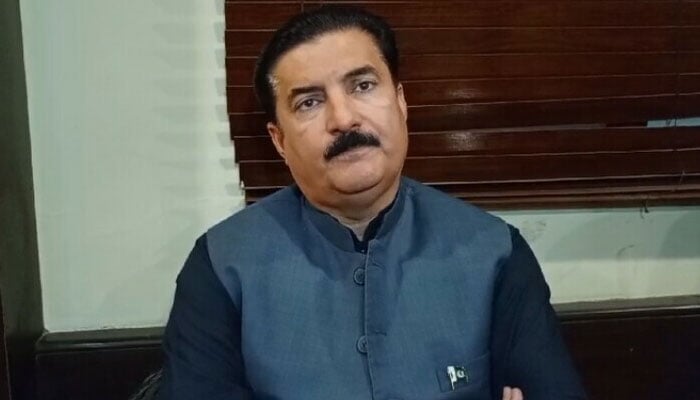
ayat noor case
| |

Ayat Noor case sparks outrage after tragic Haripur discovery

Haripur has been shaken by the tragic death of a young girl, Ayat Noor, whose disappearance ended in a heartbreaking discovery. The case has once again raised serious concerns about child safety and the growing fear among parents who worry about the dangers their children may face.

According to the details shared about the case, Ayat Noor had been missing for 14 days. During that time, her father reportedly searched tirelessly for his daughter, hoping that she would be found alive and brought home safely. His search, however, ended in devastating circumstances when Ayat’s body was discovered in a well on the 15th day.

Police reportedly confirmed that the child had been sexually assaulted and murdered. The horrifying nature of the case has left the local community deeply disturbed, while the death of such a young child has sparked renewed calls for stronger measures to protect children from abuse and violence.

For Ayat’s family, the tragedy has brought unimaginable grief. Her father is reportedly struggling to come to terms with the loss of his daughter and is now seeking justice for the child. His pain has also become a symbol of the anguish experienced by families who lose loved ones to violent crimes.

Police have arrested three suspects in connection with the case. According to the information circulating about the incident, the suspects have allegedly confessed to their involvement. Their reported demeanor after the arrests has further angered and disturbed people, many of whom believe that anyone responsible for such a brutal crime must face strict legal consequences.

Ayat’s final journey has also drawn emotional attention from people in Haripur and beyond. Images and accounts surrounding her funeral have reportedly left the public heartbroken, particularly the sight of her grieving father seeking justice for his daughter.

The case has once again brought the issue of child abuse into public discussion. Many parents are expressing fear and frustration, saying that repeated reports of violence against children have made them increasingly concerned about their children’s safety. For ordinary families, the thought that a child could become a victim of such a crime is deeply frightening.

Social media users have also expressed anger and helplessness following the incident. One person compared Ayat’s case with another child abuse case, writing, “Aizal did not get justice in Karachi and now we have Ayat in Haripur.” Another user prayed for divine intervention, saying, “May Allah send a miracle to deal with these criminals.”

Others turned their attention to society as a whole, questioning how such tragedies continue to happen and whether enough is being done to prevent crimes against children. One reaction read, “We are all wrong who can’t stop this.”

The outrage surrounding Ayat Noor’s death reflects a wider demand for accountability and effective protection for children. People are now waiting for the investigation and legal proceedings to establish the full circumstances of the crime and determine responsibility.

For Ayat’s grieving family, however, no punishment can undo the loss of their beloved child. What they seek now is justice, accountability and assurance that her death will not simply become another forgotten case. Her tragic story has left Haripur mourning and has once again forced society to confront the devastating consequences of child abuse and violence.


Similar Posts

  • | |

    Parliament approves sweeping defence command chang…

    Pakistan’s Parliament has approved legislation aimed at establishing a new legal framework for the country’s military command structure. The National Assembly and Senate passed the Defence Forces Act 2026 and amendments to the National Command Authority Act 2010 on Thursday. The legislation was approved despite strong opposition from opposition lawmakers, who objected to the speed at which the bills were brought before the Houses. Prime Minister Shehbaz Sharif attended the National Assembly session. The opposition later boycotted the voting process and walked out of the chamber in protest. The new Defence Forces Act provides a legal structure for the Defence Forces Headquarters. The headquarters will serve as a central institution for matters concerning national security, defence policy and coordination among the armed forces. Under the new framework, the Chief of Defence Forces will exercise operational command and control over the armed forces. The CDF will remain accountable to the federal government for matters related to command and control. The legislation also gives the CDF powers to improve coordination and integration among the Army, Navy and Air Force. The office will oversee joint operations, coordination and other matters involving the armed forces. The CDF will also have authority under relevant laws regarding the retirement, release and dismissal of military personnel, subject to constitutional provisions. The office will also be able to approve or reject resignations and retain personnel in service where permitted under the law. The federal government will frame rules and regulations needed to implement the new legislation. The CDF will also be authorised to issue orders and directions required to enforce the provisions of the Act. Parliament also approved amendments to the National Command Authority Act 2010. The changes replace references to the Chairman Joint Chiefs of Staff Committee with references to the Chief of Army Staff and Chief of Defence Forces. The legislation gives retrospective effect to key provisions from November 2025. The new laws are linked to changes introduced through the 27th Constitutional Amendment, which significantly altered Pakistan’s military command structure. Under the revised system, the Chief of Army Staff also serves as the Chief of Defence Forces. The office of Chairman Joint Chiefs of Staff Committee has been abolished under the new framework. The opposition strongly objected to the legislation being placed on the supplementary agenda. Opposition lawmakers said they had not been given sufficient time to examine the bills. Opposition Leader Allama Raja Nasir Abbas questioned the urgency of the legislation and called for more time for lawmakers to study the proposed changes. Mahmood Khan Achakzai also demanded that lawmakers be given at least a few days to review and debate the bills before voting. The government defended the procedure, saying parliamentary rules allow supplementary legislation to be introduced. Law Minister Azam Nazeer Tarar argued that the bills had already been examined and approved by the National Assembly. The cabinet had approved the draft legislation earlier in the day during a meeting chaired by Prime Minister Shehbaz Sharif in Islamabad. According to the government, the Defence Forces Act was necessary to provide administrative and legal arrangements for the office of the Chief of Defence Forces and its headquarters. The new framework also establishes the position of Commander of the National Strategic Command following the abolition of the CJCSC post. The commander is appointed by the prime minister on the recommendation of the army chief and CDF. The position carries a three-year term, with the possibility of another three-year term under the prescribed procedure.

  • |

    UN warns Afghanistan’s child malnutrition crisis deepens

    Afghanistan is facing a rapidly worsening malnutrition emergency as severe funding cuts leave millions without life-saving assistance, the United Nations has warned. Speaking from Kabul, the World Food Programme’s (WFP) Afghanistan Director John Aylieff said the country’s nutrition crisis is escalating at an alarming pace, with growing numbers of severely malnourished children reaching health facilities too late to receive effective treatment. He said child wasting, the deadliest form of malnutrition, has now reached critical levels in nearly one-third of Afghanistan’s provinces. According to the WFP, ongoing conflict, disruptions to trade, the return of thousands of Afghan migrants from neighbouring countries, and shrinking international aid have combined to create an unprecedented humanitarian emergency. The UN official said last year recorded the sharpest annual increase in malnutrition cases, while the situation has deteriorated even further in 2026. Children under the age of two account for around 80 percent of the most severe cases, highlighting the devastating impact on the country’s youngest and most vulnerable population. Aylieff said the WFP has only enough resources to provide treatment to one out of every seven acutely malnourished women and children this year. The remaining six are forced to leave without assistance because of a severe shortage of funds. He warned that the cries of starving children in Afghan health centres reflect a preventable tragedy that could claim countless more lives if emergency funding is not secured. The humanitarian agency also expressed concern that widespread hunger could fuel migration, instability and extremism, stressing that a stable Afghanistan remains important for regional security. Millions of Afghans have also returned from neighbouring countries, including Pakistan and Iran, over the past three years, placing additional pressure on already overstretched resources. Although this year’s harvest has improved, the gains have been overshadowed by the country’s worsening economic and humanitarian challenges. The WFP estimates that nearly 14 million Afghans are currently experiencing acute hunger. However, funding shortages have limited food assistance to only a small fraction of those in need, while preventive food distribution programmes in high-risk areas have been suspended.

  • | | | |

    Pakistan hails Hamas disarmament progress, under p…

    Pakistan has welcomed recent progress under the Gaza Peace Plan, describing developments toward Hamas’ disarmament as a positive step that could help revive efforts for a lasting political solution and the creation of an independent Palestinian state. Prime Minister Shehbaz Sharif praised the mediation efforts of the United States, Egypt, Qatar, and Türkiye after US President Donald Trump announced that an agreement had been reached for the complete disarmament of Hamas. The announcement is viewed as a significant breakthrough in implementing the Gaza ceasefire framework, as the issue of Hamas’ weapons has remained one of the main obstacles since the truce was reached in October 2025. In a statement shared on social media, the prime minister said Pakistan supports the ongoing work of the Board of Peace and expressed hope that all commitments under the Gaza Peace Plan would now move toward practical implementation. He emphasized that sustained diplomatic efforts should lead to a credible, time-bound political process in line with United Nations resolutions, ultimately ensuring the Palestinian people’s right to self-determination through the establishment of an independent state. According to Hamas officials, a committee operating under the Board of Peace will supervise the storage of the group’s weapons as part of the agreed process. The organization has also urged mediators to ensure that Israel fulfills its obligations under the ceasefire, including the withdrawal of its forces from Gaza. Although the ceasefire has reduced large-scale fighting, violence has not completely stopped. Fresh Israeli strikes reportedly killed at least four Palestinians, including two children, highlighting the fragile security situation despite ongoing diplomatic efforts. Meanwhile, Egyptian media reported that Cairo is expected to host another meeting of the ceasefire mediators, including representatives from the United States, Qatar, and Türkiye, to discuss the next phase of the peace plan. Pakistan has consistently maintained its support for the Palestinian cause and continues to advocate for an independent Palestinian state based on the pre-1967 borders, with Al-Quds Al-Sharif as its capital. Islamabad, which has no diplomatic relations with Israel, has repeatedly urged the international community to work toward a peaceful resolution of the conflict through dialogue and adherence to international law.

  • |

    Benjamin Netanyahu rejects Donald Trump’s 15-point peace plan for Gaza amidst high-stakes diplomatic rift

    A high-stakes rift has emerged between Washington and Jerusalem following Israeli Prime Minister Benjamin Netanyahu’s explicit rejection of Donald Trump’s 15-point proposal for Gaza, with Israel insisting on maintaining a military presence until Hamas is fully disarmed. Under the framework put forward by Trump’s Board of Peace last month, terms were outlined for the reduction or withdrawal of military personnel and weapons across specified zones. Hamas responded by stating that relinquishing its arsenal remains conditional upon Israel ending all forms of aggression and withdrawing its forces from Gaza entirely. Despite an agreement reached last October to pause hostilities in the territory, Israeli strikes inside Gaza have continued. Addressing a cabinet meeting on Sunday, Netanyahu stated that Israel rejects the 15-point document. He stressed that the Israeli military will not execute any troop withdrawals until Hamas undergoes genuine disarmament, adding that forces will continue to counter active threats to safeguard personnel and citizens. Although Trump previously hailed the initiative as a major milestone toward lasting regional stability after Hamas indicated acceptance of a demilitarisation strategy, Netanyahu emphasised that disarmament must precede any Israeli pullback, warning against what he described as a fictitious disarmament process. Netanyahu is engaged in crucial discussions with American officials regarding next steps, marking another hurdle for Trump’s Gaza peace initiative originally unveiled in September last year. The proposed plan centres on establishing a Board of Peace tasked with overseeing the demilitarisation of Hamas, supervising the exit of Israeli troops, and directing reconstruction efforts throughout Gaza.

  • | |

    Amitabh Bachchan sparks concern with hospitalization update

    Legendary Indian film actor Amitabh Bachchan has sparked widespread concern and speculation among fans after sharing a deeply reflective blog post mentioning a hospital stay, surgery, and time spent in the Intensive Care Unit (ICU). ​The 83-year-old actor, who regularly communicates with his followers through personal blog entries, penned an emotional note reflecting on the physical and psychological toll of post-operative recovery: ​”.. in Hospital in a surgery and in the ICU, under the care of proficient Doctors and medical Staff .. a discharge .. and a homecoming .. this homecoming period is the most difficult phase .. physically, psychologically and practically. You are a revered Champion and one day a defeat stares at you .. this is the most difficult phase of your life ..” ​He concluded his reflection with a philosophical message on resilience and personal choice, writing that while some brave difficult times and remain champions, others choose to reconcile with the past. ​The cryptic nature of the post immediately triggered anxiety across social media, with fans flooding comment sections to express concern and offer prayers for his well-being. However, Bachchan later clarified the situation in an interview with Variety, confirming that he is fine and did not undergo surgery. He explained that his post was misunderstood and was actually a broader metaphor regarding Argentina’s loss at the FIFA World Cup and how champions cope with defeat after being at the top. ​Despite periodic health rumors, the veteran superstar continues to maintain an active schedule, hosting upcoming television seasons and appearing in major cinematic projects.

  • | | |

    Security forces kill 10 militants in two Khyber Pa…

    Security forces have killed 10 militants of Fitna al-Khawarij in two separate operations in Khyber Pakhtunkhwa, according to the Inter-Services Public Relations (ISPR). The first operation was conducted in the Azam Warsak area of South Waziristan district after a group of militants attacked security forces’ check posts. According to ISPR, security personnel responded effectively to the attack, resulting in an exchange of fire. Eight militants were killed during the operation. The second operation was carried out in Dir district, where security forces killed two more militants. Weapons and ammunition were also recovered from the possession of the slain militants. ISPR said the militants killed in the operations had been involved in several terrorist activities in the area. The military’s media wing said security forces are continuing intelligence-based counterterrorism operations under the government’s vision of “Azm-e-Istehkam” to eliminate terrorism and maintain peace and stability in the region.

Leave a Reply

Your email address will not be published. Required fields are marked *