pentagon dismisses three
| |

Pentagon dismisses three stars and stripes officia…


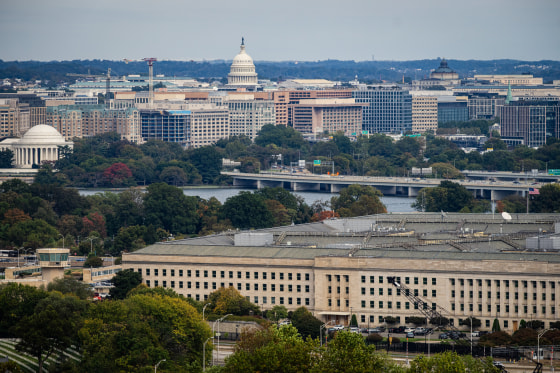
ISLAMABAD: The US Department of Defense has dismissed three senior officials associated with the military newspaper citing allegations of insubordination in a move that has intensified concerns over editorial independence and Pentagon oversight of the publication.

The officials have been given five days to appeal the decisions, according to US media reports.

The dismissals of Slavík and Kurt are reportedly connected to their appearance where they discussed the newspaper’s editorial independence and the Pentagon’s proposed changes to its operations.

During the interview, both journalists defended the principle that Stars and Stripes should be able to maintain independent editorial judgment while continuing to serve members of the US military and their families.

Slavík said in his dismissal notice that he was being removed after publicly stating that censorship of news intended for service members would cross a “red line.”

He maintained that Stars and Stripes should retain its editorial independence and said he stood by the position he expressed during the interview.

Kurt also confirmed that she had received a dismissal notice. During the interview, she reportedly emphasised that her professional responsibility was to Stars and Stripes rather than to the Pentagon, a particular administration or individual policymakers.

She also argued that members of the US military swear an oath to defend the Constitution and therefore should have access to a free and independent press.

Lederer’s dismissal appears to have stemmed from a separate dispute with Defense Department officials.

According to reports, Lederer declined to follow certain Pentagon instructions concerning action against journalists. His removal also came earlier than expected, as he had reportedly planned to retire on September 30.

The developments come amid months of tension between Stars and Stripes and Defense Department officials over the future direction of the publication.

Although the newspaper receives funding from the Pentagon, Stars and Stripes has traditionally maintained a degree of editorial independence and has served as a source of news for US military personnel, veterans and their families.

Defense officials have been seeking to reshape the publication’s coverage, placing greater emphasis on combat operations, weapons systems, physical fitness, military readiness and troop survival.

Some other areas of coverage have reportedly been described by officials as less essential to service members.

The dispute became more prominent after Stars and Stripes published reports examining conditions aboard the USS Abraham Lincoln, as well as concerns raised by military families regarding the mental health and welfare of troops.

A Pentagon spokesperson did not provide extensive details about the dismissals but referred to an open letter from Deputy Publisher Capt. William Urban.

Urban has called for the newspaper to modernise its operations, strengthen its digital presence and generate additional revenue. At the same time, he has stressed the importance of maintaining professional editorial standards.

The dismissals have renewed discussion within US military journalism about how an independent press serving military personnel should operate while receiving government funding.

Supporters of Stars and Stripes argue that troops need independent reporting that can examine military policies and conditions without interference. Pentagon officials, meanwhile, have sought greater alignment between the publication’s priorities and the department’s broader communication and operational objectives.

The controversy is therefore likely to continue raising questions about the appropriate limits of Pentagon oversight and the editorial freedom of a publication that has served US military communities for decades.

Similar Posts

  • | | | |

    Six Palestinians killed, 37 injured in fresh Gaza …

    GAZA: At least six Palestinians have been killed and 37 others injured in fresh Israeli attacks on the Gaza Strip, according to the Palestinian Ministry of Health, adding to the mounting toll since the ceasefire in October 2025. The latest casualties were reported as attacks continued to affect different parts of the besieged territory. The deaths and injuries have once again raised concerns over the fragile situation in Gaza, where civilians continue to face the consequences of the prolonged conflict. According to the Palestinian Ministry of Health, more than 1,100 Palestinians have been killed and nearly 4,000 wounded since the ceasefire began in October 2025. The ministry said that more than 800 bodies have also been recovered from various locations since the ceasefire. The figures highlight the scale of the devastation and the continuing challenges faced by emergency teams searching affected areas. The latest violence comes despite the ceasefire that was expected to reduce bloodshed and provide relief to Gaza’s population. The renewed casualties have added further uncertainty to an already fragile situation. Meanwhile, tensions have also continued in the occupied West Bank. Palestinian authorities said 66 Palestinians were arrested in different parts of the territory. The developments come as the humanitarian situation remains a major concern, with communities in Gaza continuing to deal with the aftermath of months of fighting, widespread destruction and loss of life. For families in the territory, every new round of violence brings fresh fear and uncertainty. The latest deaths have once again put the spotlight on the fragile ceasefire and the urgent need to prevent further escalation. As the death toll continues to rise, attention remains focused on whether diplomatic efforts can restore lasting calm and protect civilians caught in the conflict.

  • |

    Search operation resumes for seven missing Broad Peak climbers

    GILGIT: Search and rescue teams resumed their operation on Saturday morning to locate seven climbers who remain missing after a deadly avalanche struck Broad Peak earlier this week. The mission restarted after weather conditions improved, allowing rescuers to return to one of the world’s most challenging mountain environments. The rescue operation had been suspended late Friday because of heavy snowfall, poor visibility and the continuing risk of avalanches. Officials said improving weather conditions enabled both ground and air teams to resume the search. The avalanche occurred on Thursday while a 10-member international expedition was climbing Broad Peak, an 8,047-metre mountain in Pakistan’s Karakoram range. According to regional authorities, the climbers were ascending at an altitude of around 6,600 metres when they were caught in the massive avalanche. Three climbers were confirmed dead after their bodies were recovered on Friday. The deceased were identified as Omani climber Nadhira Ahmed Abdullah Al Harthy, Nepali mountaineer Pur Bahadur Gurung and American climber Mallory Geis. Their bodies were later airlifted to Skardu. Seven climbers are still missing. They include internationally renowned Nepali mountaineer Nirmal Purja, fellow Nepali climbers Kili Pemba Sherpa, Nima Sherpa, Nawang Thindu Sherpa and Gyalu Sherpa, Pakistani climber Sohail Sakhi and Chinese climber Wang Zhong. According to the local administration, a three-member civilian rescue team led by renowned Pakistani mountaineer Sarbaz Khan resumed the ground search on Saturday morning. Experienced Nepali climbers already stationed at the Broad Peak base camp also joined the rescue effort to assist in locating the missing mountaineers. Pakistan Army helicopters have also been deployed to support the operation. Rescue officials said helicopters are assisting with aerial surveillance, transporting rescue personnel and assessing areas that remain inaccessible by foot. Officials from the Alpine Club of Pakistan said the search operation remains extremely difficult because of steep mountain slopes, unstable snow, harsh weather and the constant threat of further avalanches. These conditions continue to slow rescue efforts and increase risks for search teams. Rescuers have also been using drone technology to scan the mountain. During the operation, drone footage reportedly identified signs of additional climbers at an altitude of around 6,000 metres. Ground teams are attempting to reach the location despite dangerous terrain and difficult weather conditions. The international rescue effort has also received support from renowned Nepali climber Mingma David Sherpa, who travelled to Pakistan to assist in the search for Nirmal Purja and the other missing climbers. Authorities said the expedition team was last in contact on Thursday morning before communication was lost. Data from the climbers’ tracking devices later suggested that several members of the team had been swept hundreds of metres down the mountainside by the avalanche.

  • PILDAT report highlights stronger Senate lawmaking

    ISLAMABAD: The Pakistan Institute of Legislative Development and Transparency (PILDAT) has reported a significant increase in legislative activity in the Senate during the 2025–26 parliamentary year, while warning that persistent institutional weaknesses continue to undermine the effectiveness of the upper house. According to PILDAT’s annual review of Senate performance, the House passed a total of 97 bills during the year, comprising 47 government bills and 50 private members’ bills. This represents a substantial increase from the 51 bills enacted during the previous parliamentary year. The report notes a marked revival in private members legislation alongside increased government-sponsored lawmaking. The Senate also reduced its reliance on presidential ordinances. Only six ordinances were laid before the House during the year, compared with 16 in the previous session, reflecting greater emphasis on parliamentary legislation. Although the Senate held 64 sittings, one fewer than the previous year’s 65, the total duration of proceedings increased considerably. Senators met for approximately 159 hours, compared with 117 hours in 2024–25, indicating longer debates and heightened legislative activity. Despite this improvement, the report highlights declining attendance among lawmakers. Average attendance fell to 57.6 per cent, down from 62 per cent a year earlier. While disruptions caused by quorum shortages became less frequent, members’ participation remained inconsistent throughout the parliamentary year. PILDAT also raised concerns over the performance of parliamentary leadership. The Leader of the House recorded an attendance rate of only 31 per cent, while the office of the Leader of the Opposition remained vacant for five months and 15 days following the removal of Senator Shibli Faraz on 5 August 2025. Senator Raja Nasir Abbas assumed the role on 20 January 2026. Among individual lawmakers, Senator Azam Nazeer Tarar, Federal Minister for Law, Justice and Human Rights, was the most active participant in debates, speaking for 10 hours and 40 minutes during Senate proceedings. He was followed by Senator Aimal Wali Khan, who spoke for 9 hours and 51 minutes, and Senator Syed Ali Zafar, who contributed 9 hours and 40 minutes. Former opposition leader Senator Shibli Faraz spoke for 8 hours and 24 minutes, while Leader of the House Muhammad Ishaq Dar recorded 6 hours and 41 minutes of speaking time. One of the defining developments of the parliamentary year was the passage of the 27th Constitutional Amendment, which introduced significant changes to the judicial structure, the constitutional interpretation mechanism and matters relating to military command. PILDAT expressed concern that the amendment was passed with exceptional haste, limiting opportunities for detailed parliamentary scrutiny and debate. The report also identifies a major institutional gap arising from the prolonged absence of representation from Khyber Pakhtunkhwa. Eleven Senate seats from the province remained vacant for nearly 23 months, from February 2024 to January 2026, because of delays in elections and legal disputes. According to PILDAT, this adversely affected the Senate’s federal character and representative composition. Further institutional strain emerged after opposition members resigned from Senate standing committees, weakening parliamentary oversight and reducing opportunities for bipartisan cooperation. On matters of national security, however, the Senate demonstrated political unity. During the Pakistan–India crisis in May 2025, the House unanimously adopted a resolution reflecting cross-party consensus on issues of national importance. The report also notes a substantial increase in the Senate’s financial allocation. The institution’s budget rose from Rs7.242 billion in 2024–25 to Rs9.055 billion in 2025–26, representing an increase of approximately 25 per cent. Consequently, expenditure per senator also increased, reaching Rs90.55 million. While acknowledging the Senate’s stronger legislative output and reduced dependence on ordinances, PILDAT concludes that improvements in member attendance, parliamentary oversight, institutional continuity and legislative scrutiny remain essential to strengthening the effectiveness of Pakistan’s upper house.

  • |

    Pakistan win four medals at ITF World Championships

    Pakistan’s tennis stars have delivered a memorable performance at the ITF Masters World Championships in Lisbon, Portugal, winning an impressive four medals and adding another chapter to the country’s international tennis story. The biggest highlight came from veteran tennis star Aisam-ul-Haq Qureshi, who successfully defended his world title in the 40+ mixed doubles category. Partnering Austria’s Nina Hermann, Qureshi defeated the top-seeded Portuguese pair in a closely fought final to retain the championship for a second consecutive year. The victory marked another significant milestone in Qureshi’s long and distinguished international career. His achievement also underlined his enduring competitiveness on the world stage, even after decades of representing Pakistan at major international events. Pakistan’s medal tally grew further in the men’s 45+ doubles category, where Qureshi and fellow veteran Aqeel Khan combined to secure a silver medal. Their run demonstrated the experience and consistency of Pakistan’s senior tennis players against strong international opposition. The national team also added another silver medal in the men’s 45+ World Team Championship, giving Pakistan a strong finish in the team competition. Aqeel Khan completed Pakistan’s four-medal haul by winning bronze in the 40+ mixed doubles event. His podium finish ensured that Pakistan’s campaign ended with medals across both individual and team competitions. The results in Lisbon are a significant boost for Pakistani tennis, particularly in the Masters categories, where experienced players continue to compete at the highest international level. Qureshi’s successful title defence stands out as the headline achievement, but the combined medal haul highlights the depth of experience within Pakistan’s veteran tennis ranks. With four medals secured, Pakistan’s performance in Lisbon offers a timely reminder that the country’s tennis talent continues to make its mark beyond the domestic circuit.

  • |

    Saudi, US officials discuss rising regional tensions

    Saudi Crown Prince Mohammed bin Salman and US Central Command chief Admiral Brad Cooper have discussed efforts to contain escalating tensions in the Middle East, with the two sides also reviewing defence cooperation and regional security. According to Saudi state media, the meeting focused on developments across the region and measures aimed at reducing tensions. Officials also discussed ways to strengthen security and stability amid the continuing US-Iran conflict and growing concerns over maritime traffic. The talks came as Saudi Arabia announced progress toward activating a multinational defensive maritime alliance. Representatives from 39 countries attended the alliance’s latest planning meeting in Jeddah, while 13 countries have joined the initiative. Saudi authorities described the meeting as an important step toward putting the maritime alliance into operation. The initiative comes as security concerns continue to grow around the Strait of Hormuz, one of the world’s most important energy routes. Tensions around the strategic waterway have intensified during the US-Iran conflict. Disruptions to shipping have raised concerns about global supplies of oil and liquefied natural gas, while diplomatic efforts to secure freedom of navigation remain uncertain. US Vice President JD Vance has said that keeping energy prices affordable for American consumers is currently Washington’s top priority in the conflict. Vance said the administration wanted to maintain lower oil and gas prices while also ensuring that Iran could not acquire a nuclear weapon. His remarks came as the prolonged conflict continued to affect energy markets and increase pressure on the US economy. Meanwhile, US Treasury Secretary Scott Bessent warned that Washington was preparing unprecedented economic measures against Tehran. He said the United States would combine intensified economic pressure with restrictions linked to Iran’s control of the Strait of Hormuz. US Defence Secretary Pete Hegseth also said Washington had the military capability to maintain its naval blockade of Iran for an extended period. He said American ships could be rotated to sustain the operation. The confrontation has severely affected Iran’s economy and disrupted its access to international trade. Tehran, meanwhile, has sought to use the Strait of Hormuz as leverage in negotiations with Washington. Iran has demanded the removal of economic sanctions and the release of frozen assets as part of conditions for restoring normal maritime traffic. Commercial traffic through the Strait has fallen sharply since the conflict began. The decline has heightened fears that a prolonged disruption could further affect global energy supplies. Two vessels linked to Abu Dhabi National Oil Company were reportedly attacked while passing through the waterway, prompting condemnation from the UAE. The situation has also kept oil markets volatile. Although crude prices declined recently amid concerns over weaker demand and rising US inventories, renewed attacks and threats of further escalation have continued to unsettle investors. The International Energy Agency has revised its forecast for global oil supply, projecting a larger decline than previously expected. Economists have warned that a prolonged conflict could weaken global economic growth and increase the risk of recession in some regions. US President Donald Trump has faced growing domestic pressure over the conflict, particularly as higher fuel costs weigh on American consumers. Washington has continued imposing sanctions on Iran, while efforts to bring Tehran back to negotiations have so far produced limited results.

  • | |

    Nawaz interviews candidates for AJK reserved seats

    Pakistan Muslim League-Nawaz (PML-N) leadership has accelerated consultations over the formation of the next government in Azad Jammu and Kashmir (AJK), with party supremo Nawaz Sharif and Punjab Chief Minister Maryam Nawaz interviewing candidates for reserved seats. The interviews were held in Murree on Sunday for five women’s reserved seats in the AJK Legislative Assembly. PML-N AJK regional president Shah Ghulam Qadir and Prime Minister’s Adviser on Political Affairs Rana Sanaullah also attended the meeting. The party leadership reviewed the profiles of several women seeking PML-N tickets. The interviews reportedly lasted between five and 10 minutes for each candidate. Among those interviewed were Maryam Kashmiri, president of the PML-N AJK Women’s Wing, secretary general Nasira Azeem Khan, former reserved-seat MLA Sehrish Qamar, former Assembly member Nisara Abbasi, Maryam Idrees, Maria Iqbal Tarana and Zareeda Nisar. The widow of late Raja Abid Khan of Dadyal also appeared before the leadership. Her son, Raja Shoaib Abid, had withdrawn from the electoral contest in support of PML-N candidate and MLA-elect Chaudhry Azhar Sadiq. The PML-N leadership praised the participation of women in the recent AJK elections. The party said women had played an active and important role in the electoral process and described their involvement as a positive development for democracy. The PML-N has emerged as the largest party following the recent AJK elections. It secured 25 directly elected seats and has the support of an allied member. Based on its strength in the Assembly, the party is expected to win four of the five reserved seats for women. The party is also expected to secure the remaining three reserved seats allocated to religious scholars or Mashaikh, overseas state subjects, and technocrats and other professionals. The AJK Election Commission has scheduled polling for all eight reserved seats for August 24. The voting will take place at the AJK Legislative Assembly Hall in Muzaffarabad from 10am to 1pm. Candidates will submit nomination papers on August 20. The scrutiny process will be completed the same day, while appeals against decisions regarding nominations can be filed on August 21. The Election Commission will hear the appeals on August 22. Candidates will have until August 23 to withdraw their nominations, after which the final list of contestants will be issued. The AJK Assembly comprises 53 members. Of these, 45 are elected through direct voting, while eight seats are reserved for specific categories. However, elections could not be held in seven constituencies because of the law and order situation in parts of Poonch and Sudhnoti districts. As a result, 38 directly elected members will take part in the process of electing candidates to the reserved seats. Meanwhile, the Election Commission also issued notifications confirming the victories of PPP candidate Sardar Ziaul Qamar and PML-N candidate Sardar Mir Akbar in Bagh district. Qamar was declared successful from LA-15 Central Bagh, while Akbar was declared the returned candidate from LA-16 Eastern Bagh. Their notifications formally completed the electoral process in the two constituencies.

Leave a Reply

Your email address will not be published. Required fields are marked *