two chinese oil
| | | |

Two Chinese oil tankers safely cross Bab el-Mandeb…

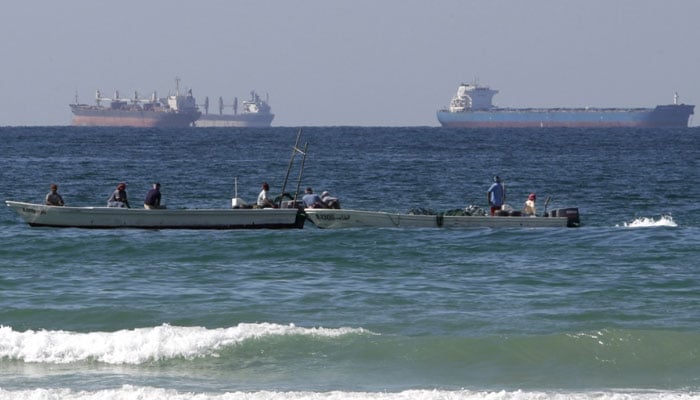
RIYADH: Two Chinese supertankers carrying Saudi crude oil have safely passed through the Bab el-Mandeb Strait, despite growing security concerns following the Houthi movement’s recently announced naval blockade targeting Saudi-linked shipping.

According to international media reports and shipping data, the vessels successfully navigated one of the world’s busiest maritime chokepoints, even as commercial shipping across the region faces mounting disruption due to escalating tensions in the Middle East.

The two tankers departed earlier this week from Saudi Arabia’s Yanbu Port, transporting crude oil to China. Maritime tracking data indicated that both ships identified themselves as carrying Chinese crews, a detail analysts believe may have helped reduce the risk of interception while transiting the strategically important waterway.

The successful voyage comes at a time when regional shipping routes are under increasing pressure. While the Bab el-Mandeb passage remained open for these vessels, traffic through the Strait of Hormuz has slowed significantly amid heightened geopolitical tensions and security threats.

Industry monitoring organizations reported that only one oil tanker crossed the Strait of Hormuz on Thursday, marking the lowest daily traffic recorded since May 7. The sharp decline reflects growing concerns among shipping companies over the safety of vessels operating in the Gulf region.

The latest developments follow the Houthis’ announcement of a naval blockade against Saudi shipping, raising fears of further disruptions to global energy supplies. The Red Sea and nearby waterways serve as vital corridors for international trade, with millions of barrels of crude oil passing through them every day.

Maritime security experts say shipping companies are increasingly reassessing routes, insurance coverage, and operational risks as tensions continue to rise. Some firms have warned that insurance policies for vessels operating in high-risk conflict zones could become more expensive or even be withdrawn if security conditions deteriorate further.

Although the two Chinese tankers completed their journey through Bab el-Mandeb without incident, analysts caution that the broader security situation remains highly volatile. Any escalation involving key maritime routes could have significant consequences for global oil markets, freight costs, and international supply chains.

The safe passage of the vessels offers temporary reassurance for energy markets, but observers note that commercial shipping in the region remains vulnerable as geopolitical tensions persist. Governments, shipping operators, and energy traders are closely monitoring developments, with particular attention focused on the strategic waterways that connect the Gulf to global markets.

Similar Posts

  • | | |

    Police constable martyred, Two suspected robbers k…

    A police constable was martyred while two suspected robbers were killed during an exchange of fire in Karachi’s Orangi Town early Tuesday morning, according to police officials. The incident occurred near Liaquat Chowk within the jurisdiction of Pakistan Bazaar Police Station during a routine police patrol. Senior Superintendent of Police (SSP) West Tariq Illahi Mastoi said four police officers were conducting motorcycle patrols when they encountered armed suspects. According to the police, the suspects opened indiscriminate fire upon spotting the patrol team, prompting officers to return fire in self-defense. During the shootout, both suspected robbers were killed at the scene. Police recovered two pistols, ammunition, spent shell casings, and the motorcycle allegedly used by the suspects. However, 26-year-old Constable Hassan Ali sustained serious gunshot injuries during the exchange. He was immediately shifted to a nearby hospital, where doctors made every effort to save his life. Despite medical treatment, he succumbed to his injuries and was later declared martyred. District West police spokesperson Nabeel Ahmed Rajput stated that the constable was wearing body armor at the time of the encounter. However, the bullets struck him from the side, causing fatal injuries. Constable Hassan Ali was unmarried and hailed from Sukkur. Following funeral prayers at the Garden Police Headquarters in Karachi, his body was transported to his hometown for burial. The funeral was attended by Sindh Inspector General of Police Javed Alam Odho, Additional IGP Azad Khan, and several senior police officials, who paid tribute to the fallen officer’s sacrifice. Police investigations later revealed that one of the deceased suspects had a significant criminal history. Officials said he had previously been arrested in connection with the 2021 killing of an assistant sub-inspector and was involved in at least 13 criminal cases. Another criminal case had also been registered against the second suspect. The incident highlights the continuing security challenges faced by law enforcement personnel in Karachi. Police officers frequently encounter armed criminals during patrols, placing their lives at risk while carrying out their duties. Authorities have reiterated their commitment to continuing operations against street crime and organized criminal networks across the city to improve public safety and maintain law and order.

  • | |

    MPhil student shot dead over marriage dispute, cou…

    A tragic incident in Kabeerwala has shocked the local community after a 28-year-old MPhil student was allegedly shot dead in connection with a marriage dispute. Police officials said the woman was targeted in a firing incident in the Sarai Sidhu area of Faridpur village. According to police, the victim belonged to the Haraj community and was allegedly attacked over a disagreement related to a marriage proposal. Initial investigations suggest that the woman was targeted by her cousin along with two other individuals, who allegedly opened fire at her. The incident took place in Faridpur village, where the victim lost her life after sustaining gunshot wounds. Following the attack, police reached the scene and began collecting evidence as part of the investigation. Authorities shifted the victim’s body to the Civil Hospital Kabeerwala for a post-mortem examination. Police said that legal proceedings have been initiated, and efforts are underway to locate and arrest the suspects allegedly involved in the killing. Officials have stated that the investigation is ongoing and further details will emerge after the completion of evidence collection and questioning of relevant individuals. Police teams are working to determine the exact circumstances behind the incident and establish the motive behind the attack. Cases involving disputes over marriage proposals and family disagreements have frequently raised concerns regarding violence against women. Legal experts and social observers have emphasized the need for stronger awareness, timely intervention, and effective enforcement of laws to prevent such tragedies. The death of the young scholar has caused grief among residents, particularly those who knew her academic journey. As an MPhil student, she was pursuing higher education and had aspirations for her future before the incident brought her life to a sudden end. Police officials have assured that all available resources are being used to investigate the case and bring those responsible to justice. Further updates are expected as the investigation progresses.

  • |

    Electricity tariff may rise by Rs2.50 per unit as July FCA pushes recovery above Rs34bn

    ISLAMABAD: Electricity consumers across Pakistan could face an additional burden of around Rs2.50 per unit as the government moves to recover more than Rs34 billion through the July 2026 monthly Fuel Charges Adjustment (FCA), according to sources. The proposed increase is expected to affect consumers of distribution companies (Discos) as well as K-Electric, with the final adjustment to be determined by the National Electric Power Regulatory Authority (Nepra) after reviewing the relevant power purchase and generation costs. Sources said the expected positive FCA for July has largely been driven by higher electricity consumption during the peak summer season and greater reliance on expensive generation sources. Among the key factors behind the anticipated increase are the use of liquefied natural gas (LNG) procured from the spot market and furnace oil to meet additional electricity requirements, particularly during periods of high demand. June FCA already approved The expected July adjustment comes after Nepra approved a positive FCA of Re0.7503 per unit for electricity consumed in June 2026. The adjustment was lower than the Rs1.20 per unit sought by the Central Power Purchasing Agency-Guaranteed (CPPA-G). Under the FCA mechanism, variations in fuel costs and other electricity generation and purchase-related expenses are passed on to consumers through periodic adjustments. For July, CPPA-G will submit its relevant claims to Nepra, which will examine the costs and determine the admissible adjustment before issuing separate decisions for the respective distribution companies. Multiple costs to be examined The regulator is expected to assess several components included in the FCA claim before determining the final amount recoverable from consumers. Separate adjustments will subsequently be calculated for each Disco after taking into account electricity purchased through CPPA-G, bilateral arrangements with small power producers and captive power producers, as well as electricity supplied under net-metering arrangements. The final impact on consumers could therefore vary depending on the individual power procurement mix and applicable tariff structure of each distribution company. Expensive generation raises concerns The expected tariff increase has emerged at a challenging time for Pakistan’s industrial sector, where electricity prices remain a major concern for manufacturers and exporters. Industrial consumers are already facing pressure from elevated production costs, while exporters are also dealing with uncertainty caused by deteriorating security and economic conditions in the Middle East. The latest FCA discussion has also brought the issue of partial-loading charges under scrutiny. During a recent hearing, Nepra raised questions over approximately Rs4.9 billion in partial-loading costs and asked CPPA-G to explain the reasons behind the additional expenditure and measures being considered to control it. Solar power changes demand pattern CPPA-G told the regulator that the partial-loading charges were not primarily the result of inefficient operation by power plants. Instead, the agency attributed the costs largely to changes in electricity consumption patterns caused by the rapid expansion of rooftop solar generation. According to CPPA-G, daytime demand from the national grid has declined as more consumers generate electricity through rooftop solar systems. Conventional power plants are consequently required to operate below their optimum capacity during solar-generation hours. However, demand rises again in the evening when solar generation falls, forcing grid-connected power plants to increase generation quickly. This change in the daily demand curve has created additional operational costs for the power system. The authority noted that partial-loading charges recorded in June 2026 were around Rs1 billion higher than the corresponding amount in June 2025, highlighting the growing financial impact of the changing electricity demand pattern. Plant shutdowns could increase costs The Independent System and Market Operator (ISMO) also informed the regulator that shutting down power plants during periods of lower demand would not necessarily provide a cheaper solution. According to ISMO, taking plants completely offline to avoid partial-loading charges could result in substantial start-up expenses when the units are required again to meet evening demand. The issue has therefore become increasingly important as the rapid growth of distributed solar generation continues to alter the traditional pattern of electricity consumption. Exporters seek cheaper fuel options Amir Sheikh, a prominent textile exporter, called for the removal of the levy imposed on high-speed diesel and furnace oil-related generation costs, arguing that furnace-oil-based power plants could offer an alternative to expensive RLNG-fired generation under certain circumstances. He maintained that allowing more flexible use of available generation sources could help reduce the overall cost of electricity, particularly during periods when LNG prices remain elevated. Sheikh also proposed a change in the way FCA-related surcharges are calculated. He suggested that the additional charges should be recovered on the basis of projected electricity consumption rather than only through the conventional mechanism, similar to the approach followed under quarterly tariff adjustments (QTA). Falling demand creates another challenge Another concern raised during the discussion was the continuing decline in electricity demand and its possible implications for future tariff adjustments. Rehan Javed highlighted the potential impact of lower electricity consumption on the power sector’s financial structure, particularly as fixed system costs are spread over a smaller volume of electricity sales. The Ministry of Energy’s Power Division, however, said the decline in demand was largely linked to the increasing number of consumers using net-metering facilities. The ministry maintained that although distributed solar generation was changing electricity consumption patterns, its impact on future quarterly tariff adjustments would not necessarily be as severe as feared by industrial consumers. Government seeks to avoid costly LNG purchases The Power Division further explained that electricity demand was being managed in a manner designed to reduce dependence on expensive RLNG spot-market cargoes. Officials said excessive reliance on spot LNG during the summer could significantly increase power generation costs and ultimately translate into higher electricity tariffs for consumers. The government is therefore attempting to balance electricity availability, fuel costs and demand management while dealing with the changing structure of Pakistan’s power market. If Nepra ultimately approves an FCA close to the expected Rs2.50 per unit, consumers could face another substantial increase in their electricity bills. The final adjustment, however, will depend on Nepra’s assessment of CPPA-G’s July claim and the costs deemed

  • Two Thai Soldiers Injured in Border Skirmish with Cambodian Forces in Si Sa Ket

    SISAKET – Two Thai soldiers sustained injuries during a border clash with Cambodian troops in Si Sa Ket province on Sunday, escalating tensions in a long-disputed frontier area. The firefight occurred in the Phupha Lek-Plarn Hin Paed Korn border zone of Kantharalak district at approximately 2:15 p.m. Chinese National Seriously Injured by Landmine While Illegally […]

  • | |

    Maryam’s big election pitch: roads, homes, hospi…

    Punjab Chief Minister Maryam Nawaz has claimed that the public response at the PML-N rally in Mirpur shows that her party will secure a strong victory across Azad Jammu and Kashmir. Addressing a public gathering in Mirpur, Maryam Nawaz praised the enthusiasm of the participants despite the intense heat. She said the large turnout reflected growing support for the PML-N in the region. She said that people in Muzaffarabad also attended the party’s gathering despite heavy rainfall, adding that she had not come to Mirpur as a political visitor but as someone returning to her ancestral home. Maryam Nawaz said Mirpur has beautiful houses and significant potential, but its roads and infrastructure require major improvement. She added that the time had come to begin a new phase of development in the city. Recalling her visit with Nawaz Sharif, she said the former prime minister repeatedly admired the beauty of the region during their journey and appreciated its natural landscape. The Punjab chief minister said Kashmir has abundant resources and talented people, but it lacks modern infrastructure. She stressed the need for better roads, advanced hospitals and improved facilities to promote tourism and economic growth in Azad Kashmir. She claimed that the PML-N would provide the same facilities in Azad Kashmir that it has introduced in Punjab if it wins the upcoming elections. She announced that even before the elections, she was bringing a gift of 10 electric buses for Mirpur. Maryam Nawaz highlighted Punjab government initiatives, saying that around 200,000 people had received homes under the “Apni Chhat Apna Ghar” housing project within two years. She said Azad Kashmir could surpass Punjab in development within five years if honest and effective governance was ensured. She also called for introducing projects such as a Safe City system and housing schemes in Azad Kashmir to improve public security and living standards. Criticising rival political parties, Maryam Nawaz said no other party could point to major development work carried out in Kashmir. She challenged opponents to identify even a single major infrastructure project completed by them. She urged voters to make a careful decision, warning that choosing the wrong leadership could delay development opportunities. She said people from other provinces often praise Punjab’s progress and wish for similar governance. Maryam Nawaz said that removing Nawaz Sharif’s contributions from Pakistan’s development history would leave behind “only ruins.” She promised that if people supported the PML-N, the party would bring changes in Azad Kashmir beyond public expectations and work to transform the region’s future.

  • | | |

    Death toll in Quetta coal mine blast rises to 34

    QUETTA: The death toll from a deadly coal mine explosion near Quetta has climbed to 34 after rescue teams recovered the bodies of eight more miners from the site. The incident occurred at a coal mine in the Sorange area, where dozens of workers were underground when a powerful methane gas explosion ripped through the mine. According to the Provincial Disaster Management Authority (PDMA), a total of 42 miners were trapped following the blast. Rescue teams have managed to recover 34 bodies so far, while efforts continue to locate the remaining workers. Officials said the operation is being carried out under difficult conditions, with emergency personnel working around the clock to reach those still inside the mine. The mine owner confirmed that 42 labourers were present in the mine at the time of the explosion. Preliminary findings suggest that methane gas accumulated inside the mine, triggering the deadly blast. Balochistan Chief Minister has ordered an immediate report on the incident and directed authorities to investigate the circumstances surrounding the tragedy. He warned that strict action would be taken against anyone found responsible if negligence or safety violations are established. Coal mining accidents remain a recurring concern in Balochistan, where hazardous working conditions and poor safety standards have claimed numerous lives over the years. The latest disaster has once again raised questions about the enforcement of mine safety regulations and the protection of workers in the province’s mining sector. Rescue operations are ongoing as authorities continue their search for the miners who remain unaccounted for.

Leave a Reply

Your email address will not be published. Required fields are marked *