
iran responds launches
|

Iran responds, launches attacks on 2 US bases in Jordan

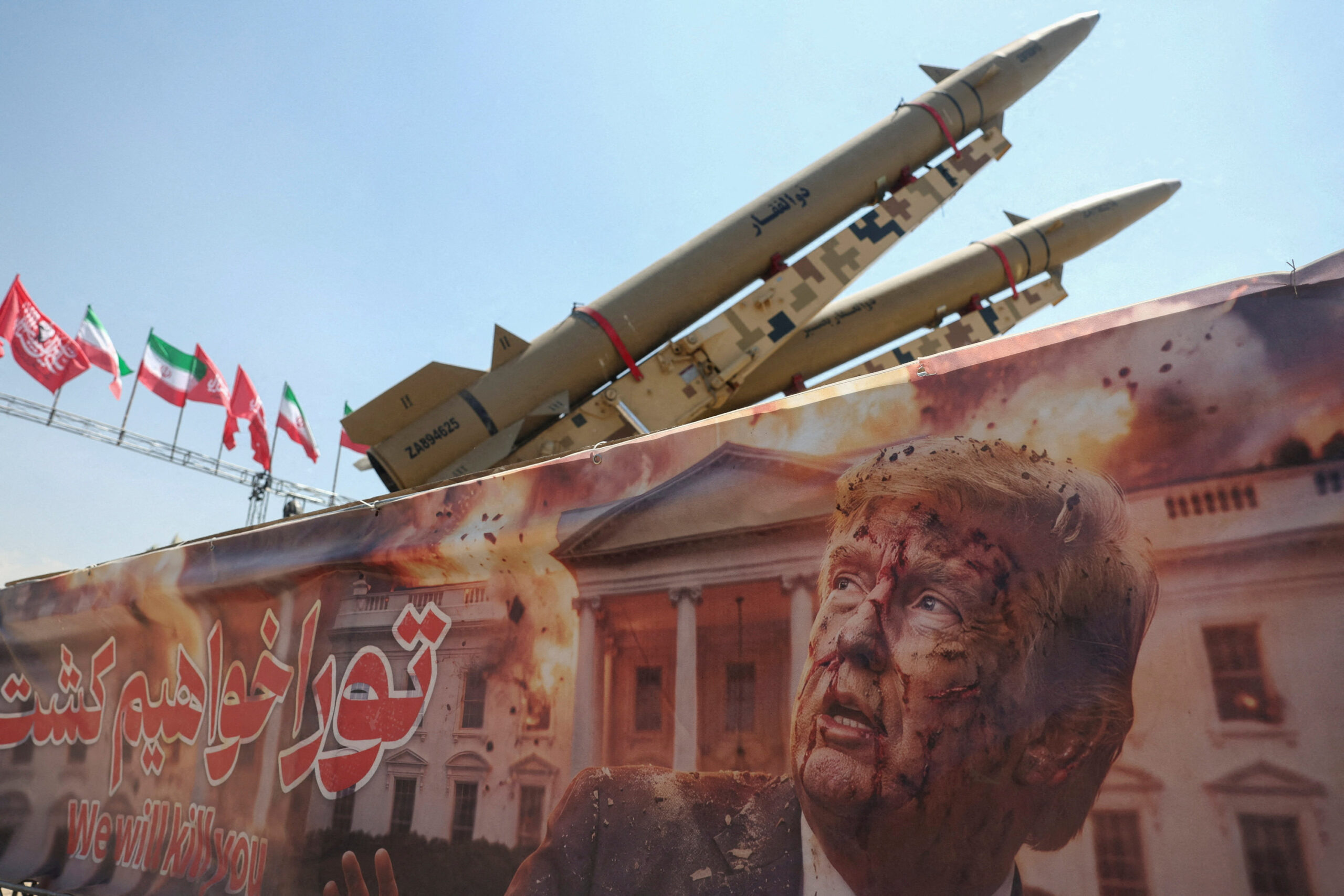
 Iran’s Revolutionary Guards said on Monday, August 31, that it launched an attack on the King Hussein and Al Azraq US bases in Jordan with ballistic missiles in response to the American attack on Larak Island, Iranian media reported.

Jordan’s armed forces said they intercepted eight missiles that entered Jordanian airspace on Monday.

Earlier, US forces struck two Iranian launchers on Iran’s Larak Island on Sunday, August 30, a US official said, marking the first known American strikes on Iran since late July.

Iran responded by attacking US forces stationed in Jordan, according to a Fox News reporter on Sunday, citing a US source. Nearly all incoming missiles “have been intercepted at this point,” the reporter’s X post said, noting that there had been no significant impact so far.
Must Read

Qatar steps in to mediate as Trump says US not talking to Iran


Qatar steps in to mediate as Trump says US not talking to Iran

Of the initial US strikes, the US official said, “I can confirm that earlier today US forces struck two Iranian launchers on Larak Island. Islamic Revolutionary Guard Corps forces were observed preparing to launch rockets with sea mines into Strait of Hormuz.”

Iran’s Revolutionary Guards said the attack killed and wounded several soldiers and citizens and would be met with a “response and punishment” from Tehran, Iranian state media reported.

Iran’s semi-official Tasnim news agency reported the US carried out a drone strike on the island.

US President Donald Trump said last week that all mines had been detonated or removed from the international waters of the Strait of Hormuz and Iran has been told that any ship or boat placing new mines will be destroyed.

The last known US strikes on Iran were in late July as the war has reached a stalemate in recent weeks with Washington threatening to impose costly sanctions on countries that support Iran.

The US and Israel attacked Iran on February 28 and Iran responded with its own strikes on Israel and Gulf states that host US bases. The Iran war has now crossed the six-month mark.

US-Israeli strikes on Iran and Israeli attacks on Lebanon have killed thousands and displaced millions of people. Eighteen US service members have been killed in the conflict.

The war has led to the blockade of the Strait of Hormuz, which before the conflict was used to transit about a fifth of the world’s oil supply.

The Iranian weapons launched at the US base on Sunday were ballistic missiles, Axios reported. – Rappler.com

Similar Posts

  • | | | |

    Iran says Pakistan-Turkey-Saudi pact not aimed at Tehran

    Iran has said it has no reason to believe that the new security agreement between Pakistan, Turkey and Saudi Arabia is aimed against Tehran. Iranian Foreign Ministry spokesperson Esmaeil Baghaei said the agreement should not be viewed as a direct threat to Iran. He said the new regional security arrangement reflects a broader change in how countries in the Middle East are approaching their security needs. Baghaei said regional states are increasingly recognising that the United States cannot guarantee long-term security in the region. He also accused Washington of contributing to instability in the Middle East. He said regional security arrangements could help strengthen stability if they take into account the political and historical realities of the region. He also called for such arrangements to be broad and inclusive. Baghaei said Iran would not resume direct negotiations with the United States while Washington continues to violate an interim agreement between the two sides. Iran has also linked the reopening of the Strait of Hormuz to several demands from Washington. Iranian Foreign Minister Abbas Araghchi said Tehran and Oman were close to finalising an agreement on new shipping routes through the strategic waterway. He said the agreement was in its final stages. However, Araghchi stressed that an agreement with Oman would not automatically lead to the reopening of the strait. He said the United States would first need to meet several conditions set by Tehran. Iran is demanding compensation for damage caused by US attacks. It is also calling for an end to US military threats and sanctions against Iran. Iran has further demanded an end to attacks against its regional allies. Other demands include the removal of restrictions on Iranian shipping and the release of frozen Iranian assets. The Strait of Hormuz is a major international route for oil and gas shipments. Its prolonged closure has raised concerns over global energy supplies and shipping. Iran and the United States are currently not holding direct talks. Tehran says it will not enter direct negotiations while Washington continues to breach the interim agreement reached earlier this year. Messages between the two countries are being exchanged through intermediaries. Iran has also made a major change in its national security leadership. Former Revolutionary Guards commander Mohsen Rezaei has been appointed secretary of the Supreme National Security Council. Rezaei replaces Mohammad Bagher Zolghadr, who had been appointed to the position in March. No official reason was given for the change. The move, however, comes at a sensitive time for Iran as tensions with the United States and Israel remain high. Rezaei, 71, is a senior figure in Iran’s political and security establishment. He led the Islamic Revolutionary Guard Corps from 1981 to 1997. He served during much of the Iran-Iraq war. He later spent more than two decades as secretary of Iran’s Expediency Discernment Council. Rezaei also served as vice president for economic affairs from 2021 to 2023 under former President Ebrahim Raisi. Iran’s Supreme Leader Mojtaba Khamenei has also appointed Rezaei as his representative on the Supreme National Security Council. Zolghadr has been appointed as Khamenei’s political adviser. The Supreme National Security Council coordinates Iran’s security and foreign policy. It includes senior military, intelligence and government officials. Meanwhile, differences between the United States and Israel are reportedly growing over military operations across the region. Israeli broadcaster Channel 13 reported that Washington is pushing Israel to move toward ending fighting on three fronts. These include Gaza, Lebanon and Iran. US Central Command chief Admiral Brad Cooper reportedly conveyed the message during a visit to Israel. Washington wants progress toward reducing military operations and closing the three active fronts. Israeli officials, however, have indicated that they want to maintain freedom to act against Iran. Israeli military officials reportedly told their US counterparts that Israel intends to retain the ability to strike Iran if Tehran continues developing its nuclear programme or rebuilding its ballistic missile capabilities. Washington is also pushing for further Israeli withdrawals from positions in southern Lebanon. In Gaza, the United States is seeking progress toward a broader settlement. It is also supporting the deployment of a multinational force in the territory. Israeli security officials have reportedly objected to some US demands. These include reducing military operations and targeted killings in Gaza. The developments point to growing differences between Washington and Tel Aviv over how to manage conflicts involving Iran, Lebanon and Gaza. At the same time, the United States appears to be adopting a more cautious approach toward Iran. Tehran, however, continues to link the reopening of the Strait of Hormuz to major concessions from Washington.

  • | | |

    Netanyahu reacts to Trump’s Saudi deal condi…

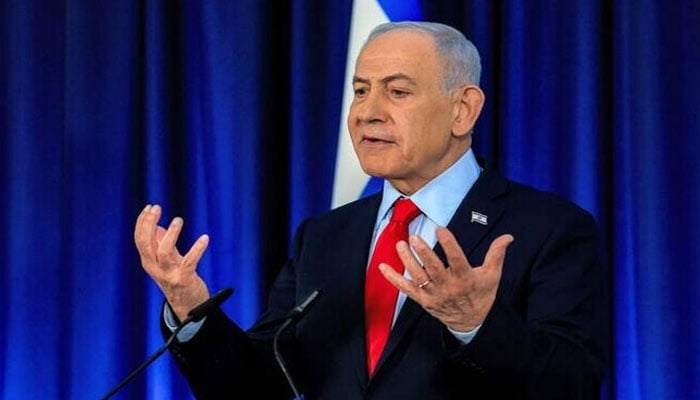
    Israeli Prime Minister Benjamin Netanyahu has described the potential inclusion of Saudi Arabia in the Abraham Accords as a “historic” step for the Middle East, following US President Donald Trump’s announcement that a proposed US-Saudi civilian nuclear agreement would depend on the Kingdom formally joining the normalization pact. According to Reuters, Netanyahu shared his reaction in a post on X, calling Saudi participation in the Abraham Accords a major breakthrough that could reshape the region’s future and strengthen peace and security across the Middle East. “Saudi Arabia joining the Abraham Accords would be a historic and tremendous development for peace and stability in the region,” Netanyahu said, without directly referring to the proposed civilian nuclear agreement between Washington and Riyadh. His remarks came shortly after President Trump revealed that the United States is prepared to move forward with a civilian nuclear cooperation agreement with Saudi Arabia—but only if the Kingdom officially becomes part of the Abraham Accords, the US-backed normalization framework that established diplomatic ties between Israel and several Arab nations. Trump’s condition has immediately placed renewed global attention on the long-discussed possibility of Saudi-Israeli normalization, an issue widely regarded as one of the most significant diplomatic challenges in the Middle East. While Netanyahu welcomed the idea of Saudi Arabia joining the agreement, he carefully avoided commenting on Trump’s specific proposal linking the nuclear deal to normalization. His statement instead focused on the broader regional benefits that such a move could bring. The Abraham Accords, first signed in 2020, normalized relations between Israel and countries including the United Arab Emirates, Bahrain, Morocco and Sudan. Saudi Arabia has repeatedly maintained that any formal normalization with Israel would depend on progress toward resolving the Palestinian issue, making the latest US proposal particularly significant. Analysts say Trump’s latest announcement could revive diplomatic negotiations that had slowed amid regional tensions and the ongoing conflict in Gaza. However, they also caution that Riyadh’s position remains closely tied to broader political and security considerations. Whether the proposed civilian nuclear agreement can pave the way for Saudi Arabia’s entry into the Abraham Accords remains uncertain. Still, Netanyahu’s swift endorsement highlights Israel’s strong interest in expanding the landmark agreement and bringing the region’s largest Arab economy into the normalization framework, a move that could significantly alter the Middle East’s diplomatic landscape.

  • |

    Trump signs new executive orders seeking to restrict US birthright citizenship

    US President Donald Trump has signed two new executive orders aimed at restricting birthright citizenship, five weeks after a 6-3 Supreme Court decision rejected his administration’s broader attempt to end automatic citizenship for children of undocumented immigrants. The newly issued directives attempt a narrower approach by targeting specific exceptions under the Citizenship Clause of the 14th Amendment. The primary focus of the orders is a total ban on birth tourism, a practice where pregnant foreign nationals travel to the US to give birth so their children acquire automatic citizenship. The directives also place restrictions on children born in the US to foreign government employees, foreign combatants classified as alien enemies, and residents of US territories pending potential congressional legislation. Speaking alongside White House aides Stephen Miller and Commerce Secretary Howard Lutnick during an Oval Office ceremony, Trump criticised the high court’s prior 30 June ruling and argued that non-citizens were taking advantage of constitutional protections established following the Civil War. Legal experts and civil rights advocacy organisations, including the American Civil Liberties Union and UnidosUS, noted that the executive actions do not carry the authority of statutory law and will face immediate challenges in federal court for attempting to bypass constitutional precedent and Supreme Court authority.

  • |

    Ukraine urges faster missile support as envoy pushes for stronger air defences

    Ukraine has renewed its appeal for advanced air defence missiles, warning that the country urgently needs stronger protection against Russian ballistic missile attacks before winter arrives. Speaking in Washington, Ukraine’s ambassador to the United States, Olha Stefanishyna, said diplomatic efforts to end the war are continuing, but military support remains essential as Russian strikes intensify. Stefanishyna said Ukraine hopes renewed ceasefire discussions with Russia could help bring an end to the conflict before the harsh winter season. However, she stressed that negotiations alone will not protect civilians from the increasing number of missile attacks targeting Ukrainian cities and infrastructure. She said the country urgently requires additional Patriot PAC 3 interceptor missiles to strengthen its air defence system. According to the ambassador, Ukraine is in talks with the Pentagon about obtaining a licence to manufacture Patriot PAC 3 missiles domestically. She acknowledged that such a project would take considerable time, with production possibly beginning anywhere between one and five years after approval. Ukrainian officials are also discussing a long term purchasing arrangement that would allow the country to secure future missile supplies by exchanging production slots with another customer. Stefanishyna revealed that representatives from Raytheon, the company that produces the Patriot air defence system, have already visited Ukraine. She added that Lockheed Martin, which manufactures the PAC 3 interceptor missiles, is preparing to send a team of specialists to the country to explore possible cooperation. Describing the current security situation, the ambassador said Russia has sharply increased its use of ballistic missiles during overnight attacks. She noted that recent waves of strikes have included between 30 and 40 ballistic missiles in a single night. While Ukraine has become more effective at intercepting drones supplied or produced by Russia and Iran, it still lacks enough advanced missile systems to counter large scale ballistic attacks. Stefanishyna said Russian President Vladimir Putin continues to expand missile production while maintaining pressure on Ukrainian cities. She argued that Ukraine has adapted successfully in many areas of the conflict but still requires additional missile defences to protect the population during the coming winter months. The renewed request for military assistance follows Ukrainian President Volodymyr Zelensky’s meeting with United States President Donald Trump at the White House earlier this week. During the talks, Zelensky sought greater support for Ukraine’s air defence capabilities while also encouraging a fresh diplomatic effort aimed at ending the war. The ambassador said the latest peace initiative could include a visit to Kyiv by senior United States representatives Steve Witkoff and Jared Kushner. Although no official date has been announced, she said the visit could take place as early as next week if preparations are completed. Stefanishyna also said Zelensky has repeated Ukraine’s proposal for a ceasefire based on the current front lines, with negotiations continuing from that point. She stressed that meaningful progress is needed before winter because colder weather will make both military operations and humanitarian conditions more difficult. The ambassador also addressed reports about her own future in government. She confirmed that she had offered to resign from her position and return to Ukraine to respond personally to corruption allegations related to her financial declarations. Stefanishyna said President Zelensky had not requested her resignation and preferred that she remain in her role. However, she believes returning home is the best way to defend herself and her family against the accusations while the legal process moves forward.

  • | |

    Iran shifts to offensive posture as Hormuz standof…

    Iran has moved from a defensive to what a senior Iranian official called a fully offensive strategy, citing a deadlock in efforts to reach a lasting end to its war with the United States, according to a person familiar with the matter who spoke to a foreign news agency on Monday. Progress toward peace talks and the resumption of oil tanker traffic through the Strait of Hormuz has stalled, with no indication that either side is moving closer to ending the conflict the United States and Israel launched on February 28. The official said Iranian entities must prepare to escalate tensions in the strait and across the wider region, adding that Tehran stands ready to make difficult decisions and would carry out a precise military strike to break the US naval blockade if diplomacy collapses. Washington did not immediately respond to those remarks, though President Donald Trump told Fox News earlier in the day that Iran should raise the white flag of surrender. Throughout the conflict, Trump has swung between threats of further escalation and claims that a peace deal sits within reach. Iran’s Islamic Revolutionary Guard Corps pushed back hard on one such claim Monday, rejecting as false Trump’s assertion that Washington maintains backchannel contact with IRGC officials on matters related to the war. Spokesman Hossein Mohibbi told Iran’s Tasnim news agency that no talks are taking place between IRGC officials and American counterparts, describing Trump’s claims as fantasies stemming from desperation over battlefield setbacks. Mohibbi said diplomatic matters fall to other Iranian institutions and remain outside the Guard’s purview, adding that current information from the Foreign Ministry confirms no talks are underway even at that level. He argued Trump’s statements amount to an attempt to influence global energy prices. Trump had told reporters earlier Monday that his administration keeps a backchannel with the IRGC and speaks directly with its officials inside Iran. Trump also issued a separate warning aimed at Oman, saying Washington would respond with force if the sultanate interferes with US Iran negotiations. Asked about Oman’s role in talks touching on Iran and the Strait of Hormuz, Trump told Fox News the United States would bomb Oman if it gets in the way. The comment came after Iran said Saturday that it had reached agreement with Oman on a shipping route map for the strait following weeks of technical talks. Trump separately confirmed the administration’s direct channel with the IRGC and repeated that Tehran should surrender, calling Iranian officials skilled negotiators who are nonetheless losing ground. Fighting also intensified elsewhere in the region. Yemen’s Houthi movement claimed Monday that it struck several Saudi naval vessels along with a weapons depot in a broad missile and drone assault. Spokesman Yahya Saree said a Saudi amphibious transport ship and accompanying vessels were hit in a precise aerial attack involving multiple ballistic missiles, claiming several ships sank while others caught fire. He said Houthi forces also used multiple drones to strike a Saudi weapons depot at the Sahn al Jin camp in Yemen’s Marib province. Saudi authorities had not confirmed the claims as of publication. Separately, Yemen’s army said Monday it detected two hypersonic ballistic missiles fired by Houthi forces toward the city of Mocha and the Red Sea, launched from a former air defense brigade headquarters east of Taiz. No information on casualties or damage was immediately available, and the Houthis did not comment. The launch followed a claim from Yemen’s National Resistance Forces that Houthi fighters had targeted Mocha with seven drones a day earlier, adding to fears of renewed full scale conflict in a country that had seen relative calm since April 2022 following nearly twelve years of civil war. On the Iranian side, IRGC Deputy Commander in Chief Major General Mostafa Izadi said Iranian forces shot down more than 200 enemy aircraft during the recent war with the United States and Israel, according to Iran’s Fars news agency. Izadi said the conflict left the Islamic system undamaged and demonstrated Iran’s strength to the world. Parliament speaker Mohammad Bagher Ghalibaf went further, declaring both a military and political victory over Washington and Israel on the day a 60 day ceasefire under the Islamabad memorandum was set to expire. Ghalibaf said the US and Israel failed to achieve any of nine publicly stated objectives in the war, calling it their biggest failure. Trump, meanwhile, reiterated on his Truth Social platform that Iran cannot possess a nuclear weapon in any form, describing this as Washington’s permanent top priority. Iran also pressed a separate grievance Monday, with Foreign Ministry spokesman Esmaeil Baghaei blaming pollution in Gulf waters on decades of US military presence and operations in the region. Baghaei said the environmental damage stems from American military activity over the past five decades and called for Washington to be held accountable, estimating losses in the trillions of dollars. His comments followed Iran’s request last week for compensation after an oil slick reached the island of Qeshm, which officials said has since been cleaned up. Separately, salvage efforts continued for a grounded tanker leaking Russian crude off Oman’s coast, with officials citing monsoon weather and the shallow, rocky seabed as major obstacles. Mohammed bin Abdullah al Rawahi of Oman’s transport ministry said the conditions expose salvage vessels to operational and navigational risks, compounded by flooding damage to one side of the tanker. Diplomatic efforts on Gaza also advanced Monday, with Israeli Prime Minister Benjamin Netanyahu due to meet Trump envoy Jared Kushner a day after a rare meeting between Kushner and Hamas officials in Cairo. A diplomatic source said Hamas leader Khalil Al Hayya attended some sessions with Kushner and Gaza peace envoy Nickolay Mladenov. Trump said in late July that a deal had been reached on the complete disarmament of Hamas and other armed groups, though Netanyahu, facing an October re election vote, has publicly rejected the plan. Trump separately welcomed the signing of the Makkah Joint Defence Agreement by Turkiye, Pakistan and Saudi Arabia, saying on Truth

  • | | |

    US rejects Iran’s Hormuz demands

    The United States has rejected Iran’s demands concerning the management and monitoring of maritime traffic in the strategically important Strait of Hormuz, with US officials saying that Tehran’s proposals have not received approval from Oman or the broader international community. American officials said the agreement under discussion focuses only on coordination between the countries involved and does not include any taxes, transit fees, or other financial charges. They described Iran’s demands as unnecessary and maintained that the proposed arrangement should remain limited to practical coordination aimed at facilitating the movement of vessels through the strategic waterway. The US officials’ remarks came after Iranian Deputy Foreign Minister Kazem Gharibabadi revealed that Tehran had proposed a joint monitoring mechanism with Oman for shipping activity in the Strait of Hormuz. According to Gharibabadi, Iran has suggested that each country should manage maritime traffic on its respective side of the strait. Under the proposal, Iranian authorities would oversee vessels and shipping movements in the section under Iran’s responsibility, while Oman would monitor traffic moving through the opposite side. Gharibabadi presented the proposal as an effort to improve coordination and maintain smooth maritime traffic through the strategically located waterway. The Iranian government has long emphasized the importance of regional countries taking greater responsibility for security and navigation in the Gulf and surrounding waters. However, US officials have challenged Iran’s position and said the demands made by Tehran do not form part of the limited coordination framework currently under discussion. They also indicated that neither Oman nor the wider international community has accepted Iran’s proposed conditions. The Strait of Hormuz plays a crucial role in global energy trade. The narrow waterway connects the Persian Gulf with the Gulf of Oman and the Arabian Sea, making it a key route for international oil and gas shipments. Any disruption or uncertainty surrounding navigation in the strait could have consequences for global energy markets, shipping costs, and regional security. The latest disagreement comes amid broader tensions between Iran and the United States over regional security and maritime activity. Tehran has repeatedly stressed its role in maintaining security in the Gulf, while Washington has continued to monitor developments in the area and protect freedom of navigation for commercial and international shipping. The dispute over the proposed arrangement highlights the continuing differences between the two sides over the management of maritime traffic in the Strait of Hormuz. While Iran views its proposal as a framework for shared regional oversight and coordination, the United States maintains that any agreement should focus strictly on coordination and should not impose additional demands, taxes, or fees on international shipping. The issue remains significant because of the strait’s importance to the global economy. Any escalation between Iran and the United States or disagreement over maritime access could draw international attention and raise concerns about the safety and uninterrupted movement of commercial vessels through one of the world’s most important shipping corridors.

Leave a Reply

Your email address will not be published. Required fields are marked *