before flood catastrophenepalasked
|

Before flood catastrophe, Nepal asked China for early warnings as risks mounted

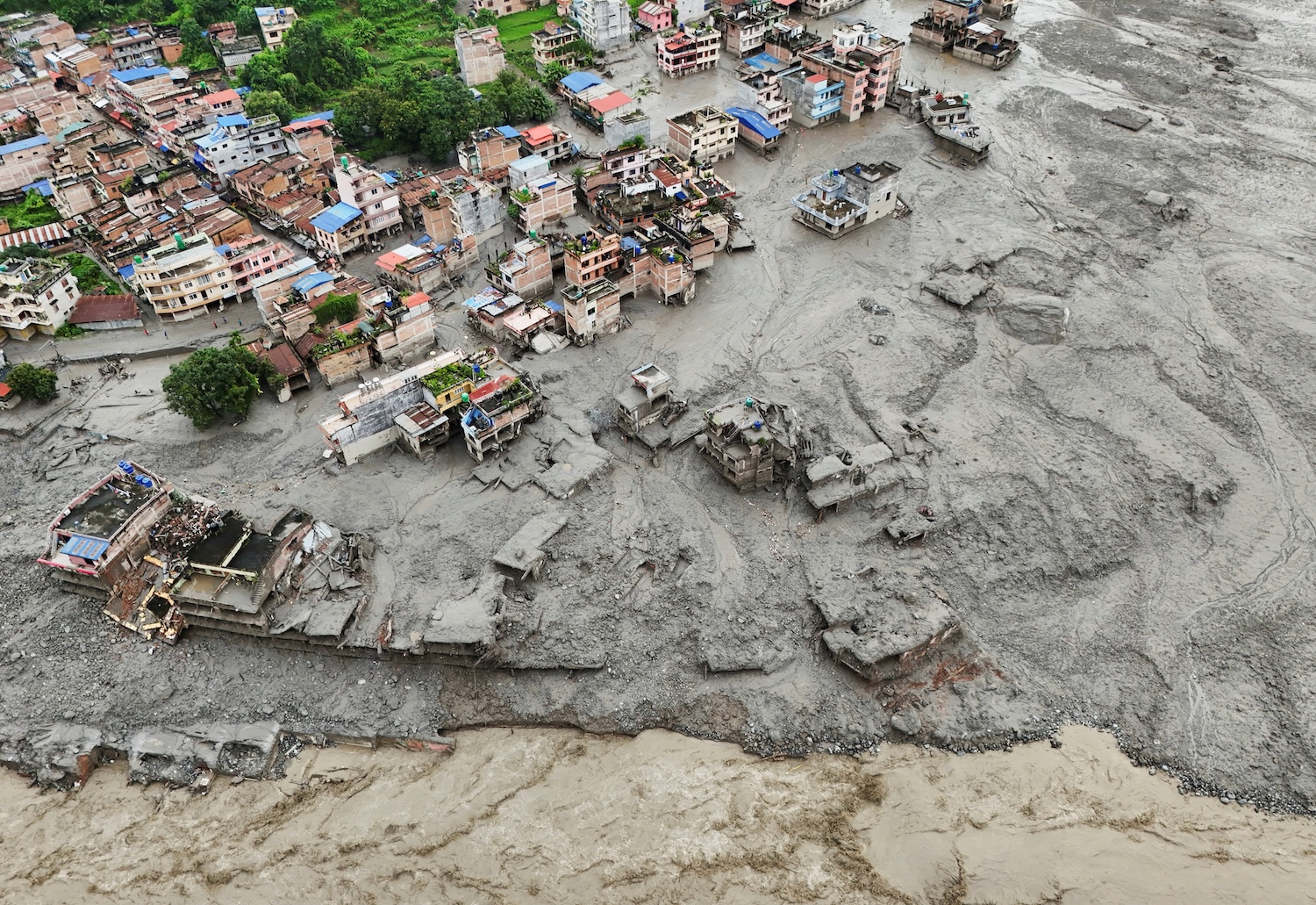
KATHMANDU, Nepal – Three months before a wall of water, mud and rock killed hundreds when it hurtled down a Himalayan valley bordering Nepal and China, experts and officials from both countries met in Kathmandu to discuss the risk of such disasters.

At the May 27 meeting in Nepal’s capital, 10 officials from Nepal and about a dozen from China, including the Tibet region where the disaster struck, discussed strengthening cooperation to monitor and respond to floods, weather and glacier-related hazards, according to an agenda prepared by the Nepali side and seen by Reuters.

The participants called for joint risk-reduction measures, including inventories of glacial lakes and hazard mapping.
Must Read

Nepal-Tibet death toll 750 from Himalayan flood, 3,000 missing


Nepal-Tibet death toll 750 from Himalayan flood, 3,000 missing

But two Nepali officials told Reuters they did not receive as much information as they wanted from China on glacier risks and water levels after the meeting and they feared insufficient data sharing could hamper their ability to anticipate and prepare for major disasters.

“What we actually wanted from them, and still want, is if there are early movements of glaciers and early movements around that area, we would want to know a bit early,” said Sauhardra Joshi, a hydrologist at Nepal’s Flood Forecasting Division, who was in the May meeting.

China says its data-sharing has been ‘timely’

No officials or experts have blamed either side for the natural disaster, which will cost an estimated tenth of Nepal’s annual economic output to recover from. Nepali officials say the priority is to deepen cooperation with China.

China’s foreign ministry did not respond to a request for comment on the May meeting or on Nepal’s request for additional information sharing.

At the meeting, the Chinese said they did not have the mandate to sign an agreement to meet Nepal’s requests, asking for further discussions, said Binod Parajuli, another Nepal government hydrologist.

Details of the meeting and Nepal’s demands for broader cooperation in monitoring the glaciers that threaten communities on both sides of the border have not previously been reported.

China’s embassy in Nepal said in a statement on X on Saturday that Beijing and Kathmandu had kept in close contact on the issue and had made “substantial progress” at the meeting in May on promoting cross-border disaster information sharing.

Nepal raised similar concerns last year, officials said, though experts and officials cautioned that what they describe as slow progress was not a significant factor in the latest disaster, in which a glacier collapse unleashed a catastrophic mudslide that has killed nearly 800 people in both countries and left more than 3,000 missing, by the latest count.
Must Read

Family asks for help in searching for missing Filipino after Nepal flash flood


Family asks for help in searching for missing Filipino after Nepal flash flood

Rejecting criticism from some Nepali social media users that China had failed to provide adequate warning, the Chinese embassy said Chinese and international experts faced significant challenges monitoring hazards in the remote Himalayan region.

Chinese teams had shared important information with Nepal “in a timely manner,” it said.

At last year’s meeting, Nepal raised concerns about a flood in the same area, triggered by the sudden release of water from a glacial lake in Tibet that killed at least nine in Nepal and left more than a dozen missing.

“When the Chinese side sees a heavy precipitation forecast in the Tibet area, then they provide us that forecast and those observations,” Parajuli said. But “not for avalanche and water level, landslides, extreme events.”

China began sharing forecasts of heavy rain in Tibet over China’s WeChat messaging app and email a month ago, Parajuli said.

Timeline to calamity

Twelve days before the disaster, China’s World Meteorological Centre told Nepali officials in an email, seen by Reuters, that a monsoon depression was forecast for the area from August 14 to 19.

“Enhanced rainfall is likely across much of Nepal, and we wish to draw your attention to the potential for secondary and cascading hazards, including but not limited to landslides and flash floods,” China warned.

The Chinese embassy said China has been sharing information including monitoring data on a lake formed by debris from last week’s calamity.

The discussions over data-sharing underline the complexity of monitoring, forecasting and providing early warning in a region where regional geopolitical rivals – including China and India – control remote mountainous areas holding vast quantities of ice and snow that loom over densely populated South Asian plains.

Wednesday’s catastrophe was sparked by the collapse of the glacier in a relatively unmonitored area, and a lack of bilateral cooperation was not a significant factor in Nepal’s response, according to environmental anthropologist Austin Lord, senior fellow at the Washington-based Stimson Center think tank.

“That’s not to forgive the fact that there isn’t really a well-articulated system. And there is very limited exchange between Nepal and China,” said Lord, who is part of a team supporting Nepal’s government on disaster and climate risk management.

“Chinese scientists have a much greater capacity, have much greater resources for monitoring than those on the Nepal side overall.”

The time that the torrent took to reach Nepal shows the value of early-warning systems, Parajuli said.

Around 8:32 am Nepal time on Wednesday, the deluge blasted through a border crossing in Tibet as people attempted to flee, according to surveillance footage that has become a defining image of the disaster.

Twenty-six minutes later, Parajuli got a call from the chief of Nepal’s National Disaster Risk Reduction and Management Authority, alerting him to a flood on the Trishuli river. Parajuli’s team found that a border monitoring station had not transmitted any data since 8:40 am.

“We also then tried to contact downstream stations, but downstream stations also couldn’t post the data,” leaving the team to suspect those devices had been washed away, he said.

After contacting local Nepali authorities to confirm the flooding, Parajuli said, his team sent a public alert to mobile phone users at 9:13 am.

At least four monitoring stations were destroyed by the flood that rampaged 168 km downstream from the Nepal-China border, carrying some 57.4 million cubic meters of water, more than half again as much as normal, according to a Nepali government assessment.

‘Huge gush of mud coming straight at us’

Surging floodwaters, which dislodged giant boulders and pulled large buildings into the overflow, damaged 19 bridges and some 40 km of highway, and knocked out more than 10% of Nepal’s power-generation capacity, according to the Stimson Center.

“It wasn’t water. It was a huge gush of mud coming straight at us,” said Keshav Prasad Baral of Tupche village, about 25 km downstream of the border. “I tried to grab my wife’s hand, but she was swept away by the mud.”

When part of the glacier broke away, crashing to the valley floor hundreds of meters below, it unleashed high-speed flash floods, according to preliminary assessments by Nepali authorities.

The Hindu Kush Himalayas, home to hundreds of millions of people from Afghanistan to Myanmar, contain the world’s largest volume of ice outside the poles, with more than 63,700 glaciers covering nearly 56,000 square km, almost the size of Croatia, and storing up to 5,700 cubic km of ice.

By comparison, the glacier chunk that caused the latest disaster carried an estimated 5 million cubic meters of ice and rock, according to Basanta Raj Adhikari, director of the Centre for Disaster Studies at Nepal’s Tribhuvan University.

Driven by climate change, glacier melt is accelerating as snow cover declines and snowfall becomes more erratic, according to a 2023 study by the International Centre for Integrated Mountain Development.

These changes will increase the likelihood of floods and landslides, as mountain communities also deal with such hazards as sedimentation and erosion, the center projects.

Several of Nepal’s major river systems originate in Tibet, then flow through one of the world’s most seismically active and flood-prone regions.

Nepal’s authorities will seek to work with China to conduct research and build systems to monitor avalanches and the release of water from glacial lakes – major risks for mountain communities – Parajuli said.

He said his department will propose a data-sharing agreement with China, along the lines of an arrangement that Nepal has with neighboring India, for more frequent information on precipitation and river levels, not just high-precipitation forecasts.

Nepal will seek data every 10 minutes so that “we can warn our people, save our people,” he said. “Our main target is we shouldn’t miss any future disaster.” – Rappler.com

Similar Posts

  • | | | |

    US forces to leave Iraqi Kurdistan by September 30

    BAGHDAD: The Iraqi government has announced that US forces will complete their withdrawal from Iraq’s Kurdistan region by September 30, marking another step in the planned transition of the American military mission in the country. According to foreign media reports, Iraqi and US officials held discussions in the Kurdistan region regarding the withdrawal and the transfer of military responsibilities. Under the plan, US military bases in Kurdistan will be handed over to Iraqi security forces following the departure of American personnel. The Iraqi government said the movement of US military equipment and personnel out of the region is already underway. The withdrawal is expected to take place in coordination with Iraqi authorities to ensure an orderly transition. The announcement comes as Baghdad and Washington continue implementing an agreement reached in 2024 on the gradual transition of the US-led military mission in Iraq. The agreement envisaged a phased reduction of the international coalition’s military role while strengthening Iraq’s own security capabilities. US forces have played a significant role in supporting Iraqi forces in the fight against Islamic State militants and in providing training, intelligence and logistical assistance. The latest withdrawal from Kurdistan is therefore likely to attract attention as Iraq assumes greater responsibility for securing military facilities previously used by US forces. The Iraqi government has not provided further details on the exact number of American troops or equipment involved in the latest phase of the withdrawal.

  • |

    Investigative report reveals new human smuggling network 

      An investigative report has revealed that human smuggling networks have established a new and well-organized operation to transport undocumented migrants from the United Kingdom to mainland Europe. The report highlights how criminal groups are exploiting vulnerable migrants by offering illegal travel services, often presenting them as safe and reliable routes to European countries where migrants believe they have a better chance of obtaining legal residency. According to the investigation, smugglers charge approximately £1,000 per person to transport migrants across the English Channel from the United Kingdom to continental Europe. Those wishing to continue their journey to Spain are reportedly asked to pay an additional £500. Spain has become an attractive destination because of recent immigration policies that are widely perceived as providing greater opportunities for undocumented migrants to regularize their legal status. The report explains that these criminal organizations have adopted sophisticated marketing strategies, using social media platforms to advertise their services. Their promotional posts resemble travel packages rather than illegal migration schemes. The advertisements often feature appealing images of famous European cities such as Berlin, Paris, Rome, and other popular destinations, creating the impression of a safe and exciting journey. By using professional-looking graphics and persuasive language, smugglers attempt to gain the trust of potential clients. The investigation further states that these groups specifically target individuals whose UK visas have expired or whose immigration status is uncertain. Many of these migrants fear deportation or have exhausted legal options to remain in Britain, making them particularly vulnerable to the promises made by smugglers. Criminal networks assure them that they can avoid detection by British immigration authorities and safely reach mainland Europe. According to the report, smugglers often claim that once migrants enter the Schengen Area, they may benefit from the freedom of movement available within many European countries. Although these claims can be misleading and depend on individual legal circumstances, they are frequently used to persuade migrants to undertake dangerous and illegal journeys. In some cases, migrants are transported across different European countries using taxis and privately hired vehicles, allowing smugglers to bypass traditional border checkpoints and reduce the likelihood of interception. A major reason Spain has become a central focus of these smuggling operations is the country’s efforts to address labor shortages. The report notes that the Spanish government has introduced a broad immigration regularization program designed to grant legal status to certain undocumented migrants under specific conditions. As part of this amnesty initiative, approximately 1.2 million applications have reportedly been submitted. Of these, nearly 600,000 individuals have received renewable residence permits, allowing them to live and work legally in Spain. Human smugglers have seized upon these developments as a selling point in their advertising campaigns. They present Spain as a destination where undocumented migrants have a greater chance of securing legal residency after arrival. However, experts caution that such claims are often exaggerated or oversimplified. Eligibility for legal status depends on meeting strict legal requirements, and many migrants may not qualify despite the promises made by smugglers. The report also emphasizes the role of social media in facilitating these illegal activities. Platforms that were originally designed for communication and business promotion are increasingly being exploited by organized crime groups to recruit clients, negotiate payments, and coordinate transportation. The ease of anonymous communication and the global reach of these platforms make it easier for smugglers to expand their operations while making it more difficult for law enforcement agencies to identify and dismantle their networks. Meanwhile, the British government continues to stress that it is intensifying efforts to combat international human smuggling organizations. Officials say that law enforcement agencies on both sides of the English Channel are working closely together to investigate criminal networks, disrupt their operations, and prosecute those responsible. The government has also strengthened border surveillance and tightened immigration enforcement in an effort to discourage irregular migration and reduce opportunities for smugglers to operate. Authorities argue that stronger international cooperation is essential because these criminal organizations often operate across multiple countries, making investigations more complex. Intelligence sharing, joint operations, and improved border security are considered key elements in tackling transnational human trafficking and smuggling. Migration experts, however, believe that enforcement measures alone may not be sufficient. They argue that as long as significant differences remain between the immigration policies of European countries, human smuggling networks will continue to identify new routes and exploit legal loopholes. Criminal groups are highly adaptable and frequently alter their methods in response to changing border controls and government policies. Experts also warn that undocumented migrants remain at serious risk of exploitation throughout their journeys. Many face dangerous travel conditions, financial exploitation, deception, and abuse at the hands of smugglers. Some migrants lose large sums of money, while others become victims of forced labor or other forms of exploitation after reaching their destinations. The investigation concludes that addressing the issue of human smuggling requires a comprehensive international strategy. In addition to stronger law enforcement, governments must improve legal migration pathways, enhance cooperation on immigration policies, and increase public awareness about the risks of relying on criminal smuggling networks. Without coordinated action across Europe, experts fear that these illegal operations will continue to evolve, placing thousands of vulnerable migrants at risk while generating significant profits for organized criminal groups.

  • |

    Wildfires in south‑west France flare up as region braces for new 40°C heatwave

    Firefighters in France’s Gironde region are battling renewed blazes as the country braces for its fourth heatwave of the summer, with temperatures forecast to reach 40°C by Wednesday. Regional prefect Sophie Brocas said 14 areas already scorched by earlier fires saw fresh flare‑ups on Tuesday. “We are not in the clear,” she warned. More than 2,000 firefighters have been deployed, with national federation spokesman Eric Brocardi describing the struggle as “David against Goliath.” Four firefighters have died in recent weeks across France. The wildfires have forced more than 70,000 people to evacuate their homes. While Bordeaux is not currently under direct threat, one blaze came within 15km of the city earlier this week. Commander Rémi Lassoureille, leading the Gironde response, voiced concern about the impact on Bordeaux’s metropolitan area, where air quality has deteriorated sharply. Residents and tourists reported smoky skies, ash falling on clothes, and restaurants closing due to pollution. Spain has also endured severe fires, though some evacuation orders have been lifted, allowing 44,000 people to return home. Prime Minister Pedro Sánchez said the situation remained challenging but expressed hope that “light is beginning to appear at the end of the tunnel.” In Portugal, 400 firefighters are tackling a major blaze in the eastern Guarda area. French Health Minister Stéphanie Rist urged residents in affected zones to remain indoors, citing air pollution risks. “Many people have lost their homes or their businesses, not to mention the firefighters who have been hard at work for weeks now and who must be exhausted,” she said. Locals in Cap Ferret voiced fears for the peninsula’s forests, warning that while Bordeaux’s concrete structures may be safe, the destruction of woodland is catastrophic.

  • | | |

    Mrunal Thakur warns of legal action over deepfake …

    Bollywood actress Mrunal Thakur has strongly condemned the misuse of artificial intelligence to create fake videos and images using her identity. Expressing serious concern over the growing circulation of AI-generated deep fake content on social media, the actress warned that she will pursue legal action against anyone involved in creating or sharing such material. According to Indian media reports, several deepfake videos and manipulated images featuring Mrunal Thakur have recently appeared across social media platforms. The actress described the unauthorized use of her face and identity through AI technology as unacceptable and called for an immediate end to the practice. Taking to her Instagram Stories, Mrunal Thakur issued a clear warning to individuals responsible for generating or distributing fake AI content using her name or likeness. She urged them to stop immediately, stating that continued misuse of her identity would leave her with no choice but to take legal action against those involved. Deepfake technology, powered by artificial intelligence, allows users to create highly realistic but fabricated videos, images, and audio recordings. While the technology has legitimate applications in entertainment and education, it has increasingly been misused to spread misinformation, damage reputations, and violate personal privacy. Mrunal Thakur’s statement has once again highlighted the growing concerns surrounding the ethical and legal challenges posed by deepfake technology. Experts warn that AI-generated fake content can seriously affect an individual’s reputation, personal life, and professional career. In many cases, victims may also face emotional distress and legal complications as a result of manipulated media circulating online. The issue has become increasingly significant in the entertainment industry, where celebrities are frequent targets of AI-generated fake content. Actors, musicians, and public figures across the world have raised concerns about the unauthorized use of their identities and have called for stronger legal protections against digital impersonation. Governments and technology companies are also working to address the misuse of artificial intelligence by introducing stricter regulations, improving content detection systems, and developing tools to identify manipulated media. However, experts believe that public awareness and responsible use of AI remain equally important in tackling the problem. Mrunal Thakur’s strong response reflects the growing determination among celebrities to protect their privacy and digital identity. Her warning serves as a reminder that while artificial intelligence offers remarkable technological advancements, its misuse can have serious legal, ethical, and social consequences. As deep fake technology continues to evolve, stronger safeguards and greater accountability will be essential to prevent its abuse.

  • |

    Beijing battles torrential rain as flood threat gr…

    BEIJING: Beijing was thrown into weather-alert mode on Wednesday as torrential rain linked to Typhoon Dolphin disrupted transport, closed tourist attractions and forced authorities to evacuate people from areas vulnerable to flooding and landslides. The Chinese capital suspended 250 bus routes and ordered trains on 10 subway lines to operate at reduced speeds as heavy rain turned several roads into virtual rivers. Authorities also halted sightseeing boat services and temporarily closed tourist and camping sites, according to state media. The downpour was part of a wider weather system generated by the remnants of Dolphin, the strongest typhoon to hit China this year. Although the storm weakened after making landfall, its vast moisture system continued moving inland, bringing intense rainfall to northern and central parts of the country. Beijing’s Changping district recorded 90.7 millimetres of rain in just one hour after 9am on Wednesday, highlighting the intensity of the storm. Floodwaters left vehicles stranded and disrupted traffic on major roads. Authorities moved residents from mountainous villages, low-lying communities and other locations considered vulnerable to flooding and geological disasters. More than 5,000 elderly people were also evacuated from care facilities as officials stepped up emergency preparations. Construction work across thousands of sites was suspended, while reservoirs were releasing water in advance to create additional capacity for incoming rainfall. The National Meteorological Center renewed an orange rainstorm alert, warning that heavy rain would continue across a broad area of China through Thursday morning. The latest weather emergency has revived concerns over the growing impact of extreme rainfall and flooding in China. Scientists have increasingly linked more intense weather events to climate change, while the 2026 El Niño pattern is also contributing to warmer conditions and stronger tropical systems. For Beijing residents, the immediate priority remains staying away from flooded roads, rivers and mountainous areas as authorities monitor rainfall and prepare for further disruption.

  • | | |

    China’s Saindak copper mine in Pakistan faces su…

    China’s long-running copper mining project in Pakistan is facing growing operational challenges as repeated militant attacks in Balochistan disrupt supply routes connected to the mine. The Saindak copper and gold mine, located in Balochistan’s Chagai district, is considered one of China’s oldest mining investments in Pakistan and remains its only major copper interest in the country. Analysts say ongoing security issues have created difficulties for transporting materials and maintaining regular operations. The attacks along key routes have raised concerns about what some analysts describe as an “economic blockade,” potentially affecting the movement of supplies required for mining activities and the shipment of copper produced at the site. Copper is a strategically important commodity for China, which is the world’s largest consumer of the metal due to its extensive manufacturing, energy, and technology industries. Any disruption to supply sources can create concerns for industries dependent on stable copper availability. The Saindak project has long been viewed as an important symbol of Pakistan-China economic cooperation. The mine has contributed to Pakistan’s mineral sector while providing China with access to copper resources. However, security challenges in Balochistan have repeatedly affected development projects and infrastructure networks. The province has witnessed several militant attacks targeting government installations, security forces, and economic projects. Officials and security agencies have increased efforts to protect strategic assets and transportation routes, but continued instability remains a major challenge for investors operating in the region. Experts say maintaining security around mining operations is essential not only for the continuity of the Saindak project but also for attracting future foreign investment in Pakistan’s mineral resources. As global demand for critical minerals continues to rise, the stability of resource-rich regions like Balochistan will remain a key factor in determining the future of mining cooperation between Pakistan and international partners.

Leave a Reply

Your email address will not be published. Required fields are marked *