iran warns regional
| | |

Iran warns of regional oil disruption

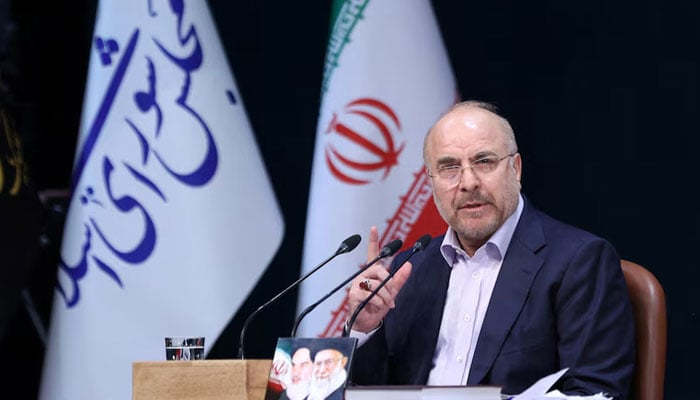
Iranian Parliament Speaker and senior negotiator Mohammad Bagher Ghalibaf has issued a strong warning over the escalating tensions in the region, saying that if Iran cannot safely export its oil, no other country in the region should expect to continue selling oil without facing consequences.

In a statement, Ghalibaf warned that regional security cannot remain selective. He said that unless Iran’s security and interests receive protection, critical infrastructure across the region could also face serious risks.

Ghalibaf also argued that ensuring the security of the Strait of Hormuz requires the absence of U.S. military forces from the area. The strategically important waterway serves as a major route for global energy shipments, making any threat to its stability a matter of international concern.

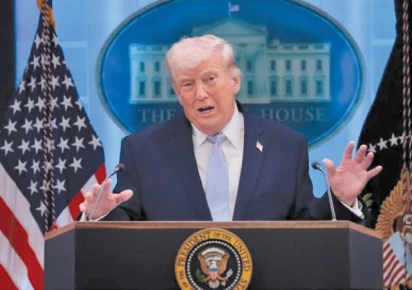
The warning comes amid heightened tensions between Iran and the United States. After U.S. President Donald Trump reportedly threatened to target Iranian power plants and bridges, Iranian officials responded with warnings that they could strike bridges and other critical infrastructure in countries across the region.

A senior Iranian official also claimed that the United States should have learned from the recent 10-day conflict that Iran has the capability to launch attacks wherever it chooses. The remarks reflect Tehran’s increasingly forceful stance as tensions continue to rise and both sides exchange threats over military targets and regional security.

The latest statements have raised further concerns about the potential for the conflict to spread beyond Iran and directly affect vital infrastructure and energy routes throughout the Middle East.

Similar Posts

  • |

    Record rainfall strands thousands at Japan Airport…

    TOKYO: Record-breaking rainfall in Japan’s Chiba prefecture left thousands of travellers stranded at Tokyo’s Narita International Airport, disrupted roads and rail services and claimed at least eight lives, as emergency crews and soldiers joined relief efforts on Friday. More than 360 millimetres of rain fell within 24 hours in parts of Chiba, an area adjoining Tokyo, triggering widespread flooding during one of Japan’s busiest holiday periods. Authorities said the downpour also disrupted power supplies, leaving more than 20,000 homes without electricity. The eight fatalities included a person who was reportedly trapped inside a submerged vehicle, according to Japanese public broadcaster NHK, citing local authorities and police. The unprecedented rainfall caused major disruption at Narita airport, where around 7,000 passengers were stranded after transport services were severely affected. Airport staff provided sleeping bags, drinking water and snacks as travellers spent the night inside terminals. Minoru Yamasaki, a 48-year-old Chiba resident returning from holiday, described the difficult situation, saying he waited about four hours for a taxi before returning to the airport after a hotel could not accommodate him. Airport officials said most flights were expected to operate normally on Friday, although transport links remained affected. Several railway services were suspended, while some trains connecting Narita with Tokyo resumed, helping reduce congestion around the international airport. Major highways in Chiba were also closed, forcing motorists onto alternative routes and creating severe traffic jams. In Chiba city, among the worst-hit areas, hundreds of residents spent the night at temporary evacuation centres in government buildings. Tokyo Electric Power reported that flooding at a power substation contributed to widespread outages. Gas supplies to nearly 13,000 households were also temporarily disrupted. Chiba Governor Toshihito Kumagai described the situation as extremely unusual, saying he had never experienced a disaster of this scale. Weather authorities said 367mm of rain was recorded over 24 hours, surpassing the previous Chiba record of 309mm set in October 2013. With further disruption possible, authorities continued rescue and recovery operations while urging residents to remain alert to flooding and other weather-related hazards.

  • | | | |

    Iranian president rejects resignation rumours

    TEHRAN: Iranian President Masoud Pezeshkian has firmly denied reports claiming he had submitted his resignation, saying he remains fully committed to leading the country despite ongoing regional tensions and recent military escalation involving the United States. Speaking in a televised address, Pezeshkian dismissed speculation about stepping down, stating that he would publicly announce such a decision if it were ever made. He emphasized that he has no intention of resigning and will continue carrying out his responsibilities. The Iranian president also rejected reports suggesting differences with Mojtaba Khamenei and the country’s armed forces. He said the government, military leadership and state institutions were working in close coordination and remained united on national issues. His remarks came after opposition-linked media claimed that he had submitted his resignation several times amid growing political and security challenges. Iranian officials have not confirmed those reports. Meanwhile, diplomatic efforts to ease tensions between Lebanon and Israel continued as the two sides launched the seventh round of direct negotiations in Rome under United States sponsorship. According to Lebanese media reports, delegations from both countries are discussing the implementation of a US-backed framework agreement reached in June. The agreement outlines a gradual Israeli withdrawal from occupied Lebanese territory in exchange for the deployment of the Lebanese army and the disarmament of armed groups operating in those areas. The latest negotiations follow six previous rounds of talks aimed at reducing border tensions and advancing the implementation of the agreement. Separately, a report published by The New York Times claimed that Iran and Oman are close to reaching an arrangement to restore normal commercial shipping through the Strait of Hormuz, one of the world’s most important energy transit routes. According to the report, the proposed arrangement would establish separate shipping channels for vessels entering and leaving the Gulf. Iranian officials reportedly said the plan would include a service fee to cover environmental protection, maritime security and operational costs, with revenue shared between Iran and Oman.

  • | |

    More than 100 aftershocks hit Japan after powerful…

    Japan’s south‑western Kyushu region has been rattled by more than 100 aftershocks following Tuesday’s powerful earthquake that left at least 13 people dead and many others in critical condition. Rescue teams are working in extreme heat to search for survivors trapped under rubble in Kumamoto prefecture, where a paper factory and a shopping mall were among the worst‑hit sites. The Aeon Mall in Kashima suffered an explosion shortly after the quake, killing three people and injuring several others. Three remain missing as crews continue to sift through debris. Prime Minister Sanae Takaichi described the situation as “truly a race against time,” with thousands sheltering in evacuation centres and widespread power outages reported. The Japan Meteorological Agency has warned residents to remain vigilant, saying strong aftershocks with seismic intensity up to 7 could strike in the coming days. The quake struck Kumamoto at 16:27 local time (07:27 GMT) and caused significant damage across the region. In Yatsushiro City, two people were found without signs of life at a factory, while nine others remain unaccounted for. Officials say the scale of destruction is still being assessed, but the combination of collapsed buildings, fires and aftershocks has left communities deeply shaken.

  • |

    Russian missile attack kills nine in Kyiv

    KYIV: At least nine people were killed and 28 others injured after Russian ballistic missile strikes hit Ukraine’s capital, Kyiv, on Saturday morning, Ukrainian officials said. The attack caused heavy damage in several areas of the city. Multiple explosions were reported as missiles struck residential areas and other locations. Emergency teams rushed to the affected sites to rescue people and control fires. Kyiv Mayor Vitali Klitschko said the capital came under a major missile attack. He said several explosions were heard across the city, while fires broke out and some areas faced power disruptions. Officials said the Darnytskyi district was among the worst-hit areas. At least seven people were killed there, while 14 others were injured. Two children were among those wounded in the strike. Another missile strike hit the Solomyanskyi district, killing two people and injuring eight others. A five-storey residential building was partially destroyed, trapping some residents inside. Rescue workers carried out operations to search for survivors and clear the damaged structure. The attack also affected the area around the Lithuanian embassy. Lithuania’s Foreign Ministry said a missile landed nearby, damaging windows and spreading debris inside the embassy compound. No casualties were reported among diplomatic staff. The latest strikes are part of an increase in Russian missile attacks on Kyiv in recent weeks. Ukrainian officials say Moscow has intensified the use of ballistic missiles, creating greater pressure on the country’s air defence systems. President Volodymyr Zelensky has repeatedly called for additional air defence support, especially Patriot missile interceptors, which Ukraine says are essential for stopping ballistic missile attacks. Zelensky raised the issue during his recent meeting with US President Donald Trump in Washington. He urged greater support for Ukraine’s air defence capabilities as Russian attacks continue. Trump said discussions over Ukraine’s request to produce Patriot interceptors are still ongoing. However, he expressed concerns about sharing advanced US military technology and said such decisions require careful consideration. Ukraine has faced shortages of Patriot systems as Russian air attacks have increased. Kyiv says these systems remain among the few weapons capable of intercepting high-speed ballistic missiles. Meanwhile, Ukraine has continued launching retaliatory strikes against Russian targets. Ukrainian officials say their operations are aimed at disrupting military supply routes and damaging facilities linked to Russia’s war efforts.

  • Nigel Farage reclaims Clacton seat in party-boycotted by-election

    Nigel Farage has won back his parliamentary seat after Reform UK triumphed in the Clacton by-election. The contest was notably boycotted by every other major Westminster party. Farage regained the seat by defeating his closest challenger, satirical candidate Count Binface, in an election he himself triggered by resigning last month. A Survation poll released Monday had projected Farage taking around 75% of the vote, with Binface trailing at 20%. The Reform UK leader declared victory even before the final vote count was completed. According to the Guardian, Farage secured 22,239 votes, while Binface followed with 9,455 votes. Voter turnout for the by-election stood at 44%. Despite the win, the final result wasn’t quite as dramatic as some earlier polling had suggested it might be. Farage and Binface ultimately topped a crowded field that included several joke candidates, independents and minor party representatives. With every major political party sitting the race out, the contest largely became a two-way face-off between the pair. The vacancy stemmed from a deepening scandal involving a £5 million gift Farage received from cryptocurrency billionaire Christopher Harborne. Facing mounting scrutiny, Farage resigned his seat in July and called the by-election himself. As results came in, Farage described the outcome as a convincing and overwhelming win. He said he wanted the people of Clacton, rather than Britain’s mainstream media, to serve as his judge in the matter. He added that voters in the constituency had firmly rejected the broader political establishment through their decision. Despite the win, Farage skipped the official vote count and cancelled a planned victory speech altogether. Addressing the allegations tied to the gift earlier, Farage maintained he had done nothing wrong and broken no laws. Many political observers continue to view him as a potential future contender for prime minister. Farage has pledged tougher migration policies if he gains greater power, including deploying the British navy to intercept asylum seekers arriving by boat. He was first elected to the Clacton seat in 2024, winning with 46.2% of the vote and an 8,400-vote majority.

Leave a Reply

Your email address will not be published. Required fields are marked *